10 Most Remarkable Historical Places in Mexico To Explore
 Henryk Lassen
28 May, 2026
13 mins read
49
Henryk Lassen
28 May, 2026
13 mins read
49
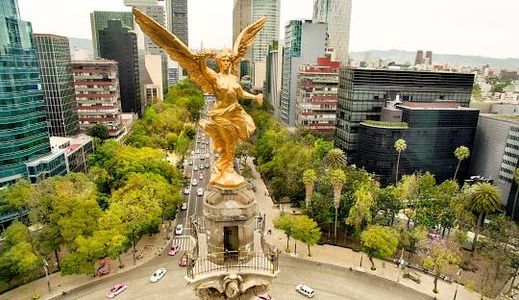
Mexico is a country where history isn’t just kept in museums—it’s carved into massive stone pyramids, painted across colonial streets, and hidden deep within tropical jungles. For centuries, great civilizations like the Maya, Aztecs, and Zapotecs built thriving empires here, leaving behind architectural wonders that still leave modern visitors speechless.
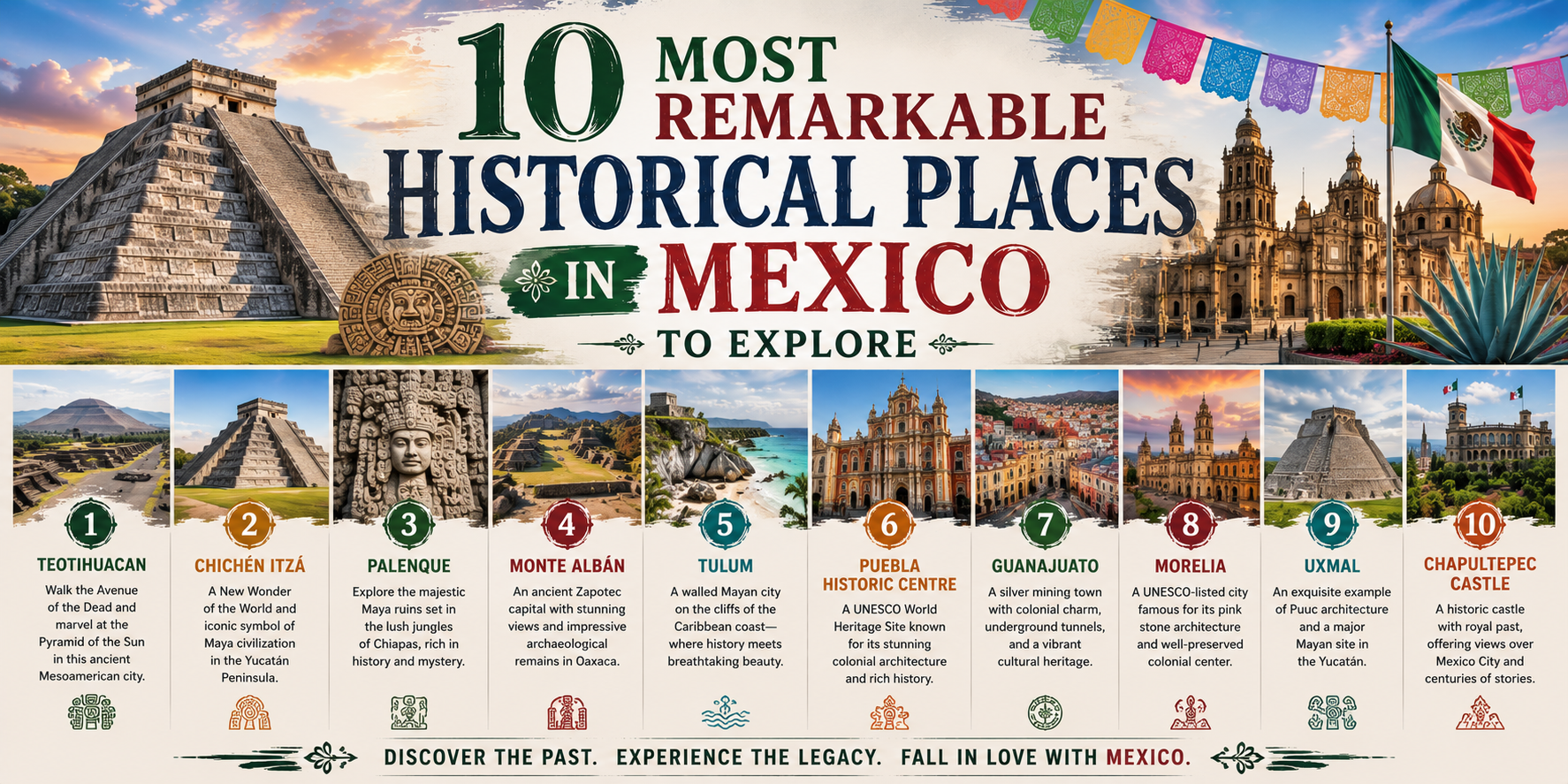
If you are planning your next adventure, exploring these ancient sites should be at the top of your list. To help you plan your itinerary, here are 10 of the most remarkable historical places in Mexico, along with the answers to the questions travelers ask most.
1. Why is Chichen Itza one of the New Seven Wonders of the World?
Located in the Yucatán Peninsula, Chichen Itza is arguably Mexico’s most famous historical landmark. This massive pre-Columbian city was a major hub of the Mayan civilization between the 9th and 12th centuries AD.
The centerpiece of the ruins is the Temple of Kukulcan, also known as El Castillo. What makes this pyramid incredibly remarkable is the ancient engineering behind it. During the spring and autumn equinoxes, the angle of the setting sun casts a shadow that looks like a giant feathered serpent crawling down the northern staircase of the pyramid.
Aside from El Castillo, you can explore the Great Ball Court (the largest in Mesoamerica), the Sacred Cenote where ceremonial offerings were made, and the astronomical observatory known as El Caracol.
- Pro Tip: Arrive early in the morning (around 8:00 AM) to beat both the intense mid-day heat and the tour buses coming from Cancún.
2. What secrets are hidden inside the Pyramids of Teotihuacan?
Just 30 miles northeast of Mexico City lies Teotihuacan, the "City of the Gods." Long before the Aztecs arrived in the 14th century, this was already a massive, abandoned metropolis. To this day, archaeologists still do not know who originally built it or what language they spoke.
At its peak around 500 AD, Teotihuacan was one of the largest cities in the world, housing over 125,000 people. When you visit, you will walk along the Avenue of the Dead, a wide central road flanked by ceremonial platforms.
The two main structures are the massive Pyramid of the Sun and the slightly smaller Pyramid of the Moon. Underneath these pyramids, modern archaeologists have discovered secret tunnels, chambers filled with liquid mercury, greenstone masks, and sacrificial offerings that hint at complex religious rituals.
3. Why is Tulum the most beautiful cliffside Mayan city?
Most Mayan ruins are tucked away in dense forests, but Tulum sits right on the edge of a 39-foot cliff overlooking the turquoise waters of the Caribbean Sea. This unique location makes it one of the most picturesque archaeological sites on earth.
Tulum was a major trading port for the Maya during the Late Postclassic period (between the 13th and 15th centuries). It was also one of the few Mayan cities still inhabited when the Spanish arrived.
The city was heavily fortified with thick stone walls to protect its wealthy merchant class. Today, you can explore El Castillo (the castle) and the Temple of the Frescoes, which still contains faint traces of original colored murals. After exploring the sun-baked ruins, you can walk down a wooden staircase directly onto a white-sand beach for a quick swim.
4. How did the Zapotecs build Monte Albán on a flattened mountain?
Located in the valley of Oaxaca, Monte Albán was the ancient capital of the Zapotec civilization for nearly a thousand years. What makes this site a marvel of ancient engineering is its location. The Zapotecs literally leveled the top of a mountain to build their grand civic and religious center.
From the central plaza, you get 360-degree views of the surrounding valleys and distant mountains. The site is filled with stepped pyramids, ancient ball courts, and underground tombs.
One of the most intriguing features of Monte Albán is the Gallery of the Danzantes (Dancers). This area features stone carvings of twisted, naked human figures. While early explorers thought they were dancers, modern historians believe they represent defeated rival leaders, captured and sacrificed to show off the city's military power.
5. What makes the jungle ruins of Palenque so mysterious?
Deep in the humid rainforests of Chiapas lies Palenque, a Mayan city-state that reached its peak in the 7th century under the rule of Pacal the Great. While Palenque is smaller than Chichen Itza, its architectural detail and preservation are unmatched.
The ruins are surrounded by thick jungle, meaning you will often explore the site to the sound of howling monkeys and calling tropical birds. The Temple of the Inscriptions is the most famous structure here. It houses the tomb of King Pacal, which was discovered in 1952 sealed deep beneath the pyramid floors. The carved stone lid of his sarcophagus is highly detailed, showing the king descending into the Mayan underworld.
Only about 10% of Palenque has been excavated. The rest of the grand city remains completely swallowed by the jungle, adding to its mysterious, explorer-like atmosphere.
6. What lies beneath the Historic Center of Mexico City?
You don't have to travel deep into the countryside to find ancient history. The Historic Center of Mexico City (Centro Histórico) is built directly on top of Tenochtitlan, the ancient Aztec capital.
At the heart of the city is the Zócalo, a massive public plaza. Right next to the grand Metropolitan Cathedral, workers in the late 1970s accidentally uncovered the ruins of the Templo Mayor, the main temple of the Aztecs.
Today, you can walk through the excavated open-air ruins and visit the on-site museum to see incredible stone carvings, skull racks, and artifacts discovered right under the city streets. It is a striking visual representation of how Spanish colonial architecture was physically built over the conquered Aztec empire.
7. Why is Guanajuato considered Mexico's most colorful colonial town?
If you want to step back into the Spanish colonial era, the historic town of Guanajuato is a must-visit. Founded in 1554, this UNESCO World Heritage site became incredibly wealthy during the 18th century because of its rich silver mines.
Because of this wealth, the city was built with beautiful Baroque and Neoclassical churches, grand theaters, and vibrant, pastel-colored houses that cling to the steep hillsides.
The city is also famous for its unique network of underground tunnels. Originally built to prevent flooding from the Guanajuato River, these stone-walled tunnels now serve as subterranean roads for cars and pedestrians, keeping the historic streets above quiet, walkable, and romantic.
8. How does Uxmal showcase the peak of Puuc Mayan architecture?
While Chichen Itza gets the crowd, many travelers prefer Uxmal for its quiet atmosphere and incredibly detailed stone carvings. Located south of Mérida, Uxmal is the finest example of "Puuc" architectural style, characterized by plain lower walls and highly decorative upper facades.
The most iconic structure here is the Pyramid of the Magician. Unlike most Mayan pyramids, which are square or rectangular, this pyramid has smooth, rounded, oval sides.
Legend says the pyramid was built in a single night by a dwarf with magical powers. The nearby Governor’s Palace features a 320-foot-long stone mosaic facade made of thousands of individual stones fitted together to look like snakes, geometric patterns, and masks of Chaac, the Mayan rain god.
9. What is the mystery behind the Pyramid of the Niches at El Tajín?
Located in the coastal state of Veracruz, El Tajín was a major city of the Classic Veracruz culture that flourished from 600 to 1200 AD.
Its most famous building is the Pyramid of the Niches. This unique structure features 365 deep, square niches carved into its outer walls. Historians believe these niches acted as a physical calendar, with each niche representing one day of the year. The play of light and shadow on these niches throughout the day was used by priests to keep track of time and agricultural cycles.
El Tajín was also deeply connected to the Mesoamerican ballgame; archaeologists have discovered over 15 ball courts within the city limits, many decorated with stone relief carvings showing human sacrifice.
10. Why is the historic center of Puebla a culinary and architectural marvel?
Puebla sits at the foot of the snow-capped Popocatépetl volcano and is famous for its exceptionally preserved Spanish colonial architecture.
What makes Puebla truly unique is its use of Talavera tiles. The facades of houses, churches, and fountains throughout the historic center are covered in colorful, hand-painted ceramic tiles, blending Spanish, Arabic, and indigenous artistic styles.
Aside from its beautiful churches, Puebla is also the birthplace of Mole Poblano—a rich, complex sauce made with chili peppers, spices, and Mexican chocolate. Exploring the historical convent kitchens where these traditional recipes were first created is an unforgettable experience for food lovers.
What Do You Need to Travel to Mexico?
Before you pack your bags to explore these incredible historical landmarks, you need to ensure you have all your travel documents in order. Depending on your nationality, you may need a tourist visa to enter Mexico.
To make sure your journey goes smoothly, you should review the official visa guidelines. You can easily check the full document requirements for a Mexico visa to see what paperwork, passport validity, and financial proofs you need to prepare before applying.
Why Choose Us?
Navigating international travel requirements can feel overwhelming. That’s why we are here to handle the hard work for you. Here is why travelers trust us with their journey:
- Reliable Travel Visa Services: Our global approach has assisted numerous travelers in successfully obtaining their visas, removing the stress of paperwork.
- Round-the-Clock Assistance: Reach out to us 24/7. Our experts are always available, and we promise a response to all your inquiries within 72 hours.
- Experienced Visa Consultants: Get personalized, expert guidance from our seasoned consultants to ensure your application meets all criteria and is accepted smoothly.
- Efficient Visa Application Process: Don't waste hours on complicated government portals. You can apply for your visa in just minutes using our simplified, easy-to-use online form.
Written By:
Henryk Lassen

Hotels at your convenience
Now choose your stay according to your preference. From finding a place for your dream destination or a mere weekend getaway to business accommodations or brief stay, we have got you covered. Explore hotels as per your mood.