11 Great Things to Do in Tunisia: The Ultimate Traveler's Guide
 Henryk Lassen
25 May, 2026
13 mins read
44
Henryk Lassen
25 May, 2026
13 mins read
44
Tunis is one of those rare cities that immediately grabs your attention. It is a place where you can hear the chaotic hum of a Mediterranean market in one ear and the quiet call to prayer in the other. It doesn't try too hard to impress tourists, and that is exactly why it is so charming. From Roman ruins and blue-and-white coastal towns to deep-spiced street food, the Tunisian capital is a massive cultural crossroads.
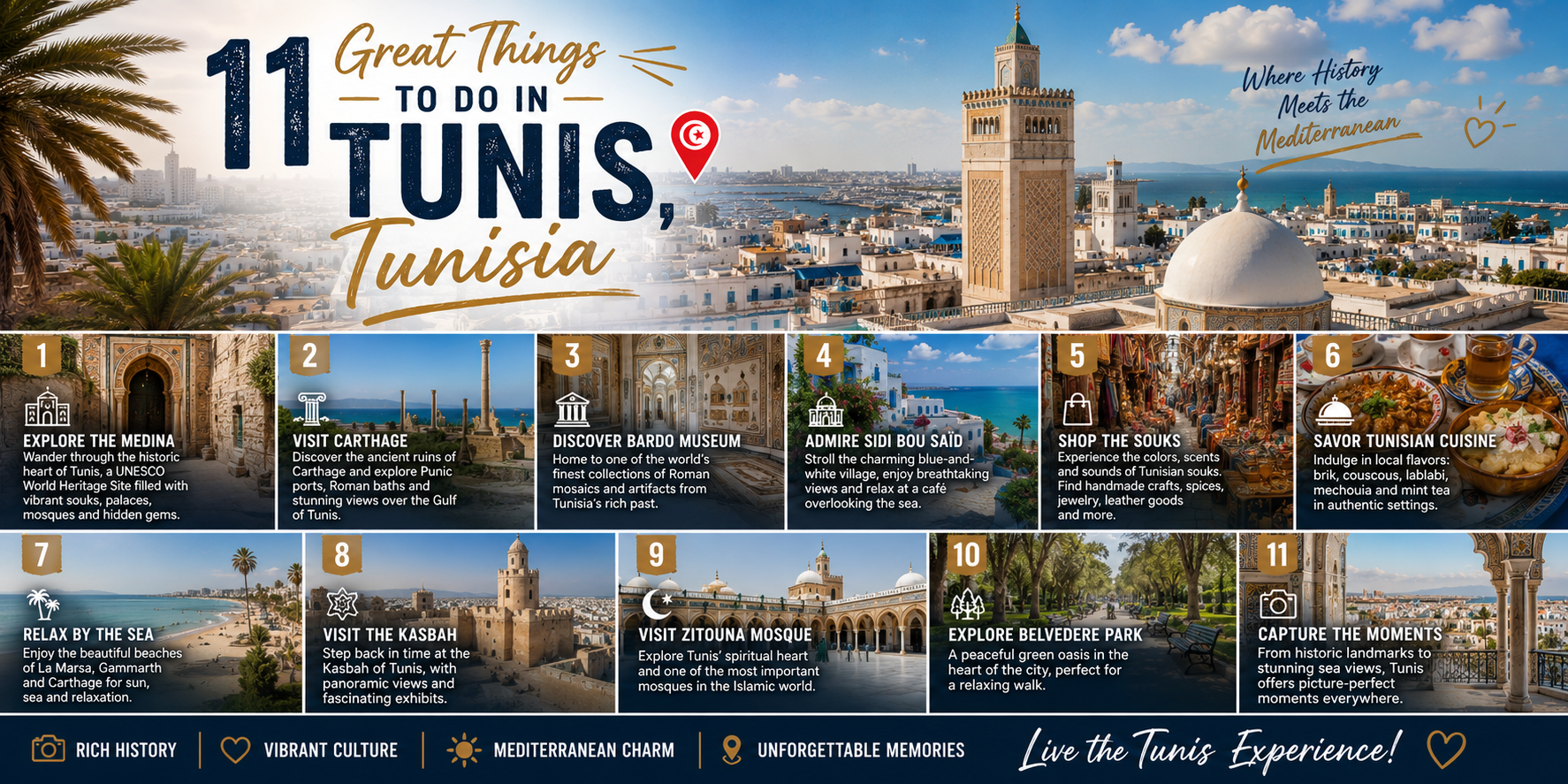
If you are planning a trip, here is a breakdown of the 11 absolute best things to do in Tunis, answered through the questions real travelers ask before they go.
1. What is Tunis most known for?
Tunis is famous for its incredible layer-cake of history. Within a 20-mile radius, you can stand in a medieval Arab Medina, walk past French colonial apartments that look like they were plucked straight out of Paris, and touch 2,000-year-old Roman stones. It is most famous for the legendary ancient city of Carthage, its UNESCO-listed historic old town, and the jaw-dropping blue-and-white seaside cliffs of Sidi Bou Said.
2. How do you explore the Medina of Tunis without getting lost?
The honest answer is: you don't! Getting lost in the Medina of Tunis (founded in 698 AD) is half the fun. This UNESCO World Heritage site is a maze of tiny, winding alleys, beautiful arched doorways, and bustling markets (souks).
To navigate like a local, look for the main street, Rue Jamaa Ezzitouna. It connects the historic city gate, Bab El Bhar (which separates the old city from the modern French-built area), directly to the Zitouna Mosque.
- Insider Tip: Walk off the main paths to find Souk Ech-Chaouachine, where craftsmen still hand-block the traditional red wool felt skullcaps (chachias). It is a fascinating, rhythmic process to watch.
3. Is the historical Zitouna Mosque open to non-Muslim visitors?
Yes, but with some limits. The Zitouna Mosque (or Al-Zaytuna, meaning "Olive Tree") is the spiritual heart of Tunis and one of the oldest mosques in North Africa.
While the indoor prayer room is reserved strictly for Muslims, non-Muslim visitors are welcome to enter the outer courtyard for a small fee. Look closely at the courtyard columns—they were actually recycled from the ancient Roman ruins of Carthage! The blend of Roman Corinthian capitals with Islamic architecture is absolutely stunning.
4. Where can you find the world’s best Roman mosaics in Tunis?
You will find them at the Bardo National Museum (Musée National du Bardo). Housed inside a spectacular 15th-century Beylical palace, this museum holds one of the largest and most complete collections of Roman mosaics on Earth.
Instead of boring, dusty stones, you will find massive, vibrant pictures made of millions of tiny colorful tiles. They show Roman myths, ancient sea monsters, gladiators, and scenes of daily life from thousands of years ago. Give yourself at least two to three hours here; the palace ceilings alone are worth the trip.
5. Is Carthage worth visiting, and how do you explore the ancient ruins?
Carthage is an absolute must-visit. It was once the superpower of the Mediterranean and the home of Hannibal, the military genius who marched elephants over the Alps to fight Rome.
The ruins are spread out across a modern, upscale neighborhood about 15 kilometers from downtown Tunis. The easiest way to get there is by taking the local TGM train from central Tunis.
- What to see: Don't miss the Baths of Antoninus (one of the largest Roman bath complexes in Africa, sitting right on the edge of the blue sea) and Byrsa Hill, which offers sweeping views of the Gulf of Tunis.
- Cool Tip: You can easily hire a taxi to take you between the spread-out ruins, but renting a bicycle to ride through the seaside neighborhood is a much more scenic and active way to see the history.
6. What makes the picturesque village of Sidi Bou Said so famous?
You have probably seen photos of Sidi Bou Said on Instagram. It is a stunning, cobblestoned village perched high on a cliff overlooking the Mediterranean. Every single house is painted bright white with vibrant blue doors, shutters, and decorative iron window grills.
The best thing to do here is slow down. Walk the steep streets, breathe in the sweet scent of fresh jasmine sold by local street vendors, and order a cup of sweet mint tea loaded with pine nuts.
7. Where is the best spot to stroll and watch daily life in Tunis?
Head straight to Avenue Habib Bourguiba in the "New Town" (Ville Nouvelle). This is the modern, French-colonial center of Tunis. It features a wide, tree-lined central promenade packed with outdoor cafes, flower shops, and historic buildings.
While walking, you will pass the grand Cathedral of Saint Vincent de Paul, a striking neo-Romanesque church built during the French colonial era. Grab a table at a sidewalk cafe, order an espresso, and enjoy the local sport of people-watching.
8. Can you swim at the beaches in Tunis, and where is the best seaside escape?
Yes, you can! While the city center is a busy metro hub, the northern suburbs offer great beaches. Locals escape the summer heat by heading to La Marsa.
La Marsa has a beautiful, wide sandy beach and a long paved promenade lined with ice cream shops and stylish restaurants. It is incredibly safe, family-friendly, and perfect for a relaxed afternoon dip in the Mediterranean. If you want a more upscale beach club vibe, head slightly further north to Gammarth.
9. How do you find authentic local perfumes and crafts at Souk El Attarine?
Located deep inside the Medina, Souk El Attarine (the Perfumers' Market) has been active since the 13th century. As you walk through, the air smells heavily of rose water, jasmine, amber, and rare spices.
This is the perfect spot to pick up authentic Tunisian souvenirs. You can buy natural essential oils, custom-blended perfumes, and handmade brass lanterns. Remember, bartering is a normal part of the shopping culture here. Smile, keep it friendly, and try to negotiate the price down by about 30% to 50% of the initial offer.
10. Why should you visit the iconic Place de la Kasbah in Tunis?
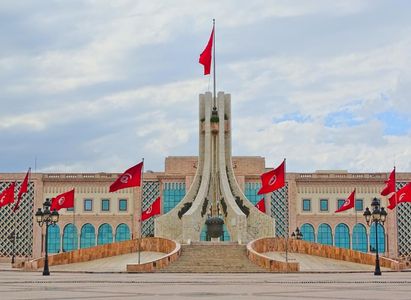
Place de la Kasbah is a massive, open public square at the western edge of the Medina. It is surrounded by grand government buildings, including the Ministry of Finance and the Prime Minister’s office.
The square is heavily decorated with Tunisian flags and features a monumental stone memorial. It is a highly historic area where locals gather, kids play football, and major national events take place. It gives you a great sense of modern Tunisian civic pride and political history. (Just a quick tip: avoid taking direct photos of government buildings or police officers here, as it is discouraged).
11. What are the must-try traditional dishes in Tunis, and where should you eat?
Tunisian food is bold, spicy, and packed with flavor. The key ingredient is Harissa—a fiery chili paste made with garlic and coriander.
- Ojja (or Shakshuka): A rich, bubbling tomato and pepper stew topped with poached eggs and spicy merguez sausage.
- Brik: A thin, crispy, deep-fried pastry sheet stuffed with a whole egg, tuna, parsley, and capers. You have to eat it quickly without letting the runny egg yolk spill!
- Where to eat: For an unforgettable meal, look for a traditional restaurant inside a restored Dar (a historic courtyard home). Eating fresh seafood or slow-cooked couscous in a tiled, open-air courtyard feels like dining in a private museum.
12. Where can you catch the absolute best sunset view of Tunis?
To end your day, head back into the Medina toward the Zitouna Mosque. Look for signs pointing to rooftop cafes, such as Café Panorama.
These cafes feature colorful hand-painted tiles and outdoor terraces that sit higher than the surrounding rooftops. Ordering a hot tea with fresh mint while watching the sun go down over the ancient minarets and white-washed roofs of the Medina is an absolute highlight of any Tunis trip.
13. Is Tunis safe for international travelers?
Tunis is generally a safe, welcoming city for travelers. The locals are incredibly friendly and proud to share their culture. Taxis are abundant and very cheap (always make sure the driver turns on the taximeter—rides inside the city should only cost a few Dinars).
Like any major city, keep an eye on your pockets in crowded markets, and dress relatively respectfully (covering shoulders and knees) when entering religious spaces.
14. How do you easily prepare for your trip to Tunisia?
Before you pack your bags and head to the airport, you need to make sure your travel documents are completely in order. Depending on your nationality, you may need to apply for a Tunisia eVisa to enter the country. Getting this sorted out ahead of time ensures you won't face any unexpected delays at border control.
Why Choose Us for Your Tunisia Travel Planning?
Planning an international holiday should be exciting, not stressful. If you need help securing your travel visa for Tunisia, our team of experts is here to make the entire process simple, fast, and completely hassle-free.
- Reliable Travel Visa Services: Our global approach has successfully assisted thousands of travelers in obtaining their visas securely and on time.
- Round-the-Clock Assistance: Got questions? Reach out to us 24/7. Our dedicated experts are always on hand and guarantee a response within 72 hours.
- Experienced Visa Consultants: Get personalized, expert guidance to ensure your visa application is perfectly filled out, drastically reducing any chance of rejection.
- Efficient Visa Application Process: No complicated paperwork or confusing steps. You can apply for your travel visa in just a few minutes using our simplified online form.
Ready to start planning your North African adventure? Check the step-by-step Tunisia visa instructions to verify your requirements and submit your application today!
Written By:
Henryk Lassen

Hotels at your convenience
Now choose your stay according to your preference. From finding a place for your dream destination or a mere weekend getaway to business accommodations or brief stay, we have got you covered. Explore hotels as per your mood.