Best Time for Kashmir Great Lakes Trek – Weather, Seasons and Trekking Guide
 Deepanshu Negi
12 Mar, 2026
11 mins read
141
Deepanshu Negi
12 Mar, 2026
11 mins read
141
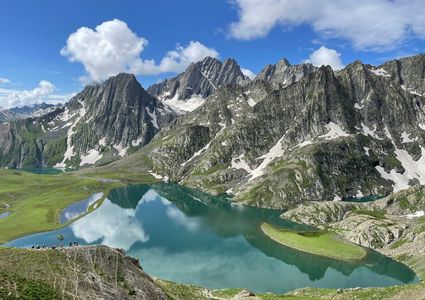
The Kashmir Great Lakes Trek is often called one of the most beautiful alpine treks in India. The trail passes through rolling meadows, glacier-fed lakes, rocky mountain passes, and stunning valleys in Jammu and Kashmir. During the trek, hikers witness several high-altitude lakes such as Vishansar Lake, Krishansar Lake, Gadsar Lake, and Gangbal Lake.
However, timing matters a lot for this trek. The mountains change dramatically across seasons, and the experience can feel completely different depending on the month you choose. Snow, blooming flowers, green valleys, and clear blue lakes all appear at different times of the trekking season.
If you are planning this Himalayan journey, understanding the best time for Kashmir Great Lakes Trek will help you enjoy better weather, safer trails, and the most stunning views.
Trekking Season of Kashmir Great Lakes
Unlike many Himalayan treks that run throughout the year, the Kashmir Great Lakes Trek has a short trekking window.
Most trekking operators run expeditions between late June and mid-September. Outside this period, heavy snowfall blocks the mountain passes and makes the route unsafe.
Here is a simple breakdown of the trekking season:
- Late June to early July - snow patches and fresh greenery
- Mid July to August - lush meadows and wildflowers
- September - clear skies and autumn landscapes
Each period offers a different experience, which makes this trek unique in the Indian Himalayas.
Best Time for Kashmir Great Lakes Trek
Most experienced trekkers consider mid-July to late August the ideal time for the Kashmir Great Lakes Trek.
During these weeks, the trail reaches its peak beauty. The snow melts from most sections, the alpine meadows turn bright green, and colorful wildflowers start blooming across the valleys.
The lakes also appear at their best during this period. The sunlight reflects beautifully on the water, which creates stunning shades of blue and turquoise. Weather conditions remain relatively stable compared to early season snow or late monsoon clouds.
In simple words, if you want the classic postcard view of Kashmir’s alpine landscape, mid-July to August works perfectly.
Kashmir Great Lakes Trek in June
Late June marks the beginning of the trekking season for the Kashmir Great Lakes Trek.
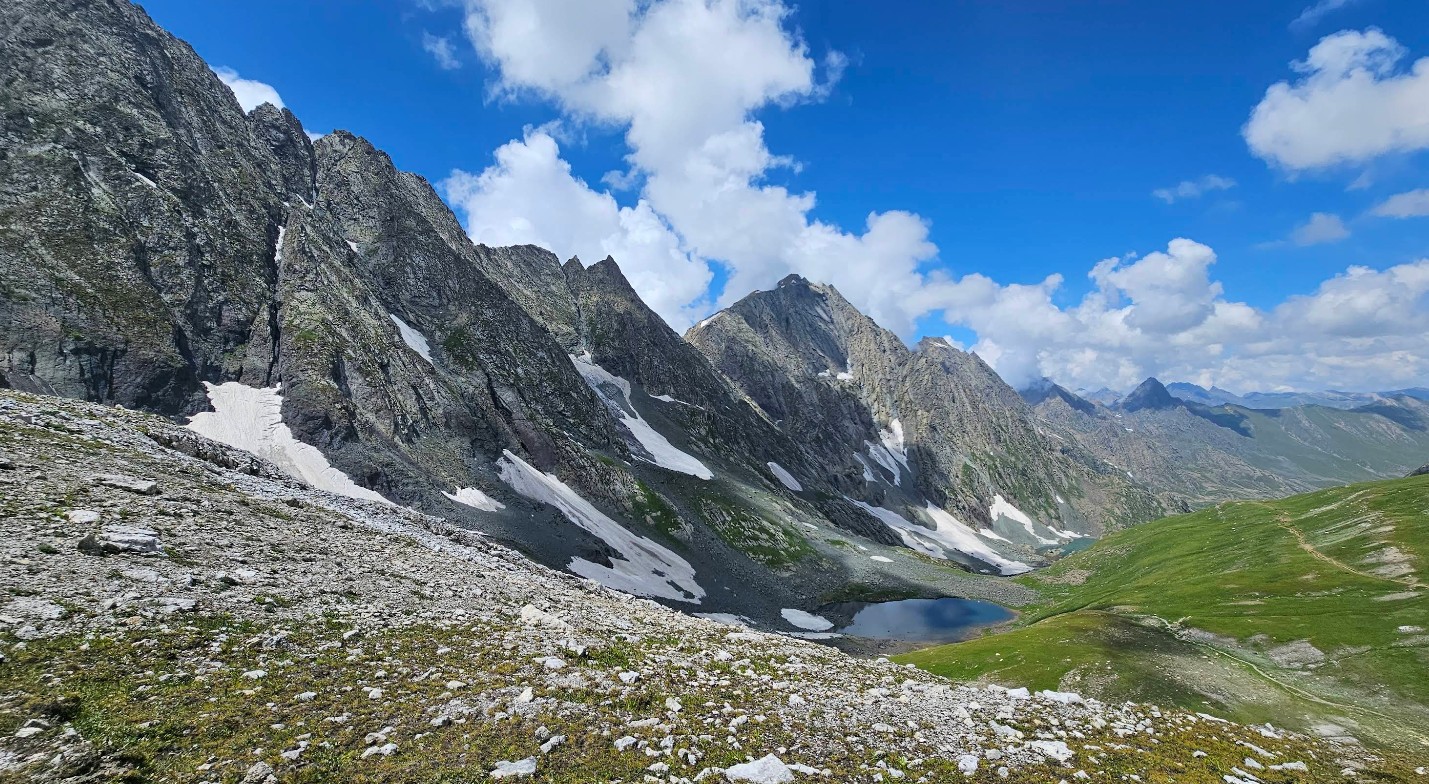
At this time, trekkers still encounter snow patches, especially near high mountain passes like Gadsar Pass. The surrounding mountains often remain partially covered with snow, which creates dramatic scenery.
However, early season trekking also comes with challenges. Trails can feel slippery because snow starts melting during the day. Some sections may require careful walking.
Despite these conditions, many trekkers love June because:
- Snow-covered landscapes look spectacular
- Fewer trekkers crowd the trail
- Fresh greenery begins to appear in the valleys
If you enjoy a slightly adventurous environment and snowy views, late June can be a rewarding time.
Gadsar Pass
Kashmir Great Lakes Trek in July
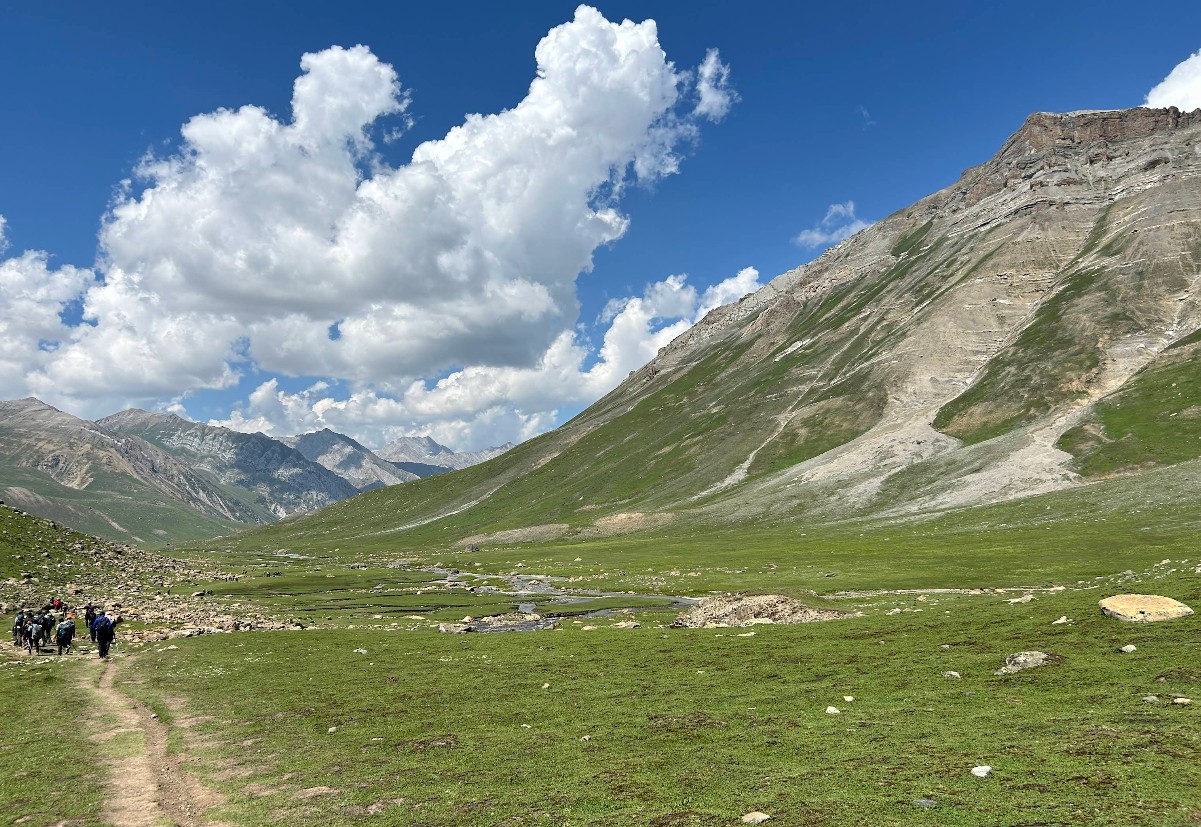
July is when the trek slowly transforms into a lush Himalayan paradise.
Snow begins to melt rapidly across the meadows. The valleys around Sonamarg, which acts as the starting point for the trek, turn bright green. Streams flow strongly due to melting glaciers, and the lakes appear clearer.
Another highlight of July is the arrival of alpine wildflowers. Large sections of the trail get covered with colorful blooms. This natural carpet creates some of the most beautiful trekking landscapes in India.
Weather in July generally includes:
- Day temperature: 15°C to 20°C
- Night temperature: 5°C to 8°C
Rain showers may occur occasionally because the monsoon reaches parts of Kashmir during this time. However, the valley usually receives less rainfall than many other Himalayan regions.
Kashmir Great Lakes Trek in August
August remains one of the most popular months for the Kashmir Great Lakes Trek.
The landscape looks fully alive during this period. Alpine grasslands stretch endlessly across the mountains, and the lakes shine under bright summer sunlight.
Trekkers often notice the famous twin lakes Vishansar Lake and Krishansar Lake at their clearest during August. The reflections of surrounding peaks create breathtaking photography opportunities.
Weather conditions stay fairly comfortable for trekking:
- Day temperature: 16°C to 22°C
- Night temperature: 6°C to 10°C
Since this month falls in the peak trekking season, expect more groups on the trail. Still, the vast Himalayan landscape rarely feels crowded.
Kashmir Great Lakes Trek in September
September brings a slightly different but equally beautiful experience.
As summer ends, the grasslands slowly start turning golden and brown, creating an early autumn feel in the mountains. The skies become clearer because the monsoon retreats from Jammu and Kashmir.
Many trekkers prefer September for photography because the visibility improves significantly. You often get uninterrupted views of distant peaks including Mount Harmukh, which towers above Gangbal Lake.
However, temperatures begin to drop:
- Day temperature: 12°C to 18°C
- Night temperature: 0°C to 5°C
The trekking season usually ends by mid-September because snowfall can return to high passes.
Months to Avoid the Kashmir Great Lakes Trek
The Kashmir Great Lakes Trek remains inaccessible for most of the year.
From October to May, heavy snowfall covers the entire route. The high-altitude passes stay buried under thick snow, and the lakes freeze completely.
Several campsites like Nichnai Valley and Satsar Lakes become unreachable during winter months.
Attempting the trek in this period can be dangerous due to:
- Deep snow on trails
- Avalanche risk
- Extremely cold temperatures
- Closed mountain routes
For safety reasons, trekking organizations do not operate expeditions during winter and early spring.
Weather Conditions During the Trek
Weather in the Kashmir Great Lakes region remains typical of high-altitude Himalayan environments.
Trekkers should prepare for rapid weather changes. A sunny morning can quickly turn into a cloudy afternoon or a brief rain shower.
Some common weather patterns include:
- Bright sunshine during the day
- Cold evenings at high camps
- Occasional rainfall during July and August
- Strong winds near mountain passes
Because the trek reaches altitudes above 4,000 meters, temperatures can drop quickly after sunset.
Packing the right clothing layers becomes essential for a comfortable experience.
Why Timing Matters for This Trek
Choosing the right month for the Kashmir Great Lakes Trek affects more than just weather.
The timing also influences the entire trekking experience.
For example:
- June offers snowy landscapes and fewer crowds.
- July and August showcase lush meadows and blooming flowers.
- September delivers crystal-clear mountain views and peaceful trails.
Each phase highlights a different side of the Kashmir Himalayas.
Trekkers who love colorful landscapes usually prefer July or August. Those who enjoy quieter trails and dramatic mountain views often choose September.
Final Thoughts
The best time for Kashmir Great Lakes Trek generally falls between mid-July and late August, when the valleys burst with greenery and alpine flowers. During this period, trekkers enjoy stable weather, clear lakes, and the most vibrant Himalayan landscapes.
However, every month in the trekking window offers its own charm. Late June brings snow-covered mountains, while September offers clear skies and golden alpine scenery.
If you plan carefully and choose the right season, the Kashmir Great Lakes Trek can easily become one of the most memorable adventures in the Indian Himalayas.
Written By:
Deepanshu Negi

Hotels at your convenience
Now choose your stay according to your preference. From finding a place for your dream destination or a mere weekend getaway to business accommodations or brief stay, we have got you covered. Explore hotels as per your mood.