Best Time to Visit Brammah Valley Trek (Weather & Seasons Guide
 Jagat Nath
21 Feb, 2026
14 mins read
58
Jagat Nath
21 Feb, 2026
14 mins read
58
Introduction
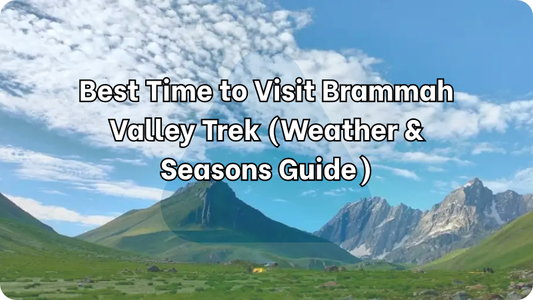
There's something about Brammah Valley that gets under your skin even before you've set foot on the trail. Nestled deep in the Kishtwar district of Jammu & Kashmir, this remote Himalayan gem sits in the shadow of Brammah I and Brammah II — twin peaks that pierce the sky at over 6,400 meters. It's wild, raw, and gloriously untouched compared to the more popular Himalayan circuits.
But here's the thing — picking the wrong time to go can turn your dream trek into a miserable, even dangerous, experience. High-altitude treks don't forgive poor timing. A pass buried under three feet of fresh snow, or a river swollen from overnight rain, can shut down an entire itinerary in hours.
So if you're seriously planning this adventure, knowing the best time to visit Brammah Valley Trek is honestly the most important decision you'll make before packing a single thing. This guide walks you through every season, month by month, so you can plan with confidence — whether you're a first-timer or a seasoned ridge-walker.
Overview of Brammah Valley Climate
Brammah Valley sits at altitudes ranging from roughly 2,800 meters at the base to well above 4,500 meters near the higher passes and glacier zones. That kind of elevation range means the weather here doesn't play by normal rules.
The valley's climate is shaped by two competing forces — the Western Disturbances that roll in from Central Asia during winter, and the tail end of the Indian monsoon that nudges into this part of Jammu & Kashmir during late summer. The result is a trekking season that's genuinely short — essentially a four-month window between June and September — before snow closes everything down again.
Temperature swings between day and night are sharp and humbling. Daytime highs in summer can feel almost pleasant at lower elevations, but the moment the sun drops behind a ridge, temperatures fall fast. Nights above 4,000 meters regularly dip well below freezing even in August. That's the Himalayas for you.
Season-Wise Breakdown
Summer (June – July) — Early Season
June marks the beginning of the trekking season in Brammah Valley, and it comes with that particular kind of beauty that only exists when winter is just letting go. Snow patches linger on the higher trails, but the lower meadows are transforming — dense, impossibly green, dotted with wildflowers that seem to appear overnight.
Daytime temperatures at lower camps hover around 15–20°C, which feels wonderful. But push up toward the passes and you're looking at single digits, with nights often dropping to -5°C or colder at high camp. Glaciers are still firm and river crossings can be tricky — snowmelt keeps water levels high and currents strong, especially in the earlier weeks of June.
The upside? Fewer people. The trails feel genuinely yours. The landscapes have that fresh, untouched quality that's hard to describe but impossible to forget once you've seen it.
The downside is that some higher sections may still be snow-covered and require careful navigation. Crampons or microspikes are worth packing in June. July improves considerably — the snow retreats further, trails open up, and conditions start feeling more manageable.
Who should trek in early season? Experienced trekkers who are comfortable with variable snow conditions and river crossings. If you've done a few Himalayan treks before and you're after solitude and lush scenery, June–July rewards handsomely.
Peak Season (August – Early September) — The Sweet Spot
If you ask most seasoned trekkers or local guides what the best time to visit Brammah Valley Trek actually is, nearly all of them will say August to early September without much hesitation. And they're right.
This is when everything clicks. The snow has pulled back from most passes, the trails are dry and well-defined, and the skies tend to be remarkably clear. Morning views of Brammah I and II from high camps can stop you mid-stride — those peaks catching the first light of day with nothing between you and them but clean mountain air.
The wildflowers are at their absolute peak. Alpine meadows turn into something out of a painting — blues, yellows, purples — while the higher slopes carry a dramatic starkness that contrasts beautifully with the greenery below.
Temperatures are manageable. Daytime at mid-altitude camps usually sits between 12–18°C. Nights get cold — expect 0 to -4°C at higher elevations — but nothing that proper sleeping gear can't handle.
This window is especially recommended for photographers chasing mountain light, and for first-time high-altitude trekkers who want the best possible conditions without throwing themselves into the deep end.
August does carry a slight monsoon influence — you might get a shower or two — but this part of Jammu & Kashmir sits in a rain shadow and sees far less precipitation than Himachal or Uttarakhand. It rarely disrupts plans significantly.
Late Season (Late September) — Golden and Quiet
Late September brings a different kind of magic to Brammah Valley. The chaos of summer is gone, and so are most of the trekkers. Trails feel emptier, mornings are crisp and bright, and the landscape transitions into autumn tones — russet, gold, amber — that light up the hillsides in a way summer simply can't match.
This is a beautiful time to trek. But it asks more of you.
Nights get noticeably colder — expect temperatures to dip to -8 or -10°C at higher camps by late September. Daylight hours shorten, which means tighter trekking windows and less buffer for unexpected delays. Weather can also become unpredictable — early snowfall at altitude is possible from mid-September onward.
The risks are manageable if you're experienced, well-geared, and mentally prepared for the cold. But if you're a first-timer or trekking with a larger group, the margin for error shrinks considerably.
For solitude lovers and experienced trekkers who run warm and sleep well in the cold — late September in Brammah Valley might honestly be their favorite time of year.
Winter & Spring (October – May) — Off Season
The valley essentially closes from October onward. Western Disturbances bring heavy, sustained snowfall that buries the passes and makes trekking in the traditional sense impossible. By November, access routes are completely blocked.
This period isn't for regular trekking at all. The terrain becomes technical mountaineering territory — the kind that requires ropes, ice axes, and a team that knows how to use them. Unless you're planning a specialized alpine expedition with full technical gear and an experienced high-altitude guide team, October through May is a firm pass.
Spring thaw begins slowly in late April and May, but the valley doesn't truly open until June.
Month-by-Month Quick Guide
MonthConditionsRecommendationJuneSnow patches, lush greenery, high riversGood for experienced trekkersJulyImproving trails, fewer snow patchesGood — great for moderate trekkersAugustBest visibility, wildflowers, stable weatherExcellent — highly recommendedEarly SeptClear skies, peak beauty, mountain viewsExcellent — top pickLate SeptAutumn colors, colder nightsGood for experienced, well-equipped trekkersOct–MayHeavy snow, closed passesNot suitable for general trekking
Temperature & Weather at a Glance
During peak season (August–September), daytime temperatures at mid-altitude camps typically range from 12–18°C — comfortable for trekking but cool enough to keep you moving. Nights at high camps drop between -2 and -8°C depending on elevation and time of month. Rain probability is low but not zero — brief afternoon showers are possible in August. Wind conditions are generally mild at lower elevations but can pick up sharply near exposed ridgelines and passes, especially in the early morning.
Best Time Based on Trekker Type
Different people need different things from a trek, and the Brammah Valley season has room for most of them.
Beginners should firmly target August to early September. Conditions are at their most forgiving, visibility is excellent, and the trails are well-defined. You want every advantage working in your favor when you're still figuring out high-altitude trekking.
Experienced trekkers have the full June–late September window. If you want solitude and don't mind a bit of challenge, June or late September will feel more rewarding.
Photographers — August is your month. The wildflowers, the snow-capped peaks, the clear morning light. Go in August and your memory card will be full by day three.
Adventure seekers who crave river crossings, lingering snow, and the feeling of being genuinely early on a trail — June and early July are calling.
Solitude lovers — late September, without question. You'll have the valley almost entirely to yourself.
Things to Consider Before Choosing Your Dates
A few practical points worth keeping in mind as you lock in your timing:
Fitness and acclimatization matter more than most people expect. Even in peak season, Brammah Valley pushes into serious altitude. Build in acclimatization days and don't rush elevation gain.
Monsoon impact is lower here than in many Himalayan regions, but August can still bring unpredictable weather. Always carry rain gear and plan buffer days.
Permits and accessibility — Kishtwar is a restricted area, and depending on the route, permits may be required. Check current regulations before your trip, as these can change. Road connectivity to the trailhead can also be weather-dependent.
Gear requirements shift by season. June and September demand warmer sleeping bags and potentially microspikes or crampons. August trekkers can travel a touch lighter but should never underestimate high-altitude cold.
Buffer days are not optional — they're insurance. Build at least two to three extra days into your itinerary for weather holds.
Final Recommendation
If you've read this far and you're still wondering what the best time to visit Brammah Valley Trek is — here it is, plainly: August to early September.
This is when the valley is fully open, the weather is most cooperative, the views are at their clearest, and the trails are at their best. It's the window where everything aligns — and where most trekkers come away saying it was one of the finest experiences of their lives.
That said, no time of year lets you be careless. Prepare properly. Train adequately. Gear up for cold nights regardless of when you go. And respect the mountain's pace — it doesn't adjust to yours.
Brammah Valley rewards those who show up ready. Make sure that's you.
window.NREUM||(NREUM={});NREUM.info={"beacon":"bam.nr-data.net","licenseKey":"NRJS-3109bb2e2783f515265","applicationID":"558315209","transactionName":"blUHbEVQCxECBUVQWVcfMEpeHhARBhRCFlRVXwIXVEMAAxcDU1VZXh4VUEc=","queueTime":0,"applicationTime":148,"atts":"QhIEGg1KGB8=","errorBeacon":"bam.nr-data.net","agent":""}
window.NREUM||(NREUM={});NREUM.info={"beacon":"bam.nr-data.net","licenseKey":"NRJS-3109bb2e2783f515265","applicationID":"558315209","transactionName":"blUHbEVQCxECBUVQWVcfMEpeHhARBhRCFlRVXwIXVEMAAxcDU1VZXh4VUEc=","queueTime":0,"applicationTime":147,"atts":"QhIEGg1KGB8=","errorBeacon":"bam.nr-data.net","agent":""}
Written By:
Jagat Nath

Hotels at your convenience
Now choose your stay according to your preference. From finding a place for your dream destination or a mere weekend getaway to business accommodations or brief stay, we have got you covered. Explore hotels as per your mood.