Cambodia eVisa for Taiwan Citizens
 Laura Vogel
09 Dec, 2025
14 mins read
188
Laura Vogel
09 Dec, 2025
14 mins read
188
For Taiwanese travelers, Cambodia offers a fascinating blend of ancient history and vibrant culture. Whether you are departing from Taoyuan International Airport (TPE) or Kaohsiung (KHH), the journey to the Kingdom of Wonder is often just a short connection away via Bangkok, Ho Chi Minh City, or Hong Kong.

However, entry requirements can sometimes be confusing due to diplomatic nuances. Fortunately, the Cambodia eVisa system simplifies the process significantly, allowing holders of Republic of China (Taiwan) passports to secure travel authorization online without needing to visit an overseas mission.
This guide answers every question you might have about applying for a Cambodia eVisa from Taiwan, ensuring your trip to Angkor Wat or Phnom Penh is smooth and hassle-free.
Does Taiwanese need a visa to Cambodia?
Yes. Taiwanese citizens are required to hold a valid visa to enter Cambodia. Taiwan is not on the visa-exemption list.
However, you are fully eligible for the Electronic Visa (eVisa). This means you can complete the entire application process digitally.
- Important Tip: On some government dropdown menus, you may need to look for "Taiwan", "China (Taiwan)", or similar variations depending on the system's current listing protocol.
What documents do Taiwanese citizens need to upload for a Cambodian eVisa?
To ensure your Cambodia eVisa application is approved without delay, you must upload clear digital scans of the following documents:
- Passport Bio Page: A color scan of your Taiwan passport. Ensure the page is fully visible, with no glare on the laminate.
- Digital Photo: A recent passport-style photo (specifications below).
- Flight Ticket In: Proof of your arrival flight (e.g., flight itinerary from Taipei to Phnom Penh).
- Flight Ticket Out: Confirmation of your return or onward flight to prove you intend to leave within the visa validity period.
- Hotel Reservation: A PDF confirmation of your accommodation (e.g., from Agoda, Booking.com) for at least the first few nights.
- Invitation Letter: Generally required only if you are applying for a Business (Type E) visa.
What are other ways to enter Cambodia besides Phnom Penh and Siem Reap international airports?
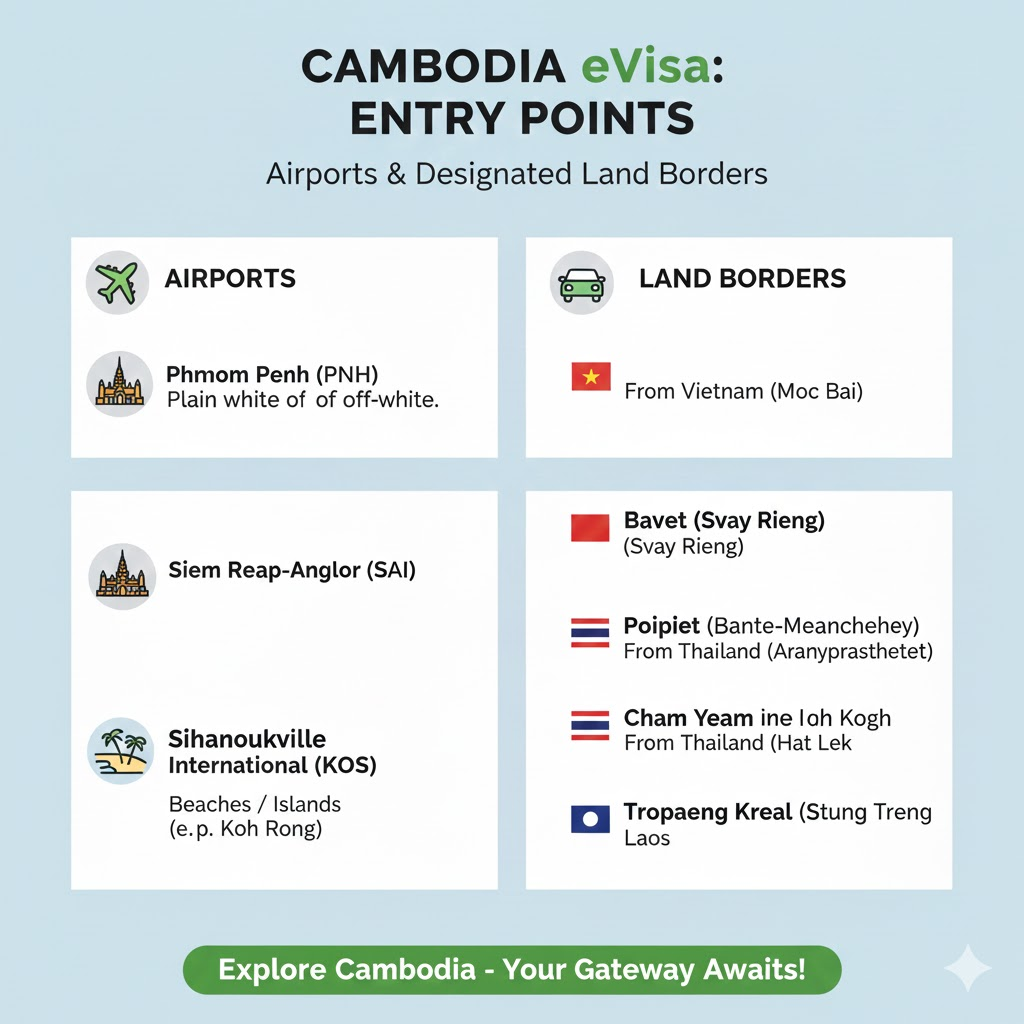
While Phnom Penh (PNH) and the new Siem Reap-Angkor (SAI) airports are the most popular entry points, eVisa holders can also enter via:
- Sihanoukville International Airport (KOS): Ideal for those heading straight to the beaches or islands like Koh Rong.
- Designated Land Borders:
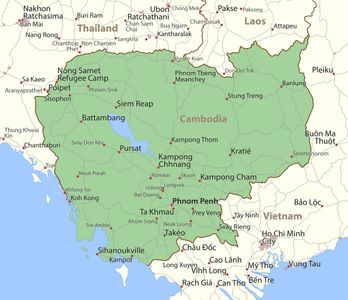
- Bavet (Svay Rieng) – From Vietnam (Moc Bai).
- Poipet (Banteay Meanchey) – From Thailand (Aranyaprathet).
- Cham Yeam (Koh Kong) – From Thailand (Hat Lek).
- Tropaeng Kreal (Stung Treng) – From Laos.
What are the requirements for passport validity and blank pages for Taiwanese citizens applying for a Cambodian eVisa?
Strict international travel rules apply:
- Validity: Your passport must be valid for at least 6 months beyond your intended date of entry into Cambodia.
- Blank Pages: You generally need at least 2 blank pages in your passport—one for the entry stamp and one for the exit stamp, although the eVisa itself is a printed piece of paper (not a sticker).
Where can Taiwanese citizens extend their Cambodian e-Visa?
If you wish to stay longer than the standard 30 days:
- Tourist eVisa (Type T): Can be extended once for an additional 30 days. This must be done at the Department of Immigration in Phnom Penh (located across from the airport).
- Ordinary eVisa (Type E): Can be extended for 1, 3, 6, or 12 months at the same Immigration Department.
- Note: You cannot extend the visa online; you must do it in person or hire a local agency in Phnom Penh to handle the passport runner service.
What are the accepted photo formats and size limits for the Cambodia eVisa application?
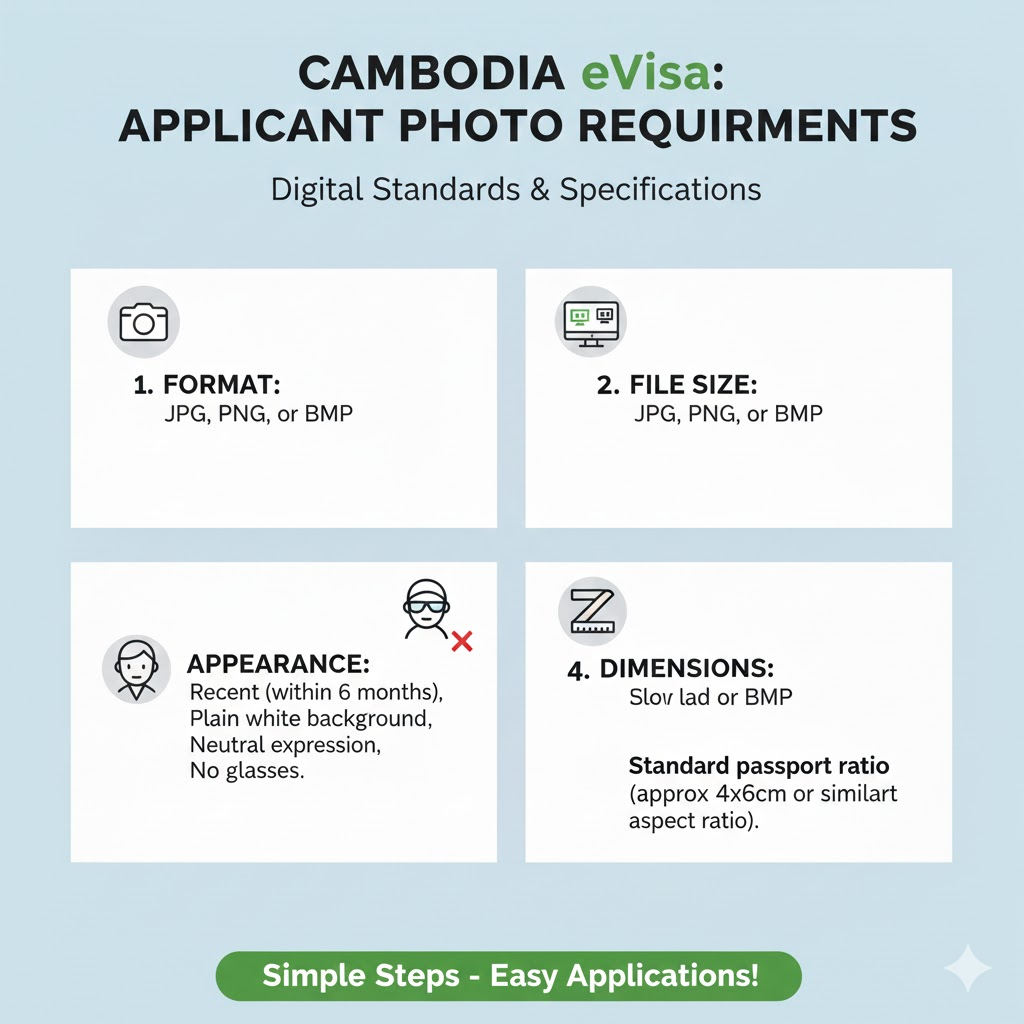
Your "Applicant Photo" must meet these digital Cambodia Visa Photo Requirements:
- Format: JPG, PNG, or BMP.
- Size: Less than 2 MB.
- Style: Recent (within 6 months), plain white background, neutral expression, no glasses.
- Dimensions: Standard passport ratio (approx 4x6cm or similar portrait aspect ratio).
Does Cambodia require a digital Arrival card?
Yes. As of 2024/2025, Cambodia has introduced the "Cambodia e-Arrival" (CeA).
- Requirement: All travelers (including eVisa holders) must submit the e-Arrival card within 7 days before their arrival.
- Purpose: It replaces the old paper immigration form, customs declaration, and health declaration.
- Cost: It is free to submit on the official government app or website, though some agents may charge a service fee to do it for you.
Is it better to get a visa on arrival or online for Cambodia?
For Taiwanese citizens, Online (eVisa) is generally better.
- eVisa Pros: You skip the "Visa on Arrival" queue (which can be long), you don't need to carry USD cash for fees, and you avoid potential scams at land borders.
- Visa on Arrival Cons: Requires filling out paper forms on the spot, waiting in line, and having exact cash ($30-$35 USD).
What are other ways for Taiwanese citizens to get a Cambodian visa besides eVisas?
- Visa on Arrival (VOA): Available at all major international airports and land borders. You simply fly in, go to the VOA counter, submit a form + photo + cash, and get a sticker in your passport.
- Embassy Visa: Since Taiwan and Cambodia do not have formal diplomatic relations, there is no Cambodian Embassy in Taiwan. This makes obtaining a physical sticker visa in advance very difficult for Taiwanese citizens while at home. You would likely have to apply in a third country (like Thailand or Vietnam), making the eVisa the superior choice.
Can you get a Cambodia visa at the land border?
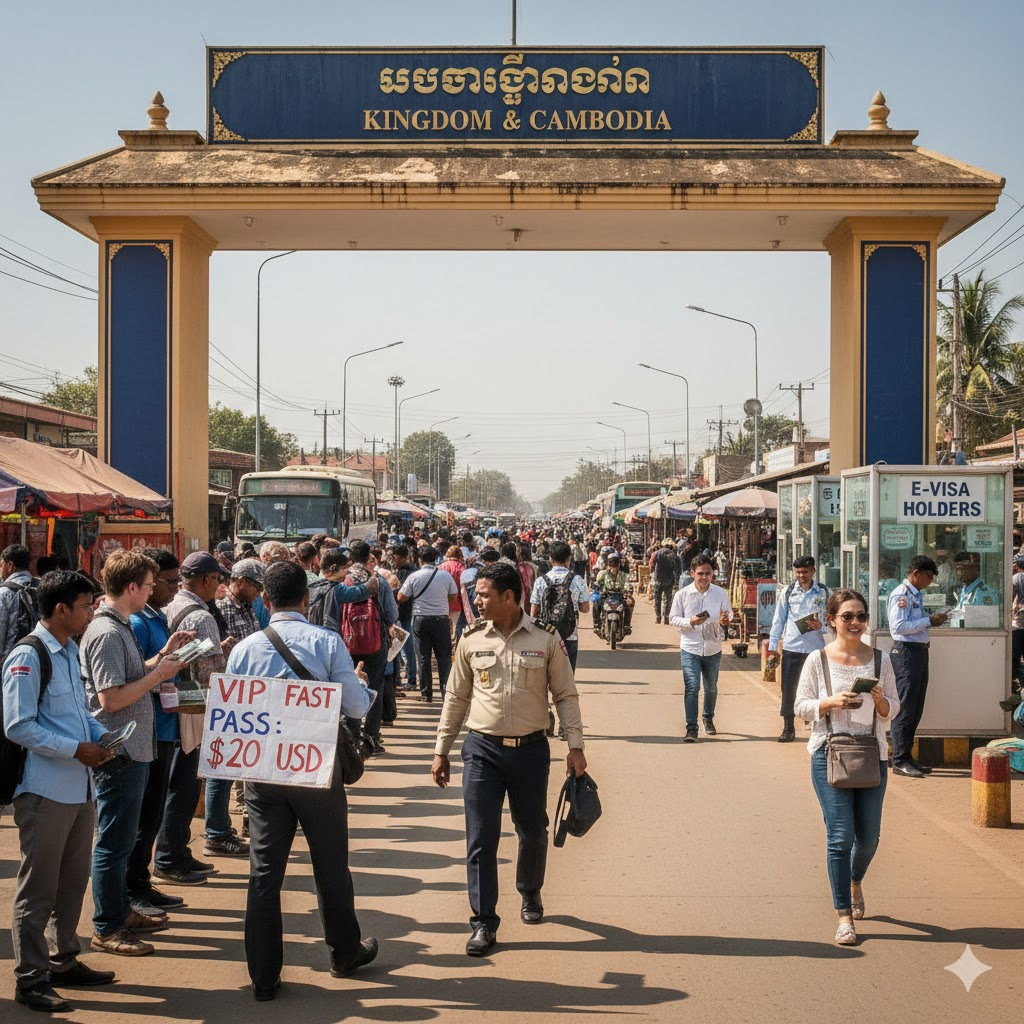
Yes, Visa on Arrival is available at major land borders (Poipet, Bavet, etc.).
- Warning: Land borders are notorious for "scams" where bus operators or touts demand extra fees for "VIP processing" or "health checks."
- Recommendation: Arriving with an approved eVisa allows you to bypass these touts and proceed directly to the immigration officer.
Which is better, apply directly for a visa or apply via a travel agency?
- Apply Directly: Cheaper (only the government fee), but offers zero support. If you make a mistake (e.g., upload a blurry photo or select the wrong port), your application may be rejected with no refund.
- Apply via Travel Agency (e.g., e-visa-cambodia.com):
- Pros: They review your documents to prevent rejection, resize your photos, offer 24/7 support (helpful if you are confused by the forms), and guide you through the "e-Arrival" process.
- Cons: Higher fee due to the service charge.
- Verdict: If you are comfortable with English forms and digital uploads, direct is fine. If you want peace of mind and support, an agency is worth the extra cost.
Written By:
Laura Vogel

Hotels at your convenience
Now choose your stay according to your preference. From finding a place for your dream destination or a mere weekend getaway to business accommodations or brief stay, we have got you covered. Explore hotels as per your mood.