Chile Visa Photo Requirements and Size: Your Complete Guide
 Damian York
28 Oct, 2025
30 mins read
479
Damian York
28 Oct, 2025
30 mins read
479
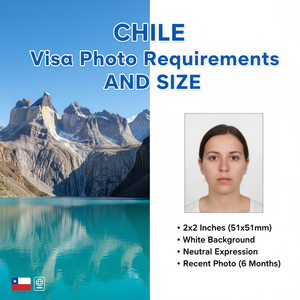
Before applying for your travel documents, make sure your photo meets all rules. The Chile Visa Photo Requirements specify a 4x4 cm size, plain white background, and neutral expression. Clear lighting and recent photos ensure your application is smooth and accepted without delay.
Who needs a Chile eVisa?
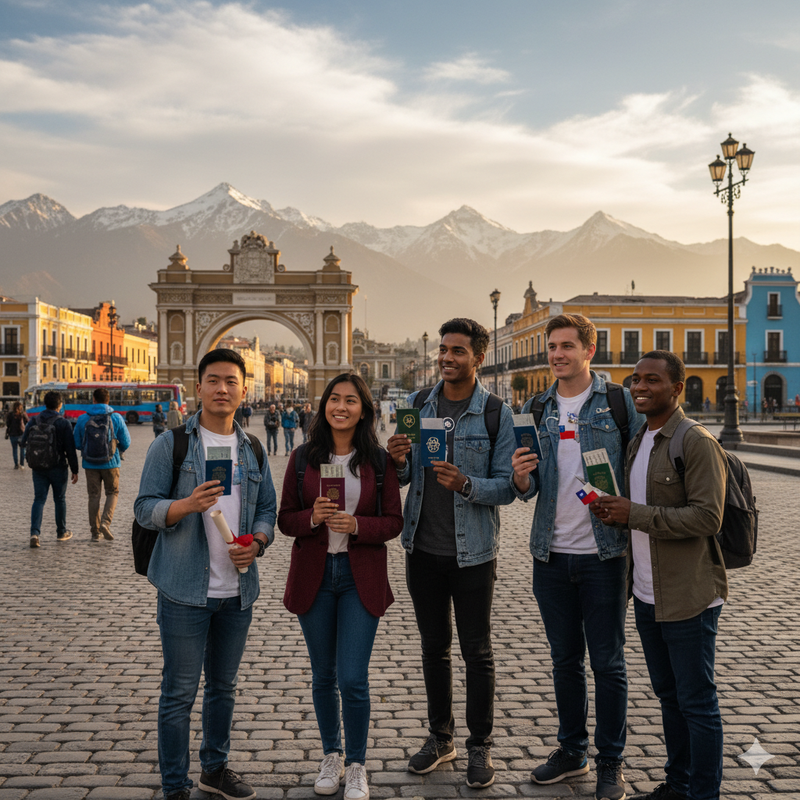
So, which travellers to Chile will need to apply for a Chile eVisa (electronic visa) or a visa at all? The answer depends on your nationality, length of stay, purpose of trip and whether you’re exempt under certain rules.
- For many nationalities, Chile offers visa-free entry for tourism stays up to 90 days. For example, as per the official site of the Chilean foreign affairs ministry, Indian nationals with a valid US visa of any kind (excluding type C transit) and at least 6 months validity may be exempt from a tourist visa.
- If you are not covered under a visa-free category, you’ll need to apply for a tourist visa, or if available for your country, a Chile eVisa. The term eVisa here may be used loosely in travel-guides; what’s important is you submit your application to the correct Chilean consulate, embassy or online platform.
- You’ll need the visa (or eVisa) if you plan to stay beyond permitted visa-free time, or you plan to work/study, or your nationality doesn’t have the visa-free benefit.
- Always check with the Chilean consulate in your country (or their official website) for your exact status, since rules change.
In short: if you’re visiting Chile for tourism, check whether you already enjoy visa-free access. If not, apply for a visa/eVisa accordingly.
How do I apply for a Chile eVisa?
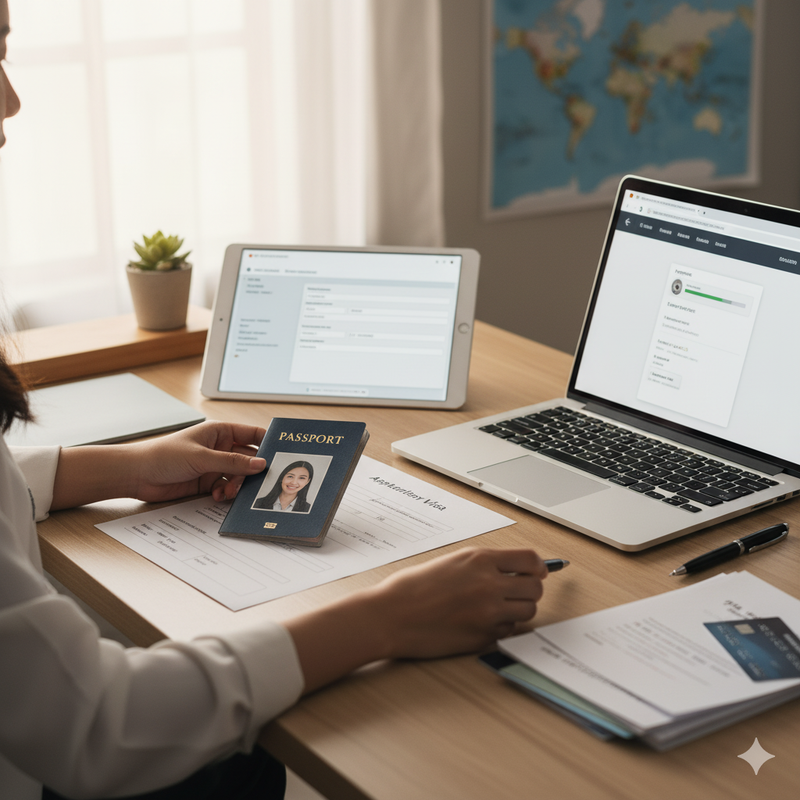
Here’s a simple step-by-step breakdown of how to apply for Chile Visa (or visa) so you don’t feel lost.
- Check eligibility: Determine if your nationality needs a visa. Confirm whether the “eVisa†option is available for you (and whether your country participates).
- Gather documents: Typical supporting materials include: a valid passport (with adequate validity), a digital photograph (meeting size & background requirements), travel itinerary/return ticket, proof of accommodation, proof of funds, and any other documents required by the consulate. For example, one guide lists for a visit visa: a completed form, valid passport, colour photo (5 × 5 cm) with a white background.
- Complete the application: Depending on the consulate or online system, you’ll fill out an application form (online or offline). If it’s an eVisa, you’ll upload documents and pay any fees electronically.
- Photo upload or submission: Here’s where the photo requirements become important (we’ll cover this in detail below).
- Pay the fee: Most applications will require you to pay a visa fee.
- Submit and await decision: After submission, wait for the decision. If approved, you’ll receive the eVisa by email (or the visa will be affixed to your passport).
- Travel with correct documents: For eVisa holders, you may need to bring a printed copy of your approval along with your passport when entering Chile. For example, one site states: “Yes, all international travellers travelling to Chile on an eVisa must carry a copy of the approved eVisa to be presented to board their flight and at Chilean border immigration.â€
- Enter Chile: Upon arrival you’ll present your passport, the visa/eVisa approval and any other documents required by border control (like proof of onward travel, accommodations etc).
Tip: It’s best to apply well in advance (for example 30-60 days before travel) so you have time to deal with any hiccups. One FAQ mentions applying no more than 90 days before your intended travel date.
How long does the Chile eVisa application take?
Great question — time is often of the essence when booking flights and accommodation.
- Chile eVisa states: “Standard processing time for Chile Visa applications is 3-5 business days from the date of submission.â€
- However, the same FAQ notes that processing times can vary based on volume, seasonal travel peaks, completeness of your application and whether extra checks are needed. During busy periods it may stretch to “7-10 business daysâ€.
- For traditional visa applications (paper/consulate based) the processing time is often longer. One source says 15-20 working days (plus time to schedule appointment) for Chile visa via consulate.
- Another site mentions “the Chilean visa process takes several weeks and can even be up to 6 months†in some cases for residence visas.
So what do you do?
Plan for at least one to two weeks, ideally apply a month or more before your travel date. If you’re travelling in peak season, give yourself even more buffer.

What size should the photo be for a Chile visa be?
Now we’re getting into the photo specifics — which is the heart of your original question. Knowing the right size and specifications will help avoid one of the common reasons for rejection.
Here are the various photo requirements from different sources for Chile:
- One source (ivisa.com) says: Required photo size: 4.5 cm in height and 3.5 cm in width.
- Another (akbartravels.com) lists: Size: 35 mm x 45 mm (with plain white background).
- Yet another (visa-to-travel.com) states: Photo size should be 3.5 cm x 4.5 cm (1.38 in x 1.77 in).
- If you look at the “5×5 cm†mention: some sources list a size of 5 × 5 cm (50 mm x 50 mm) for Chile visa. For example visafoto.com offers 5 × 5 cm size for Chile visa photo requirement.
- Another notes “20 × 30 mm (2×3 cm)†as a size for Chile visa photo.
What do you do with the conflicting sizes?
Because there are variations, here’s my recommendation for you (coming from a travel-friendly angle):
- Check the website of the Chilean consulate or embassy in your country, because sometimes they specify a particular size.
- If online for eVisa upload, check whether the upload portal mentions specific dimensions (pixel size, mm, or cm).
- To be safe: take a photo that meets at least one of the commonly cited sizes — 4.5 cm (h) × 3.5 cm (w) (or the 35 × 45 mm) with white background, neutral expression, no shadows, etc.
- If the consulate site mentions 5×5 cm (50×50 mm), you may submit that size too.
- When in doubt, go for the slightly larger dimension (e.g., 50×50 mm) as long as proportions are correct and background is plain white.
Photo Format & Additional Criteria
Beyond size:
- The photo must be in colour, show full face, front view, neutral expression, both eyes open.
- Background: plain white or off-white, no patterns, no shadows.
- Head position: centred, shoulders visible, no tilt.
- Head size: often a guideline is that the face occupies ~70–80% of photo height.
- Recent photo: taken within the last 6 months.
In plain language: imagine a passport-style photo of you facing the camera, head straight, no big smile, plain white background, good lighting, both eyes visible. Then ensure it meets one of the size standards and you should be fine.

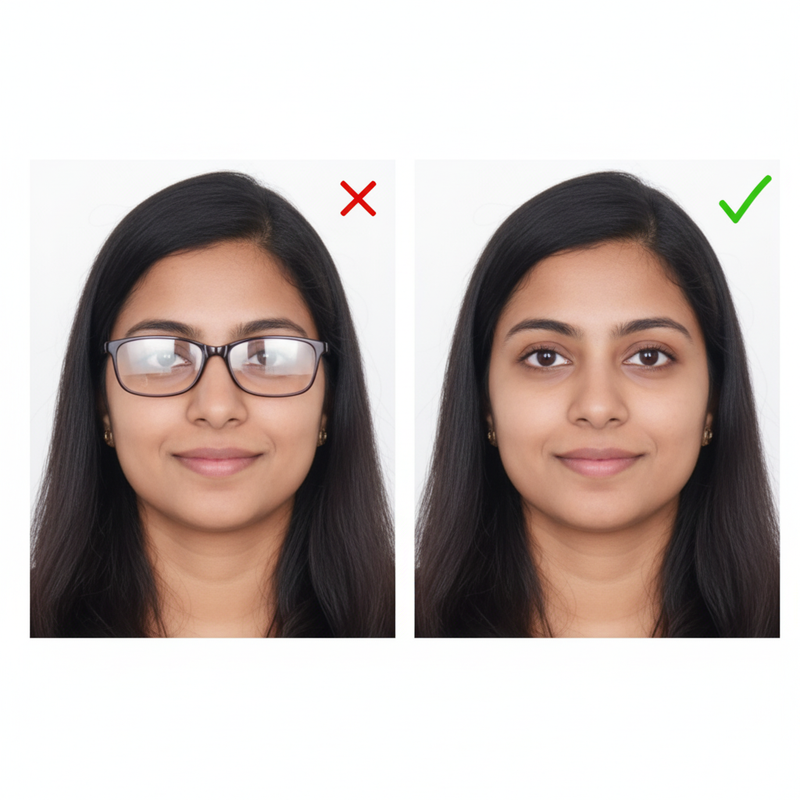
Can I wear glasses in the Chile visa photo?
Yes — but with conditions. The photo rules for Chile (and many other countries) allow glasses only if they don’t interfere with visibility of your eyes, don’t cause glare, shadows or reflections.
Here are details:
- One source (ivisa.com) says: “Glasses: only acceptable if they do not obstruct your eyes.â€
- Another (rostrio.com) states under “Glasses and Accessoriesâ€: No glare or reflections on lenses; frames must not cover eyes or eyebrows.
- It’s often recommended to remove glasses if possible (especially large frames, tinted lenses, heavy reflections) just to avoid any risk of rejection.
My traveller tip: If you wear glasses full time, wear them for a practice photo and check if there is any glare. If yes, take them off for the photo. Better safe than needing a re-submission.
What is the cost/fee for the Chile eVisa?
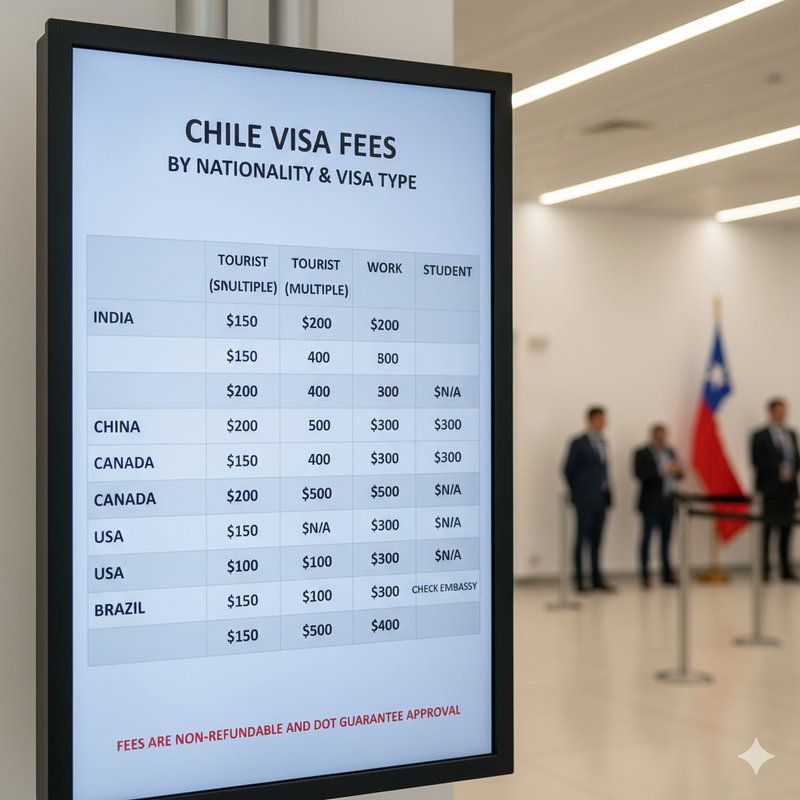
Fees vary depending on the type of visa, your nationality and the consulate handling your case.
Here’s what I found:
- One guide (Chile eVisa site) states: “Fee prices can range depending on your nationality and the type of visa you are applying for.â€
- For Indian nationals applying for a Chile tourist visa via some agencies, a sample fee is shown for a single-entry tourism visa.
- For a tourist permit extension in Chile (once you are already inside the country) the cost is (regardless of nationality) for +90 days.
Because eVisa is somewhat newer and implementation varies, you should check the fee table for your specific country on your Chilean consulate or embassy’s website.
Important: The fee is generally non-refundable, even if your application is rejected. As one FAQ warns: “The visa fee is not a guarantee of visa approval.â€
How long can I stay in Chile on a Chile eVisa?
Once your visa or permit is approved, how many days can you stay? Here’s what I found:
- For standard tourist/temporary stay visas: The temporary stay permit (former tourism visa) is valid for up to 90 days.
- For eVisa type (as per one site), approved online travel visa is valid for a stay of up to 90 days in the country.
- What you’ll often get is: you must enter within a certain time (for example 90 days from issue) and then you are allowed to stay up to 90 days from entry (or lesser if the border official gives you fewer days).
My practical advice: When you land in Chile, check at the immigration counter how many days you have been admitted for (often stamped or noted). Don’t assume you always have 90 days unless explicitly told.
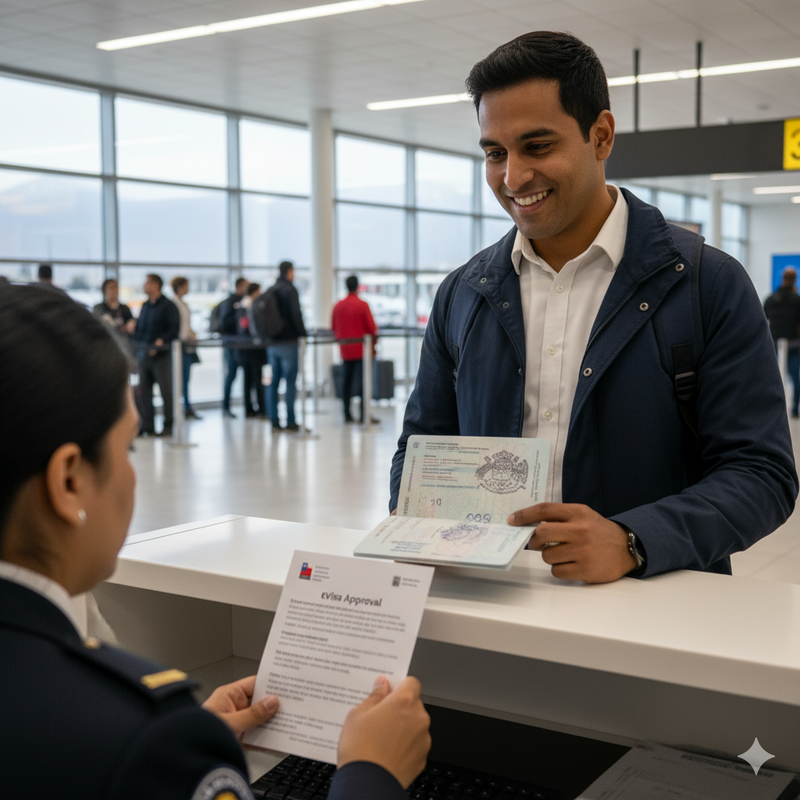
Can I extend my stay in Chile if I have an eVisa?
Yes — but extensions are limited and subject to requirements. Here’s the breakdown:
- According to a guide, you can request an extension of your tourist permit for another 90 days. The example mentions “stay in Chile for another 90 days from the expiration date of your first tourist permitâ€.
- The extension process: you must apply in person (or through designated offices) during the last 30 days of validity of your existing permit. Provide original passport, original tourist card, and other documents (proof of funds, reason for extension).
- “Chile Visa Extension options … but extensions are not automatic and require proper justification and documentation.â€
Important caveats:
- Extension is not guaranteed. Approval depends on your reason, document quality, compliance, etc.
- If you entered with a visa-free regime (instead of a special permit) you might have fewer or no extension options.
- If you overstayed without approval, you risk fines or future travel restrictions.
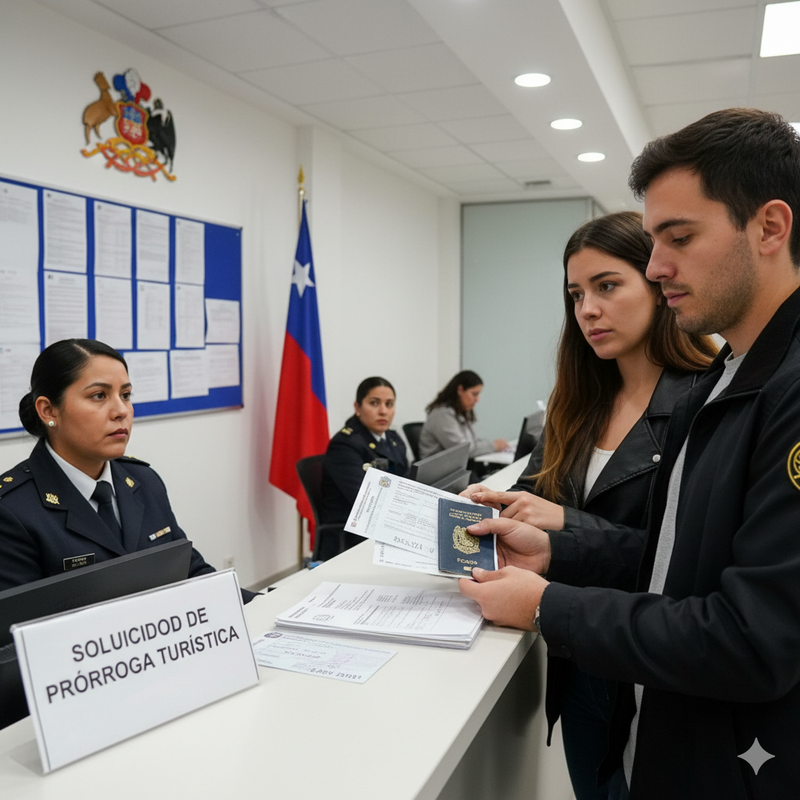
What happens if my passport is renewed/changed after I apply?
This is a scenario many travellers run into — they apply for visa or eVisa with Passport A, then renew their passport (Passport B) before travelling. What then?
From the FAQ:
- It says: “If you renew your passport after receiving your eVisa but before travelling, your eVisa becomes invalid because it’s linked to your old passport number.â€
- Solution: Apply for a new eVisa using the new passport details. Keep both passports (old one with visa, new one with no visa) when travelling if necessary.
Traveler tip: If you know you’ll renew your passport before the trip, wait to apply for the visa until you have the new passport number (or check with the consulate if they allow linking to new passport). Always ensure the passport you travel with matches the visa application.
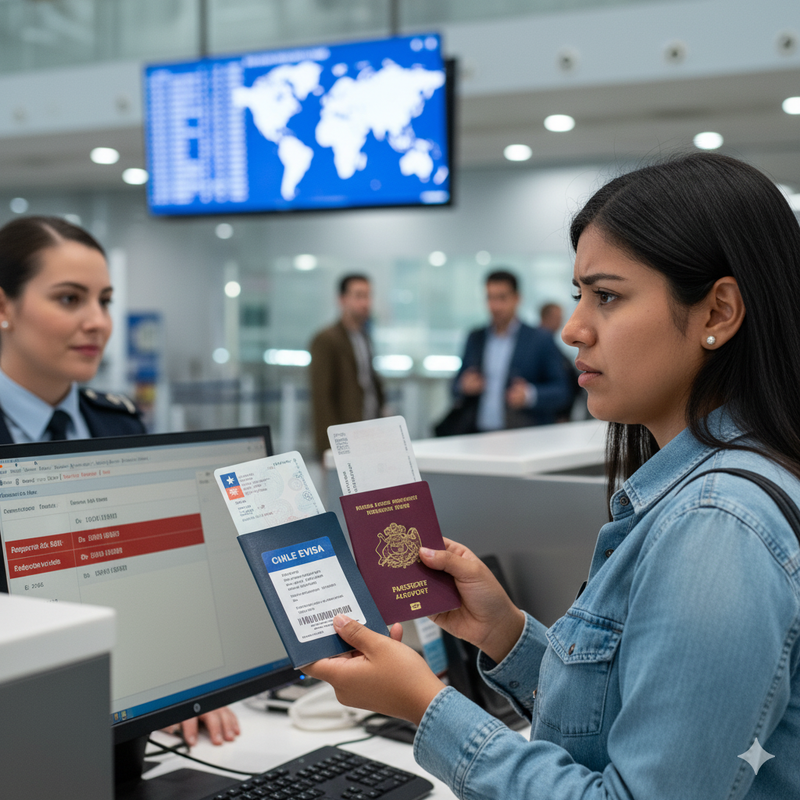
What happens if my Chile Visa application is rejected?
If your visa or eVisa application to Chile is rejected, it can be frustrating — but here’s what typically happens and what you can do:
- Your application will be refused, you’ll often receive a formal notice. You’ll not get your fee back, because the visa fee is non-refundable.
- You may apply again, but you’ll want to fix the issue that caused the rejection (insufficient documentation, photo incorrect, financial proof weak, passport validity short, etc). One Reddit traveller wrote:
- “My Chile business/tourist visa got rejected … I understood the reason … I plan to rectify the problem and reapply.â€
- Be prepared for additional time, and possibly higher scrutiny on your second application.
- Make sure you check why it was rejected (if stated), gather missing documents, and correct any mistakes (photo size/quality is a common cause).
Pro tip: Before you reapply, review the application carefully, double-check photo specs, passport validity, financial proof, etc. That way you reduce the chance of a second rejection.

Is travel insurance required to get the Chile eVisa?
Travel insurance is an often-asked question. The short answer: It depends.
- I did not find a universal requirement for travel insurance stated in the main Chile eVisa guides I looked at. I checked for “Chile eVisa validity†mentions financial resources, but doesn’t explicitly mandate travel insurance.
- Some visa/immigration offices do strongly recommend carrying travel insurance for your entry, stay and return journey (especially for health/emergency coverage).
- As a smart traveller you should always purchase travel insurance when travelling abroad (for your own peace of mind) even if not strictly required by visa rules.
My recommendation: Buy travel insurance that covers your entire trip (medical emergencies, evacuation, trip cancellation) — whether it’s required for the visa or not, you’ll be glad you did.
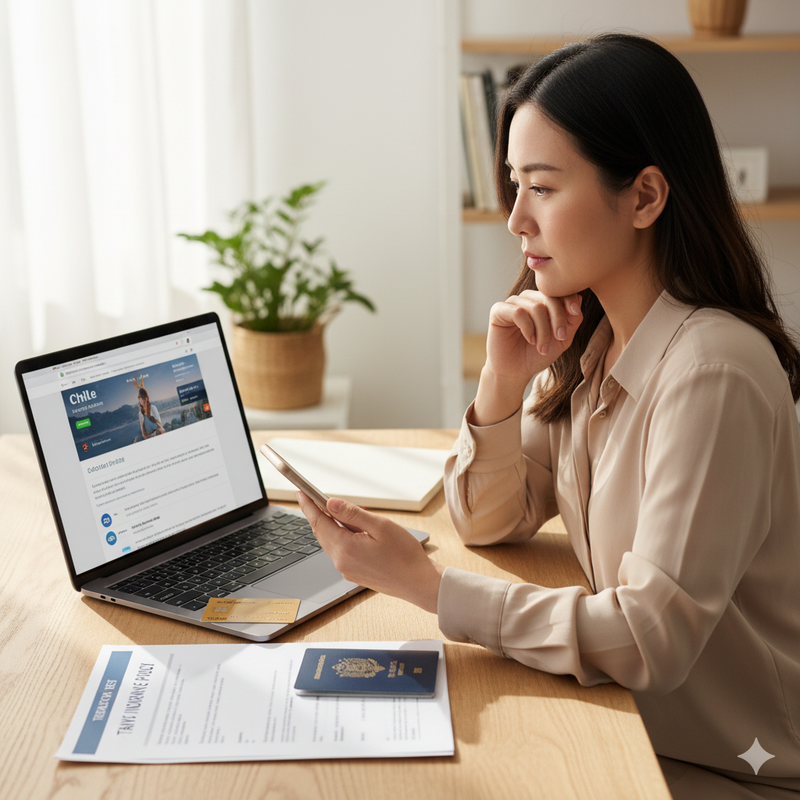
Where can I look up the status of my Chile eVisa application?
Tracking your application status is important because it helps you plan flights and accommodation with confidence.
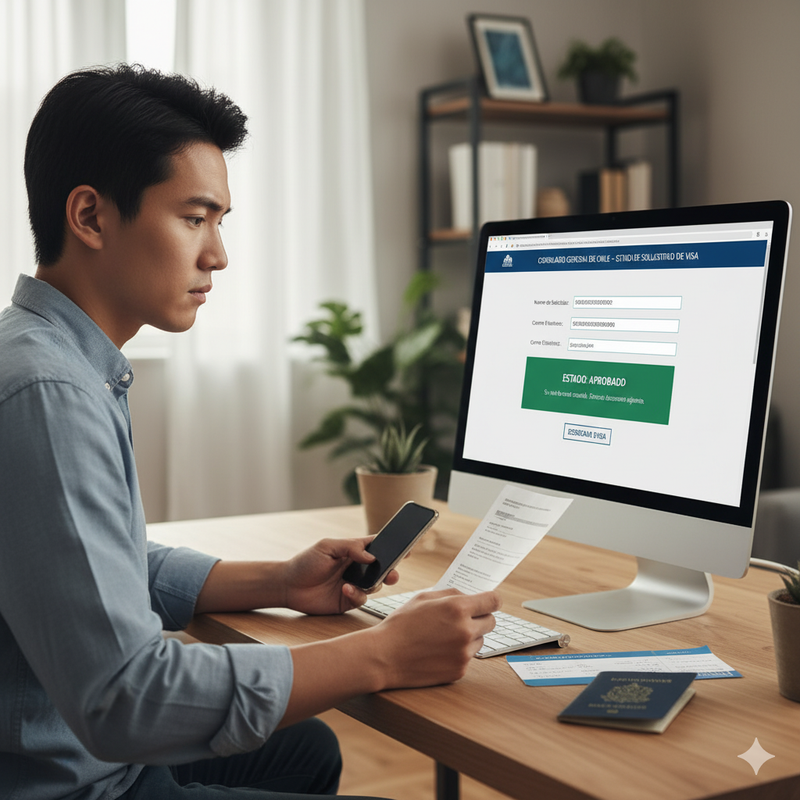
- Also, for eVisa or online submissions many consulates will provide you with an application number or token at the time of submission. Use that on the portal to check whether your visa is under review, approved, or requires additional documents.
Tip: Keep a record of your application number, token, and the email you submitted. Check the portal at least once a week. If it’s hanging longer than expected, contact the consulate or the eVisa support email for your region.
How does the eVisa differ from a traditional visa for Chile?
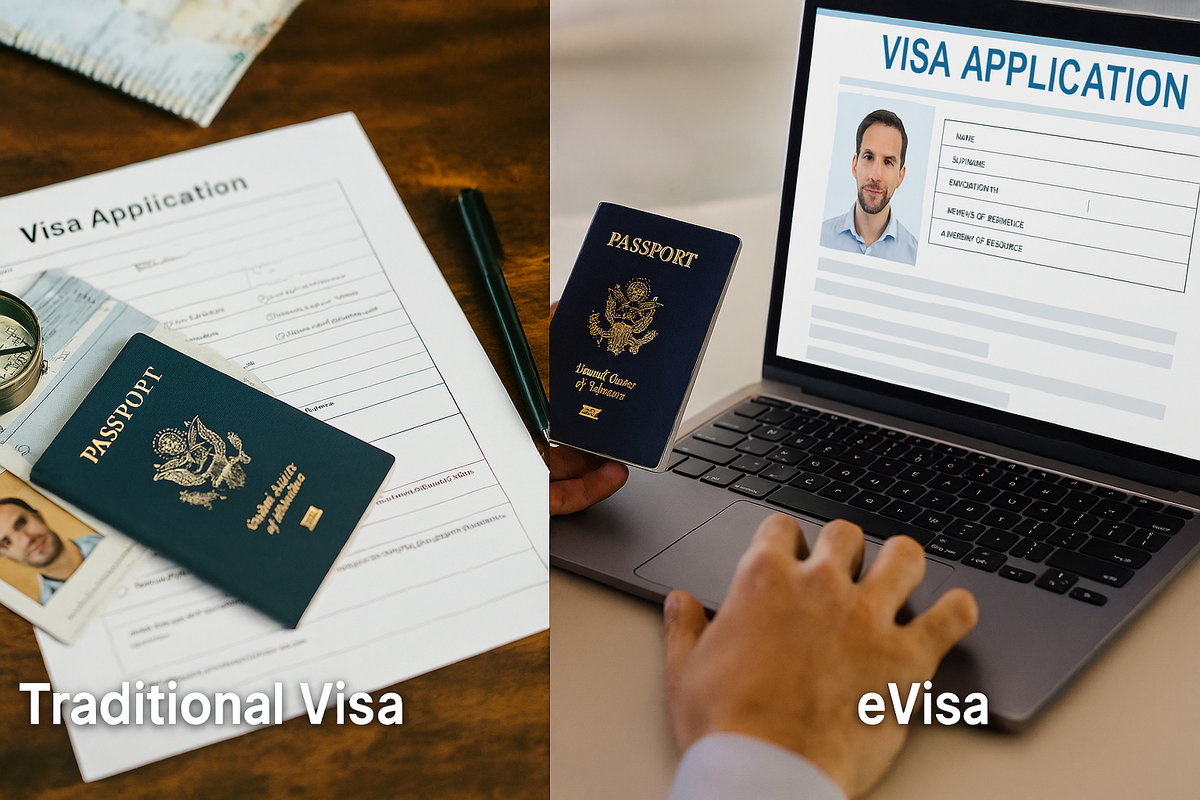
Here’s how the newer “eVisa†(electronic visa) concept differs from the traditional paper visa process for Chile:
Traditional visa
- Usually applied through a Chilean consulate or embassy in person (or via courier).
- You submit a physical passport, biometrics (maybe), paper forms, printed photo, supporting documents.
- The visa is either affixed to the passport (a sticker) or issued as a separate permit you attach.
- Processing time is longer (often several weeks). For example one source says 15-20 working days.
- You may need to appear in person for interviews or biometrics.
- The check-in and border process may require submitting paper forms and physical documents.
eVisa
- Mostly online submission: you fill the form, upload digital photo/document, pay fee electronically.
- The permit is sent by email or electronically approved; you bring a printed copy or just your passport + email approval.
- Faster processing (e.g., 3-5 business days as one source notes) for eligible nationalities.
- More convenient for travellers who don’t live near the consulate or cannot appear in person.
- Still requires meeting all the same criteria (passport validity, photo requirements, proof of funds, etc).
In essence: The eVisa is like the digital upgrade of the visa process, making it more seamless for travel-friendly nationalities. But the core immigration rules (stay duration, permitted activity, etc) remain similar.
Travel Tips
Since you’ll be travelling to Chile, here are some friendly travel-tips to make your journey smoother:
- Photo first, booking later: Because photo rules are specific, get your photograph taken or edited early, check the specs and upload with your application so you’re not held up.
- Passport validity: Ensure your passport has at least 6 months validity (common rule) and blank pages. Some consulates mention this as a requirement.
- Proof of funds and onward travel: At immigration in Chile, you may be asked to show bank statements, accommodation bookings and return tickets. Be ready.
- Entry stamp check: Upon arrival, check how many days you are allowed to stay — the immigration officer might stamp you for fewer than 90 days.
- Keep copies of everything: Visa approval, passport ID page, boarding pass, hotel bookings — keep digital and printed copies.
- Health & travel insurance: Even if not mandatory for visa, get travel insurance. Also check health requirements (vaccinations if needed).
- Time zone & airports: Chile covers a vast geographic span (mainland plus Easter Island), so plan accordingly.
- Local laws & culture: Chile is friendly but has its own rules. For example, respect environmental rules in Patagonia, check local weather (that wind!), and always check correct currency/use of cards.
- Leave buffer time before you fly: Visa processing can be quick but delays do happen — especially if your nationality has additional checks.
- Extension caution: If you plan to stay longer than 90 days, or maybe work/study, apply for the correct visa from the start (instead of relying on extension).
Chile eVisa FAQs
Here’s a list of frequently asked questions about the Chile eVisa/visa process, with short answers:
Q: Can I apply for the Chile eVisa when I’m already in Chile?
A: No — according to the FAQ, eVisas must be obtained before travelling to Chile.
Q: If I apply for an eVisa and it’s valid for entry within 90 days, but I enter after 100 days, is it invalid?
A: Yes — many eVisa/permit approvals set a validity window (for example “must enter Chile within 90 days of issueâ€). If you miss that window, you may need to apply again.
Q: My photo was uploaded but later I changed appearance (e.g., shaved beard). Will it cause issues?
A: Minor changes (like a trimmed beard) usually are fine provided your face is still clearly visible and matches the passport. Big changes (e.g., heavy facial surgery, entirely new face) may raise questions at immigration. Best to use a recent photo (within 6 months) that closely matches your look at travel time.
Q: The visa application says photo must be 20 × 30 mm, but my printed photo is 35 × 45 mm — is it okay?
A: Because of varying specifications, yours may still be accepted if it meets the overall criteria (face size, background, clarity). But to be safe, go with consulate’s specified size or one of the commonly accepted sizes (35×45 mm) and check with the consulate.
Q: If my visa allows 90 days stay, can I leave Chile for a day and then re-enter to reset the 90 days?
A: No — that’s generally not allowed under the tourist/temporary stay permit. Re-entry does not reset the stay allowance unless you exit and re-enter under a different visa regime. Always check with Chile’s immigration authorities.
Q: Will the immigration officer in Chile ask to see my visa even if I had visa-free entry?
A: Yes — always carry proof of your passport, onward ticket, accommodation, and funds. If you entered under a visa-free regime, you’ll still need to satisfy immigration.
Q: Do I need to take both a printed and digital copy of my approved eVisa?
A: Yes — it’s safest to print a copy of the approval email/document and keep a digital copy on your phone or email. Some airlines may ask before boarding, and border control will want to see it.
Written By:
Damian York

Hotels at your convenience
Now choose your stay according to your preference. From finding a place for your dream destination or a mere weekend getaway to business accommodations or brief stay, we have got you covered. Explore hotels as per your mood.