Desert Recovery Abu Dhabi: What to Do When Your Car Gets Stuck in the Sand
 Zain Hamdani
29 Dec, 2025
13 mins read
140
Zain Hamdani
29 Dec, 2025
13 mins read
140
Introduction to Desert Driving in Abu Dhabi
Driving through the vast deserts of Abu Dhabi is an experience like no other. Endless golden dunes, open skies, and that sense of freedom attract adventure lovers, tourists, and even locals who enjoy weekend desert drives. But as exciting as it sounds, desert driving comes with its own set of challenges. One small mistake, and suddenly your vehicle isn’t moving anymore.
In such situations, desert recovery abu dhabi services become essential for handling emergencies safely and efficiently. Getting cars stuck in desert areas is more common than most people think. Soft sand, sudden slopes, and lack of traction can turn a fun trip into a stressful situation. Knowing what to do in such moments can save time, money, and most importantly, keep you safe.
Why Cars Get Stuck in the Desert
The desert may look smooth from afar, but underneath those dunes lies loose, shifting sand that behaves very differently from regular roads. Vehicles lose grip easily because sand doesn’t provide the resistance needed for tires to roll properly.
Another major reason cars get stuck is incorrect tire pressure. On highways, high tire pressure is fine, but in sand, it works against you. The tire sinks instead of floating, making movement almost impossible. Add sharp turns, sudden acceleration, or braking, and the vehicle digs itself deeper into the sand.
Understanding Desert Terrain and Sand Behavior
Desert sand is unpredictable. One patch might feel firm, while the next could swallow your tires in seconds. Wind constantly reshapes dunes, creating hidden soft spots. This is why even experienced drivers can get trapped if they underestimate the terrain.
Common Mistakes Drivers Make in the Desert
Many drivers enter the desert without proper preparation. Overconfidence is a big factor. Some assume that a powerful SUV can handle anything, but even the strongest vehicles need the right technique. Speeding, sharp steering, and stopping on slopes are common mistakes that lead to trouble.
How Tire Pressure Affects Sand Driving
Lowering tire pressure increases the surface area of the tire, helping it float over sand instead of digging in. Drivers who forget this step often struggle within minutes of entering the desert.
Weather Conditions and Their Role
Hot weather makes sand even softer, while strong winds reshape dunes quickly. Driving during extreme heat also increases the risk of overheating your vehicle, especially if it’s already struggling.
Immediate Steps to Take When Your Car Gets Stuck
The moment you realize your car isn’t moving, stop accelerating. Spinning the wheels only pushes sand deeper around the tires. Take a deep breath and stay calm. Panic leads to poor decisions, and in the desert, that can make things worse.
Why Panicking Makes Things Worse
When panic kicks in, drivers tend to over-accelerate or make sudden movements. This not only damages the tires but can also cause the vehicle to sink further. Staying calm helps you think clearly and act wisely.
Assessing the Situation Safely
Before doing anything, step out carefully and inspect the area around your vehicle. Look at how deep the tires are buried and whether the car is stuck from the front, back, or all sides.
When to Exit the Vehicle
If it’s safe and not too hot, stepping out allows you to assess the situation better. Always be aware of your surroundings, especially if visibility is low.
When to Stay Inside the Car
If you’re stuck in extreme heat or far from help, staying inside the vehicle with limited movement may be safer until assistance arrives.
Do-It-Yourself Techniques to Free a Stuck Car
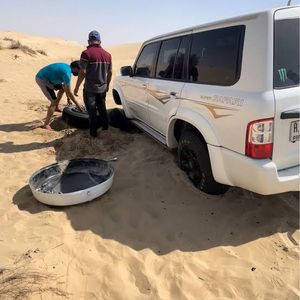
Sometimes, you can get out without external help. Start by gently clearing sand from around the tires using your hands or any available tool. Create a small path in front of the tires to help them move forward.
Reducing Tire Pressure the Right Way
Lower tire pressure gradually. Don’t deflate too much, as it can damage the tire. Once pressure is reduced, try moving slowly and steadily without sudden acceleration.
Using Mats, Wood, or Sand Ladders
Placing mats, wooden planks, or even car floor mats under the tires can provide extra grip. Think of it like giving your tires a firm stepping stone to push off from.
Rocking the Vehicle Gently
Shift between drive and reverse slowly to rock the car out. This technique works best when the car isn’t deeply buried.
Why Professional Desert Recovery Matters
If DIY methods don’t work, it’s time to call professionals. Desert recovery services are designed specifically for these situations. They have the right tools, vehicles, and experience to handle soft sand safely.
Risks of Improper Recovery Attempts
Using the wrong towing points or pulling at incorrect angles can cause serious damage to your car. Recovery straps snapping under pressure can also be dangerous for people nearby.
Vehicle Damage Risks
From broken suspension parts to damaged axles, improper recovery can turn a small problem into a costly repair.
Personal Safety Concerns
Extreme heat, dehydration, and exhaustion are real risks when stuck in the desert. Professional teams are trained to handle these conditions safely.
Choosing the Right Desert Recovery Service
Not all recovery services are equal. Look for teams experienced in car recovery in Abu Dhabi desert conditions. They understand local terrain and know how to reach remote locations quickly.
What Makes a Reliable Recovery Team
A good team responds quickly, communicates clearly, and arrives with proper equipment. They assess the situation before acting, ensuring both your safety and your vehicle’s protection.
Equipment Used in Desert Recovery
Specialized recovery vehicles, winches, sand ladders, and traction boards are commonly used. These tools make recovery faster and safer.
Experienced Drivers vs Regular Tow Trucks
Regular tow trucks are designed for roads, not sand. Desert recovery experts use 4x4 vehicles that can navigate dunes without getting stuck themselves.
Preventive Tips for Desert Driving
Prevention is always better than recovery. Before heading into the desert, make sure your vehicle is in good condition and suitable for off-road driving.
Preparing Your Vehicle Before Desert Trips
Check tires, engine fluids, and cooling systems. Always lower tire pressure before entering sandy areas and reinflate once you return to the road.
Essential Items to Carry
Carry water, a phone charger, basic tools, a shovel, and recovery straps. These items can make a big difference in emergencies.
Importance of Driving With a Group
Never drive alone in remote desert areas. Having another vehicle nearby means quicker help if something goes wrong.
Conclusion
Getting stuck in the desert can be stressful, but it doesn’t have to be dangerous. Understanding the terrain, staying calm, and knowing the right steps can help you handle the situation wisely. While simple techniques may work in minor cases, professional desert recovery abu dhabi services are the safest option when things get serious, especially when reliable car recovery abu dhabi support is needed in remote areas. With the right preparation and mindset, desert adventures can remain enjoyable instead of turning into nightmares.
FAQs
1. How long does desert recovery usually take?
Response time depends on location, but most professional teams arrive within 30–60 minutes.
2. Can I use a normal tow rope in sand?
No, standard tow ropes are risky. Professional recovery straps are designed for high tension.
3. Is it safe to drive in the desert without experience?
It’s not recommended. Beginners should go with experienced drivers or guided groups.
4. Does lowering tire pressure damage tires?
When done correctly and reinflated later, it does not damage tires.
5. What should I do if my phone has no signal?
Stay with your vehicle, conserve energy, and wait for help if possible.
Written By:
Zain Hamdani

Hotels at your convenience
Now choose your stay according to your preference. From finding a place for your dream destination or a mere weekend getaway to business accommodations or brief stay, we have got you covered. Explore hotels as per your mood.