Discover the highlights of Malawi in a 7 day trip
 James Smith
10 Nov, 2025
31 mins read
74
James Smith
10 Nov, 2025
31 mins read
74
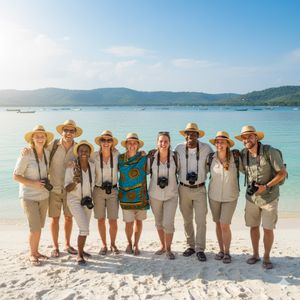
When you hear "African travel," you might picture the vast plains of the Serengeti or the crowded markets of Marrakech. But let me introduce you to a hidden gem, a place that offers world-class wildlife, a freshwater lake that feels like a tropical ocean, and a genuine, soul-stirring culture of kindness. I’m talking about Malawi, the "Warm Heart of Africa."
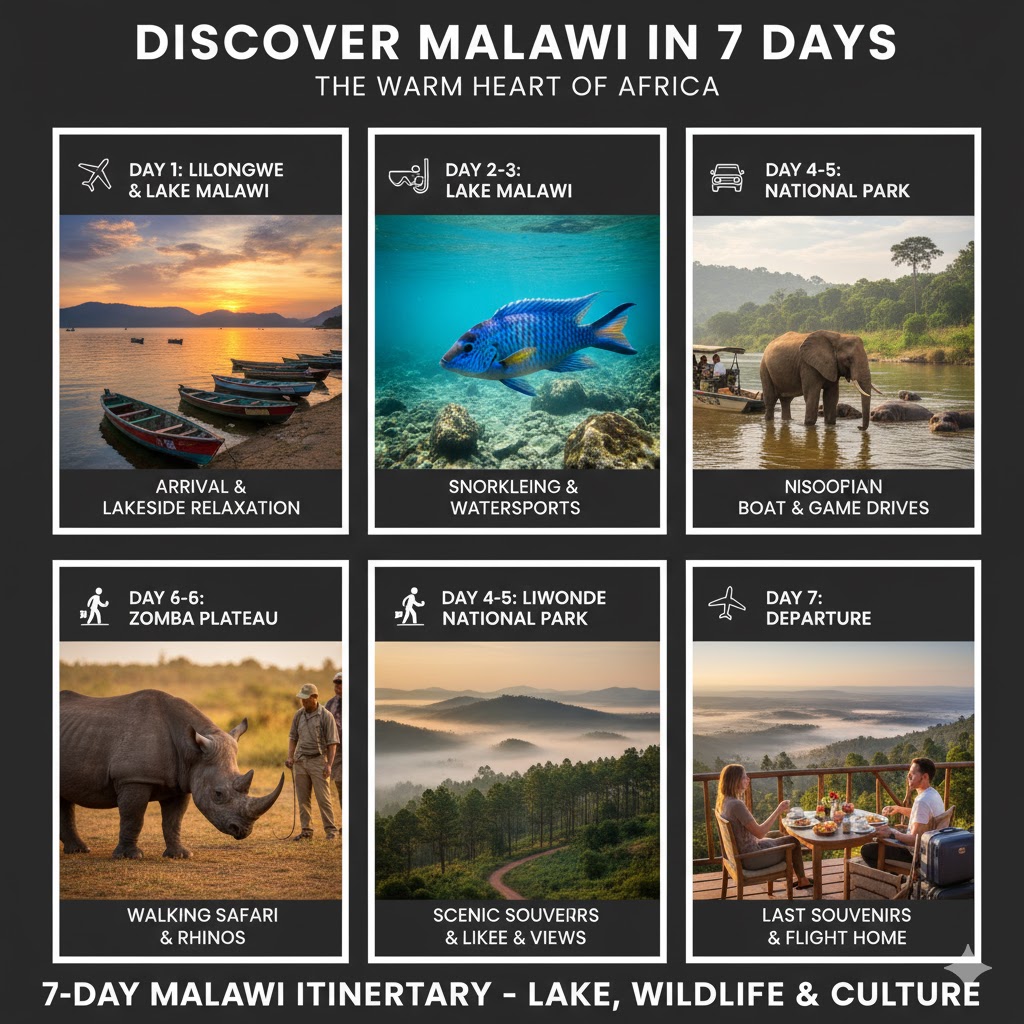
Many travelers skip Malawi, thinking it's too difficult to get to or overshadowed by its larger neighbors. But with a new, streamlined eVisa system and an incredibly diverse landscape, there has never been a better time to go. Seven days is just enough to get a tantalizing taste of this incredible country.
This 7-day Malawi itinerary is designed to maximize your time, focusing on the stunning Southern Circuit. We'll cover safari, beach, and highlands, all while showing you just how easy it is to get your visa and start your adventure.
Why is Malawi Called the "Warm Heart of Africa"?
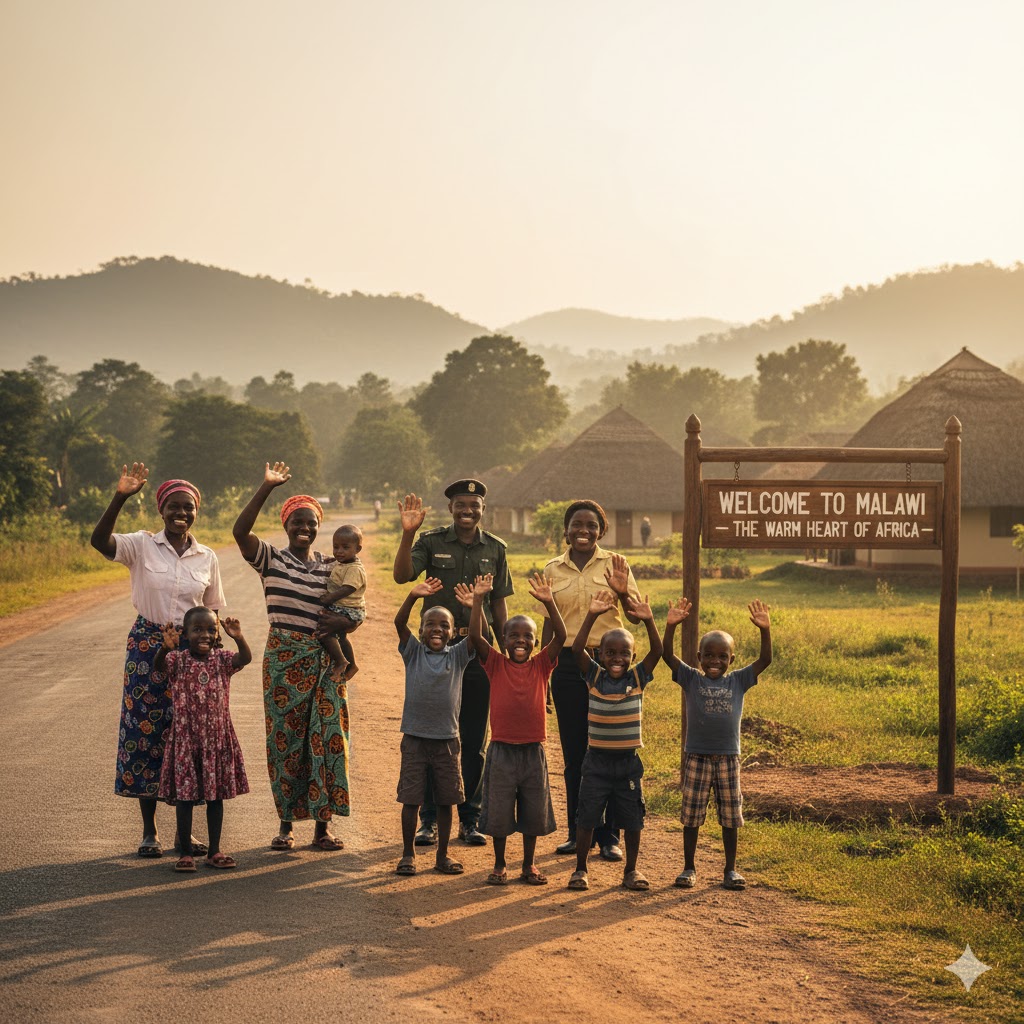
You'll hear this phrase before you even land, but it’s not just a clever marketing slogan. It is the single most accurate description of the country. The Malawian people are, without exaggeration, some of the most friendly, welcoming, and genuinely kind people you will ever meet. From the immigration officer to the lodge staff and the children waving from the roadside, you are treated with a warmth that is becoming rare in the world. This welcoming spirit is the highlight of any trip.
Do I Need a Visa for Malawi?
Yes, most foreign nationals, including citizens from the USA, UK, Canada, Australia, and most of the EU, need a visa to enter Malawi. Citizens of some SADC countries are exempt, but it's crucial to check the latest Malawi eVisa Requirements for your nationality.
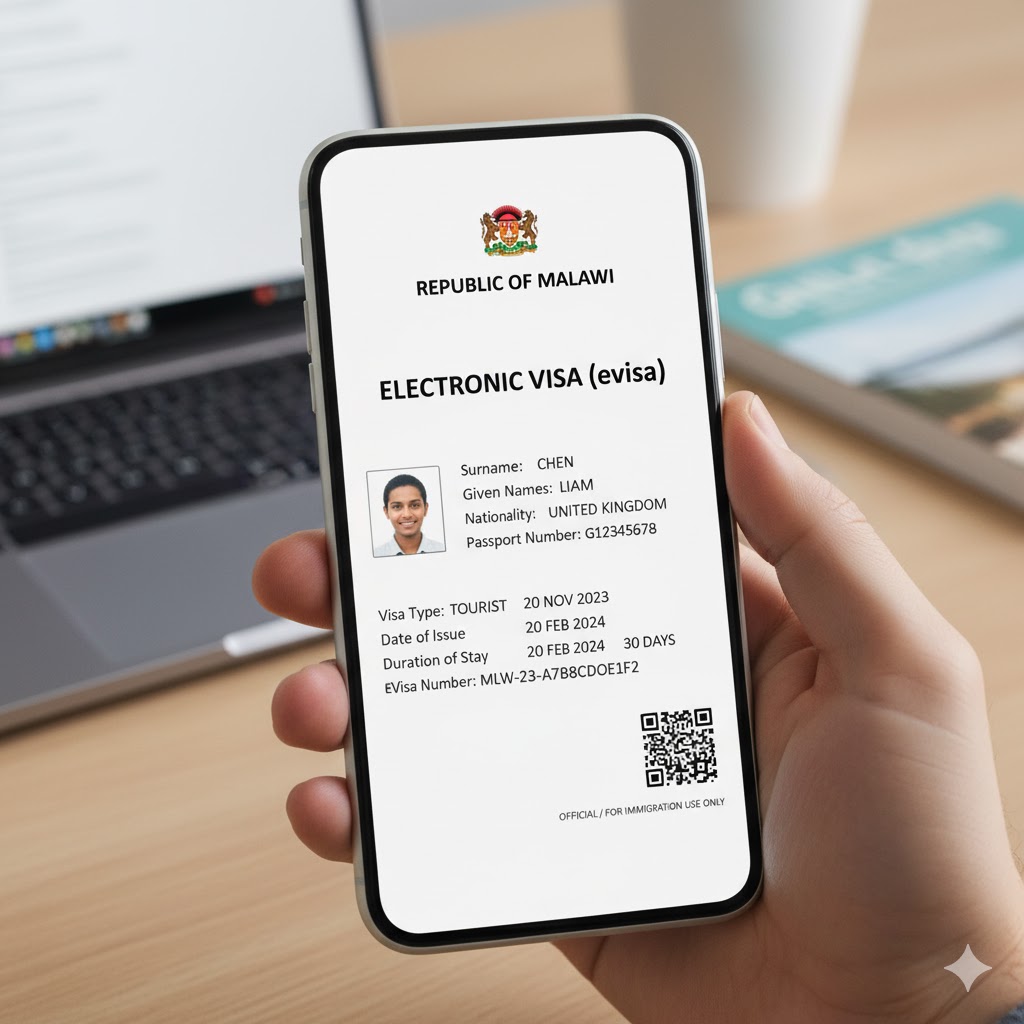
The great news is that the days of complex embassy visits are over. Malawi has implemented a simple and efficient eVisa system, which you must use to get your visa before you travel.
How Do I Get the Malawi eVisa?
The Malawi eVisa system is the official and easiest way to get your tourist visa. The process is straightforward, but it’s essential to be prepared.
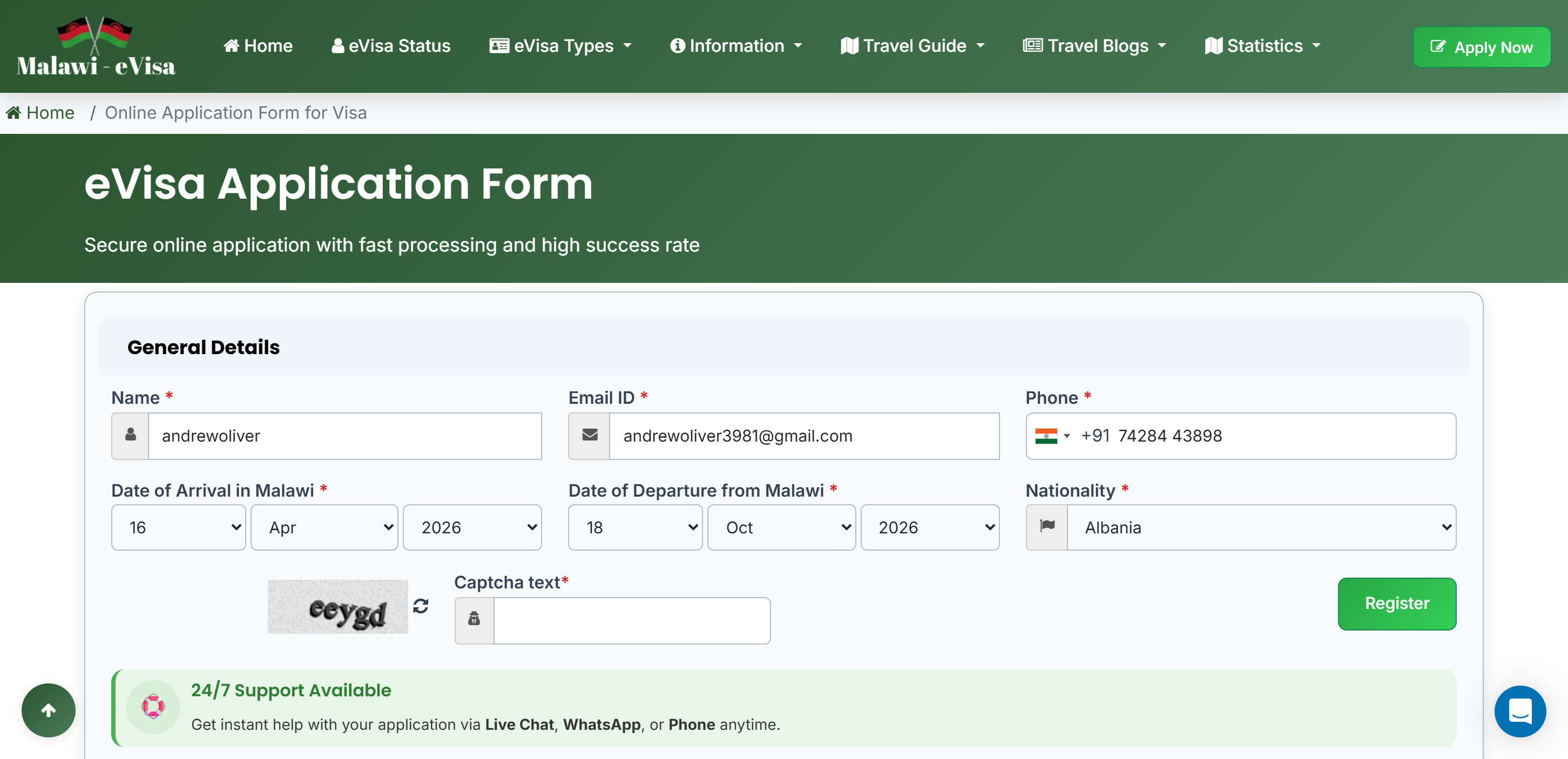
- Fill Out the Application: The Malawi evisa application form is clear and asks for standard informationâ€â€Âyour personal details, passport information, and your travel plans in Malawi.
- Upload Your Documents: This is the most important part. You will typically need digital copies (scans or clear photos) of:
- Your passport data page (with at least 6 months validity).
- A recent passport-sized digital photo.
- Proof of accommodation (your first night's hotel booking is usually sufficient).
- A scan of your return flight itinerary.
- Pay the Fee: You'll pay the visa fee online via credit card. A standard single-entry tourist visa costs around $50 USD (this can change, so check the portal).
- Wait for Approval: Processing times are usually between 3 to 5 working days, but I strongly recommend applying at least two weeks before your flight to avoid any last-minute stress.
- Print Your Approval: Once approved, you'll receive an eVisa approval letter via email. Print this letter and present it to the immigration officer upon arrival in Malawi.
Should You Apply for an e-Visa malawi-evisa.com Through an Agent or the Government Website?
Once you have your documents, you face a key choice: use the official government portal or use a specialized travel agent or e-Visa service? Here a breakdown to help you decide.
Method 1: The Official Government Portal
This is the direct-to-source method, using the evisa.gov.mw site.
- Pros:
- Lowest Cost: You only pay the visa fee itself (around $50 USD) with no added service charges.
- Direct Control: You are in full control of the application from start to finish.
- Cons:
- No Support: You are on your own. There is no 24/7 support line or chat to help you if you get stuck.
- No Refunds for Errors: If you make a mistake (e.g., upload a blurry photo, enter a passport number incorrectly, or choose the wrong visa type), your application can be rejected, and you will not get your money back.
- Potential for Glitches: Government portals can sometimes be confusing, slow, or have payment gateway failures.
- No Pre-Check: No one will stop you from submitting an application with a critical mistake.
Method 2: Using a Visa Agent or Service Provider
These are “malawi-evisa.com†companies that specialize in handling visa applications for a fee.
- Pros:
- Document Verification: This is their biggest value. An expert checks all your documents before submission to ensure your photo meets the standards, your passport is clear, and your forms are correct. This dramatically increases your chance of approval.
- Full Support: Reputable agents offer 24/7 support via chat, email, or phone. They can answer questions and give you status updates.
- Simplified Process: They handle the confusing parts. You typically fill out a simple form, and they take care of the official government paperwork and upload process.
- Handling Complex Cases: If you have a unique situation (like past rejections or dual citizenship), they know how to handle it.
- Language Assistance: Many agents offer support in multiple languages, overcoming barriers you might face on the official site.
- Cons:
- Higher Cost: You are paying a service fee on top of the visa fee. This can range from $20 to $50+ extra.
Do travel agencies charge more for e-visa applications?
Yes, they do, and it's important to understand what you're paying for. Applying via the government site is always the cheapest option, as you only pay the non-refundable visa fee.
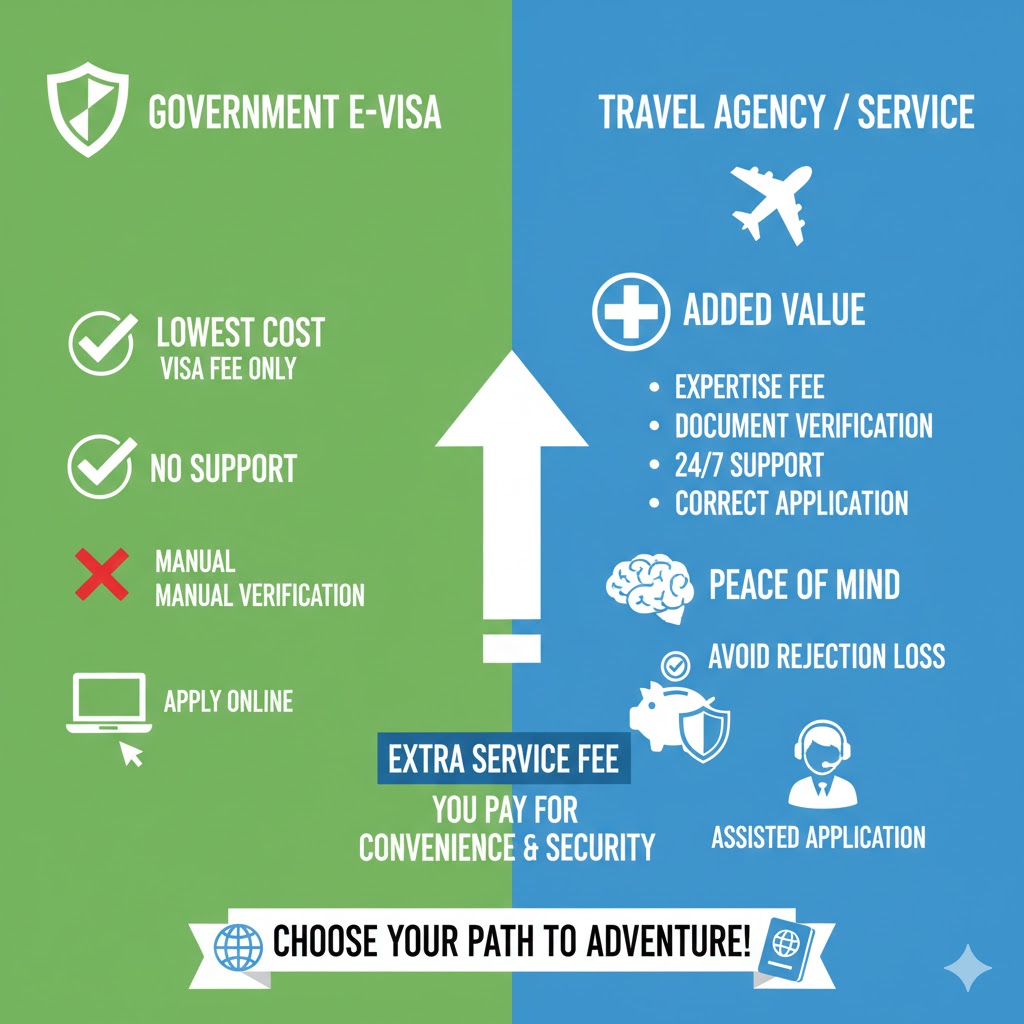
When you use a travel agency or e-Visa service, you are paying for peace of mind. This extra service fee covers their expertise, the time they spend verifying your documents, 24/7 customer support, and the expertise to ensure your application is correct before it's submitted. For many travelers, this extra cost is a worthwhile investment to avoid the stress and potential financial loss of a rejection.
What is the Best 7-Day Itinerary for Malawi?
With only one week, you can't see the whole country. The most logical and rewarding route is the Southern Circuit. This plan minimizes driving time and maximizes your experience, giving you the perfect trifecta of Malawi's highlights: wildlife, the lake, and the highlands.
Our itinerary will be a loop starting and ending in Blantyre, the southern commercial hub.
Is Lilongwe or Blantyre Better to Fly Into?
For this 7-day Southern Circuit, Blantyre (Chileka International Airport - BLZ) is by far the most convenient and logical airport. Flying into Lilongwe (LLW), the capital, is also an option, but it would add several hours of driving to your first and last days, which isn't ideal on a short trip.
Days 1-2: What are the Highlights of Liwonde National Park?
Day 1: Arrive at Blantyre (BLZ). Pick up your pre-booked 4x4 rental or meet your private driver. The drive to Liwonde National Park is a scenic 2-3 hours. You'll arrive at your safari lodge (like the wonderful Mvuu Camp or Kuthengo Camp) in time to settle in and soak up the sounds of the bush before an evening game drive.
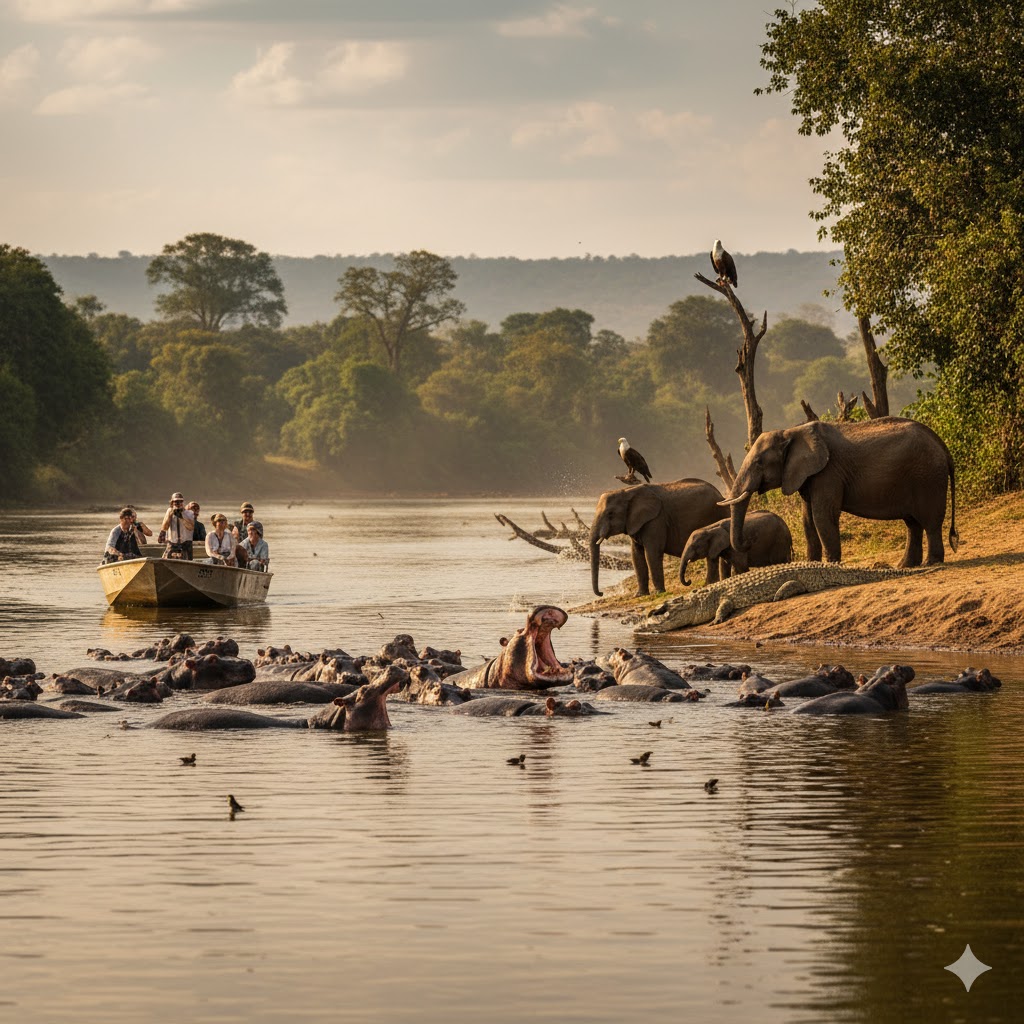
Day 2: This is your full safari day. Liwonde is a story of incredible conservation success. Your morning will be spent on a traditional 4x4 game drive, tracking elephants, antelope, zebra, and perhaps the park's predators.
The must-do activity here is the afternoon boat safari on the Shire River. This is what makes Liwonde unique. You'll glide past hundreds of hippos, sunbathing crocodiles, and herds of elephants that come to the river to drink, swim, and play. The birdlife is spectacular, with fish eagles, kingfishers, and weavers everywhere.
Can You See the "Big 5" in Malawi?
Yes, you can! Thanks to the tireless efforts of African Parks, Malawi is a remarkable conservation success story. Liwonde National Park now boasts elephant, buffalo, lion, and black rhino. Cheetah have also been successfully reintroduced. While leopards are famously elusive, your chances of seeing four of the "Big 5" here are very high.
Days 3-4: What is So Special About Lake Malawi?
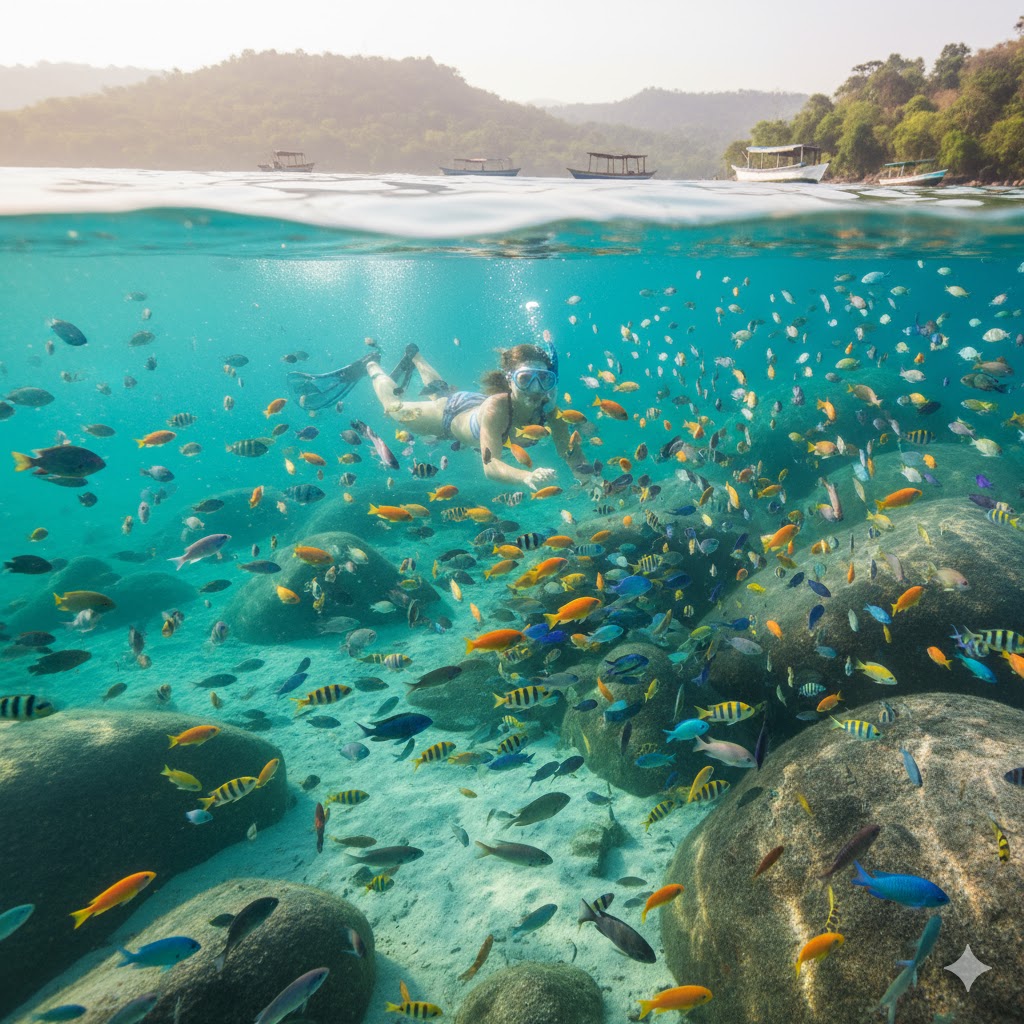
Day 3: After a final morning game drive (or a guided bush walk), you'll drive from Liwonde to your next stop: the legendary Lake Malawi. The drive to the popular hub of Cape Maclear takes around 3-4 hours.
Day 4: You'll wake up to the sight of what looks like a calm, turquoise ocean. But Lake Malawi is a freshwater lakeâ€â€Âthe third largest in Africa. It's nicknamed the "Lake of Stars" by Dr. Livingstone, and it's a UNESCO World Heritage Site for one main reason: its biodiversity. It is home to more species of fish than any other lake in the world, most famously the brightly colored cichlids.
What are the Best Things to Do in Cape Maclear?
Your full day at Cape Maclear, located within Lake Malawi National Park, is all about the water.
- Snorkeling: This is non-negotiable. You can just swim off the beach with a mask and be surrounded by hundreds of dazzling cichlids.
- Kayaking: Rent a kayak or stand-up paddleboard and paddle out to Thumbi West Island.
- Boat Trip: Hire a local guide for a boat tour. They’ll take you to the best snorkeling spots and show you the majestic fish eagles, calling them down from the sky to snatch fish from the water.
- Hike: The hills of the national park offer short trails that provide stunning panoramic views over the bay.
- Relax: This is key. Find a spot on the beach at your lodge (like Chembe Eagles Nest or Mgoza Lodge), order a "Green" (local Carlsberg beer), and watch one of the most spectacular sunsets of your life.
Is it Safe to Swim in Lake Malawi?
This is a very common and important question. The short answer is yes, but be smart.
- Wildlife: In busy, clear bays like Cape Maclear, the risk of crocodiles or hippos is extremely low, as they prefer reedy, muddy river mouths (like the Shire River you just left).
- Bilharzia (Schistosomiasis): This is a real, but manageable, risk. Bilharzia is a waterborne parasite found in many African lakes. Most travelers swim without issue. To minimize risk, avoid stagnant, reedy water and dry off vigorously with a towel as soon as you get out. You can get a simple, precautionary test and treatment from a travel clinic when you return home.
Day 5: What is the Zomba Plateau Like?
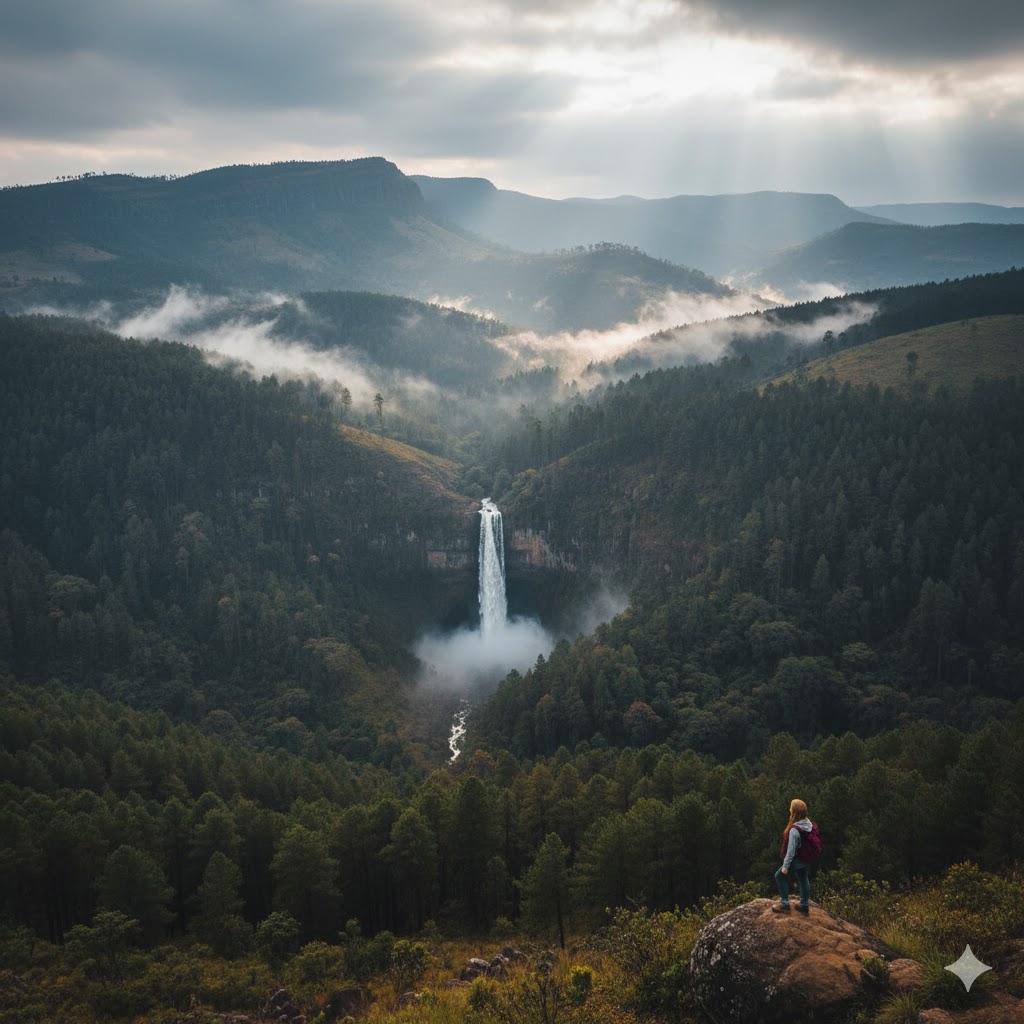
Day 5: It's time to leave the beach and head for the hills. You'll drive 3-4 hours from Cape Maclear to the Zomba Plateau. This former colonial capital sits on a vast, forested mountain plateau that rises 1,800 meters (6,000 ft). The air is cool, the vibe is peaceful, and the scenery is a world away from the humid lake shore. It feels more like the Scottish Highlands than Africa.
Check into your lodge (like the charming, rustic Zomba Forest Lodge) and spend the afternoon hiking to waterfalls (like Williams Falls) and breathtaking viewpoints (Queen's View and Emperor's View are must-sees).
Day 6: What is There to Do in Blantyre?
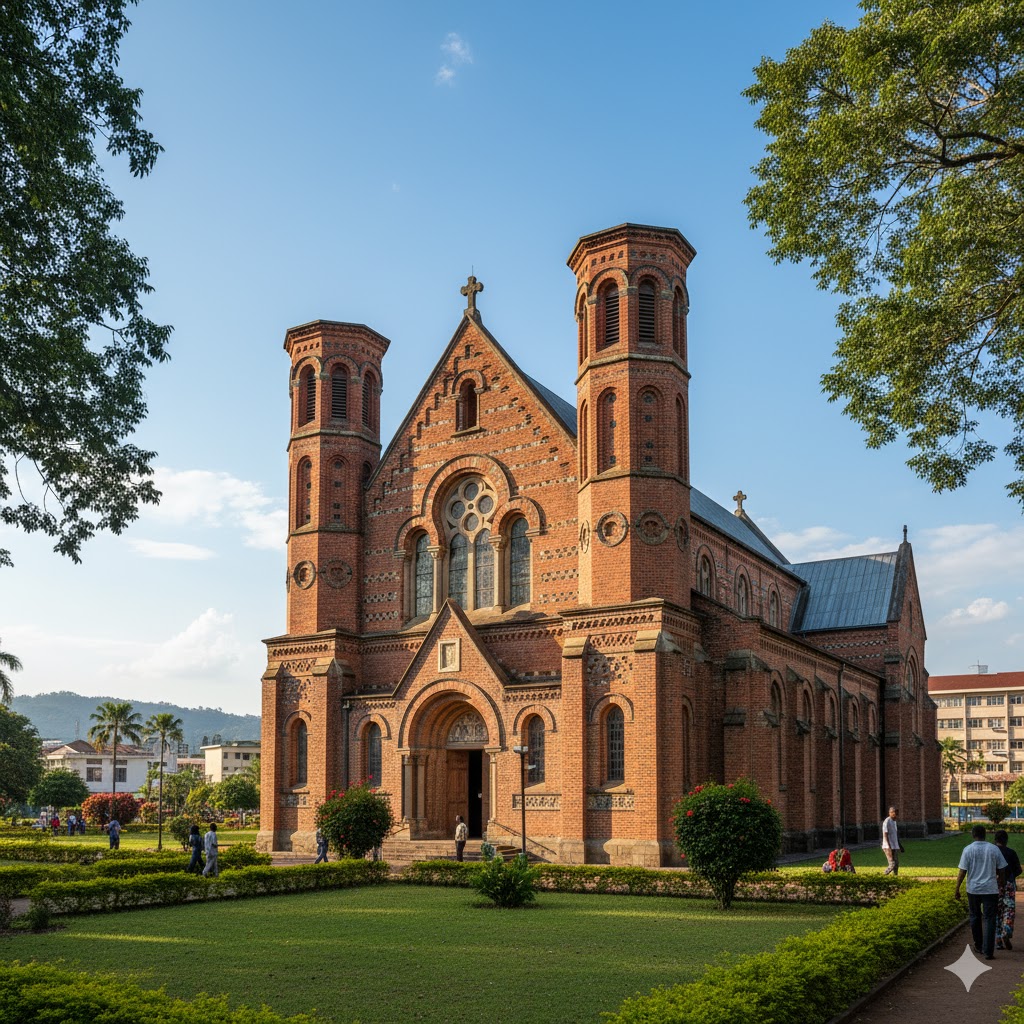
Day 6: Enjoy a final misty morning walk on the plateau, perhaps buying some fresh berries from a local vendor. Then, make the short 1-2 hour drive down the winding road to Blantyre, Malawi's historic and commercial center.
Spend your afternoon exploring the city. Visit the St. Michael and All Angels Church, an architectural marvel built in 1891. See Mandala House, the oldest building in Malawi, and explore the bustling local markets to see artisans at work and get a feel for urban Malawian life.
Day 7: What Souvenirs Should I Buy in Malawi?
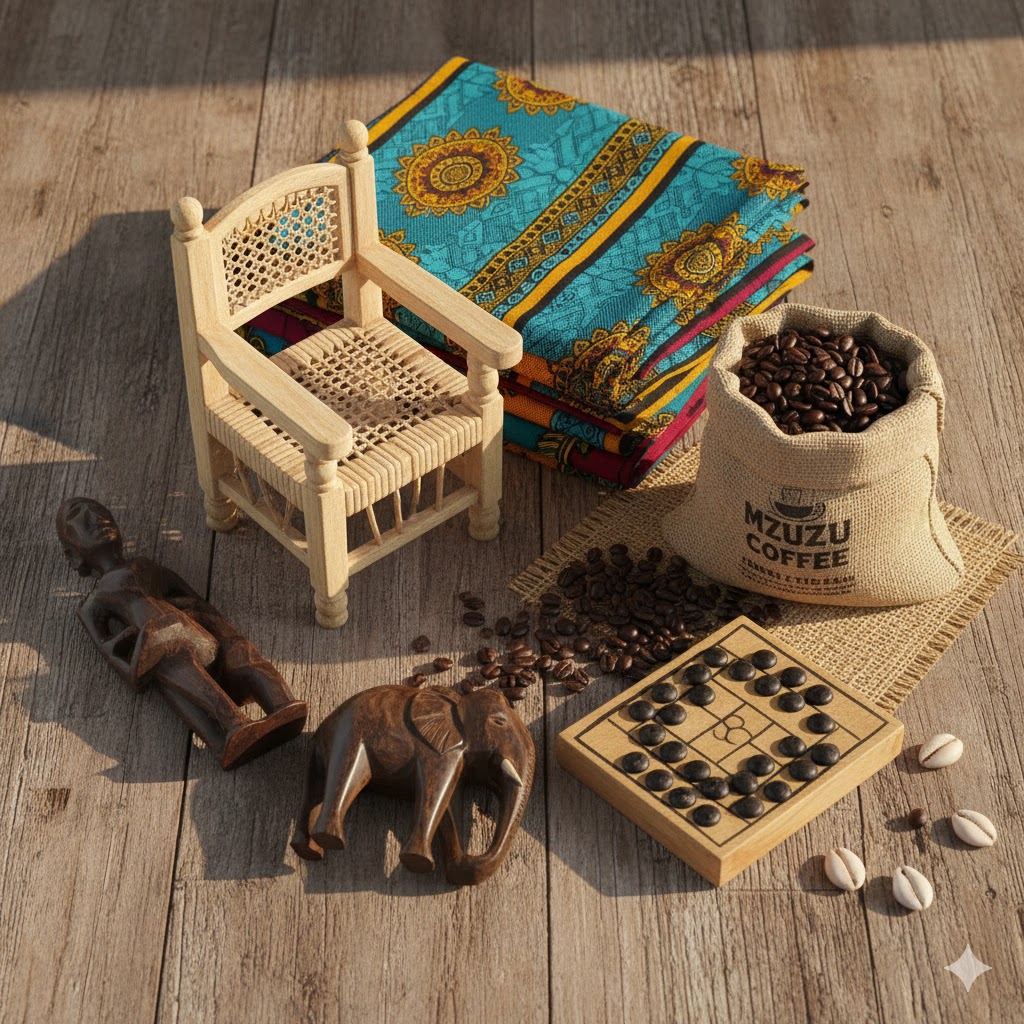
Day 7: Enjoy a final Malawian breakfast. Depending on your flight schedule, you can do some last-minute souvenir shopping. The most famous export is the "Malawi Chair," a beautiful wooden and cane chair you'll see in design magazines worldwide. Other great buys include colorful "chitenje" fabrics, intricate wood carvings, bawo game boards, and some delicious Mzuzu coffee.
Afterward, it's a short drive to Chileka International Airport (BLZ) for your flight home, your heart full and your bags a little heavier.
What are the Common Challenges When Traveling in Malawi?
While Malawi is an incredibly welcoming country, it's helpful to be prepared for a few logistical and practical challenges.
Health and Vaccinations
Malaria is prevalent throughout Malawi, including on the shores of Lake Malawi. You must consult your doctor for anti-malarial prophylaxis before your trip. You should also be up-to-date on routine vaccinations. The risk of Bilharzia in Lake Malawi is real but manageable (see the section "Is it Safe to Swim in Lake Malawi?").
Road Conditions and Driving
Outside of the main arterial roads (which are generally decent), road conditions can be poor. Potholes are common. If you are self-driving, a 4x4 is highly recommended, especially if you are visiting national parks. Avoid driving at night. Roads are unlit, and you will often encounter people, bicycles, and animals on the road.
Wi-Fi and Connectivity
Don't expect reliable, high-speed Wi-Fi. Most lodges will offer (often slow) Wi-Fi in the main common areas, but it's rare to have it in your room. The best solution is to buy a local SIM card (e.g., from Airtel or TNM) upon arrival in Blantyre and load it with a data package. This is cheap and far more reliable than lodge Wi-Fi.
Cash and Payments
Malawi is largely a cash-based economy. While high-end lodges and some restaurants in Blantyre will accept credit cards, you will need cash (Malawian Kwacha) for everything else: market purchases, fuel, tips, and meals at local restaurants. ATMs are available in cities like Blantyre and Zomba, but they can be unreliable or empty. It's wise to withdraw a good amount of cash when you find a working ATM.
What is the Best Time to Visit Malawi?
The best time to visit Malawi is during the Dry Season (May to October).
- Wildlife: This is peak safari season. Vegetation is thin, and animals gather around the rivers and waterholes, making them easier to spot.
- Weather: The days are sunny and warm, while the evenings are cool and pleasant (especially in the highlands). The lake is perfect for swimming. The Wet Season (November to April) is the "green season." Landscapes are lush, and it's the best time for birdwatching. However, some roads can become challenging, and it's hotter and more humid.
Is Malawi Safe for Tourists?
Yes. Malawi is consistently ranked as one of the safest and most peaceful countries in Africa. The "Warm Heart of Africa" nickname is built on this. Violent crime against tourists is extremely rare.
However, you should use the same common sense you would anywhere. Petty crime like pickpocketing can occur in busy markets or on buses in Blantyre and Lilongwe. Avoid walking alone at night in cities, and keep your valuables secure and out of sight.
What Should I Pack for a 7-Day Trip to Malawi?
- Lightweight, modest clothing (T-shirts, linen pants, long skirts).
- A warm fleece or jacket for cool safari mornings and the Zomba Plateau.
- Neutral-colored clothing (khaki, beige, green) for safari.
- Swimsuit and a quick-dry towel.
- Sunscreen, a wide-brimmed hat, and sunglasses.
- Good walking shoes or hiking sandals.
- Insect repellent with DEET.
- Malaria Prophylaxis: (Consult your doctor before your trip).
- Your printed eVisa approval letter and passport!
How Much Does a 7-Day Trip to Malawi Cost?
Malawi is one of the more affordable destinations in Southern Africa.
- Budget (Backpacker): $40 - $60 USD per day.
- Mid-Range (This Itinerary): $150 - $250 USD per day. This covers comfortable lodges, park fees, and a private driver or 4x4 rental.
- Luxury: $400+ USD per day for high-end safari lodges and internal flights.
Is Malawi Worth Visiting?
100% yes. Malawi may not have the vast scale of Tanzania, but it offers an incredible diversity of experiences in one compact, easy-to-navigate country. Where else can you go on a "Big 5" river safari in the morning, swim in a cichlid-filled freshwater "ocean" in the afternoon, and hike in a cool mountain forest the next day?
It's an authentic, uncrowded, and deeply rewarding destination. Get your eVisa, pack your bags, and go. You will not be disappointed.
window.NREUM||(NREUM={});NREUM.info={"beacon":"bam.nr-data.net","licenseKey":"NRJS-3109bb2e2783f515265","applicationID":"558315209","transactionName":"blUHbEVQCxECBUVQWVcfMEpeHhARBhRCFlRVXwIXVEMAAxcDU1VZXh4VUEc=","queueTime":0,"applicationTime":182,"atts":"QhIEGg1KGB8=","errorBeacon":"bam.nr-data.net","agent":""}
window.NREUM||(NREUM={});NREUM.info={"beacon":"bam.nr-data.net","licenseKey":"NRJS-3109bb2e2783f515265","applicationID":"558315209","transactionName":"blUHbEVQCxECBUVQWVcfMEpeHhARBhRCFlRVXwIXVEMAAxcDU1VZXh4VUEc=","queueTime":0,"applicationTime":153,"atts":"QhIEGg1KGB8=","errorBeacon":"bam.nr-data.net","agent":""}
Written By:
James Smith

Hotels at your convenience
Now choose your stay according to your preference. From finding a place for your dream destination or a mere weekend getaway to business accommodations or brief stay, we have got you covered. Explore hotels as per your mood.