Djibouti eVisa for Bahamas Travelers
 Alex Franklin
17 Oct, 2025
26 mins read
145
Alex Franklin
17 Oct, 2025
26 mins read
145
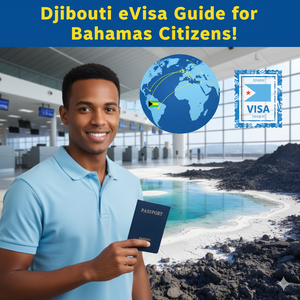
If you live in the Bahamas and want to see the amazing salt lakes and the unique volcanic landscapes of the Horn of Africa, getting your travel authorization is the very first step. Luckily, the Djibouti eVisa makes this easy as it is a fully online application that does not require you to go to an embassy or consulate in person.
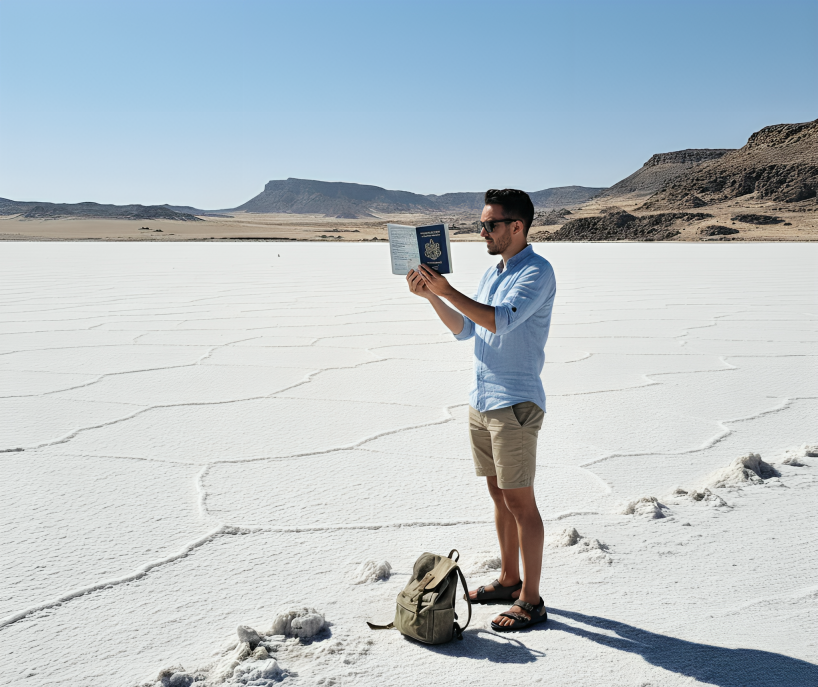
This guide is definitely a perfect match for the people of the Bahamas who want to travel abroad. It utilizes the latest Djibouti Visa Policy and addresses the most searched, trending queries to ensure your journey from Bahamas to Djibouti is seamless. We will provide a comprehensive, detailed breakdown of every requirement, step, and crucial piece of information needed for your trip.
Djibouti eVisa Eligibility for Citizens of the Bahamas
The Djibouti eVisa is a digital travel permission (Electronic Travel Authorization) that allows the holder to enter and move around the country for short stays. After its launch in 2018, the new system has been one of the major reasons why Djibouti still ranks as one of the best countries offering e-visa in 2025 for short stays.
The eVisa is a crucial development, as it replaces the visa issued at the point of entry (Visa on Arrival), making the process more certain and efficient for the traveler. It is digitally linked to your passport, simplifying the arrival process.
e-Visa Eligibility for Bahamian Citizens
Under the current Djibouti Visa Policy, citizens of the Bahamas are fully eligible to apply online for this electronic visa. The eVisa is a mandatory travel authorization for short-term stays, eliminating the risk of being denied entry on arrival.
Available Djibouti Visa Types for Bahamian Travelers
The eVisa system offers a few options based on your travel purpose:
- Short-Stay: Allows a stay of up to 14 days (single entry). Perfect for quick trips or layovers.
- Long-Stay (Tourism/Business): Allows a stay of up to 90 days (single entry). Ideal for a full exploration of the country.
- Transit: Allows a stay of up to 3 days (single entry) if you are passing through to another destination.
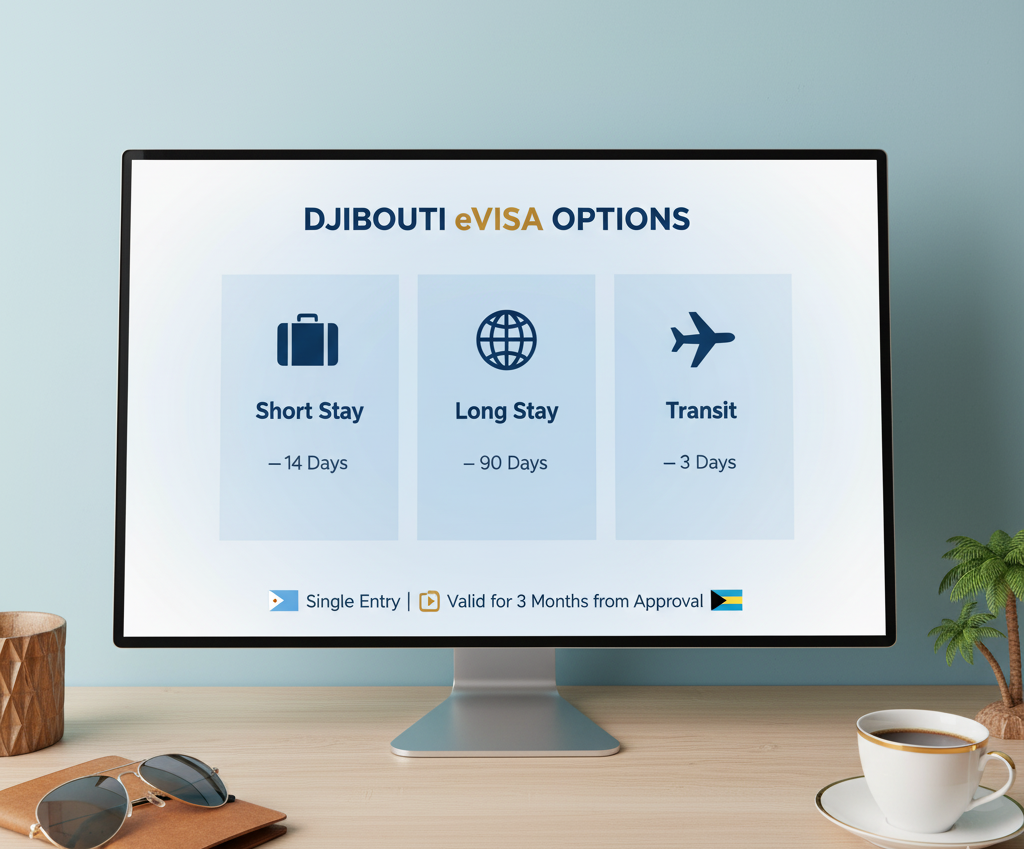
The eVisa is typically valid for up to 3 months from the date it's approved. You enter Djibouti within this 3-month window. It's crucial to remember that the standard eVisa is single-entry only. If you need to stay longer than 90 days or plan on multiple entries, you'll need to explore different long-term visa options.
2. What Documents Do Bahamas Travelers Need for the Application?
Meeting the Djibouti Visa Requirements is critical for a smooth application and to avoid e-visa rejection reasons. You must prepare all e-visa documents needed in advance to avoid resubmission of the application.
Mandatory e-Visa Requirements Checklist for Bahamas Citizens:
- Valid Passport: Your passport is valid 6 months from your expected date of entry into Djibouti. If it's close to expiring, get a new one first!
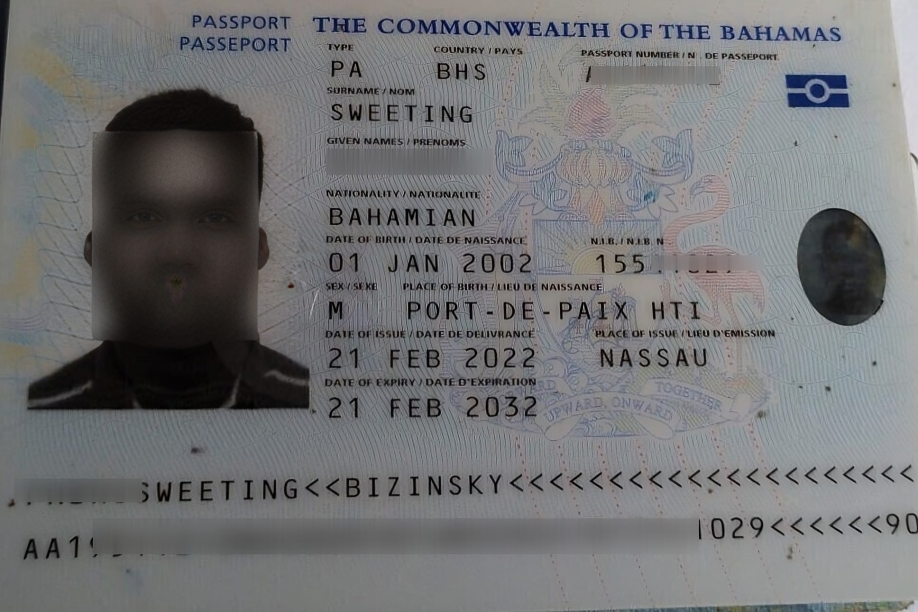
- Digital Passport Photograph: A recent, clear, passport-size color photo is required.
- Proof of Travel: A confirmed return or onward flight ticket is necessary to prove your intent to leave Djibouti.
- Proof of Accommodation: A confirmed hotel reservation or a formal invitation letter from your host in Djibouti, including their contact information and address.
- Proof of Financial Means: Evidence of adequate funds to support your stay. You are required to show that you have enough money to cover your stay and any other expenses, which is most often done by presenting official bank statements or equivalent documents.
- Proof of Purpose: For the Djibouti Business Visa, a letter from your Bahamian employer or an invitation from a Djiboutian company on a letter head specifying the purpose and duration of the stay is required.
- For the Djibouti Tourism eVisa, To convince the immigration authorities that you will not overstay, it might be necessary for you to show evidence of strong ties to your home country (for instance, being employed or having family commitments in the Bahamas).
The Djibouti eVisa Application Process
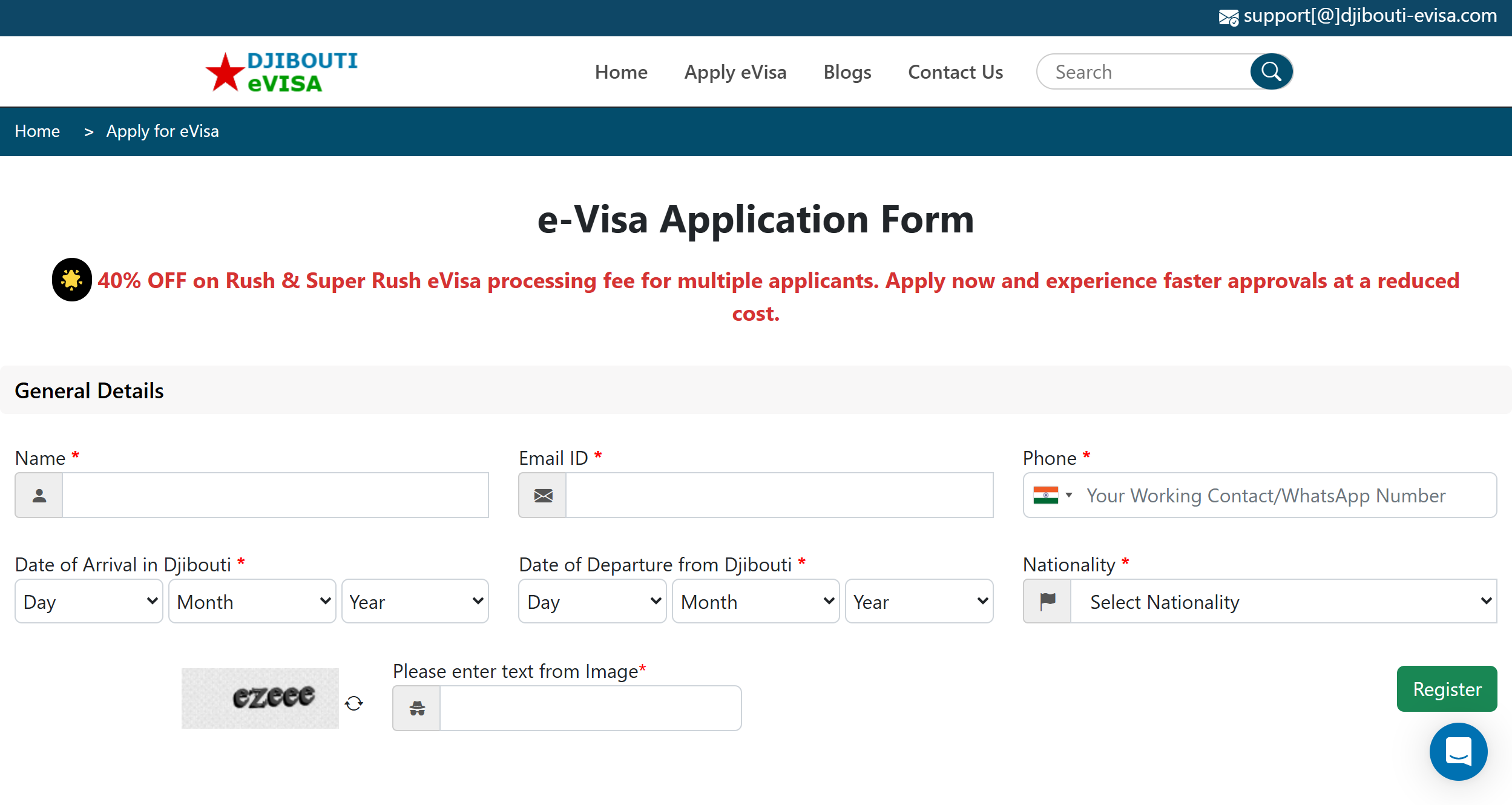
Getting your eVisa is straightforward, but it requires accuracy. This simple walkthrough guides you through the core steps of the Djibouti Visa Application Process:
Select Your Purpose and Duration: Select your country (Bahamas), the type of eVisa (Tourism or Business), and the duration (14 or 90 days).
Fill Application Form: Enter your personal details exactly as they appear on your passport. Small typos can invalidate the final document.
Upload Documents: Upload the required scans of your passport, photo, itinerary, and accommodation proof.
Review and Submit: Double-check every single piece of data before clicking submit.
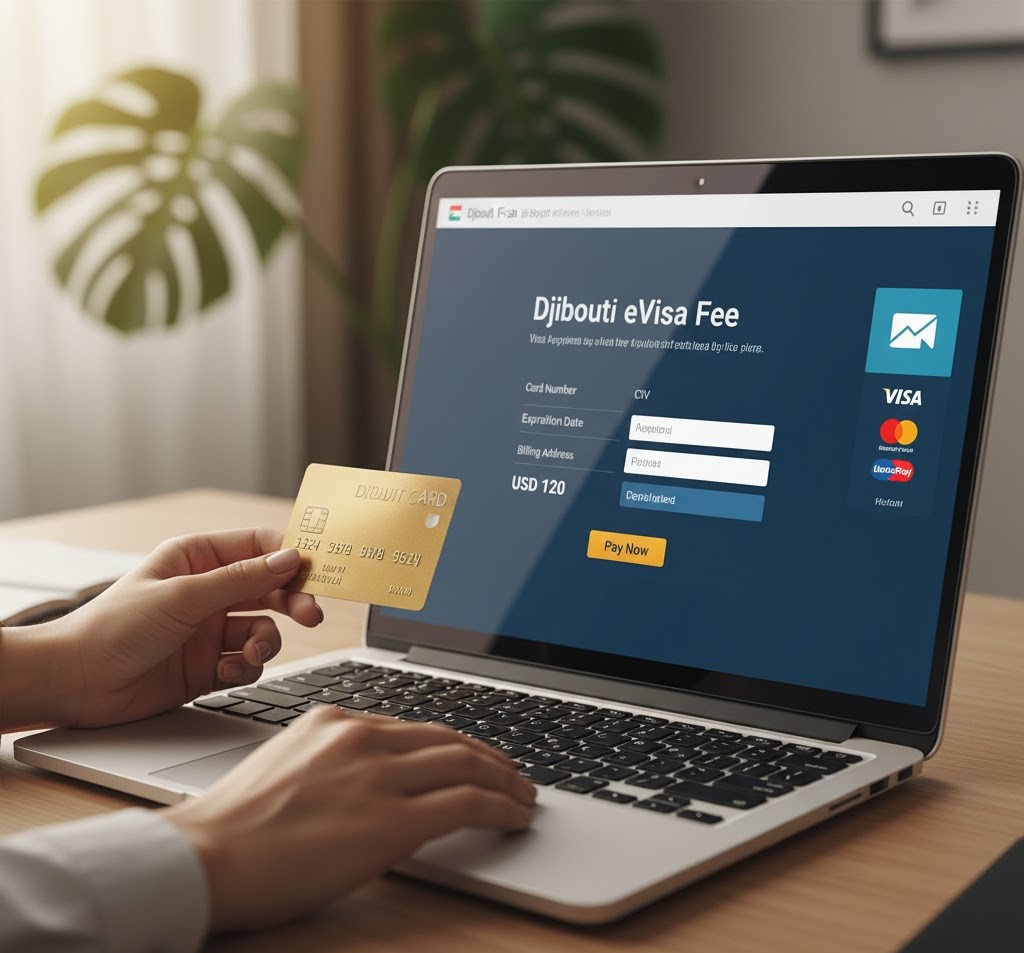
Pay: Complete the payment using your card.
Receive Approval: The link to download your eVisa will be emailed to you once your application has been successfully processed.
Adhering to Djibouti Visa Photo Requirements
The digital photograph is a common reason for application failure, so strict adherence to the official Djibouti Visa Photo Requirements is mandatory:
- Background: The background must be plain white or light-colored.

- Quality & Size: The photo should be a recent one, of high quality, with the dimensions of 35mm x 45mm, and the face occupying 80% of the area. The photo must not have any shadows, glare, or filters. If a photo is of poor quality, the application will be rejected automatically.
eVisa Fees and Processing Time for Bahamian Applicants
The e-visa fees / cost are calculated based on the duration of stay and the processing speed you select. The exact Djibouti Visa Fees will be displayed on the official portal before you finalize payment. The fees are country-specific, and bank transaction charges may be added.
Is a Djibouti Urgent e-visa and Processing Time
The standard e-visa processing time varies based on your needs, but most applications are approved within 10 business days, so early submission is crucial. For Standard Processing, the estimated e-visa processing time is 4 to 7 working days, and the standard e-visa fees apply. If you need the visa sooner, you can choose the Urgent / Express e-visa option, which takes around 3 to 5 working days, but this requires paying an additional fee for the urgent/express service. Requires selecting the urgent / express e-visa option with an additional fee.

Travelers must apply well in advance, especially during peak travel seasons, even if opting for the express service, as governments do not guarantee processing times. It is generally advised to apply at least 3 days before your trip.
eVisa Refund Policy
The application fee is charged only upon the successful approval of your eVisa. If your application is rejected, the fee is not deducted, which is part of the e-visa refund policy. For Djibouti's system specifically, payment is generally processed upon approval.
How Bahamas Travelers Track Status and Avoid Rejection
After submitting your application and payment, you must use your assigned application ID and passport details on the portal for Djibouti eVisa Application Tracking. This ensures you are promptly aware if the authorities require additional documentation or if your status has changed.

What Are the Top Reasons for eVisa Rejection?
The majority of denials are administrative, though security and financial factors play a role. Being aware of the following e-visa rejection reasons is critical to avoiding e-visa mistakes to avoid:
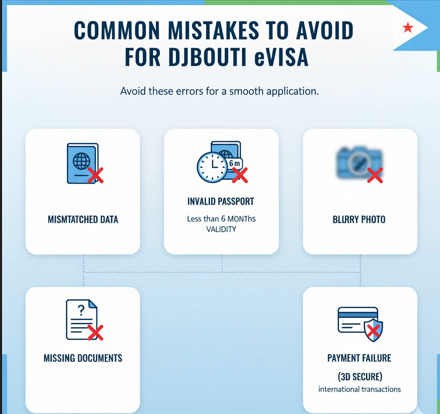
- Incomplete Application Forms: Missing details, no matter how minor, can trigger an automatic rejection.
- Passport Validity: The passport has less than six months remaining validity.
- Photo Non-Compliance: Failure to meet the mandatory Djibouti Visa Photo Requirements.
- Insufficient Proof of Funds: Failure to provide adequate bank statements or documents to demonstrate sufficient financial capacity for the trip.
- Missing Documentation: Failure to upload mandatory proof of travel (return ticket) or accommodation.
What If I Get a Djibouti Visa or e-Visa Rejection?
If you receive a Djibouti Visa or e-Visa Rejection notice, you must immediately read the reason. Since the fee was generally not charged for the rejected application, you must correct the specific error (e.g., correct the typo, upload a compliant photo) and file a new, corrected online visa application.
eVisa Extension, Overstay, and Employment Rules
The e-visa validity and duration are strictly limited to the approved 14 or 90 days. The eVisa is a short-stay permit (less than 90 days).
eVisa Extension and Renewal
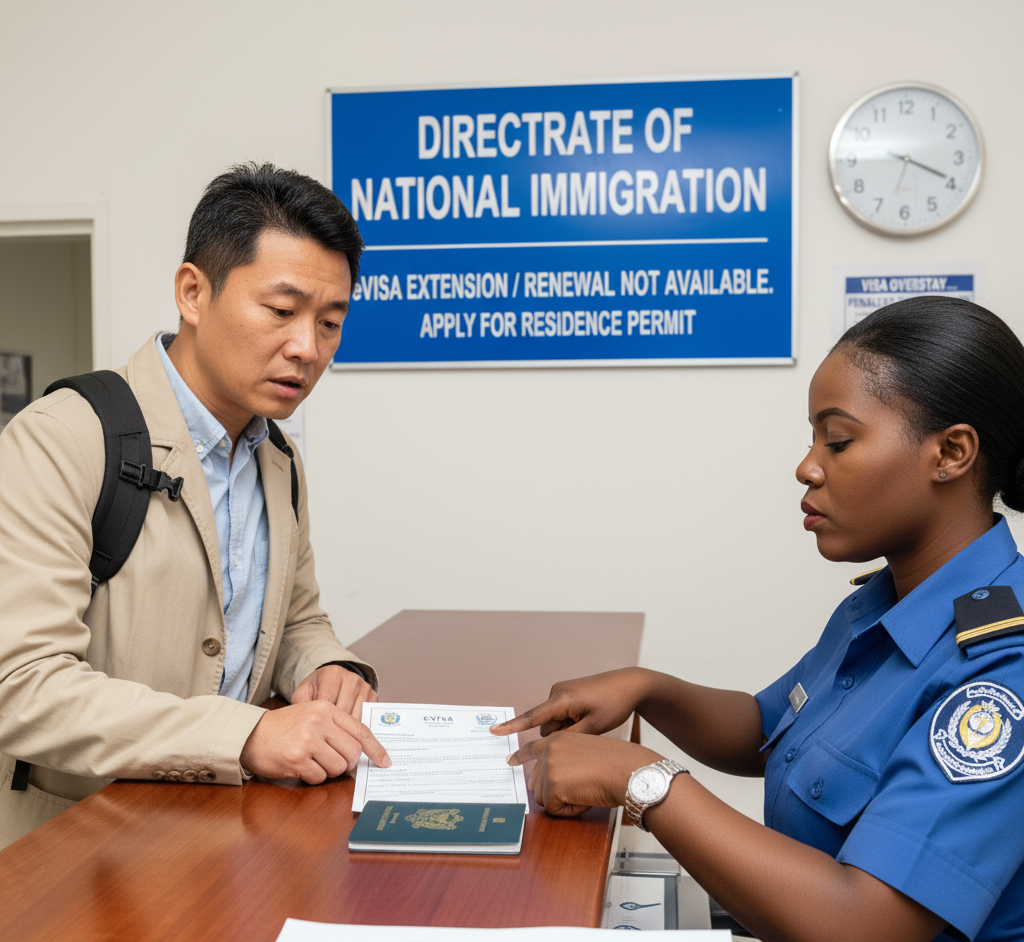
The eVisa is a Single Entry permit and cannot be renewed or extended online (e-visa extension / renewal). If you wish to stay longer than 90 days, you must apply for a residence permit at the Directorate of National Immigration before your current stay duration expires. Any stay beyond the authorized period constitutes Djibouti Visa Overstay and will result in penalties or deportation.
Working, Studying, or Medical Treatment
The eVisa is strictly for tourism and short-term business activities.
- Working in Djibouti: The eVisa does not authorize paid employment. Working in Djibouti requires a formal work permit and a Djibouti Long-Term Visa, which must be secured via a consulate abroad.
- Djibouti Study Visa / Djibouti Medical Visa: For long-term stays, including studying, medical treatment, or attending specialized events, you must contact the nearest Djiboutian Embassy or Consulate, as these are not available through the online visa application system.
Is Djibouti eVisa vs. Visa On Arrival
The Comparison Between Djibouti Visa on Arrival and eVisa strongly favors the electronic option for certainty and convenience, especially for travelers from the Bahamas arriving after a long flight.
Getting a Djibouti eVisa is a better and more reliable option, as it guarantees entry before you travelâ€â€Âyour visa status is marked as "GRANTED" in advance. In contrast, the Visa on Arrival (VOA) depends on the decision of the border officer, which carries a higher risk of denial. The eVisa process is done online, is faster, and saves time at the airport, while the VOA requires completing the visa process after landing, often involving long queues. Payment for the eVisa is made securely online using cards like Mastercard, Visa, or American Express, whereas VOA fees usually have to be paid in cash (USD or EUR).
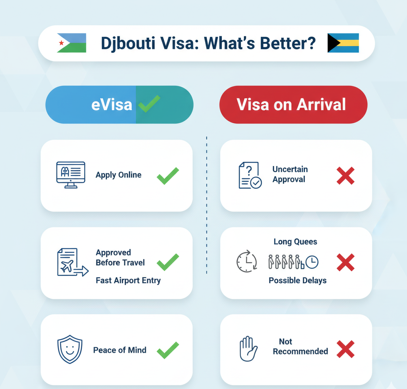
The eVisa is the superior travel authorization, as the government introduced the e-Visa system specifically to replace the VOA system and provide a smoother entry.
Health, Safety, and Family Travel for Bahamian Visitors
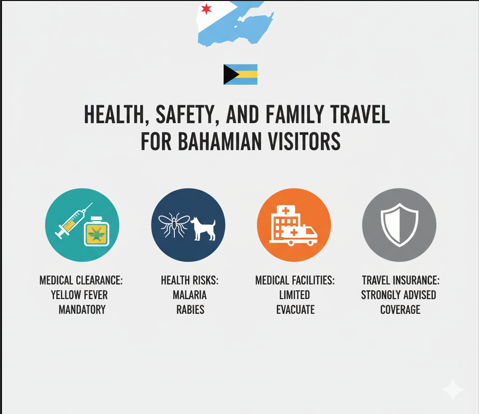
Medical clearance is mandatory only if you are arriving from a yellow fever endemic country. In this case, you must present a valid yellow fever vaccination certificate upon arrival.
- Other Health Risks: Travelers are also advised to check their routine vaccinations and consider antimalarial medication, as malaria is a risk in Djibouti. Rabies is also common and carried by dogs and wildlife.
- Medical Facilities: Medical facilities are limited in the capital and often non-existent in outlying areas. Medical evacuation is necessary for serious cases.
- Travel Insurance: While comprehensive travel insurance is not a mandatory travel insurance requirement for e-visa, it is strongly advised that you obtain a policy covering all overseas medical costs, including medical repatriation/evacuation and legal costs.
Requirements for Family Travel
For e-visa for family travel, every individual, including minors, must hold their own valid passport and must file a separate e-visa application process. The system does not support a single application for several family members. Minors traveling without a parent or guardian may also require a No Objection Certificate (NOC) from their parents.
Safety, Customs, and Financial Preparedness in Djibouti
While Djibouti is relatively safe, travelers should maintain a High Degree of Caution (Level Two of four ratings).
- Safety and Security: Petty crime can occur, especially at night. Travelers should avoid walking alone after dark and keep valuables out of sight. Terrorism is a risk, and attacks may target public places, hotels, and transport hubs. Avoid all travel within 10 km of the borders with Somalia and Eritrea.
- Local Laws and Customs: Djibouti is a predominantly Muslim country.
- Dress Code: Dress and behave conservatively to respect religious and social traditions.
- Ramadan: During Ramadan, do not eat, drink, smoke, or chew gum in public during the daytime.
- Alcohol: Drinking alcohol is permitted, but drunken behavior could result in a two-year prison sentence.
- Photography: Strictly prohibited. It is taking pictures of the physical structures that support an area or a country, such as the military facilities, ports, airports, bridges, and public buildings.
- Money: Djibouti mainly operates through a cash-based system. The local currency is the Djiboutian Franc (DJF). You will find that outside the major hotels and supermarkets, credit cards are barely accepted. Of the two major cards, Visa is accepted by more establishments than Mastercard. Make sure you have enough cash on you.
Essential Destinations and Connectivity for Bahamian Tourists
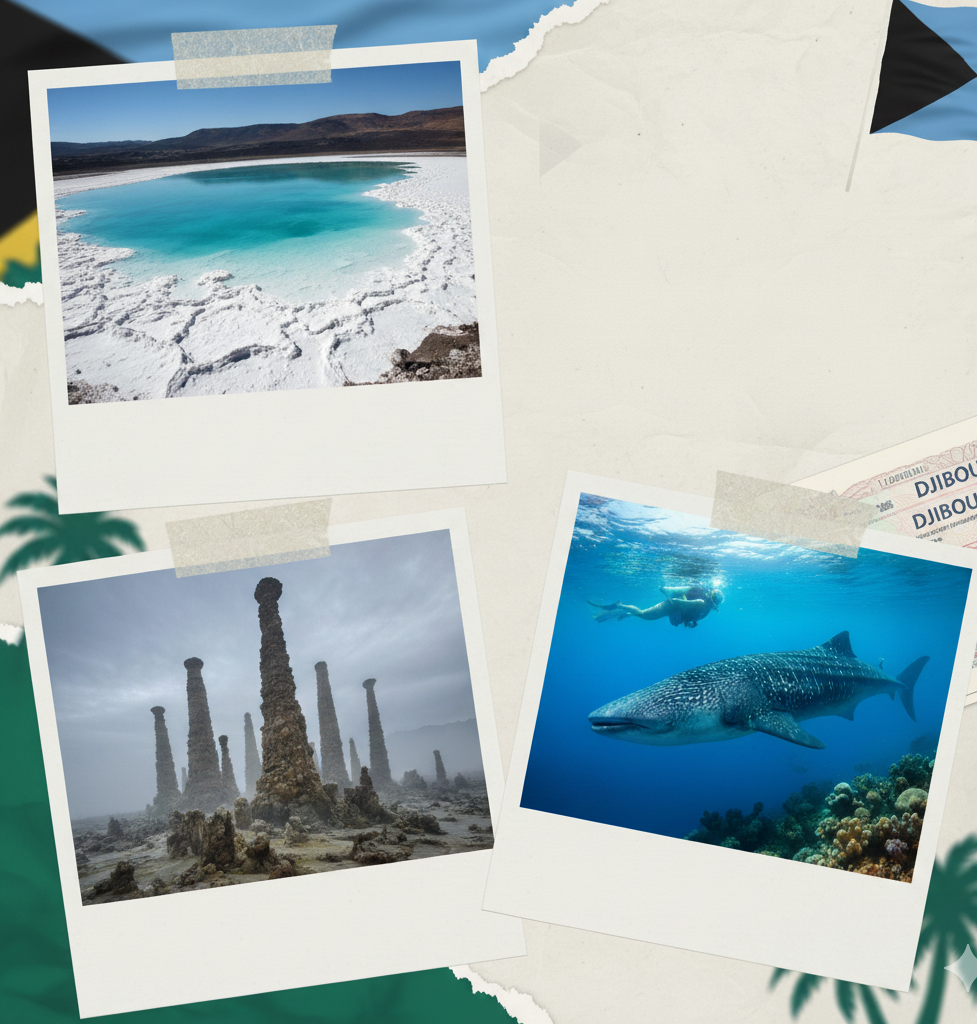
Djibouti is one of the top destinations with easy e-visa approval. Ensure your Djibouti Tourism eVisa allows enough time to visit these unique places:
- Lake Assal: One of the world's saltiest lakes, surrounded by a striking white salt crust and volcanic formations.
- Lake Abbe: A surreal landscape of limestone chimneys and steaming hot springs.
- Moucha Island: Known for snorkeling, diving, and spotting whale sharks.
How to Stay Connected During Your Trip (e-SIM)
If you want to access the internet in a way that is both reliable and inexpensive, there is no better way than an eSIM. The use of the top eSIM for international travel in 2025 eliminates the need to purchase a local physical SIM card.
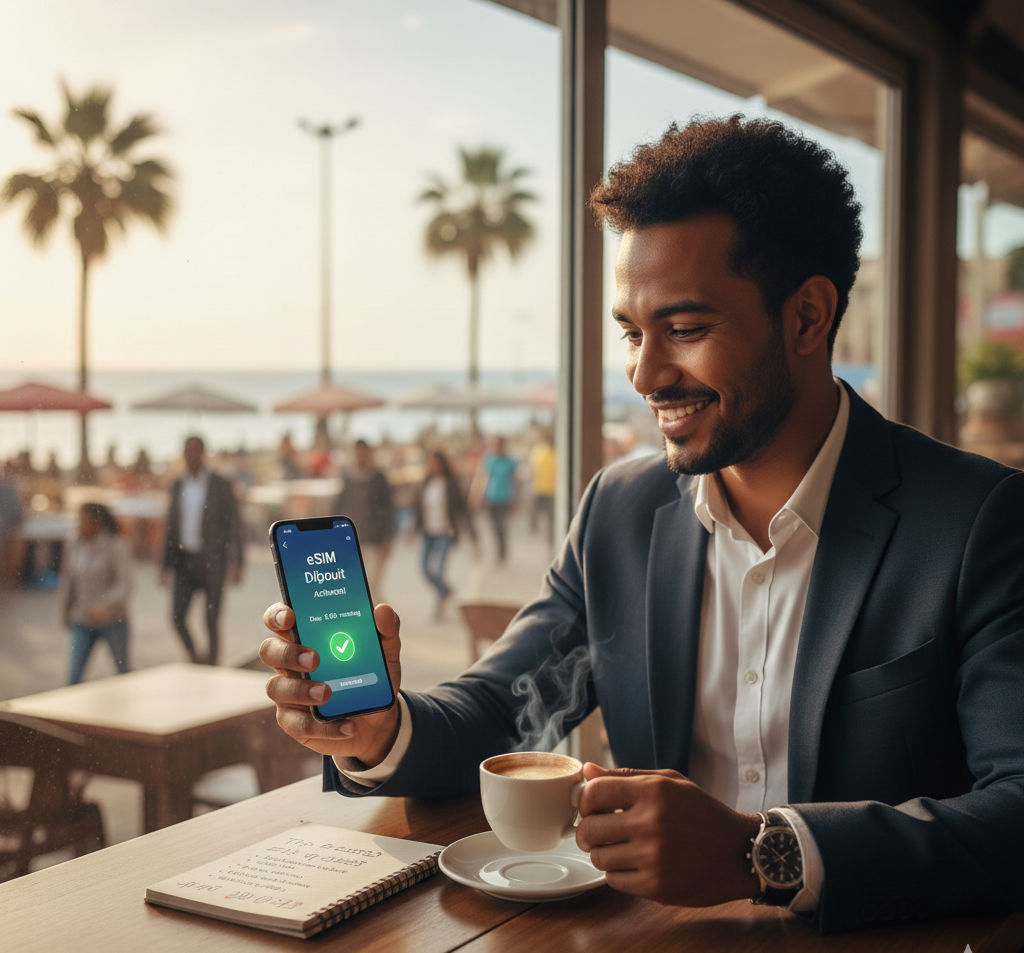
eSIM Benefits: eSIMs provide eSIM plans for multiple countries and are very beneficial for eSIM for business travelers. eSIM plans for Djibouti are data-only and generally start the validity period when you connect to a supported network. It is necessary that you check if your phone is compatible before buying.
Final Actions Before Departure
Getting a Djibouti visa should be a straightforward task if you adhere to the steps correctly. Ensure your passport has at least six months validity and carry a printed version of your e-visa which has been approved in advance. Get your travel papers in order which should consist of your return flight tickets and hotel bookings.

Be able to show evidence of enough money and also have health documents such as a yellow fever vaccination certificate available. Check the local laws concerning photography, use of alcohol, and Ramadan. It is very important to be accurate and prepared, once you have everything sorted out, you are only a few clicks away from your journey!
FAQs for Bahamas Travelers
Do Bahamian citizens need a visa to visit Djibouti?
Yes, Bahamian travelers must apply online for a Djibouti eVisa before traveling.
2. Is the Djibouti eVisa process online or in person?
It’s a fully online process, no embassy visits or in-person appointments are required.
3. How long does Djibouti eVisa processing take?
Standard: 4–7 working days; Urgent: 3–5 working days with extra fee.
4. Can I stay in Djibouti for more than 90 days on an eVisa?
No, the eVisa only allows a maximum stay of 90 days per entry.
5. What documents are needed for Bahamas citizens to apply?
You’ll need a valid passport, photo, return ticket, hotel booking, and financial proof.
Written By:
Alex Franklin

Hotels at your convenience
Now choose your stay according to your preference. From finding a place for your dream destination or a mere weekend getaway to business accommodations or brief stay, we have got you covered. Explore hotels as per your mood.