East African Tourist eVisa
 Dominik Lehmann
11 Dec, 2025
19 mins read
143
Dominik Lehmann
11 Dec, 2025
19 mins read
143
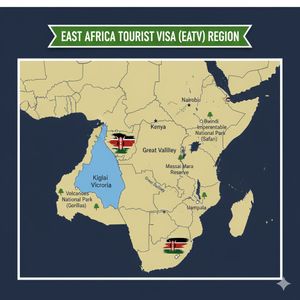
The dream East African safari—featuring Kenya’s Masai Mara, Rwanda’s Volcanoes National Park, and Uganda’s Bwindi Impenetrable Forest—used to require navigating three separate visa applications. Thanks to the East Africa Tourist Visa (EATV), this regional adventure has become seamlessly simple.
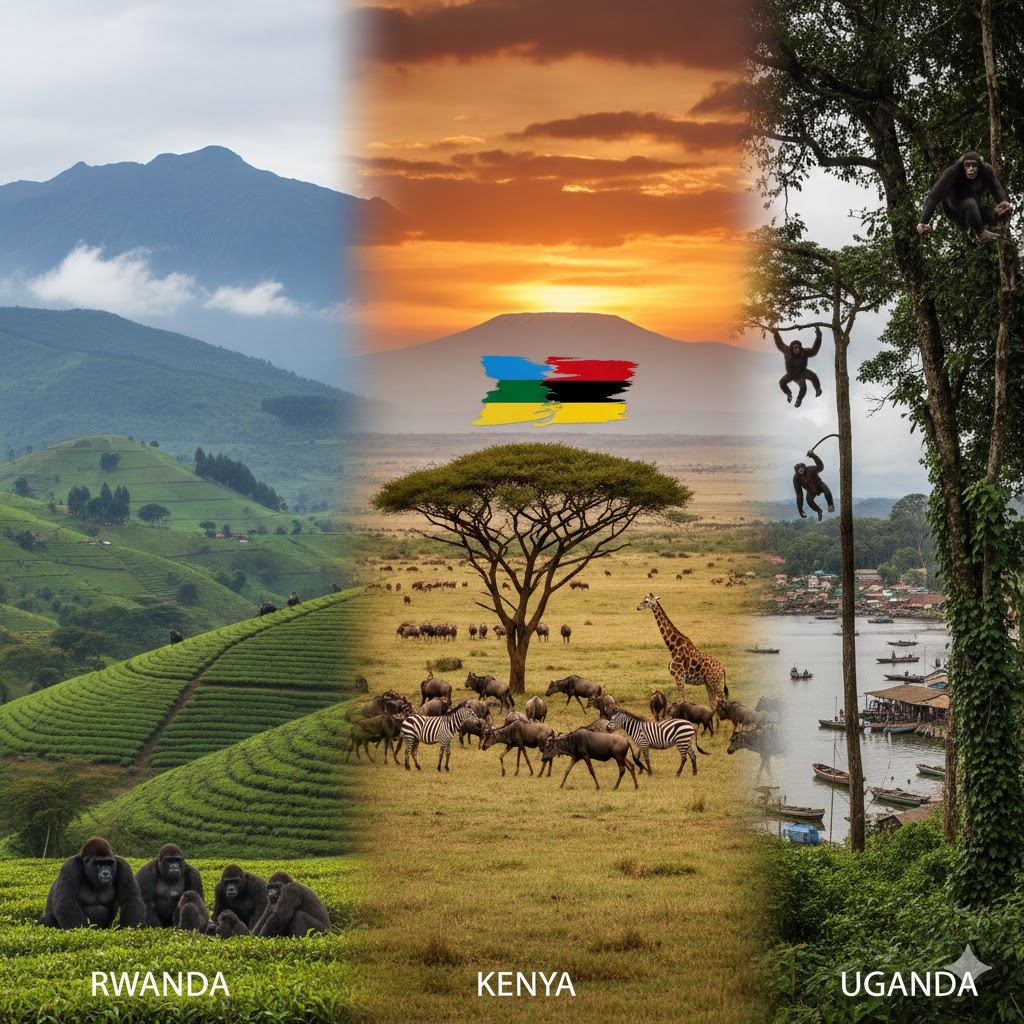
The EATV is a joint, multiple-entry visa initiative between Kenya, Rwanda, and Uganda. It allows international travelers to visit all three partner states for tourism purposes on a single application, saving significant time, effort, and money.
This comprehensive guide breaks down everything you need to know about the EATV: the rules, the application process, the costs, required documentation, and tips to ensure a smooth, worry-free trip across the region known for its unparalleled wildlife and captivating landscapes.
Which Countries are Included in the East Africa Tourist Visa (EATV)?
The EATV is a collaborative effort between three East African Community (EAC) partner states:
- Kenya
- Rwanda
- Uganda
The visa grants the holder access to all three countries. It is crucial to understand that Tanzania and other EAC member states like Burundi are not currently part of the EATV scheme. If your itinerary includes a destination like the Serengeti in Tanzania, you must obtain a separate visa for that country.
What is the Cost of the EATV and What Does It Cover?
The application fee for the East Africa Tourist Visa is a standard, non-refundable government fee.
This East Africa Tourist Visa fee covers:
- Validity: 90 days from the date of first entry into the issuing country.
- Entries: Multiple entries within the three participating countries (Kenya, Rwanda, and Uganda) during the 90-day validity period.
- Purpose: Strict tourism purposes, including sightseeing, safari, and social visits. It does not permit employment.
The EATV is highly cost-effective, as obtaining separate single-entry visas for Kenya, Rwanda, and Uganda would cost a minimum of $150 to $180 USD in total.
Where Must I Apply for the EATV?
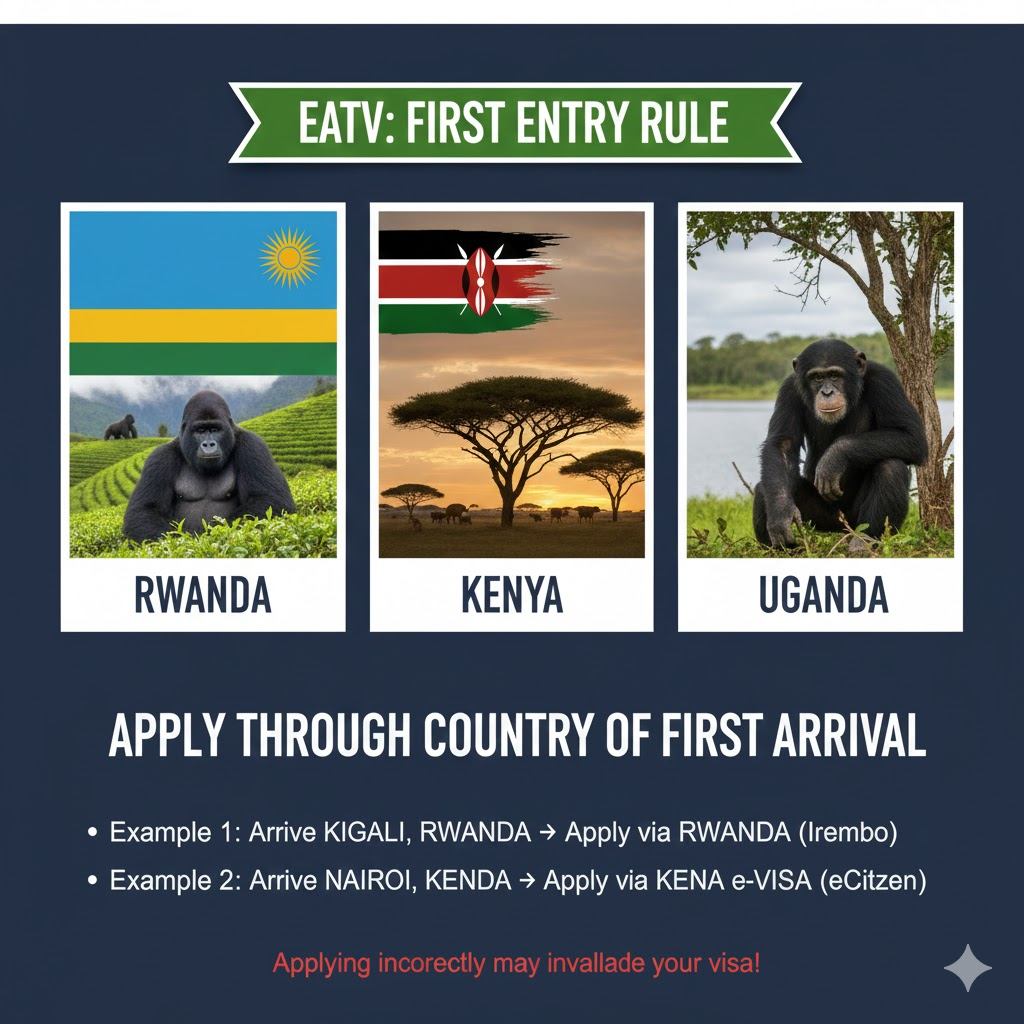
This is the single most important rule of the EATV: You must apply through the country that you will enter first.
The EATV is issued by one of the three partner states, and your itinerary must reflect that the issuing country is your initial point of entry into the region.
- Example 1: If your flight lands in Kigali, Rwanda first, you must apply for the EATV through Rwanda (Irembo).
- Example 2: If you fly into Nairobi, Kenya, you must apply through the Kenya e-Visa (eCitizen).
If you apply through Rwanda but land first in Kenya, your visa may be invalidated, and you could be refused entry or forced to purchase a new visa on arrival in Kenya.
What are the Mandatory Document Requirements for the EATV?
While the exact list can vary slightly depending on the issuing country (Kenya, Uganda, or Rwanda), the following documents are universally required for the EATV application:
- Passport Bio Page: Digital copy of your passport’s data page. The passport must be valid for at least six months beyond your intended entry date and have at least one blank page.
- Recent Passport-Sized Photograph: A clear, high-resolution photo with a plain white background. (See Section 7 for detailed specifications).
- Detailed Travel Itinerary: A copy of your flight bookings (round-trip or onward ticket) and a clear document detailing your travel plan, including the dates you intend to cross borders between the three countries.
- Proof of Accommodation: Confirmed hotel bookings or a formal invitation letter with the contact details of your host in the first country of entry.
- Yellow Fever Certificate: A copy of your Yellow Fever Vaccination Certificate is mandatory for all EATV applications and is checked upon entry into the region.
What are the EATV Processing Times?
To ensure your itinerary is not jeopardized, it is highly recommended to apply at least three weeks before your intended departure date.
Private visa processing agents offer faster, tiered service options: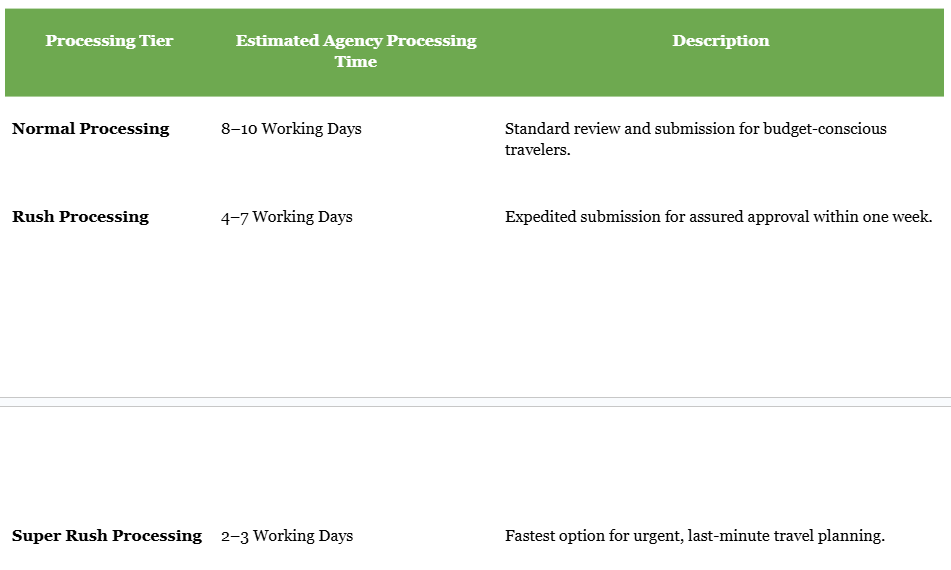 What are the Photo Requirements to Ensure My EATV Isn't Rejected?
Incorrect photographs are one of the most common reasons for rejection. Ensure your digital photograph meets these strict criteria:
- Size: 500x500 pixels (or 2x2 inches / 51x51 mm).
- Background: Must be plain white or off-white. No shadows, patterns, or colors.
- Head Position: Full frontal view of the head, centered, occupying 60-80% of the frame.
- Expression: Neutral facial expression, mouth closed, eyes open and visible.
- Accessories: No sunglasses, no headwear (except for religious reasons), and clear visibility of the face.
- File: Usually required in JPG format and under 500KB in size.
Is the East Africa Tourist Visa Multiple Entry?
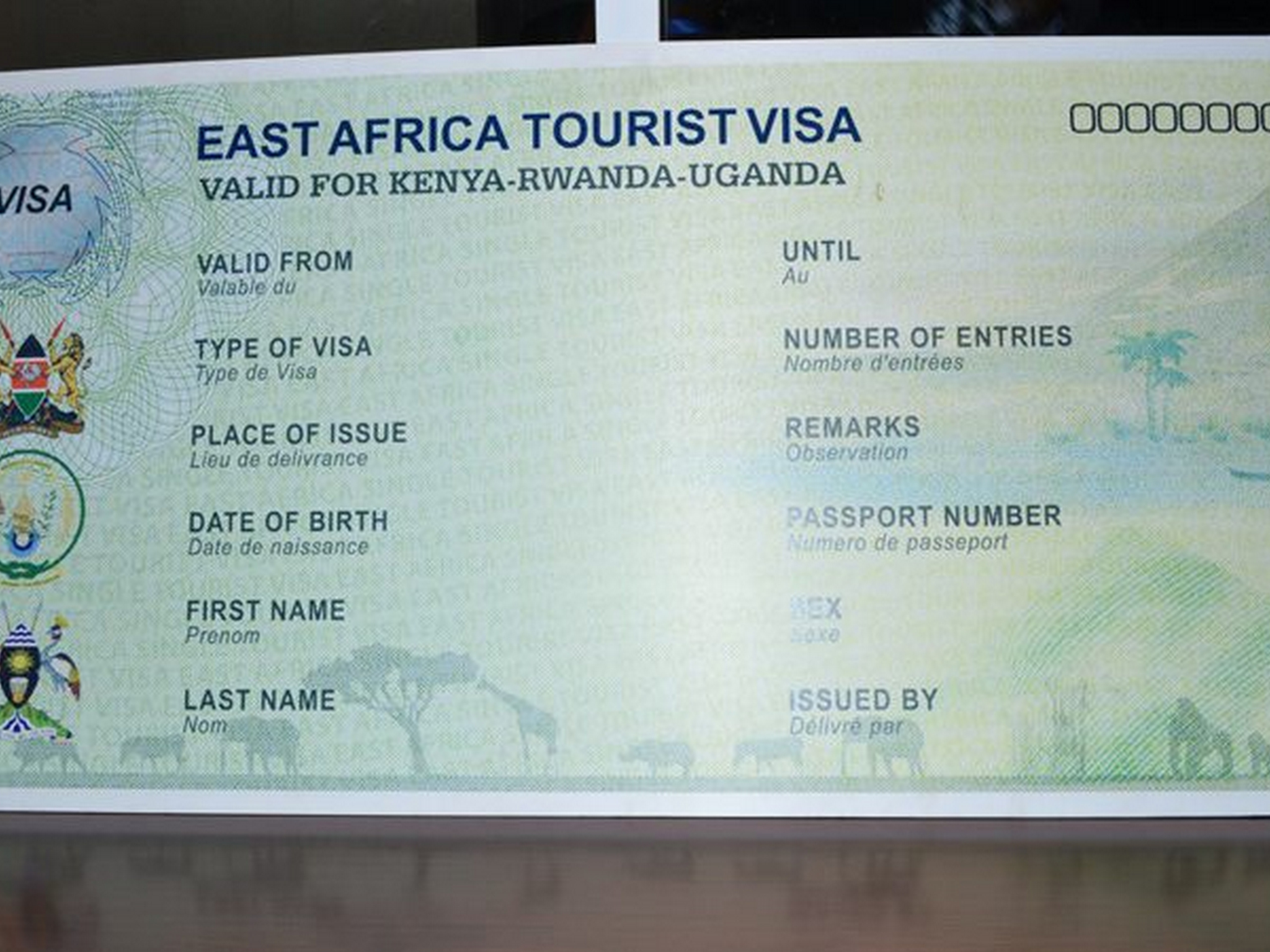
Yes. The EATV is a Multiple Entry visa. This is one of its biggest advantages.
Once you have entered the first country, you are free to travel back and forth between Kenya, Rwanda, and Uganda as often as you like during the 90-day validity period. You will simply present your EATV approval letter and passport at the internal land borders or airport immigration desks.
Can I Travel Outside the Three Countries and Re-enter on the EATV?
No. The EATV is valid only within the Kenya-Rwanda-Uganda bloc.
If you leave the three participating countries (for instance, flying to Tanzania or connecting through Dubai) and attempt to re-enter any of the three EATV nations, your existing EATV will be considered expired or invalid. You will then be required to apply for a brand new single-country visa (VOA or eVisa) to gain re-entry.
Is the EATV Extendable Beyond the 90-Day Limit?
No, the EATV is strictly non-extendable.
The 90-day validity period begins the moment you enter the first country and cannot be renewed or extended within the region. If you wish to stay longer than 90 days, you must exit the EATV bloc and apply for a standard, single-country tourist or visitor visa (V1 or equivalent) for the country you wish to remain in.
Do I Need to Submit Proof of Funds or Travel Insurance?
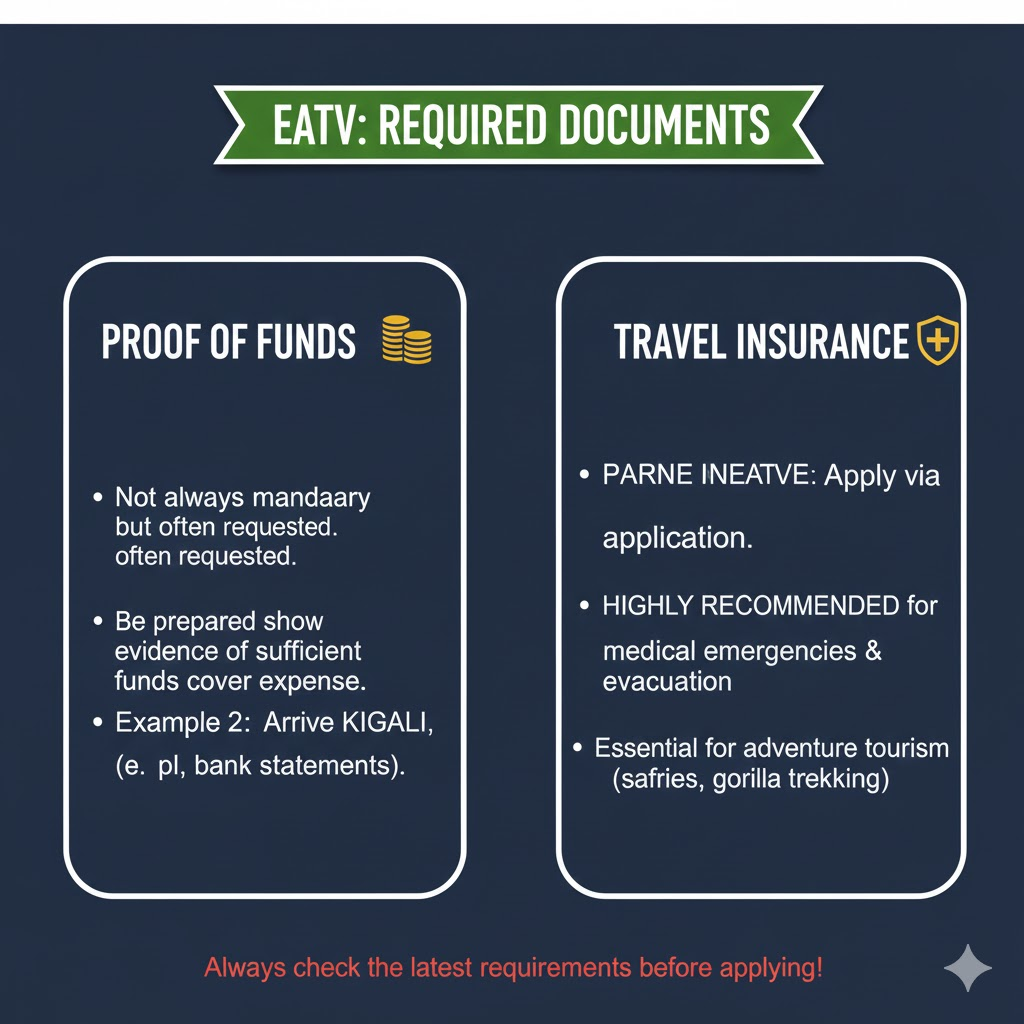
While proof of sufficient funds (such as recent bank statements) is not always listed as a primary mandatory document on every official portal, immigration authorities in all three countries reserve the right to request it upon application or arrival. You should be prepared to show evidence that you can comfortably cover your expenses.
Regarding Travel Insurance, while it is not mandatory for the EATV application itself, it is highly recommended by all regional embassies and travel experts. The EATV region is popular for adventure tourism (safaris, hiking, gorilla trekking), and comprehensive insurance covering medical emergencies and, critically, emergency medical evacuation, is essential for traveler safety.
Can I Apply for the EATV on Arrival at the Airport?
The ability to obtain the EATV on arrival varies by country:
- Rwanda: Often available at Kigali International Airport (KGL) if Rwanda is your first entry point.
- Kenya: Generally not recommended, as Kenya's immigration favors the pre-approved eVisa/eTA system.
- Uganda: Generally not available for the EATV; online application is mandatory prior to travel.
Verdict: Given the inconsistent policies and the potential for long waits, applying online in advance through the official portal of your first entry country is strongly advised.
Why Do Visa Agents (Like evisa-iraq.org) Charge a Service Fee for the EATV?
When utilizing a private visa agent (such as evisa-iraq.org or other online services), the total cost includes two components: the official government fee of $100 USD and the agent’s service fee.
The agent’s service fee covers non-government services designed to guarantee accuracy and efficiency:
- Error Proofing: Agents review your entire application and uploaded documents to correct mistakes (e.g., photo compliance, itinerary errors) that could lead to rejection by immigration authorities.
- 24/7 Support: Access to dedicated customer service to handle urgent queries or issues, especially valuable when dealing with multi-country documentation.
- Expedited Tiers: They offer the Rush and Super Rush processing options (Section 5), prioritizing your application for the fastest possible turnaround.
- Streamlined Forms: They often use more user-friendly, multilingual platforms than the government portals, simplifying the process.
This service fee is paid for peace of mind, expert guidance, and faster processing, making it a popular choice for travelers with complex itineraries.
What If My First Entry Country is an EATV Member but My Nationality is Exempt?
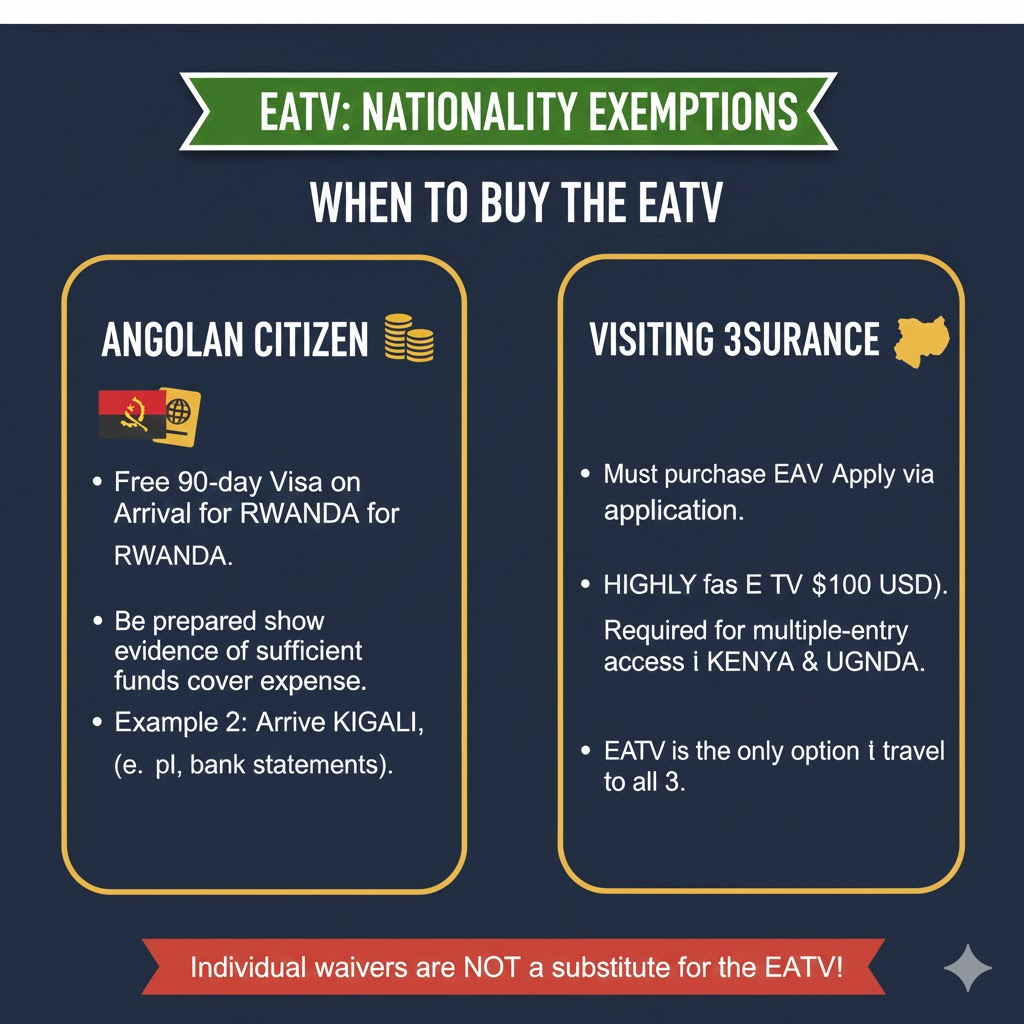
Some nationalities (like Angolan citizens, mentioned in the prior guide) may receive a free visa on arrival for one of the partner states (e.g., a free 90-day VOA for Rwanda).
Rule: If you intend to visit all three countries (Kenya, Rwanda, and Uganda), you must still purchase the EATV for $100 USD, as this is the only way to gain easy multiple-entry access to the other two partner states. The individual country waiver only applies if you plan to stay only in that single country.
What Happens When the EATV Expires?
If you are still in the region when your 90-day EATV expires, you are legally overstaying. Overstaying leads to significant fines and penalties imposed by the respective immigration departments (Kenya, Rwanda, or Uganda) before you are permitted to exit the country.
Tip: Monitor the date of your first entry closely, as the 90-day countdown begins immediately then. If your trip is nearing the 90-day limit, you must exit the EATV region entirely.
The East Africa Tourist Visa is truly a traveler's best friend for exploring Kenya, Rwanda, and Uganda. By understanding the critical "first entry" rule, preparing your documents accurately (especially the Yellow Fever Certificate), and being mindful of the non-extendable 90-day limit, you are set to embark on an unforgettable journey through the heart of East Africa.
Written By:
Dominik Lehmann

Hotels at your convenience
Now choose your stay according to your preference. From finding a place for your dream destination or a mere weekend getaway to business accommodations or brief stay, we have got you covered. Explore hotels as per your mood.