Fiji eVisa Application from Thailand
 Jenson Rhett
30 Oct, 2025
20 mins read
67
Jenson Rhett
30 Oct, 2025
20 mins read
67
Planning a tropical escape from Thailand and eyeing the stunning islands of Fiji? You’re in good company. Fiji is a paradise of turquoise waters, welcoming villagers, and lush rainforest—truly one of those places you go to reset. In this post, I’ll walk you through everything you need to know about the Fiji e-visa (or visa exemption) from Thailand, and along the way serve up plenty of travel inspiration: which part of Fiji to visit, what it’s famous for, food you’ve got to try, top destinations, and some handy travel tips for your trip. I write this as someone who loves island escapes, so expect a conversational tone, like we’re chatting over a cold drink by the beach.
Do Thai citizens need a visa to travel to Fiji?
No, at least for regular short tourist stays.
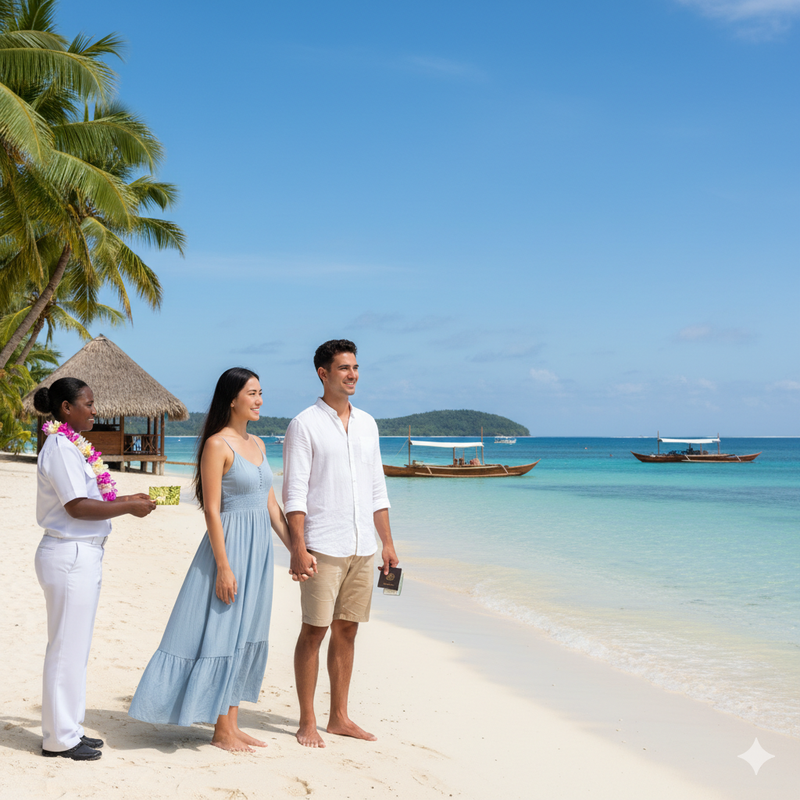
If you hold a Thai passport (citizen of Thailand), you are reportedly visa-exempt for travel to Fiji. According to multiple visa-information sources, Thai passport holders can stay in Fiji as tourists for up to four months without needing to obtain a visa in advance—provided you meet standard entry requirements (valid passport, return/ on-ward ticket, funds, etc.).
To break it down:
- The list of visa-exempt countries includes a large range of nationalities. While specific mention of Thailand appears in third-party visa-info websites, you should always check the latest official list and ask your airline/immigration to be safe.
- Because the rule says you’re given a Visitor Permit on arrival (for visa-exempt countries) rather than a strict “e-visa†you apply for, the process is relatively simple: you just show up, meet the conditions, and you’re good for your stay (up to 4 months).
What to check before you fly
- Make sure your passport is valid for at least 6 months (that’s a common requirement).
- Make sure you have a return or onward ticket.
- Ensure you have evidence of sufficient funds for your stay.
- Check that your airline will board you (sometimes airlines ask for confirmation).
- Keep in mind: if you stay longer than the permitted Visitor Permit (4 months for many visaâ€exempt countries), then you’ll need to apply for an extension or a different permit.
In short: Yes, Thai citizens can travel to Fiji without applying beforehand for a visa, making the journey from Thailand more relaxed than many other destinations. Of course, always double-check the rules close to your departure date in case of changes.
Which countries can enter Fiji without a visa?
The visa policy of Fiji is generous for many travellers. Below is a summary of how it works, and some examples of visa-exempt countries.
According to the online portal of Fiji:
- There is a list of Eligible Countries for the Fiji Visa. Citizens of those countries do not need to apply for a visa before arrival—they will receive a Visitor Permit on arrival.
- The website states: “Visitors coming from countries listed in the visa-exempt list will be given the Visitor Permit on arrival.â€
- For other countries (i.e., those not on the visa-exempt list), you must apply for a visa/permit before travelling.
- It appears there are around 117 countries or so with visa-free or visa-on-arrival arrangements, according to a third-party listing.
Examples of visa-exempt countries:
From the list published, countries from the Americas (e.g., Canada, Brazil, Chile), Europe (e.g., UK, Netherlands, Czechia), Asia & Oceania (e.g., Australia, New Zealand) are included.
Since you’re based in Thailand, you’ll likely be part of that generous visa-exemption group—just verifying ahead is wise.
Where is the best part of Fiji to visit?
Now for the fun part: deciding where in Fiji to go. Fiji is not just one island—it’s an archipelago of over 300 islands (more than 330 islands, many uninhabited) so you’ll have to pick your vibe: resort luxury, beach/party mode, culture & village stays, jungle trekking.
Here are a few excellent choices:
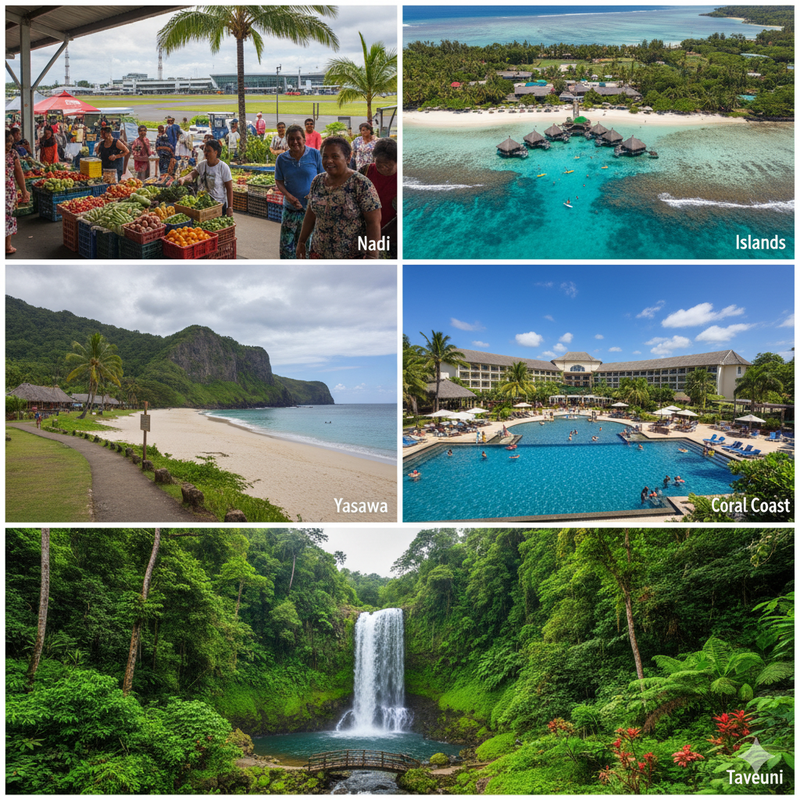
- Nadi on the main island of Viti Levu is often the gateway. It has good airport links, shopping, local markets.
- The Mamanuca Islands: ideal for that postcard-island feel—white sand beaches, turquoise waters, water-sports, and relaxing resorts.
- The Yasawa Islands: For something a bit more remote, natural and less commercial. Hikes, secluded beaches, authentic Fijian village interactions.
- The Coral Coast on Viti Levu: A great mix of accessibility + beach + village culture. If you’d like to stay on the main island but still get the “island-resort†vibe.
- Eating up jungle & waterfalls? The island of Taveuni (the “Garden Islandâ€) is lush, green, ideal for nature lovers.
My pick for “bestâ€: If this is your first trip and you want a balance of convenience + gorgeous scenery + comfort: stay around Nadi or the Mamanucas for a few nights, then take a day trip or stay overnight on an island like Yasawa. That gives you both the comfort of good infrastructure and the magic of remote paradise.
What is Fiji famous for?
Fiji may look like any other tropical paradise at first glance—but it has a handful of special traits that really make it shine. Here are some of the standout features:
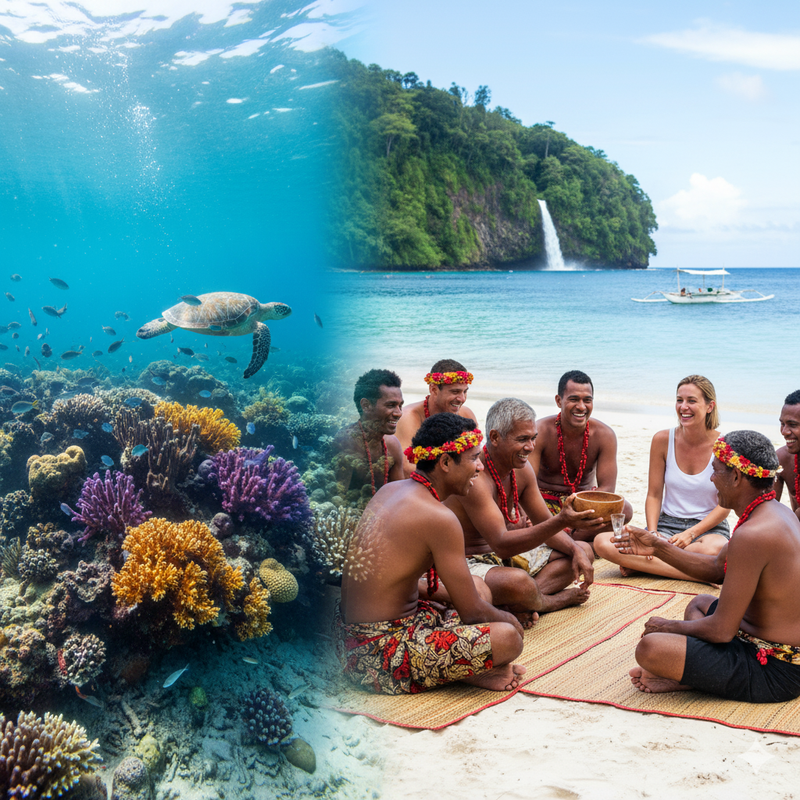
- Beaches & turquoise seas: Its white-sand beaches, clear water and postcard-perfect islands are major draws.
- Marine life & coral-rich reefs: Fiji is often called the “Soft Coral Capital of the World†thanks to its abundant coral formations, vibrant marine biodiversity and excellent snorkelling/scuba spots.
- Warm hospitality & culture: The Fijian greeting “Bula!†is everywhere, and the village culture, traditional dances, kava ceremonies, etc., all make visiting feel more immersive.
- Adventure & nature: Beyond beaches you’ll find rainforest trekking, waterfalls, river tubing, snorkelling with turtles, etc.
- Island-hopping paradise: With over 300 islands you have huge choice. Some islands are ultra-luxury, some are rustic and remote.
- Tourism growth & global appeal: Fiji recently recorded a historic number of visitors, showing how its global profile is rising. For example, Fiji welcomed nearly a million visitors by air in 2024.
So if someone asks “What is Fiji famous for?†you can confidently say: “pristine beaches, coral reefs and warm-hearted culture.â€
Which country visits Fiji the most?
When wondering who visits Fiji the most, the answer is relatively clear: Australia is the top source market.
According to official statistics:
- For 2023, the top visitor market for Fiji was Australia—with around 434,533 tourists arriving from Australia alone.
- New Zealand is the next largest source market (220,963 visitors in 2023) for Fiji.
- In 2024-25, more than one million visitors arrived in Fiji, and while Australian visitors led, other long-haul markets (US, Europe, Canada) are increasingly contributing.
- So, if you’re going from Thailand, you’ll be part of a growing wave of non-traditional markets (i.e., not just Australia/NZ) discovering Fiji.

Most Famous Fijian Foods
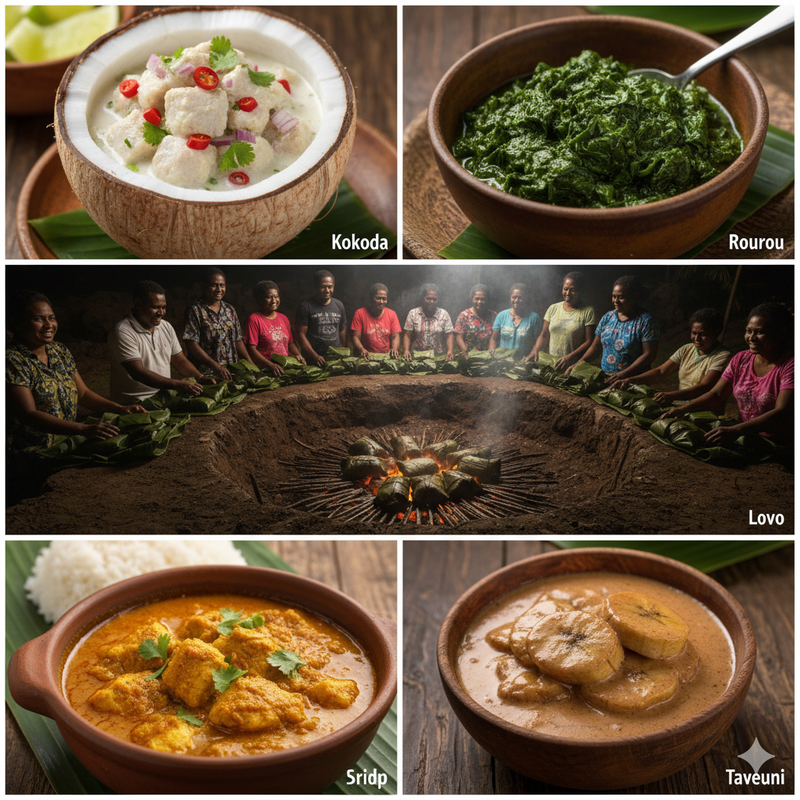
One of my favourite parts of travel is eating local food—and Fiji delivers. Here are some must-try dishes and what makes them special:
- Kokoda – A Fijian version of ceviche: fresh raw fish marinated in lime/coconut milk and spices. Delicious and tropical.
- Rourou – Creamed taro (root vegetable) leaves cooked in coconut milk. A staple side dish.
- Lovo – Not just a dish but a cooking method: meat/fish/root veggies are wrapped (often in banana or coconut leaves), placed in a pit oven with hot stones, covered and cooked slowly. Gives deep flavour and traditional experience.
- Fish Suruwa – A curry dish made with fresh fish and coconut milk. For those who like mild spice.
- Vudi Vakasoso – A dessert: steamed bananas topped with coconut milk and sugar. Simple, comforting.
Eating tips:
- When you stay in a resort or visit a Fijian village, ask if they’ll do a “lovo night†or “village feastâ€â€”this is one of the best ways to taste authentic local food.
- Try the kava ceremony (the earthy-tasting traditional drink) to pair cultural experience with food.
- Also, being an island nation, seafood is fresh and excellent. Don’t hesitate to try local fish grilled or curry style.
Top 5 Most Famous Destinations in Fiji
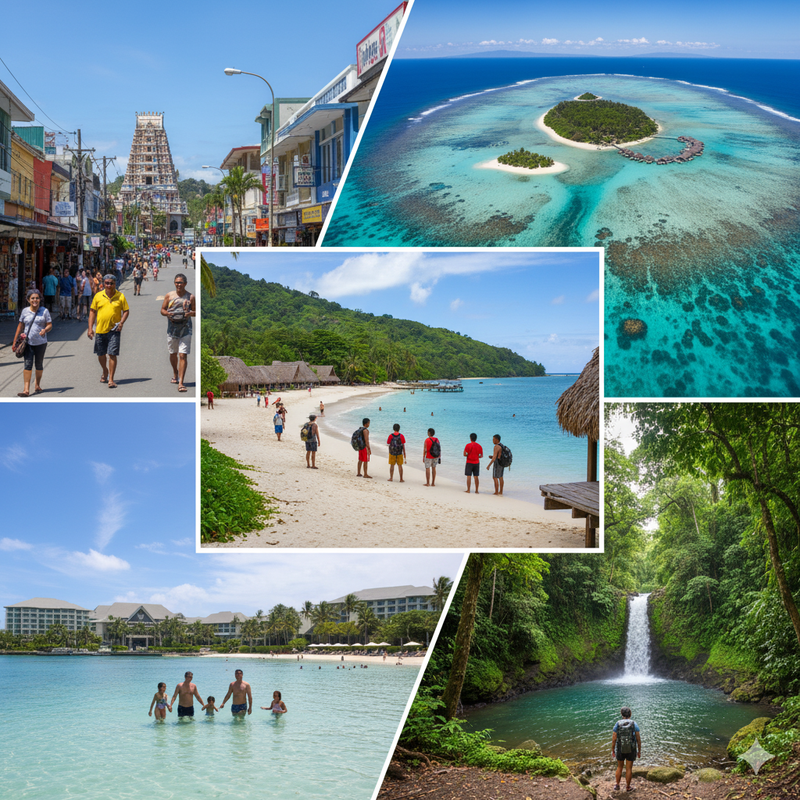
Here are five destinations I recommend highly—each with its own vibe. Pick one or two depending on how long you have.
1. Nadi (Main Island, Viti Levu)
As the main gateway, Nadi is where most flights arrive. It has decent shopping, a variety of accommodation (budget to luxury) and sets you up for island hopping. Staying here gives you convenience and a soft landing into Fiji life.
2. Mamanuca Islands
Think picture-perfect: white sand, turquoise lagoon, coral reefs, water-sports galore. Whether you’re honeymooning, soaking up the sun, or snorkelling, this island cluster delivers.
Yasawa Islands
Less crowded than the more commercial islands. If you want to feel a little more “wild†and connected to nature (and culture), this is a solid pick. You’ll find fewer big resort developments and more authentic island vibe.
Coral Coast (Viti Levu)
Accessible from Nadi, and offering beach + culture + day trips inland. It’s ideal if you have limited time, perhaps travelling with family, or want a mix of relaxation and local experiences.
5. Taveuni (Garden Island)
If you’re into green interiors, waterfalls, rainforest trails, and fewer crowds, then Taveuni is your go-to. It’s less about mega-resorts and more about nature’s spectacle.
Travel Tips for Fiji (Especially from Thailand)
Here are some practical pointers to make your trip smoother, especially coming from Thailand:
1. Flights & Timing
- From Thailand you’ll likely fly via Singapore, Hong Kong, or Australia to Fiji (via Nadi). Check flight options and pick the most convenient via route.
- Check nearest airport in Fiji: Nadi International Airport is the main hub.
- Consider going in the shoulder season (outside peak Australian holidays) for better value and fewer crowds.
2. Packing & Weather
- Bring reef-safe sunscreen—coral reefs are sensitive and many resorts request responsible sunscreen.
- Light tropical clothes are fine; if visiting villages, bring something modest (e.g., for a kava ceremony or village visit).
- Rain-season is roughly November to April; the dryer months are May to October (so for best beach weather go in that window).
- If venturing inland or trekking, bring insect repellent and perhaps a light rain jacket.
3. Money & Budgeting
- Many resorts are allâ€inclusive (food, activities). But if you stay more locally or do village tours, bring cash (Fijian Dollars) or a card that works internationally.
- Exchange rate: check GBP/FJD or USD/FJD in advance so you’re aware of costs.
- Tipping isn’t traditionally expected everywhere, but appreciated for good service (especially at resorts or with guides).
4. Culture & Behaviour
- Greeting “Bula!†is commonly used; respond with a smile.
- When visiting villages, respect local customs: cover up if needed, ask before taking photos of villagers, follow guide instructions.
- In a kava ceremony, you’ll often drink from the communal bowl—take it respectfully.
- If you hire a car (on Viti Levu) note speed limits and village signs; drive with care especially on rural roads.
5. Island-Hopping & Transfers
- Some resorts charge transfer fees (boat or seaplane) if located on outer islands—check ahead so you aren’t surprised.
- Ferry schedules can change with weather; build in some buffer time if connecting flights or moving islands.
- If staying only a few nights, pack light. If moving from island to island, organise luggage transfer or consider staying put for a chunk to reduce transit fatigue.
6. Health & Safety
- Standard travel vaccinations as you’d do anywhere. Sun-protection is a big priority in the tropics.
- Swim safe: check local advice for currents or tides. For snorkelling/diving, use trusted operators.
- Respect nature: don’t touch or take coral, avoid feeding wild animals, and stick to marked paths for hiking.
7. Visa & Entry Documentation
- As we discussed: Thai citizens generally visaâ€exempt, but carry your valid passport, return/ onward ticket, proof of sufficient funds, and ideally show accommodation booking.
- At immigration you’ll get issued the Visitor Permit—confirm the length allowed (commonly up to 4 months).
- If you plan to stay longer or plan to work/volunteer, check the correct permit type in advance.
- Travel insurance is highly advisable (covers health, cancelations, underwater activities).
- Check with your airline: sometimes they require proof of entry requirements before boarding.
Final Thoughts

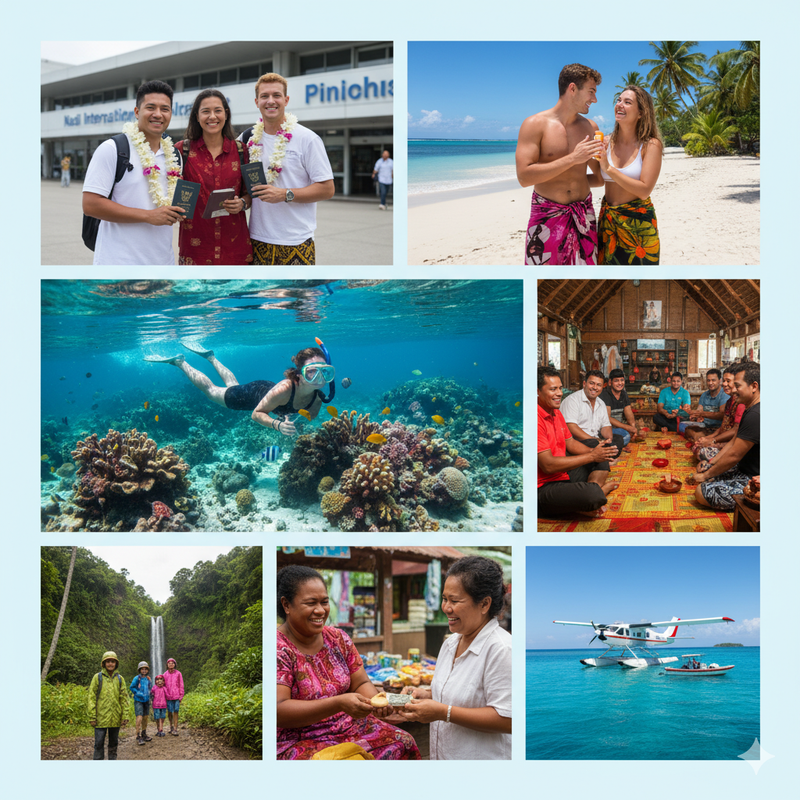
Travelling from Thailand to Fiji feels like stepping into paradise—but with the comfort of knowing the admin side (visa/permit) is relatively hassle-free for you as a Thai citizen. With that sorted, you’re free to focus on what really matters: sandy beaches, coral reefs, friendly locals, and delicious food.
Whether you opt for the resort-style luxury of the Mamanucas, the serene wild of the Yasawas or Taveuni, or keep things simple at Nadi or the Coral Coast—make sure you soak in some culture, eat well, and slow down a bit.
Written By:
Jenson Rhett

Hotels at your convenience
Now choose your stay according to your preference. From finding a place for your dream destination or a mere weekend getaway to business accommodations or brief stay, we have got you covered. Explore hotels as per your mood.