How Desert Hotels Keep Guests Comfortable in Extreme Heat Without Heavy Air Conditioning
 Lalbabu Prasad
31 Dec, 2025
8 mins read
139
Lalbabu Prasad
31 Dec, 2025
8 mins read
139
Traveling to desert destinations is an unforgettable experience. The golden landscapes of Rajasthan, the dunes of Dubai, the open deserts of Morocco, or the arid regions of Arizona attract millions of travelers every year. Yet, one question often worries travelers before they book their stay: How do hotels stay comfortable in such extreme heat?
Surprisingly, the answer is not always air conditioning. In many desert hotels, heritage properties, eco-resorts, and safari camps, evaporative cooling plays a key role in maintaining comfort—often more effectively than conventional AC systems.
The Real Challenge of Cooling in Desert Travel Destinations
Desert regions regularly experience temperatures above 40°C. Traditional air conditioning can cool rooms quickly, but it comes with serious drawbacks in these environments:
- Extremely high electricity consumption
- Dry, recycled indoor air
- Uncomfortable temperature shock when moving outdoors
- High operational costs passed on to guests
For hotels that operate large open courtyards, tents, dining halls, and semi-open spaces, air conditioning alone is neither practical nor sustainable. This is where evaporative cooling becomes a smart and traveler-friendly solution.
What Is Evaporative Cooling and Why Does It Suit Desert Travel?
Evaporative cooling is based on a natural process: water evaporation. When hot, dry air passes through water-saturated cooling pads, the heat is absorbed, and the air temperature drops before it enters the living space.
Desert climates are ideal for this process because the air is dry. The lower the humidity, the more effective evaporation becomes. This is why evaporative cooling has been used for centuries in hot regions, long before modern technology existed.
Today, hotels combine traditional architectural design with modern evaporative cooling systems to create comfortable, breathable environments for guests.
Why Desert Hotels Prefer Evaporative Cooling Over Full-Time AC
1. Fresh Air Improves Guest Comfort
Unlike air conditioning, which recirculates indoor air, evaporative cooling systems supply 100% fresh air. This creates a lighter, more breathable atmosphere—something travelers immediately feel when entering desert resorts.
Guests often report better sleep quality and fewer issues like dry skin or throat irritation compared to heavily air-conditioned rooms.
2. Better Experience in Open and Semi-Open Spaces
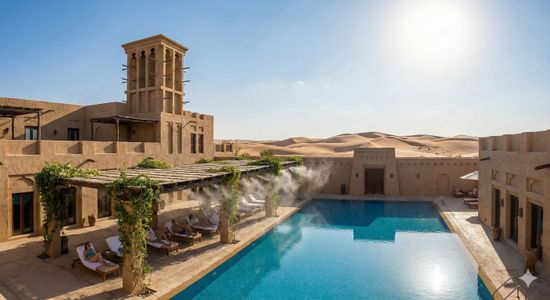
Desert hotels are known for courtyards, open dining areas, poolside lounges, and tented accommodations. Air conditioning struggles in these environments.
Evaporative cooling, however, works exceptionally well in large and open spaces, making it ideal for:
- Desert safari camps
- Heritage palace courtyards
- Outdoor restaurants
- Cultural performance areas
This allows hotels to preserve the authentic desert experience without compromising comfort.
3. Energy Efficiency Supports Sustainable Tourism
Sustainability is increasingly important to travelers. Evaporative cooling systems consume up to 80–90% less electricity than air conditioning.
By using water-based cooling instead of refrigerants, hotels significantly reduce their carbon footprint. Many eco-resorts openly promote evaporative cooling as part of their commitment to responsible tourism.
Traditional Desert Architecture and Natural Cooling
Long before modern systems existed, desert civilizations mastered passive cooling techniques. Travelers staying in heritage properties often unknowingly benefit from these designs.
Common features include:
- Thick stone walls that reduce heat transfer
- High ceilings that allow hot air to rise
- Central courtyards with water features
- Wind catchers and natural airflow channels
Modern evaporative cooling systems enhance these traditional designs by actively cooling incoming air while respecting the original architecture. This fusion of old and new creates a uniquely comfortable travel experience.
Why Air Conditioning Alone Is Not Ideal for Desert Travel
Many travelers assume more air conditioning equals more comfort. In desert regions, this is not always true.
Excessive AC use can cause:
- Dehydration due to overly dry air
- Frequent temperature shocks when moving outdoors
- Reduced air quality in closed rooms
Evaporative cooling avoids these issues by maintaining moderate temperatures and continuous airflow. The result is a more natural and pleasant indoor environment that aligns with the desert climate.
Where Travelers Are Most Likely to Experience Evaporative Cooling
You are most likely benefiting from evaporative cooling if you stay at:
- Desert safari camps
- Eco-resorts and sustainable lodges
- Heritage palaces and havelis
- Large desert hotels with courtyards
- Tent-based luxury accommodations
In many cases, hotels use a hybrid approach, combining evaporative cooling for common areas and air conditioning for enclosed rooms.
What This Means for Travelers Planning a Desert Trip
Understanding how your accommodation is cooled can help you choose better stays. If you value:
- Fresh air
- Eco-friendly travel
- Authentic local experiences
- Comfortable open spaces
Then properties using evaporative cooling are often the better choice, especially in dry, high-temperature destinations.
Many experienced travelers now look beyond “air-conditioned rooms” and focus on overall comfort and sustainability when booking desert accommodations.
Final Thoughts: Cooling That Matches the Destination
Desert travel is about experiencing the environment, not escaping it entirely. Evaporative cooling allows hotels to work with the climate, not against it. It delivers comfort, fresh air, and sustainability in a way traditional air conditioning often cannot.
The next time you enjoy a cool breeze in a desert courtyard or sleep comfortably in a safari tent despite the heat outside, there is a good chance evaporative cooling is doing the work quietly in the background—enhancing your travel experience without you even noticing.
Written By:
Lalbabu Prasad

Hotels at your convenience
Now choose your stay according to your preference. From finding a place for your dream destination or a mere weekend getaway to business accommodations or brief stay, we have got you covered. Explore hotels as per your mood.