How Flight Simulators and Live Gaming Both Use Immersive Tech to Enhance Experience
 Aliya Shahzadi
22 Oct, 2025
8 mins read
132
Aliya Shahzadi
22 Oct, 2025
8 mins read
132
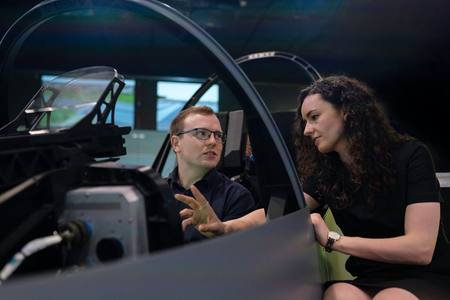
Stepping into a flight simulator or loading up a live game today feels nothing like it did a decade ago. The screens are sharper, the sounds more lifelike, and how users interact with the environment has dramatically changed.
The tech doesn’t just display what’s happening—it puts users right in the middle of the action.
Developers build flight simulators and live games around the same core principles: realism, interactivity, and advanced technology. When done well, these elements capture users’ attention and create memorable, engaging experiences. They keep people immersed without relying on flashy effects or overly complex systems.
Let’s explore how these platforms use immersive technology to improve user experiences.
Live and Dynamic Engagement
Not all immersion stems from visuals. Some of it comes from how people interact and the environment. Modern flight simulators often feature live air traffic control or shared virtual skies where users fly alongside others. This introduces unpredictability and raises the level of challenge in a rewarding way.
Gaming has expanded on this concept even further. Online matches with live players, ever-changing objectives, and time-limited events create unique and unscripted moments. Since user behaviour is unpredictable, it creates tension and excitement.
A notable example of immersive technology in action is the integration of live dealers in popular casino games. These titles use real-time video streams, realistic studio backdrops, and interactive features to mimic the atmosphere of an actual casino.
This shows that realism and live interaction extend beyond action games and are just as effective in games of timing and chance.
Creating Realistic Environments
Visual detail is one of the first things users notice. Flight simulators now feature highly accurate skies, runways, and landscapes resembling real-world locations. Game developers apply similar design techniques to build rich, believable settings that do more than serve as simple backdrops.
Sound design also plays a crucial role in deepening immersion. From engine noise and wind to background chatter or intentional silence, these audio cues help establish mood and guide attention, especially in high-focus scenarios like cockpits or competitive multiplayer matches.
Many flight sims now incorporate real-world satellite imagery and weather data to ground the experience in reality. Similarly, live games frequently replicate real cities, natural environments, or fantasy worlds with logical physics and coherent internal rules. In both cases, the goal is to make the environment feel authentic so the user naturally feels part of it.
Simulating Physical Movement
One of the most significant leaps in immersive technology is how movement feels. Flight simulators use tilt, lift, or shake motion platforms to replicate plane movements during takeoff, turbulence, or landing. This offers aspiring pilots a close approximation of real flight conditions.
Gaming setups are quickly catching up. Vibration-enabled controllers, motion-sensitive devices, and complete VR rigs translate in-game events into physical feedback. Sudden impacts, footsteps, or terrain changes are felt through tactile responses, making each action more tangible.
Some simulators offer full-motion cockpits that respond to every pilot's input.
On the gaming side, more studios are designing titles that support haptic vests and gloves. These enhancements enable players to sense direction, weight, and contact, deepening the user’s physical connection to the digital world.
Interactive Controls and Interfaces
Smooth, intuitive interaction is essential for immersion. Flight simulators often use physical controls with real switches, levers, and instrument panels. This not only enhances realism but also builds muscle memory, which is a vital skill for trainee pilots.
Touchscreens, VR controllers, and voice commands are becoming increasingly responsive and precise in gaming. These tools allow players to act without overthinking, keeping them grounded in the moment. The more natural the input feels, the more believable the experience becomes.
Interface design also shapes how much control users feel they have. For example, a pilot adjusting altitude by turning a dial expects precise feedback. Likewise, a gamer switching weapons or interacting with an object expects immediate, accurate responses. That sense of control builds trust in the system and strengthens immersion.
Use of Advanced Tech to Train or Entertain
Behind every immersive moment is a blend of advanced technologies. Flight simulators frequently integrate artificial intelligence, real-time weather modelling, and sensor data to replicate realistic flight conditions. These tools help tailor training sessions to each user’s real-time actions.
Live games use similar technologies for entertainment purposes. Developers employ adaptive algorithms to balance difficulty, track player choices, and customise experiences for each session. This keeps the gameplay challenging, fair, and engaging.
Technologies like VR and AR have pushed immersion even further. Some simulators now include AR overlays to annotate cockpit instruments during training. In gaming, VR delivers interactive worlds that respond seamlessly to user input. This fusion of physical and digital elements is what keeps users coming back.
Final Thoughts
Immersive technology has transformed how people train, play, and connect in digital environments. While flight simulators and live games serve different roles, they rely on the same foundational tools to deliver lifelike, engaging experiences.
It’s no longer just about sharper visuals or better sound—it’s about making users feel like they are in the moment.
Written By:
Aliya Shahzadi

Hotels at your convenience
Now choose your stay according to your preference. From finding a place for your dream destination or a mere weekend getaway to business accommodations or brief stay, we have got you covered. Explore hotels as per your mood.