Japan Visa for China Citizens – Application Process & Visa Guide
 World Visa
15 Mar, 2026
15 mins read
541
World Visa
15 Mar, 2026
15 mins read
541

Dreaming of the cherry blossoms in Kyoto or the neon lights of Shinjuku? For Chinese citizens, visiting Japan has become significantly more accessible thanks to the electronic visa system. Whether you are a resident of Mainland China or a Chinese national living abroad, understanding the eVisa process is the first step to your Japanese adventure.

In this guide, we break down everything you need to know about the Japan eVisa for Chinese citizens, from document checklists to the fastest processing times.
Who is Eligible for the Japan Tourist eVisa?
Currently, the Japan eVisa is available for Chinese citizens holding ordinary passports who plan to visit Japan for tourism purposes only. It is valid for a single-entry stay of up to 15 or 90 days, depending on your specific circumstances and where you are applying from.
What are the Different Types of Japan eVisas for Tourism?
While most travelers seek the standard tourist entry, it is important to know the limitations:
- Tourism/Single Entry: Valid for stays of 15 to 90 days.
- Validity: The visa must be used within 3 months of issuance.
- Important Note: This eVisa is not for business, visiting relatives, or transit. For those purposes, a traditional sticker visa is still required.
What is the Document Requirement for Japan eVisas from China?
To ensure a high approval rate, you must have the following digital document requirement for Japan eVisas from China:
- Valid Passport: A clear scan of the bio-data page.
- Facial Image: A recent, high-quality digital photo with a white background.
- Proof of Immigration Status: (If living outside China) A valid Permanent Residence card or visa for your current country of residence.
- Proof of Address: A utility bill or official document confirming your current residence.
- Flight Itinerary: Confirmed or tentative flight reservations showing entry and exit.
- Daily Schedule & Hotel Info: A day-by-day breakdown of your activities and accommodation details.
- Financial Proof: The latest 3-month bank statement to show sufficient funds.
- Special Cases: A parental consent form for unaccompanied minors or an ERFS certificate (for specific Business-related purposes).
How Long Does the Japan eVisa Take to Process?
Timing is crucial when planning your trip. Depending on your urgency, you can choose from three processing tiers:
- Standard Processing: 26 - 32 Working Days.
- Rush Processing: 20 - 26 Working Days.
- Super Rush Processing: 14 - 20 Working Days.
Pro-tip: We recommend applying at least 45 days before your flight to account for any public holidays or document clarifications.
How Do I Apply for a Japan eVisa Online?
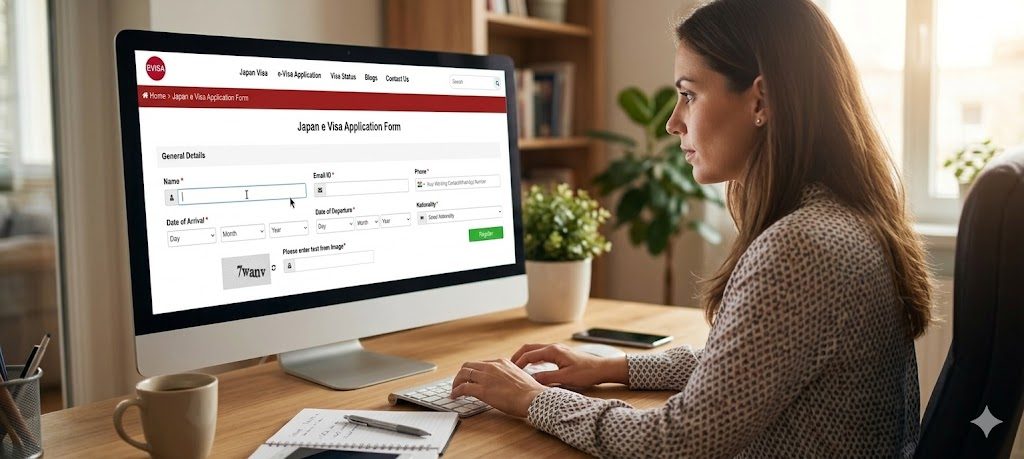
The application process is entirely digital. You will need to fill out an online form, upload your scanned documents, and pay the service fee. Once the Japanese consulate reviews your application, you will receive an email notification regarding the status.
What Payment Methods Are Accepted for the Japan eVisa Fee?
When using a service like japan-e-visa.info, payment is made simple. You can typically use major credit or debit cards (Visa, MasterCard), and often digital wallets. The service fee covers document verification, expert review, and 24/7 support to ensure your application is perfect before it reaches the consulate.
Can I Apply for the Japan eVisa if I Live in Mainland China?
Yes, but there is a specific rule: If you are a resident of Mainland China, you must apply through an accredited travel agency or a specialized service like japan-e-visa.info. Individual direct applications through the government portal are currently restricted for residents within China.
What are the Most Common Reasons for Japan eVisa Rejection?
Avoid these common pitfalls to ensure your visa is granted:
- Low Image Quality: Blurry passport scans or photos that don't meet the "white background" rule.
- Inconsistent Itinerary: Flight dates that don't match your hotel bookings.
- Insufficient Funds: Bank statements that do not show enough balance for the duration of the stay.
How Do I Properly Display My eVisa at the Airport?
Remember, a printout or a screenshot of your eVisa will not be accepted. You must be able to log in to the official portal and display the live "Visa Issuance Notice" on your smartphone or tablet at the airport check-in counter and to Japanese immigration officers.
What are the Current Japan Immigration Rules I Should Know?

Upon arrival, you will undergo a brief immigration procedure where your photo and fingerprints are taken. You must present your digital eVisa notice. Additionally, you are required to answer questions regarding your stay and confirm you have a return ticket. Compliance with local laws is mandatory to avoid deportation or future entry bans.
Can I Legally Work on a Japan Tourist eVisa?
Absolutely not. The Japan eVisa is strictly for leisure and tourism. Engaging in any paid activity or employment is a violation of your visa status. If you intend to work in Japan, you must apply for a specific Work Visa through the traditional consulate process.
Do I Need a Separate Transit Visa if I Only Stop in Japan?
The eVisa is for tourism. If you are staying within the international transit area of the airport and have a connecting flight, you may not need a visa. However, if you plan to clear immigration and stay overnight in a hotel outside the airport, you must have a valid tourist eVisa or a specific Japan Transit Visa.
Is Japan a Safe Destination for Chinese Tourists?
Japan is widely regarded as one of the safest countries in the world. Crime rates are exceptionally low, and the public transportation system is reliable and safe at all hours. However, always exercise standard travel precautions, such as keeping your passport secure and having travel insurance for medical emergencies.
Is a Private eVisa Agency Worth the Fee?
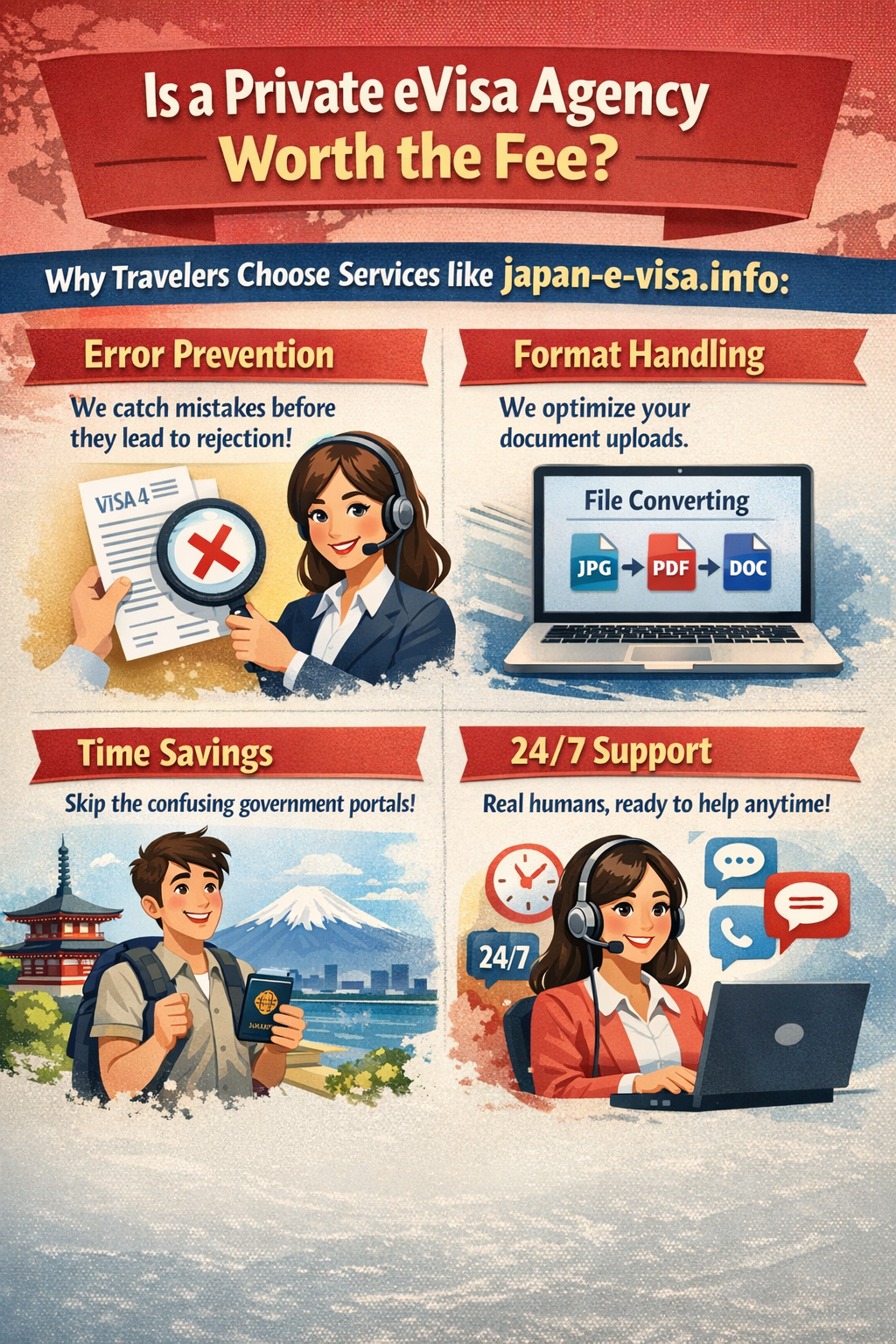
Many travelers ask if paying for an agency like japan-e-visa.info is worth it. The answer is usually yes for the following reasons:
- Error Prevention: They catch mistakes that would lead to immediate rejection.
- Format Handling: They convert and optimize your document uploads.
- Time Savings: No need to navigate complex government portals in foreign languages.
- Support: Real humans are available 24/7 to answer your specific questions.
How Much Cash Should I Carry to Japan?
While Japan is becoming more digital, it is still a "cash-heavy" society in some areas. For a comfortable trip, we recommend carrying around ¥5,000 - ¥10,000 per day for smaller shops, street food, and shrines that may not accept cards.
Can Tourists Use International Credit Cards in Japan?
Yes, international credit cards (Visa, MasterCard, Amex) are widely accepted in major cities, department stores, hotels, and most restaurants. It is a good idea to notify your bank before traveling to avoid your card being flagged for suspicious activity.
What is ATM Availability Like for Foreigners?
ATMs are everywhere! Look for ATMs in 7-Eleven stores (7-Bank) or Post Offices (JP Bank). These are the most reliable for international cards and usually offer English menu options. They are open 24/7 in most convenience stores.
FAQ
Q: Can I extend my 15-day eVisa while in Japan?
A: No, short-term tourist eVisas cannot be extended. You must exit before your stay expires.
Q: Is the visa fee refundable if rejected?
A: Typically, service fees are non-refundable as they cover the administrative work of document verification and expert review.
Q: Do I need a physical interview?
A: In most cases, no. However, the consulate reserves the right to request an interview if they find discrepancies in your application.
Conclusion: How to Start Your Japan Journey Today?
The Japan eVisa for Chinese citizens has simplified travel, but the key to success lies in careful preparation. By gathering the right documents and choosing a reliable processing partner, you can focus on what really matters—planning your perfect Japanese itinerary.
Written By:
World Visa

Hotels at your convenience
Now choose your stay according to your preference. From finding a place for your dream destination or a mere weekend getaway to business accommodations or brief stay, we have got you covered. Explore hotels as per your mood.