Japan eVisa for Taiwan Citizens
 Alexis Charpentier
07 Dec, 2025
20 mins read
1654
Alexis Charpentier
07 Dec, 2025
20 mins read
1654

Japan remains one of the top travel destinations for Taiwanese tourists, offering a perfect blend of rich tradition, cutting-edge modernity, and breathtaking natural landscapes. From the snowy peaks of Hokkaido to the bustling streets of Tokyo, the allure of Japan is undeniable.

As travel protocols evolve, understanding the entry requirements is crucial for a smooth journey. Whether you are planning a quick family getaway or a longer exploration, this guide covers everything you need to know about the Japan eVisa for Taiwan citizens, entry rules, and the application process.
Do Taiwanese citizens need a visa for Japan?
For the vast majority of travelers, the answer is no.
According to current regulations, Taiwanese citizens with a valid passport that includes a Personal ID Number generally do not need a visa for short-term tourist stays. This privilege falls under the Visa Waiver Program, allowing eligible Taiwanese nationals to enter Japan for tourism, business, or visiting friends and relatives without applying for a visa in advance.
Under this visa exemption arrangement, you can stay in Japan for up to 90 days.
However, there are specific scenarios where a visa is required:
- If you intend to stay longer than 90 days.
- If you plan to work or engage in paid activities in Japan.
- If your passport does not contain a Taiwan Personal ID number.
- If you have a criminal record or have been previously deported, which may affect your eligibility for the waiver.
Additionally, for residents of Taiwan (e.g., foreign nationals living in Taiwan with an ARC) who are not from visa-exempt countries, a visa is required. The Japan eVisa system is now a convenient option for these residents.
Can Taiwanese citizens apply for a Japan e-visa online for tourism?
If you are a Taiwanese citizen eligible for the visa waiver, you typically do not need to apply for Japan eVisa; you simply arrive with your passport.
However, the Japan eVisa system is available and highly recommended for specific categories of travelers who do require a visa. This includes:
- Residents of Taiwan (non-Taiwanese nationals) who hold passports from countries that do not have a visa exemption agreement with Japan (e.g., nationals of China, Vietnam, Philippines, Indonesia living in Taiwan).
- Taiwanese citizens who do not hold a passport with a Personal ID Number.
- Travelers who wish to secure a visa for specific durations not covered by the standard waiver policies.
The eVisa for residents allows for short-term stays of 15, 30, or 90 days, depending on eligibility and nationality.
What are the visa requirements for Taiwanese citizens for short-term tourism in Japan?
For Visa-Free Entry (Visa Waiver)
If you are entering under the standard visa exemption, you must present:
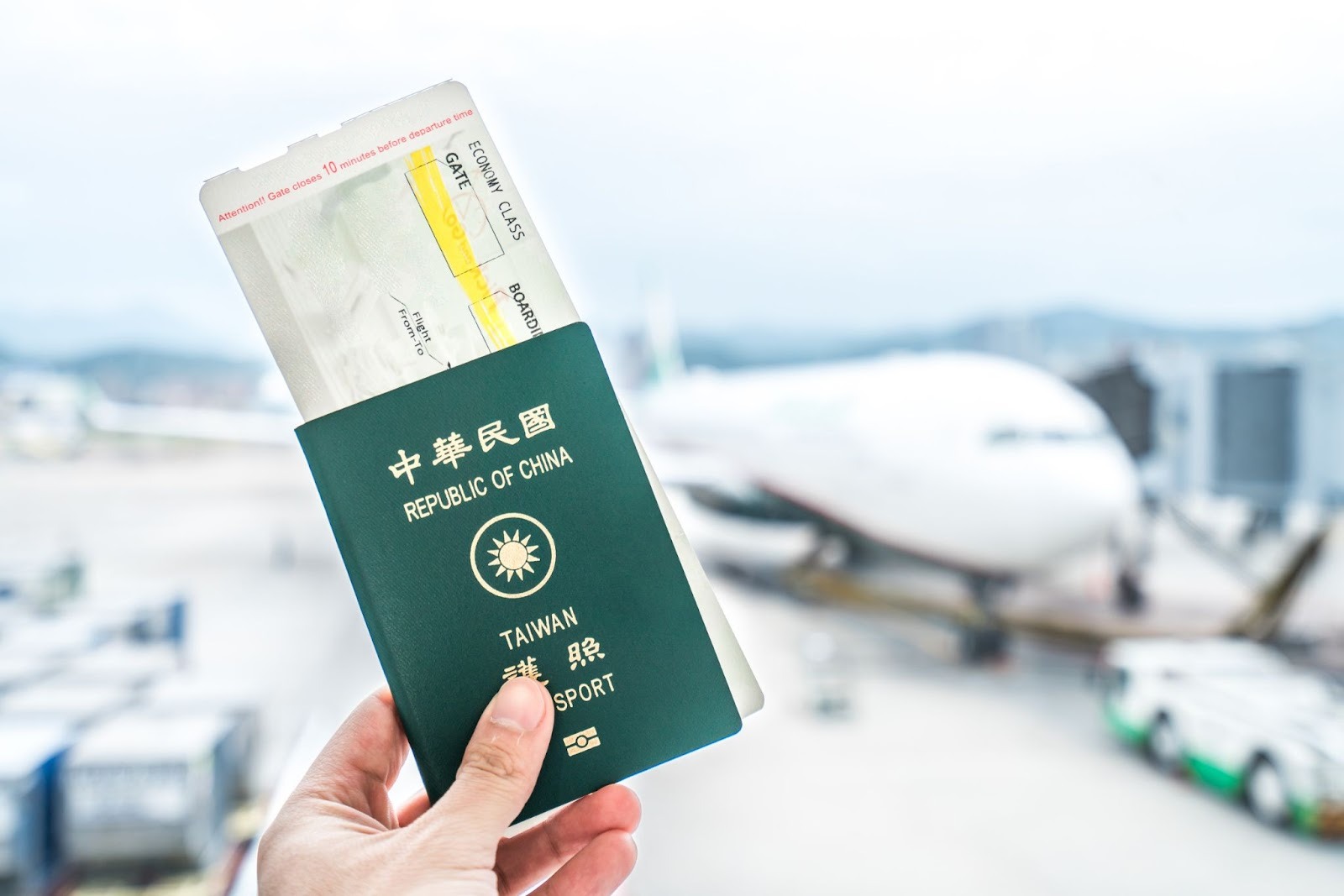
- Valid Passport: Must be valid for the entire duration of your stay and must include your Personal ID Number.
- Return/Onward Ticket: Proof that you intend to leave Japan within 90 days.
- Financial Sufficiency: Proof that you can support your trip (e.g., access to bank funds or credit cards), though this is checked at the discretion of immigration officers.
For Japan eVisa Applicants
If you are applying for a Japan eVisa (e.g., as a foreign resident in Taiwan), the requirements are more comprehensive. You will generally need to upload:
- Passport Bio Page: A clear, color scan of your valid passport's biographical page.
- Applicant Photo: A recent photo (taken within the last 6 months) facing forward with a plain white background. No edits, blurriness, or printed photos scanned.
- Flight Itinerary: A document showing the visa applicant's name and date along with ALL flight information.
- Bank Statements: The most recent and consecutive three (3) months of bank statements. These must be issued by a bank in your country (residence) under your name and current address.
- Proof of Residential Address: One valid document such as a Driver's License, State ID, Utility Bill, or Lease Agreement.
- Detailed Schedule of Stay: A daily activity plan describing your accommodation information, phone numbers, and addresses.
- Proof of Immigration Status: (For non-Taiwanese residents applying from Taiwan) Front and back of your Alien Resident Certificate (ARC) or valid visa.
What are the entry requirements for Taiwanese citizens traveling to Japan?
Upon arrival at a Japanese airport (like Narita, Haneda, or Kansai), you will go through immigration procedures.
- Biometrics: You will be required to provide fingerprints and a facial photo (except for travelers under 16 years old).
- Disembarkation Card: You must fill out an arrival card (Disembarkation Card for Foreigners). This can be done on paper on the plane or digitally via the Visit Japan Web service before you fly (highly recommended for faster entry).
- Passport Validity: Ensure your passport is valid for the duration of your trip. Japan does not strictly require a "6-month validity" beyond the stay, but it is a safe travel practice to have at least 6 months remaining.
What are some popular family-friendly tourist attractions in Japan?
Japan is incredibly safe and welcoming for families.
- Tokyo Disneyland & DisneySea: World-class theme parks that are a hit with all ages.
- Ghibli Park (Nagakute): A magical experience for fans of Studio Ghibli films.
- Universal Studios Japan (Osaka): Famous for the Super Nintendo World and Harry Potter areas.
- Okinawa Churaumi Aquarium: One of the largest aquariums in the world, perfect for a relaxing tropical vibe.
- Nara Park: Kids love feeding the friendly, bowing deer.
What Japanese visa is needed for longer stays or work?
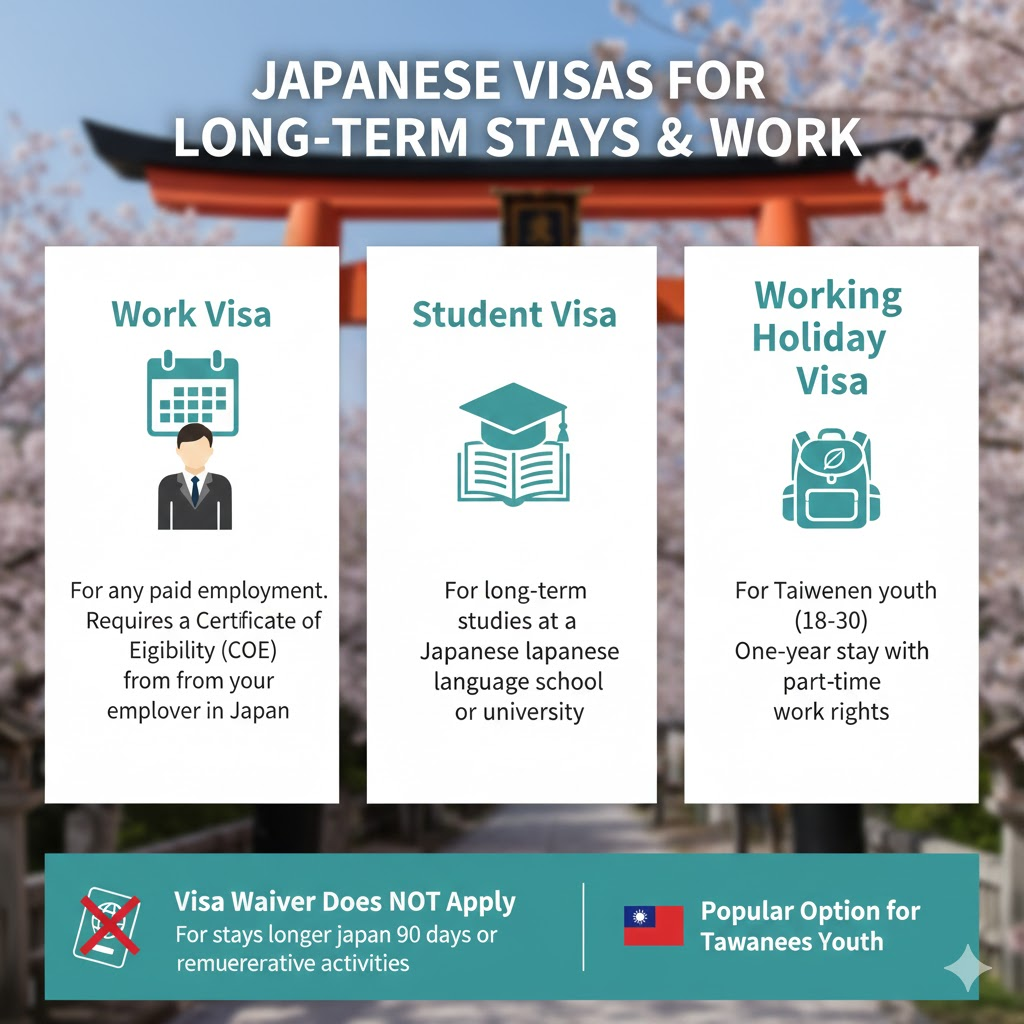
If you wish to stay longer than 90 days or engage in remunerative activities (work), the visa waiver does not apply.
- Work Visa: Required for any paid employment. You must secure a Certificate of Eligibility (COE) from your employer in Japan before applying.
- Student Visa: For long-term studies at a Japanese language school or university.
- Working Holiday Visa: A popular option for Taiwanese youth (aged 18-30) allowing a one-year stay combined with part-time work rights.
Can Taiwanese citizens work in Japan on a visa-free stay?
No. It is strictly illegal to work in Japan while on a tourist entry (visa waiver). This includes short-term part-time jobs or "under-the-table" work. Engaging in work without the proper visa can lead to deportation and a ban from re-entering Japan.
What are the financial requirements for a Japanese tourist visa from Taiwan?
If you are applying for a visa (because you are not eligible for the waiver), financial stability is a key assessment factor.
As indicated in the application guidelines, you must provide bank statements for the most recent and consecutive three (3) months.
- The statements must clearly show your name, current address, and a steady balance.
- You may use savings, checking, investment, stock, or IRA/401k accounts to prove your solvency.
- There is no fixed "minimum amount" set in stone, but the funds should be sufficient to cover your flights, accommodation, and daily expenses for the entire duration of your proposed schedule.
What are other visa options for Taiwanese citizens traveling to Japan besides the e-visa?
Besides the standard tourist eVisa (Tourism - 90 days, Single Entry) or the Visa Waiver:
- Business Visa: For attending conferences, meetings, or signing contracts (stays up to 90 days are often visa-free, but frequent travelers may apply for a Multiple-Entry Business Visa).
- Medical Visa: For patients wishing to undergo medical treatment in Japan.
- Spouse Visa: For those married to Japanese nationals.
How can Taiwanese citizens apply for the Japan eVisa?
If you determine that you need a visa, applying online is the most convenient method. Using a professional visa processing service can simplify the complex documentation required.
The Application Process:
- Gather Documents: Prepare digital copies of your passport, photo, bank statements, itinerary, and proof of residence.
- Document Review: Many premium services offer an Expert Document Review to ensure your photos and files meet strict government standards before submission.
- Payment: Use secured payment methods (Credit/Debit Card or PayPal).
- Wait for Processing: Once approved, the eVisa (Visa Issuance Notice) is sent digitally.
Processing Times: Planning ahead is vital, as visa processing can take time. Current estimates for processing are:
- Normal Processing: 26 - 32 Working Days
- Rush Processing: 20 - 26 Working Days
- Super Rush Processing: 14 - 20 Working Days
Note: These timelines indicate that you should apply at least a month before your intended travel date.
What are common mistakes to avoid on a Japanese visa application?
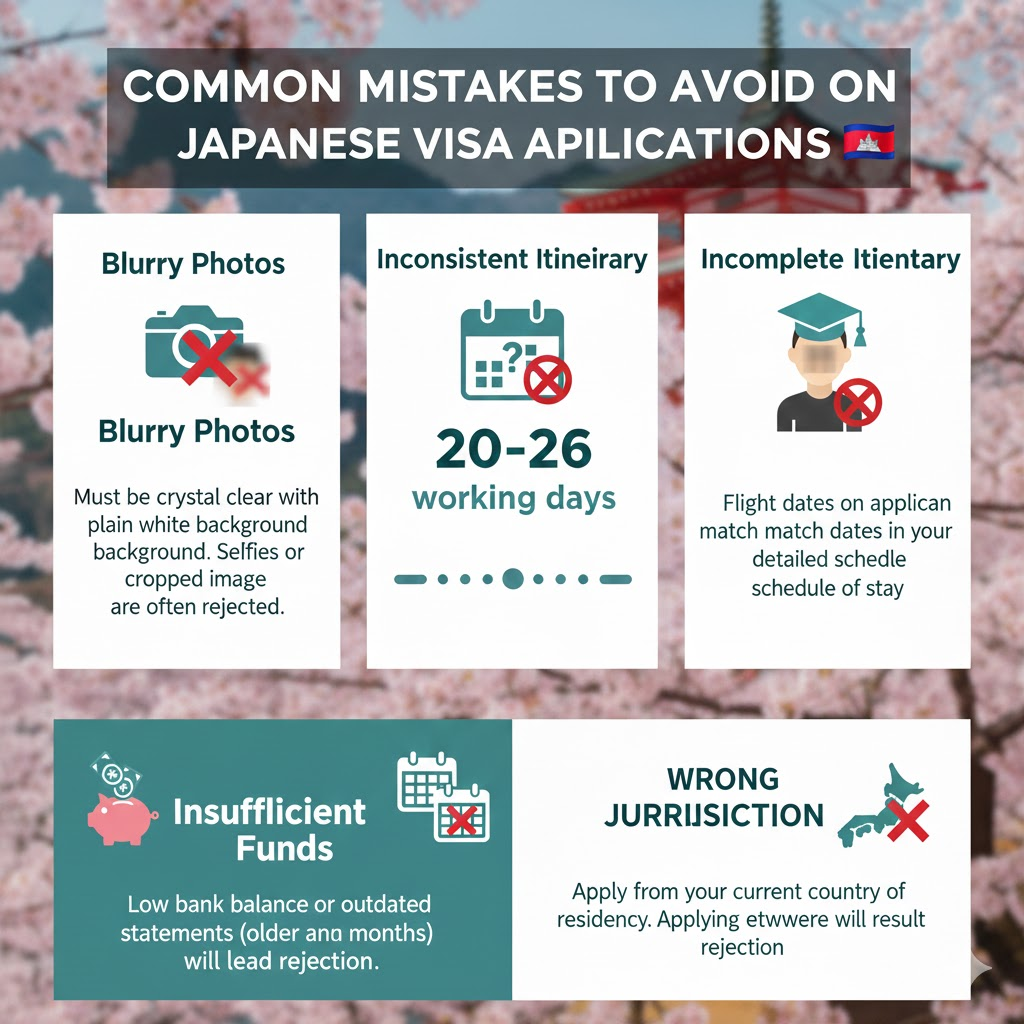
- Blurry Photos: The applicant photo must be crystal clear with a plain white background. Selfies or cropped images often get rejected.
- Inconsistent Itinerary: Your flight dates must match the dates in your detailed schedule of stay.
- Insufficient Funds: Submitting a bank statement with a very low balance or one that is outdated (older than 3 months).
- Wrong Jurisdiction: Applying from a region where you do not have current residency status.
Are there specific photos or formats for the Japan eVisa?
Yes. The photo requirements are strict:
- Recency: Taken within the last 6 months.
- Background: Plain white only.
- Expression: Face forward, neutral expression, no hats or head coverings (unless for religious reasons).
- Format: Digital upload (JPEG/PNG) is usually required for the online system.
Does a travel agency help you get a tourist visa for a certain country?
Yes, utilizing a specialized travel or visa agency is highly recommended, especially for the Japan eVisa which involves uploading multiple specific documents.
Why Choose an Agency?
- Expert Document Review: A dedicated team reviews your files (like bank statements and itineraries) to prevent rejection due to minor errors.
- 24/7 Support: You get round-the-clock email support to answer inquiries.
- Hassle-Free Process: They handle the photo formatting and submission to the Government of Japan on your behalf.
- Privacy: Trusted agencies prioritize data security with encrypted payment methods.
For Taiwanese residents who need a visa, or for complex travel cases, this support can be the difference between a rejected application and a stress-free departure.
Written By:
Alexis Charpentier

Hotels at your convenience
Now choose your stay according to your preference. From finding a place for your dream destination or a mere weekend getaway to business accommodations or brief stay, we have got you covered. Explore hotels as per your mood.