Kedarkantha Trek – A Complete Guide for First-Time Trekkers
 Manish Choudhary
23 Feb, 2026
16 mins read
72
Manish Choudhary
23 Feb, 2026
16 mins read
72
I still remember the first time I heard about Kedarkantha. A friend had just come back from the trek and couldn't stop talking about it. The way he described the frozen lake, the sunrise from the summit, the feeling of standing on top of a mountain – it stayed with me.
A few months later, I found myself in Sankri village, lacing up my boots and wondering if I had made a terrible mistake. I had never done anything like this before. I was not particularly fit. And everyone around me looked like they belonged on a mountain.
Turns out, I was wrong about all of it. The trek was hard, yes. But it was also the most beautiful thing I had ever done. And I wasn't alone – half the people on that trail were first-timers just like me.
If you've been thinking about trying your first Himalayan trek, Kedarkantha might be the one. Let me tell you what to expect.
Why This Trek?
Kedarkantha sits in the Garhwal Himalayas of Uttarakhand. It is not the tallest peak in the region. It is not the most difficult climb. But every year, thousands of people make their way to this mountain.
The reason is simple. Kedarkantha gives you a real Himalayan experience without requiring years of training or expensive gear. You walk through forests heavy with snow. You camp by a lake that freezes solid in winter. You climb to a summit at 12,500 feet and watch the sun rise over peaks that have names you cannot pronounce but will never forget.
The trek is designed for people like you and me. People who work regular jobs. People who get winded climbing stairs. People who have never slept in a tent at minus ten degrees.
When to Go
The trek runs from October to June, but the experience changes with the season.
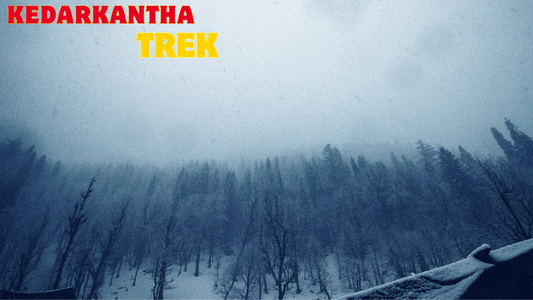
Winter (December to March) is when most people come. The snow is deep, the lake freezes over, and the whole landscape looks like a postcard. December and January are the busiest months. The trails are full, and campsites buzz with energy. Nights are cold – temperatures drop to minus ten or lower. But the days are clear and beautiful.
Spring (April to June) brings warmer weather. The snow starts to melt, and rhododendrons bloom along the trail. The crowds thin out, and you get more space to yourself. The views are still stunning, just different.
October to November is autumn. The skies are crystal clear, and you can see forever. The first snow might come towards the end of November, dusting the trail with white.
July to September is the monsoon. The trails get slippery, and landslides can block the way. Most operators stop running treks during these months.
Getting to the Start
The trek begins from Sankri village in Uttarkashi district. Sankri is about 200 kilometers from Dehradun.
Most people take an overnight train or flight to Dehradun. From there, a jeep takes you to Sankri. The drive takes eight to nine hours, winding through Mussoorie and following the Yamuna River through the hills. It is a long day, but the scenery keeps you company.
Sankri itself is a small village at about 6,400 feet. There are a few guesthouses and homestays where trekkers spend the night. The rooms are basic – a bed, blankets, maybe a hot water bucket if you ask nicely. But after the long drive, it feels like luxury.
Most trek operators include this drive in their package. You do not need to figure out buses or taxis on your own.
The Trek Day by Day
The trek usually takes five days from Dehradun to Dehradun. Here is how it goes.
Day One: Dehradun to Sankri
You leave Dehradun early in the morning. The road climbs steadily, leaving the plains behind. By afternoon, you are deep in the hills. Tea stalls appear at every bend. Small villages flash past the window.
You reach Sankri by evening. After checking into your guesthouse, you might walk around the village or just sit and watch the mountains appear through the clouds. Dinner is simple – dal, rice, roti, maybe some sabzi. Everyone is quiet, thinking about the days ahead. You go to bed early.
Day Two: Sankri to Juda Ka Talab
After breakfast, you start walking. The trail leaves the village and enters the forest almost immediately. Pine and oak trees crowd the path. The climb is gentle – nothing that makes you stop and gasp.
You walk for about five hours. The forest opens up occasionally, giving you glimpses of the valley below. Birds call from somewhere above. The only other sounds are boots on dirt and your own breathing.
Juda Ka Talab is a small lake at 9,100 feet. In winter, it is frozen solid – a perfect circle of ice surrounded by snow-covered trees. You set up camp on the banks. By evening, the temperature has dropped, and everyone is bundled in layers. After dinner, someone points at the sky. It is filled with more stars than you have ever seen.
Day Three: Juda Ka Talab to Kedarkantha Base Camp
Today is shorter – about four hours of walking. The trail climbs steadily, and soon you are above the tree line. The forest gives way to open meadows. And then, suddenly, the mountains are right there.
Swargarohini. Black Peak. Bandarpoonch. Names you have read about in travel blogs, now right in front of you.
The base camp sits at 11,250 feet in a wide, flat meadow. Tents are already set up when you arrive. In the evening, everyone gathers to watch the sunset. The peaks turn gold, then orange, then pink, then grey. Someone makes tea. Someone else starts a conversation that lasts until dinner.
Day Four: Summit Day
You wake up at 3 AM. It is dark and cold. Your breath fogs in the air. You put on every layer you brought and step out of the tent.
The climb begins in darkness, headlamps bobbing ahead and behind. The trail is steep. Your legs burn. Your lungs work harder than they ever have. But the guides keep everyone moving at a steady pace. One step at a time. One breath at a time.
After three or four hours, the sky starts to lighten. And then you are there. The summit is at 12,500 feet.
The sun rises just as you arrive. The entire Himalayan range spreads out below you – peak after peak after peak, all glowing in soft morning light. You stand there with your group, too tired to speak, too happy to care. Someone hugs you. You hug them back. For a few minutes, nothing else in the world matters.
The descent takes you back to base camp and then further down to Hargaon. By the time you reach camp, you can barely walk. But it is the good kind of tired. The kind that comes from doing something hard and beautiful.
Day Five: Hargaon to Sankri to Dehradun
The last day is a gentle walk back to Sankri, about four hours. Everyone is quiet, lost in their own thoughts. The mountains recede behind you.
From Sankri, you drive back to Dehradun. By evening, you are back in the city. Hot showers. Real beds. Food that is not dal-chawal.
But something has changed. You cannot stop thinking about the mountains. And you know, with absolute certainty, that you will go back.
How Hard Is It Really?
Let me be straight with you. The trek is hard. Not impossible, but hard.
You walk four to six hours every day. The altitude makes everything more difficult – breathing, sleeping, even thinking clearly. Summit day starts before dawn and involves a steep climb in cold. Your legs will hurt. Your lungs will burn. There will be moments when you wonder why you signed up for this.
But here is what I learned. The hard parts are also the good parts. The struggle is what makes the summit feel like an achievement. The exhaustion is what makes the campsite feel like home.
And you do not need to be a super-athlete to do this. I am not particularly fit. I work a desk job and get winded climbing stairs. If I could do it, you can too.
A little preparation helps. Walk every day for a month before the trek. Take the stairs instead of the elevator. Do some squats and lunges. Nothing crazy – just enough so your body knows what it is getting into.
No prior trekking experience is needed. The trail is clear, and the guides know exactly what they are doing. Listen to them, walk at your own pace, drink water, and you will be fine.
Food on the Trail
The food is simple but satisfying.
Breakfast is usually porridge, cornflakes, or parathas with tea. Lunch is packed and eaten on the trail – sandwiches, rotis with sabzi, boiled eggs, and fruits. Dinner is a hot meal at camp – rice, dal, sabzi, roti. There is often soup before dinner and something sweet after.
Maggi noodles appear frequently. It is basically a tradition at this point.
Everything is vegetarian. Meat is hard to store safely in the mountains, so most operators do not serve it. If you have specific dietary needs, tell them in advance, and they will usually figure something out.
Tea is served multiple times a day. There is nothing quite like sitting in the cold, holding a hot cup of tea, watching the mountains change color as the sun goes down.
How Much Does It Cost
A full Kedarkantha package from Dehradun usually costs between ₹6,000 and ₹10,000 per person.
This covers:
- Transport from Dehradun to Sankri and back
- Accommodation in guesthouses and tents
- All meals during the trek
- Permits and forest fees
- Guides and support staff
- Safety equipment and basic first aid
Some operators charge less, some charge more. Personal expenses like tips and travel insurance are extra.
Carry some cash. The last ATM is in Purola, well before Sankri. There is no banking on the trail.
Common Questions
Is this trek good for beginners?
Yes. It is one of the most beginner-friendly Himalayan treks out there. Thousands of first-timers do it every year.
How fit do I need to be?
Fit enough to walk five to six hours with a backpack. A month of regular walking before the trek helps a lot.
What is the summit day like?
Hard but doable. You start around 3 AM and climb for three to four hours. The last stretch is steep. But the guides pace it well, and the sunrise at the top makes everything worth it.
Will there be snow?
If you go between December and March, yes. Plenty of it.
Can I charge my phone?
Not on the trail. Bring a power bank. Some guesthouses in Sankri have charging points, but once you start camping, there is no electricity.
Is it safe for solo travelers?
Very safe. You join a group with other trekkers and professional guides. Many people come alone and leave with new friends.
What if I get altitude sickness?
Tell your guide immediately. They carry oxygen and know how to handle it. The itinerary is designed to minimize risk, but it can still happen.
Do I need to book in advance?
Yes. Groups fill up, especially in peak season. Book at least a month or two ahead.
A Final Thought
I have done a few treks since that first time on Kedarkantha. Some were harder. Some were longer. Some had bigger mountains and more dramatic views.
But I have never forgotten that first summit morning. Standing on top of a mountain for the first time, watching the sun come up over peaks I had only seen in photographs, feeling like I had done something truly hard and truly beautiful.
If you have been thinking about trying a Himalayan trek, stop thinking and start planning. Kedarkantha is waiting. It will be hard. You will be tired. You will question your decisions at least once.
But when you stand on that summit, watching the sunrise paint the mountains gold, you will understand why people keep coming back.
Written By:
Manish Choudhary

Hotels at your convenience
Now choose your stay according to your preference. From finding a place for your dream destination or a mere weekend getaway to business accommodations or brief stay, we have got you covered. Explore hotels as per your mood.