Marchoi Trek Route Guide – Everything You Need to Know Before You Go
 Jagat Nath
26 Feb, 2026
17 mins read
65
Jagat Nath
26 Feb, 2026
17 mins read
65
1. Introduction
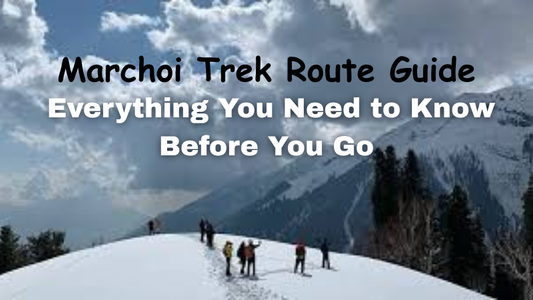
There's something about Kashmir that gets under your skin – the kind of place where the mountains feel personal, like they're talking directly to you. And if you want to experience that feeling without the noise of overly commercialized trails, the Marchoi Trek might just be the answer you've been looking for.
Tucked inside the Kashmir Valley, the Marchoi Trek takes you through some of the most undisturbed terrain in the region – sweeping alpine meadows that seem to go on forever, glacial streams so clear you'd think they were filtered, snow bridges that creak and groan beneath your boots, and a silence that's almost loud in its own way. It's the kind of trail where you stop mid-step just to take it all in.
What makes Marchoi particularly special is that it doesn't demand you to be a hardcore trekker with five Himalayan summits under your belt. Whether you're lacing up your hiking boots for the first time or you're a seasoned trekker looking for something off the beaten path, this trail has a place for you. The terrain is challenging enough to give you a sense of achievement but never punishing enough to make you regret coming.
So if you've been scrolling through Instagram looking at Kashmir pictures and thinking "someday" – let this guide push that someday a little closer.
2. Quick Facts
DetailInfo
Duration 4 Days / 3 Nights
Total DistanceApprox. 25–28 km (round trip)
Maximum AltitudeMarchoi Top (~4,200 m / ~13,800 ft)
Difficulty LevelEasy to Moderate
Best SeasonJune to September
Starting PointNaranag, Kashmir
Ending PointNaranag, Kashmir
3. How to Reach the Base Camp
Nearest City: Srinagar
Srinagar is your gateway to this entire adventure. Most trekkers fly in to Sheikh ul-Alam International Airport (SXR), which is well connected to Delhi, Mumbai, Bengaluru, and several other major Indian cities. If you're coming by road, Srinagar sits on the Jammu–Srinagar National Highway (NH44), a journey of roughly 260–270 km from Jammu that takes around 7–9 hours depending on traffic and weather conditions.
Getting from Srinagar to Naranag
Naranag is approximately 60 km east of Srinagar and serves as the base village for the trek. The drive typically takes around 2 hours by private cab or shared taxi. You can hire a cab directly from Srinagar's taxi stands, or pre-book one through your trek operator. Naranag itself is a charming village that often catches trekkers off guard with its natural beauty – the ancient temple ruins here are worth a quiet stroll before the trek begins.
There's no direct bus service to Naranag, so a private cab is your most reliable and comfortable option. Expect to pay around ₹1,500–₹2,500 for a one-way cab from Srinagar depending on negotiation and season.
4. Day-by-Day Itinerary
Day 1 – Srinagar to Naranag | Arrival & Acclimatization
Your trek doesn't technically start today, but in many ways it does. The moment you leave Srinagar behind and start winding through the Sindh Valley, the mountains begin to close in around you, and something shifts. The air gets cooler, the noise fades, and you start to feel the altitude even before you've taken a single step on the trail.
Arrive at Naranag by early afternoon and check into your homestay. The hosts here are warm and genuinely welcoming – the kind of people who'll make you chai without being asked and want to know where you're from. Spend the evening exploring the village, wandering through the pine forests nearby, and getting your gear sorted. Don't stay up too late – tomorrow starts early. Sleep at approximately 2,130 m.
Day 2 – Naranag to Sangri | Trek Begins
This is where the real fun begins. You'll set off from Naranag in the morning, following a trail that immediately plunges you into a dense conifer forest. The path climbs steadily as you make your way toward Sangri, the gateway to Marchoi Valley. The approximately 5 km trek takes around 3–4 hours, depending on your pace and how often you stop to catch your breath (and the view – because you will stop).
As the trees begin to thin, the landscape opens up dramatically. The valley reveals itself in layers – first the meadows, then the ridgelines, and finally the snow-capped peaks in the distance. Set up camp at Sangri and let it sink in that you're actually here. This isn't just a photo – it's where you're sleeping tonight.
Day 3 – Sangri to Marchoi Top & Back | Summit Day
Wake up before the sun does. Seriously. The light on the ridgeline during golden hour is something you'll want to see with your own eyes, not just on someone else's reel.
Summit day covers roughly 8 km round trip and is the most physically demanding part of the trek. The trail from Sangri climbs steadily toward Marchoi Top (around 4,200 m), passing through snow patches, rocky terrain, and some genuinely breathtaking ridgeline walking. The final push to the top will test your legs, but the panoramic views from the summit – surrounding peaks stretching in every direction, the valley floor far below – make every laboured step worth it.
Take your time at the top. Eat something, take photos, sit quietly for a few minutes. Then head back down to Sangri for a well-deserved rest and a night under some of the clearest skies you'll ever see.
Day 4 – Sangri to Naranag | The Walk Back
There's always something bittersweet about the last day of a trek. The trail back to Naranag is familiar now, but somehow it looks different on the return – maybe because you're looking at it with different eyes. The descent takes 3–4 hours and is gentler on your lungs but harder on your knees, so take it slow and steady.
Once back in Naranag, freshen up and head to Srinagar by road. Most trekkers make it back to the city by early evening, which leaves enough time for a proper Wazwan dinner before catching your flight or continuing onward.
5. Route Highlights
The Marchoi Trek isn't just about reaching the top – it's about everything in between. The alpine meadows (locally called margs) are genuinely stunning, especially when wildflowers are in bloom during early summer. The glacial streams that cross your path are ice-cold and impossibly clear. If you're lucky with timing, you'll walk across snow bridges that arch over rushing meltwater – a surreal experience that feels almost cinematic.
On the wildlife front, keep your eyes open. The forests around Naranag are home to Himalayan monal (the state bird of Himachal, often spotted in Kashmir too), brown bears (rare but present), and countless bird species that fill the mornings with sound. The flora shifts dramatically with altitude – dense pine forest gives way to shrubby alpine growth and eventually bare rocky ridgelines near the top.
6. Difficulty & Fitness Requirements
The Marchoi Trek sits comfortably in the easy-to-moderate category, which means you don't need to be a distance runner or a gym enthusiast – but you do need a baseline level of fitness. If you can walk 8–10 km on flat terrain without trouble, you're in reasonable shape to attempt this trail with proper preparation.
Start preparing at least 4–6 weeks before your trek. A mix of daily walks (gradually increasing distance), stair climbing, and some light strength training for your core and legs will go a long way. On summit day, your cardiovascular fitness matters more than raw strength, so include some moderate cardio in your prep.
If you've never trekked at altitude before, don't underestimate the adjustment period. Even fit trekkers can feel the effects of altitude – headaches, shortness of breath, mild nausea. Day 1 in Naranag is specifically designed for acclimatization, so use it. Avoid rushing. Drink plenty of water, eat light, and skip the alcohol the night before the climb.
7. Packing List
Clothing (Layer Smart, Not Heavy)
- Moisture-wicking base layer (tops and bottoms)
- Mid-layer fleece or light down jacket
- Outer windproof and waterproof shell jacket
- Trekking trousers (avoid jeans entirely)
- Warm hat and gloves (non-negotiable, even in summer)
- Sun hat or buff
- 2–3 pairs of merino wool or synthetic trekking socks
- Thermal underlayer for cold nights
Trekking Gear
- Sturdy ankle-support trekking boots (broken in before the trip!)
- Trekking poles (highly recommended for the descent)
- Comfortable daypack (25–30 litres)
- Sleeping bag rated to -5°C or lower
- Headlamp with spare batteries
- Trekking gaiters (useful for snow patches)
Essentials
- Government-issued photo ID (Aadhaar, passport, or voter ID)
- Any required trek permits (check with your operator)
- Basic first-aid kit (blister pads, ORS sachets, altitude sickness tablets like Diamox if prescribed, paracetamol, antiseptic)
- Sunscreen (SPF 50+) and UV-protection sunglasses
- Water bottles or hydration bladder (minimum 2 litres capacity)
- Water purification tablets or filter
- Snack bars, dry fruits, nuts for the trail
- Trekking permit copy and emergency contacts written down
8. Safety & Permits
Weather Awareness
Kashmir's mountain weather is famously unpredictable. A clear morning can turn overcast within hours, and afternoon thunderstorms are not uncommon during monsoon months. Always check the forecast the morning of your summit push and be willing to turn back if conditions deteriorate. No summit is worth risking your life over.
Permits & Local Guidelines
Trekking in the Kashmir Valley requires Inner Line Permits (ILP) for trekkers from outside Jammu & Kashmir. These are typically arranged through your registered trek operator and processed at the District Magistrate's office in Srinagar. Always carry photocopies of all documents separately from the originals.
Local guidelines include staying on marked trails, not disturbing wildlife, respecting religious sites, and seeking permission before photographing locals. The communities around Naranag are largely dependent on trek tourism, so be a responsible visitor.
Emergency Contacts
- Keep the contact of your trek guide saved offline
- Nearest hospital: SKIMS / SMHS Hospital, Srinagar
- J&K Tourism Helpline: 1800-180-7999
- Mountain Rescue (via local police): 100
9. Best Time to Visit
June to August – Peak Summer
This is the sweet spot for most trekkers. The weather is clear, the meadows are in full bloom, and the trails are at their most accessible. June still has significant snow on the upper sections, which adds to the drama but requires traction devices. July and August are warmer and more stable weather-wise.
September – Autumn Magic
If you prefer fewer crowds and dramatic colours, early September is excellent. The summer tourists have mostly left, the air is crisp, and the changing colours of the vegetation make for stunning photography. Nights get cold fast, so pack accordingly.
October Onwards
Late October brings early winter to the higher elevations. The trail becomes significantly more challenging with ice and heavy snowfall. Only experienced trekkers with proper winter gear should consider this window, and even then, go with a highly experienced local guide.
10. Budget & Cost Breakdown
ItemApproximate Cost (INR)Flight to Srinagar (from Delhi, round trip)₹4,000 – ₹10,000Cab: Srinagar to Naranag (one way)₹1,500 – ₹2,500Homestay at Naranag (per night)₹500 – ₹1,200Trek guide (for 4 days)₹2,500 – ₹4,000Porter (if needed, per day)₹800 – ₹1,200Camping charges (Sangri, 2 nights)₹300 – ₹600/nightMeals on trail₹300 – ₹600/dayPermits₹200 – ₹500Approximate Total (per person)₹10,000 – ₹20,000
Prices vary by season and group size. Trekking with a group significantly reduces per-person costs, especially for guide and transport.
11. Tips for a Successful Trek
Photography Tips
The golden hours – roughly 6–8 AM and 5–7 PM – deliver the best light on this trail. The meadows glow during early morning, and the alpenglow on the peaks at dusk is something else entirely. A wide-angle lens is your best friend for the valley panoramas, while a zoom works well for capturing wildlife. And please – sometimes put the camera down and just be there.
Responsible Trekking (Leave No Trace)
This should go without saying, but it bears repeating: take everything you bring in back out with you. Plastic, wrappers, food scraps – all of it. The Marchoi Valley's beauty comes directly from how relatively untouched it remains. Don't burn that. Stick to established campsites, don't pick wildflowers, and use biodegradable products wherever possible.
Cultural Etiquette
The villages around Naranag are home to warm and deeply hospitable Kashmiri families. Dress modestly when in the village – this isn't the place for shorts and sleeveless tops. Always ask before photographing anyone. Accept the chai that's offered to you. Learn a couple of Kashmiri phrases – even a simple shukriya (thank you) goes a long way. These small gestures of respect are what make the difference between being a tourist and being a welcome guest.
Written By:
Jagat Nath

Hotels at your convenience
Now choose your stay according to your preference. From finding a place for your dream destination or a mere weekend getaway to business accommodations or brief stay, we have got you covered. Explore hotels as per your mood.