Marchoi trek
 Jagat Nath
06 Jan, 2026
11 mins read
132
Jagat Nath
06 Jan, 2026
11 mins read
132
Introduction to Marchoi Trek
Marchoi Trek is one of those trails that doesn't show up on every trekker's radar—and honestly, that's part of its charm. Tucked away in Kashmir's wilderness, this trek offers something rare these days: solitude. While everyone's heading to the Great Lakes or Tarsar Marsar, Marchoi remains relatively untouched and peaceful.
It's perfect for those who want to experience Kashmir's raw beauty without bumping into crowds every few kilometers. Nature lovers will absolutely fall for this one—think dense forests, endless meadows, and that kind of silence you can actually feel. If you're tired of Instagram-famous trails, Marchoi might just be your next favorite adventure.
Where is Marchoi Trek Located?
Marchoi Trek sits in the Gurez Valley region near Bandipora district, which is already off the beaten path compared to mainstream Kashmir destinations. Getting there from Srinagar takes about 4-5 hours of driving through some seriously beautiful (and winding) mountain roads.
The trek itself ranges between 10,000 to 12,500 feet, so you're definitely in proper Himalayan territory. The terrain shifts from thick coniferous forests at lower altitudes to wide-open alpine meadows as you climb higher. It's remote enough to feel adventurous but not dangerously isolated—just the sweet spot.
Marchoi Trek Route & Itinerary
Most people do Marchoi as a 5-6 day trek, though you could stretch it if you're the slow-and-steady type. Day one usually starts from Tulail or Dawar in Gurez Valley—small villages where you'll need to arrange permits and local guides.
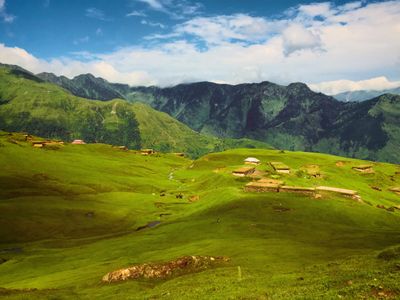
The first couple of days take you through dense deodar and pine forests. The trail climbs gradually, nothing too brutal, and you'll cross several crystal-clear mountain streams along the way. Around day three, you break into the alpine meadows—this is where Marchoi really shows off. Rolling grasslands stretching forever, wildflowers in season, and mountains framing every direction.
Day four typically takes you to higher camps with even better views, maybe around 12,000 feet. Some groups push to nearby ridges for sunrise views before heading back. The descent retraces your steps mostly, giving you a different perspective on landscapes you've already passed. Each day feels distinct though—morning light hits differently than evening shadows, you know?
Difficulty Level of Marchoi Trek
I'd call Marchoi a moderate trek, maybe leaning slightly toward moderate-plus depending on your fitness level. It's definitely doable for beginners with some prior trekking experience—like if you've done a couple of weekend treks and felt comfortable, you should be fine here.
The altitude does demand respect though. At 12,000+ feet, you'll feel it if you're not acclimatized properly. The trail itself isn't technically challenging—no scary rock scrambles or glacier crossings—but there are long stretches where you're just walking uphill steadily. Your legs will remember this trek, let's put it that way.
Fitness-wise, being able to walk 5-6 hours comfortably with a backpack is the baseline. Cardio stamina matters more than strength here. A month of regular walking or jogging before the trek makes a huge difference in how much you'll actually enjoy it versus just surviving it.
Best Time to Do Marchoi Trek
Summer months—June through September—are your window for Marchoi Trek. July and August are peak season when the weather's most stable and the meadows are at their greenest, covered with wildflowers. It's gorgeous but you might encounter a few other trekking groups.
Early September is actually my favorite time. The crowds thin out, temperatures are cooler but still pleasant, and there's this golden light that makes everything look painted. Mornings can be chilly though, dropping near freezing at higher camps.
Winter is completely off the table. Heavy snowfall makes the trail inaccessible and honestly dangerous. Gurez Valley itself gets cut off during winter months, so unless you're planning an expedition-level snow trek (which this isn't set up for), stick to summer and early autumn.
Scenic Highlights & Natural Beauty
Where do I even start? Marchoi Valley has this untouched quality that's getting harder to find. The lower forest sections feel almost mystical—tall pines filtering sunlight, moss covering everything, that earthy smell after rain. You might spot Himalayan birds if you're paying attention, maybe even a fox if you're lucky.
But the alpine meadows are the real showstopper. Imagine walking through grass that's almost waist-high in places, flowers scattered like someone went wild with a paintbrush. Behind all this, snow-capped peaks form this incredible backdrop—you're looking at ranges that include Harmukh and other lesser-known giants.
What struck me most was the silence. No vehicle sounds, no crowds, just wind and occasionally a shepherd's distant call. The streams you cross are ridiculously clear—you can see every pebble at the bottom. Camping under stars here, with zero light pollution, is something you won't forget quickly. The Milky Way looks like someone spilled milk across the sky.
How to Reach Marchoi Trek
Getting to Marchoi starts with reaching Srinagar, which is well-connected by flights and trains (nearest major station is Jammu). From Srinagar, you'll drive north toward Bandipora and then into Gurez Valley—about 120-130 kilometers total but it takes time because of road conditions.
The drive itself is an experience. Mountain roads, switchbacks, and views that make you want to stop every ten minutes. You'll need permits to enter Gurez Valley since it's close to the Line of Control. Local travel agencies usually handle this, or you can arrange through district administration in Bandipora.
Once in Gurez, jeeps can take you to the trek starting point. Roads are rough in places, so expect a bumpy ride. Going with a local operator makes logistics way easier—they know the permissions, the routes, and honestly, you want local guides for this trek anyway.
Essential Packing List for Marchoi Trek
Layer up—that's the golden rule. Temperatures swing wildly from day to night. Good trekking shoes with ankle support are non-negotiable; the terrain isn't technical but it's uneven enough that you'll want stability. Rain gear is essential; mountain weather changes fast and you don't want to be caught soaked halfway through the day.
Carry a proper sleeping bag rated for at least -5°C, maybe -10°C if you're trekking in early June or September. Nights get cold at altitude. Trekking poles help, especially on descents when your knees are screaming. Sun protection—hat, sunscreen, sunglasses—because at altitude, you burn faster than you think.
Personally, I always pack extra socks (wet socks are miserable), a headlamp with spare batteries, basic first aid including altitude sickness meds, and a reusable water bottle with purification tablets. Oh, and toilet paper—trust me. Keep your backpack under 10-12 kg if possible. Your shoulders will thank you.
Why Choose Marchoi Trek Over Popular Treks?
Here's the thing: Kashmir Great Lakes is stunning but packed. Tarsar Marsar is beautiful but you're sharing those campsites with multiple groups. Marchoi offers something increasingly rare—space to actually experience the mountains without feeling like you're in a queue.
It's not about Instagram moments here; it's about genuine connection with the landscape. You can sit by a stream for half an hour without someone walking into your shot. The pace is naturally slower, more contemplative. There's this raw, untouched quality that popular treks lose once they hit a certain visitor threshold.
If you want that "I discovered something special" feeling, Marchoi delivers. It's for trekkers who value peace over popularity, who'd rather have an authentic experience than tick boxes on a bucket list.
Final Thoughts
Marchoi Trek suits people who appreciate subtlety—it won't overwhelm you with dramatic moments but will quietly win you over with its consistent beauty and tranquility. Come with realistic fitness, respect for the environment, and openness to slow travel.
The trek rewards patience and presence. Leave no trace, support local guides and communities, and give yourself permission to just be there without rushing. Kashmir has plenty of famous trails, but Marchoi? It's for those who know that sometimes the best adventures are the ones fewer people talk about.
window.NREUM||(NREUM={});NREUM.info={"beacon":"bam.nr-data.net","licenseKey":"NRJS-3109bb2e2783f515265","applicationID":"558315209","transactionName":"blUHbEVQCxECBUVQWVcfMEpeHhARBhRCFlRVXwIXVEMAAxcDU1VZXh4VUEc=","queueTime":0,"applicationTime":285,"atts":"QhIEGg1KGB8=","errorBeacon":"bam.nr-data.net","agent":""}
window.NREUM||(NREUM={});NREUM.info={"beacon":"bam.nr-data.net","licenseKey":"NRJS-3109bb2e2783f515265","applicationID":"558315209","transactionName":"blUHbEVQCxECBUVQWVcfMEpeHhARBhRCFlRVXwIXVEMAAxcDU1VZXh4VUEc=","queueTime":0,"applicationTime":256,"atts":"QhIEGg1KGB8=","errorBeacon":"bam.nr-data.net","agent":""}
Written By:
Jagat Nath

Hotels at your convenience
Now choose your stay according to your preference. From finding a place for your dream destination or a mere weekend getaway to business accommodations or brief stay, we have got you covered. Explore hotels as per your mood.