Morocco Visa for Uruguayan Citizens
 Andrew Oliver
04 Nov, 2025
21 mins read
309
Andrew Oliver
04 Nov, 2025
21 mins read
309
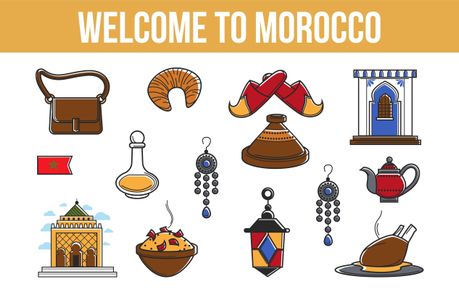
Planning a trip from Uruguay to Morocco is a true once-in-a-lifetime adventure. You're swapping the shores of Montevideo for the vibrant, spice-filled souks of Marrakesh. But before you can get lost in the magic of the Atlas Mountains or the Sahara Desert, there's one critical step: the visa.
The process can seem confusing. You'll hear about "e-Visas," "embassy visas," "supporting documents," and complex flight routes.
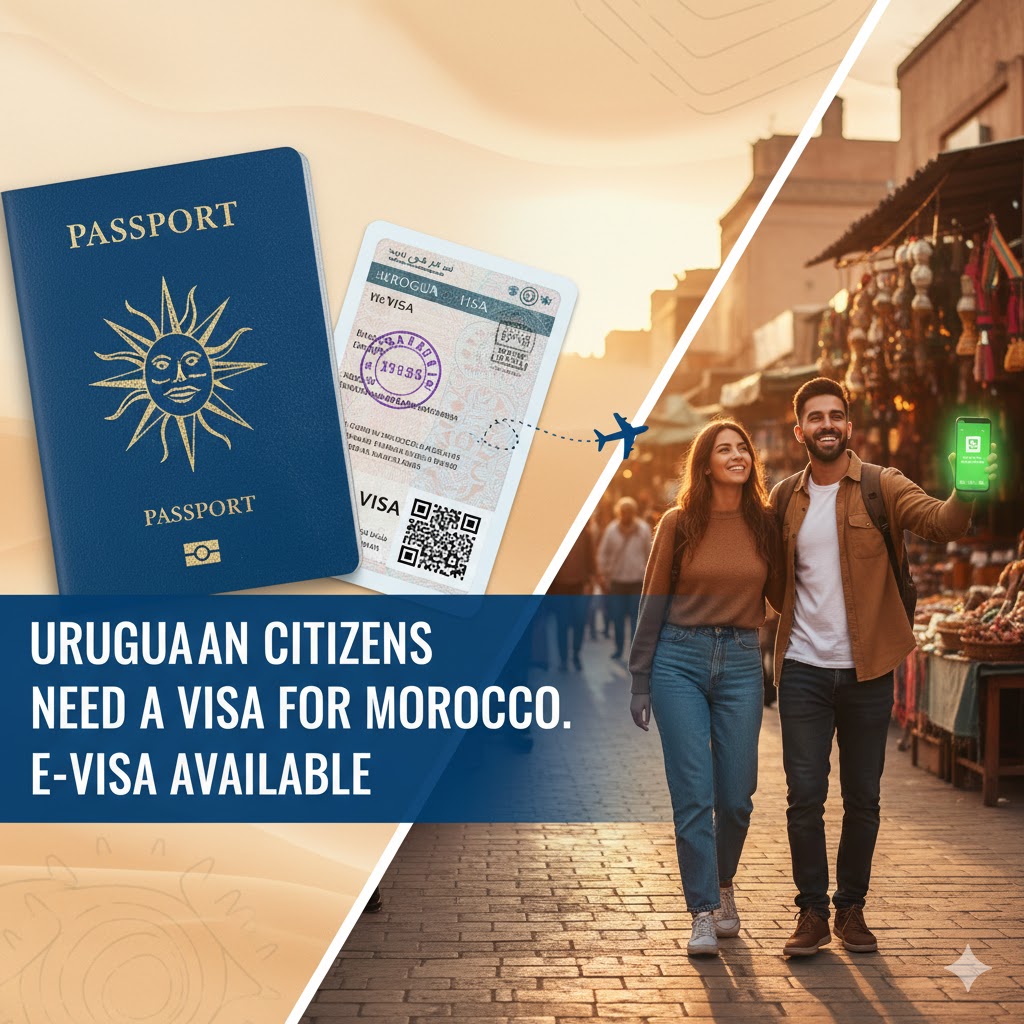
This guide is built specifically for travelers from Uruguay. We will walk you through the entire Morocco eVisa for Uruguay, focusing on the real-world problems you might face—from the application itself to the currency you need to bring and the long flight to get there.
Do Uruguayan Citizens Need a Visa to Visit Morocco?
Yes. This is the most important fact. A citizen of Uruguay traveling on a Uruguayan passport must have a visa to enter Morocco. There is no visa-free access or visa-on-arrival for tourism.
The good news? You can likely use the fast, simple online e-Visa system instead of going to an embassy.
Am I Eligible for the Morocco e-Visa with a Uruguayan Passport?
This is the critical question. Uruguay is on Morocco's "Group B" e-Visa list. This means you are only eligible for the e-Visa if you hold a specific "golden ticket" document from another country.
You must have one of the following:
- A multiple-entry visa from the USA, United Kingdom (UK), Schengen Area, Australia, Canada, Ireland, or New Zealand.
- A residence permit from one of these same countries, valid for at least 180 days.
If you have one of these, you are eligible for the e-Visa. If you do not have one of these, you cannot use the online system and must apply for a traditional visa at a Moroccan embassy.
"My US Visa Expires in 2 Months": The 90-Day Validity Rule Explained
This is the most common mistake that gets applications rejected. Your "golden ticket" (your supporting US, UK, or Schengen visa) must be valid for more than 90 days from the day you submit your e-Visa application.
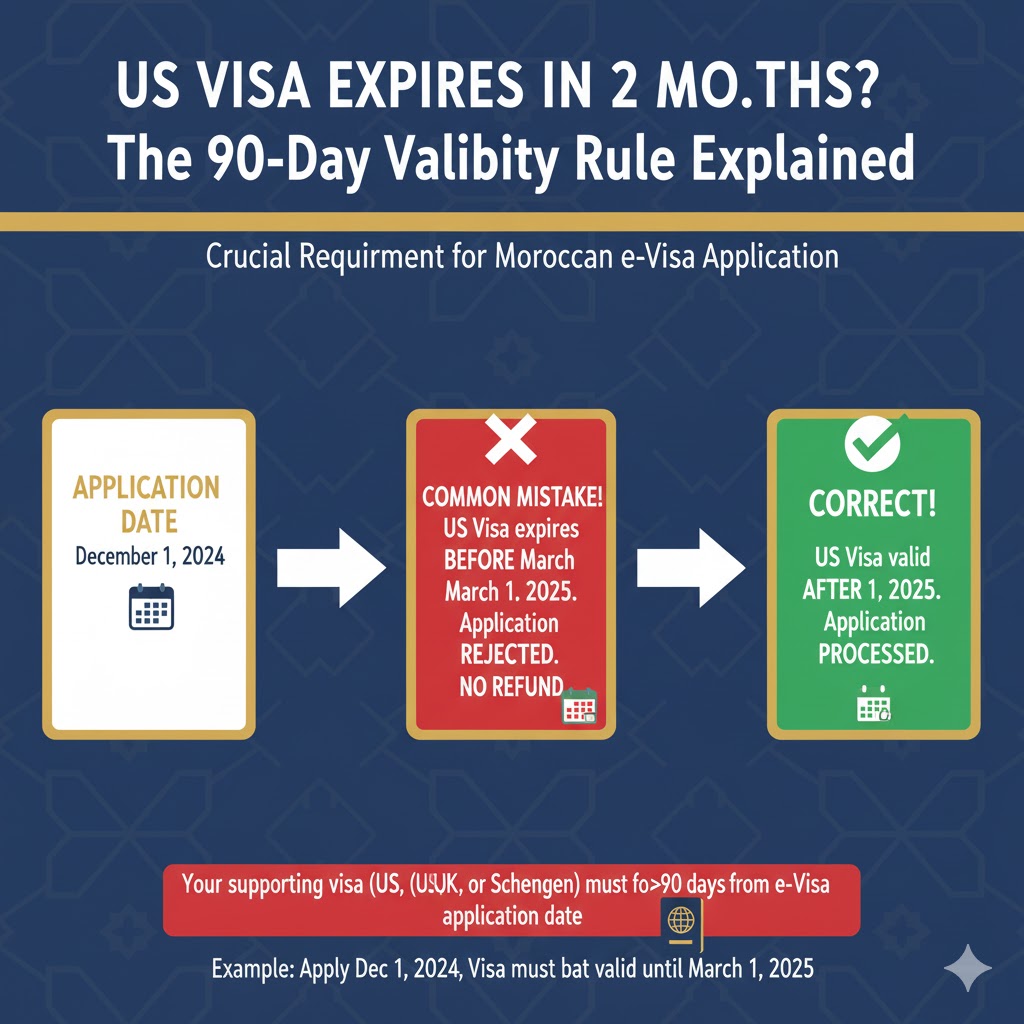
- Real-World Example: If you apply for your e-Visa on December 1st, 2024, your US visa must be valid at least until March 1st, 2025. If it expires in February, your application will be automatically rejected, and your fee will not be refunded.
Document Requirements for Morocco eVisa: What's the Real Requirement?
This is the simplest part, and where many people get confused. The online Morocco Visa Requirement only requires you to upload three documents. Do not upload anything else.
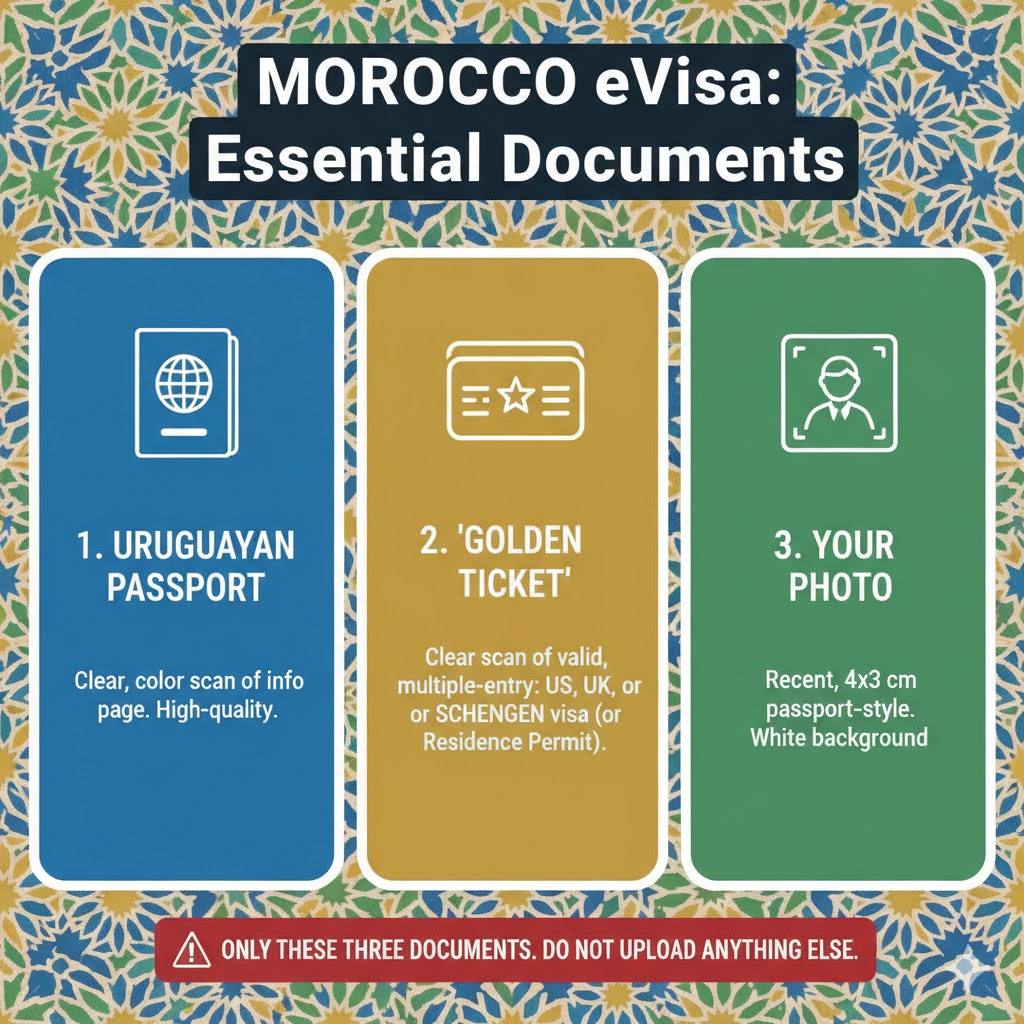
- Your Uruguayan Passport: A clear, high-quality color scan of your passport's main information page.
- Your "Golden Ticket": A clear scan of your valid, multiple-entry US, UK, or Schengen visa (or your residence permit).
- Your Photo: A recent 4x3 cm passport-style photo.
That's it. You do not upload flight bookings, hotel reservations, or bank statements at this stage.
What Happens at Moroccan Immigration: The "Second Check"
On the Morocco E-visa application form, you will see checkboxes where you must certify that you have proof of accommodation and a return flight. You don't upload them, but you must have them ready to show the immigration officer in Morocco.
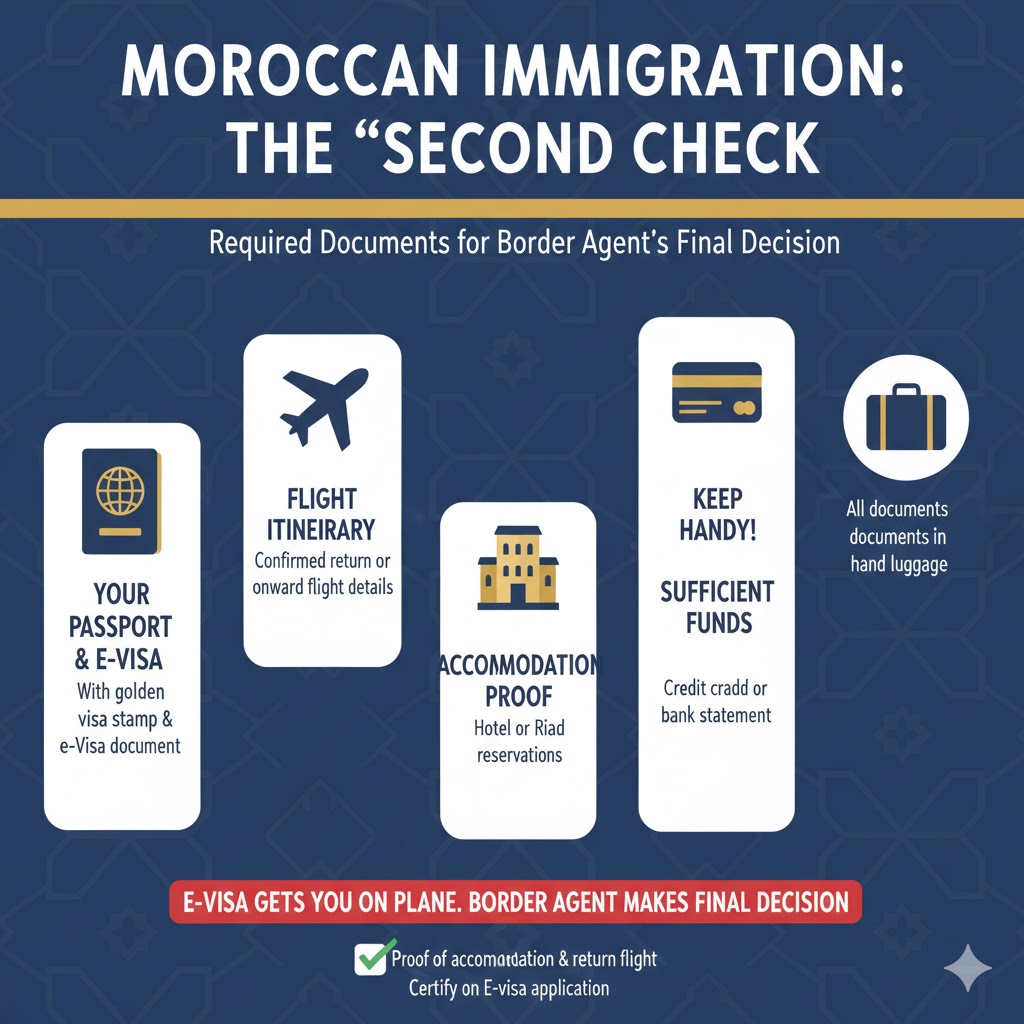
This is the "Second Check." Your e-Visa gets you on the plane, but the border agent makes the final decision. Have this in your hand luggage:
- Your printed e-Visa.
- Your Uruguayan passport (and the "golden ticket" visa inside it).
- Your confirmed return or onward flight itinerary.
- Your hotel or riad reservations for your stay.
- Proof of sufficient funds (a credit card is usually fine).
I Don't Have a US Visa: What's the Alternative for Uruguayans?
If you are not eligible for the e-Visa, you must apply for a traditional paper visa at a Moroccan embassy. This is a much more complex, expensive, and slow process.
Where is the Moroccan Embassy for Uruguay?
This is a real challenge for Uruguayans: Morocco does not have an embassy in Montevideo.
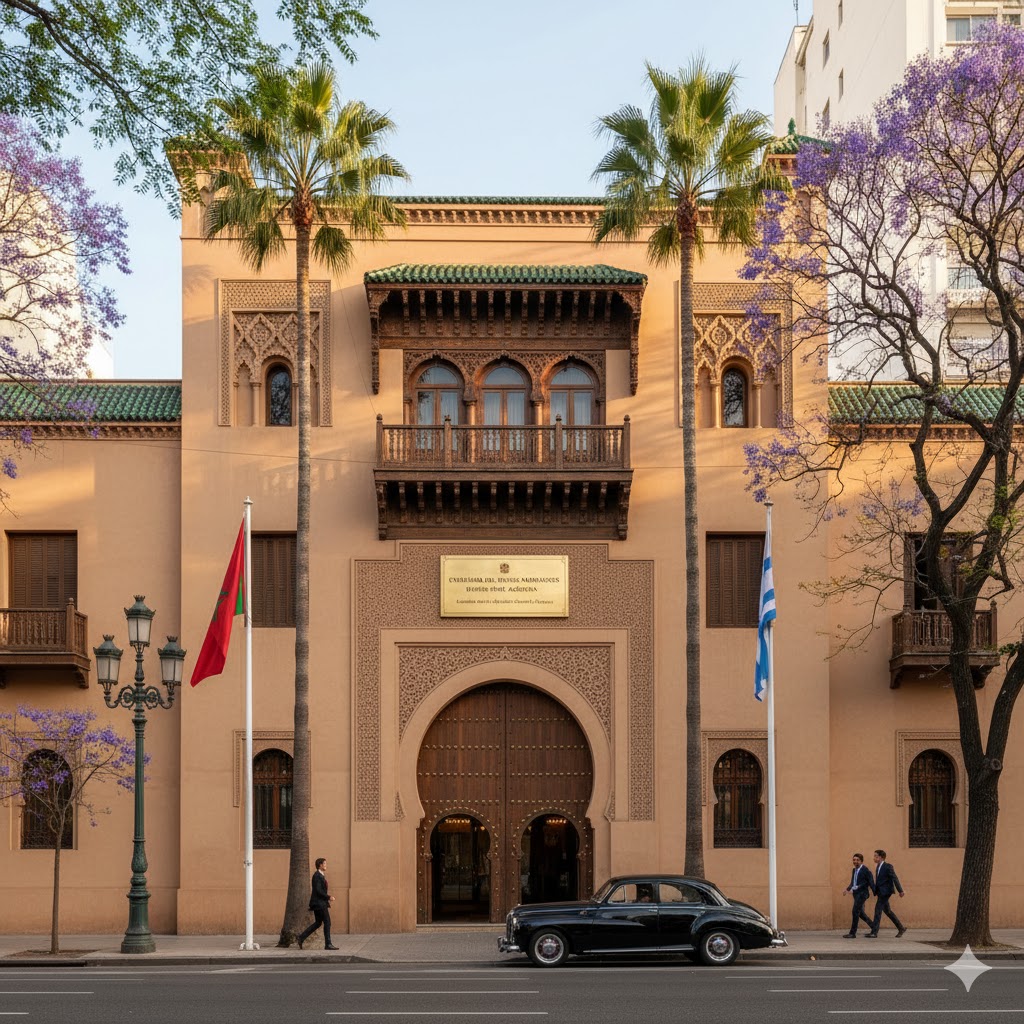
You must contact the Moroccan Embassy accredited to Uruguay, which is in Buenos Aires, Argentina. This process requires you to coordinate with that embassy, likely by mail or in person, to submit a long list of documents (including bank statements, invitation letters, etc.). It can take many weeks.
This is why having a valid US or Schengen visa is so valuable—it saves you from this difficult process.
How Do I Plan My Flight from Montevideo to Avoid Transit Visas?
A trip from Carrasco International Airport (MVD) to Casablanca (CMN) is a long-haul journey with at least one stop. Your layover city is critical.
- Easiest Route: Fly from MVD to a major European hub like Madrid (MAD) or Paris (CDG) and then connect to Marrakesh or Casablanca.
- Transit Visa Warning: If you book your flights on one single ticket (e.g., Iberia all the way), your luggage will be checked through, and you can stay in the international transit area. You will not need a Schengen transit visa.
- What NOT to Do: Do not book separate tickets (e.g., one flight to Madrid, and a separate, new flight to Marrakesh). This would force you to exit the transit area in Spain, go through their immigration, collect your bags, and check in again. This requires a Schengen visa just for your transit!
"Morocco Visa Payment Failed!" - How to Fix e-Visa Payment Issues from Uruguay
This is a very common "real problem." Your Uruguayan bank (like Itaú, BROU, or Santander) will often block the payment, thinking it's fraud.
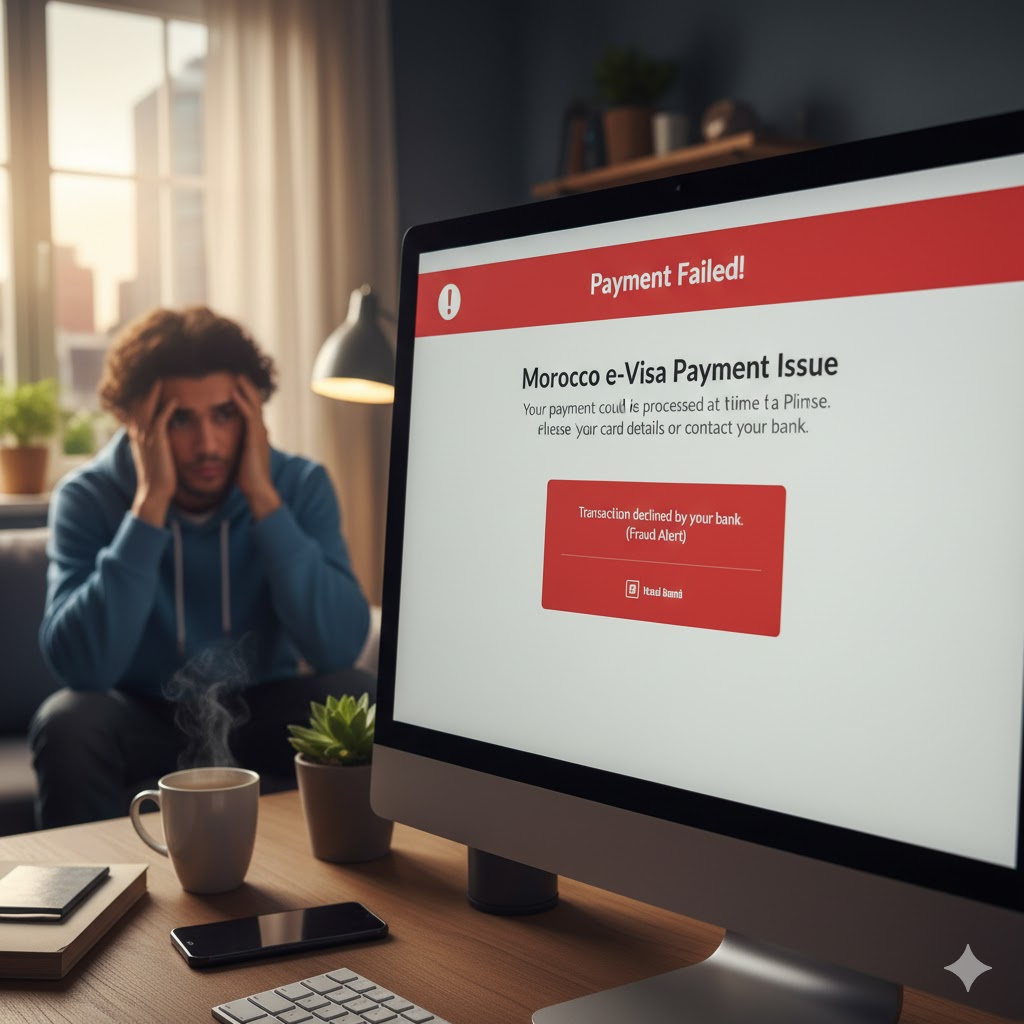
- What NOT to Do: Don't keep trying 10 times. You might lock your card.
- What to Do: Call your bank before you start the application. Tell them you are about to make a small international payment to the "Government of Morocco e-Visa" in Moroccan Dirhams. They will pre-authorize the transaction, and your payment will go through smoothly.
"My Morocco Visa Was Rejected": Top Reasons and What to Do Next
Rejections are almost always due to simple, avoidable errors:
- Your supporting visa was single-entry, not multiple-entry.
- Your supporting visa failed the "90-Day Rule" (it expired too soon).
- Your passport or photo scan was blurry and unreadable.
If you are rejected, you must find the mistake, fix it, and re-apply from the beginning, including paying the 220 MAD fee again.
What Happens if My Approved Morocco Visa Has a Typo?
This is a critical travel-time disaster. An e-Visa with any mistake—a misspelled name, a wrong passport number, an incorrect date of birth—is invalid.
You cannot fix it at the airport. The airline will deny you boarding, or Moroccan immigration will send you back on the next flight. You must double-check every single letter on your application before you submit it.
Can I Use Spanish in Morocco, or Do I Need French?
Here is a fantastic travel tip: your native language is a superpower in Morocco.
While the main languages are Arabic and French, Spanish is widely spoken in the northern part of Morocco (in cities like Tangier, Tetouan, and Chefchaouen) due to its proximity to Spain. You will find it incredibly easy to communicate, bargain in the markets, and connect with locals in a way many other tourists can't.
Will My Phone & Google Pay Work in Morocco?
- Google Pay / Apple Pay: Yes, this is becoming more common. In modern, high-end hotels, restaurants, and shops in big cities like Casablanca and Marrakesh, you will find contactless payment terminals that accept Google Pay and Apple Pay. Do not rely on it in the souks or in smaller towns.
- Phone & Data: Your Uruguayan SIM (from Antel, Claro, or Movistar) will be extremely expensive on roaming. The best solution is to buy a local Moroccan SIM card at the airport. For about $10-$20 USD, you can get a SIM from an operator like Orange or Maroc Telecom with a large amount of data for your entire trip.
Is Tap Water Safe to Drink in Morocco?
This is a top question for all travelers. The official answer is that tap water in most of Morocco's major cities is potable (safe to drink).
However, it is highly chlorinated and has a different mineral content than the water in Uruguay. To avoid an upset stomach that could ruin your trip, it is strongly recommended that you stick to bottled water.
- What to Do: Buy large bottles of water (like from brands "Sidi Ali" or "Ain Saiss") for your hotel room and refill a smaller, reusable bottle for walking around.
- What NOT to Do: Do not drink from public fountains or use tap water to make ice, unless you are boiling it first for tea or coffee.
What Should I Pack? A Note on Dress Code and Modesty
Morocco is a modern Muslim country, but it remains culturally conservative, especially outside the big tourist hubs of Marrakesh and Casablanca. While you don't need to cover your head, dressing respectfully is a sign of courtesy.
- For Women: Pack lightweight, loose-fitting clothing. Maxi dresses, linen trousers, and long skirts are perfect. Always bring a light scarf or pashmina—it's incredibly versatile for sun protection, for warmth in the desert at night, or for quickly covering your shoulders if you enter a more traditional area.
- For Men: T-shirts and shorts are generally fine in tourist areas, but packing a few pairs of light trousers or chinos is a good idea for the evenings or for visiting more rural villages.
- What NOT to Pack: Avoid packing overly revealing clothing. It's better to be comfortable and respectful.
Navigating the Souks (Markets): A Quick Guide to Haggling
The markets (souks) in cities like Fes and Marrakesh are a highlight, but the bargaining (haggling) culture can be intense for first-timers.
- Rule 1: Never accept the first price. The first price is always an inflated "tourist price."
- Rule 2: Be polite and smile. Haggling is a friendly, social interaction, not an argument.
- Rule 3: Have a maximum price in your head. Know what the item is worth to you and don't go above it.
- What NOT to Do: Don't start haggling for something you have no intention of buying. If you agree on a price, you are expected to buy it. If you can't agree, it's perfectly fine to smile, say "shukran" (thank you), and walk away.
What to Pack in Your Hand Luggage
- Passport (with your "golden ticket" visa inside).
- Printed e-Visa (do not rely on your phone).
- Printed flight itinerary and hotel bookings.
- A "Notify Bank" reminder (for the e-Visa payment and for using your cards abroad).
- A reusable water bottle (which you will fill from sealed bottles).
That's it! You're ready. Enjoy the incredible journey from Montevideo to the magic of Morocco.
Written By:
Andrew Oliver

Hotels at your convenience
Now choose your stay according to your preference. From finding a place for your dream destination or a mere weekend getaway to business accommodations or brief stay, we have got you covered. Explore hotels as per your mood.