My Gaumukh Tapovan Trek Journey in October (Autumn)
 Mountains Curve
13 Aug, 2025
13 mins read
112
Mountains Curve
13 Aug, 2025
13 mins read
112
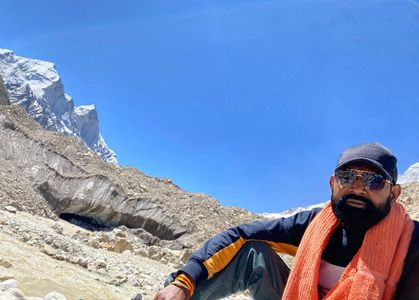
When I first thought about doing the Gaumukh Tapovan Trek, I didn’t see it as just another adventure. It was more like a calling. I had read about the sacred source of the Ganga and the wide open meadows of Tapovan for years, but this time, I finally decided to go see it for myself. I gave myself enough days so I wouldn’t have to rush. I wanted to take in the journey step by step, at my own pace.
An introduction to Gaumukh Tapovan Trek-
The Gaumukh Tapovan Trek is a remarkable blend of spiritual significance, raw Himalayan beauty, and high-altitude adventure. Starting from the sacred town of Gangotri in Uttarkashi, this 6-night, 7-day trek takes you to the source of the Ganges and the stunning meadows of Tapovan, reaching an altitude of 14,150 feet over a distance of about 46 km.
The journey begins in Gangotri, where the Bhagirathi River flows past the revered Ganga Temple. The trail first leads to Chirbasa, named for its Blue Pine trees, where lush green canopies meet the stark backdrop of rugged mountains, with the river flowing gracefully through the valley. Next is Bhojbasa, known for its Bhojpatra (Himalayan Birch) trees and panoramic views of the Bhagirathi peaks.
From here, the path becomes more challenging, with loose rocks and steep ascents leading to Gaumukh Glacier—the birthplace of the Ganges. Standing before this immense ice mass, you feel a deep connection to centuries of legends and devotion. The final stretch to Tapovan opens up into vast alpine meadows surrounded by towering peaks like Shivling, Bhagirathi, Meru, Sudarshan, Kedar Dome, and the Chaturangi Glacier.
Wildlife encounters such as Blue Sheep add to the charm, while the ever-changing landscapes—from dense forests to barren high-altitude terrain—make this trek an unforgettable blend of adventure and spirituality.
Best Time to Visit
- May to June (pre-monsoon/summer) and September to October (post-monsoon/autumn) for clear skies, moderate weather, and stable trails
Accessibility
- Base camp at Gangotri, Uttarkashi district, Uttarakhand
- Accessible by road from Dehradun, Rishikesh, and Haridwar via Uttarkashi
- Nearest railway station: Dehradun
- Nearest airport: Jolly Grant Airport, Dehradun
Major Highlights
- Sacred Gaumukh Glacier – source of the Ganges
- Majestic Tapovan meadows with views of Mt. Shivling, Bhagirathi massif, and Meru Peak
- Pine forests of Chirbasa and Birch groves of Bhojbasa
- Wildlife sightings, including Blue Sheep
- Spiritual atmosphere of Gangotri Temple and surrounding region
Also Read: 5 Best Treks in Gangotri for Adventure Lovers
The Long Drive to Gangotri
The trip began with a long drive from Uttarkashi to Gangotri. My driver was an older man named Mahesh. At first, I wasn’t sure what to talk about. I’m not exactly the type to strike up conversations easily, especially with strangers. The first hour passed mostly in silence except for the sound of the engine and old Garhwali songs playing faintly from his phone.
Finally, somewhere near Harsil, I asked him about the road conditions ahead. That one question opened the door. He started telling me about landslides, unpredictable weather, and how every year the mountains “test†the people living here. I mostly listened, nodding along, but I remember he smiled and said, “Pahadon mein sab kuch dhire hota hai†— in the mountains, everything happens slowly. That line stuck with me, and it ended up becoming the theme of my whole trek.
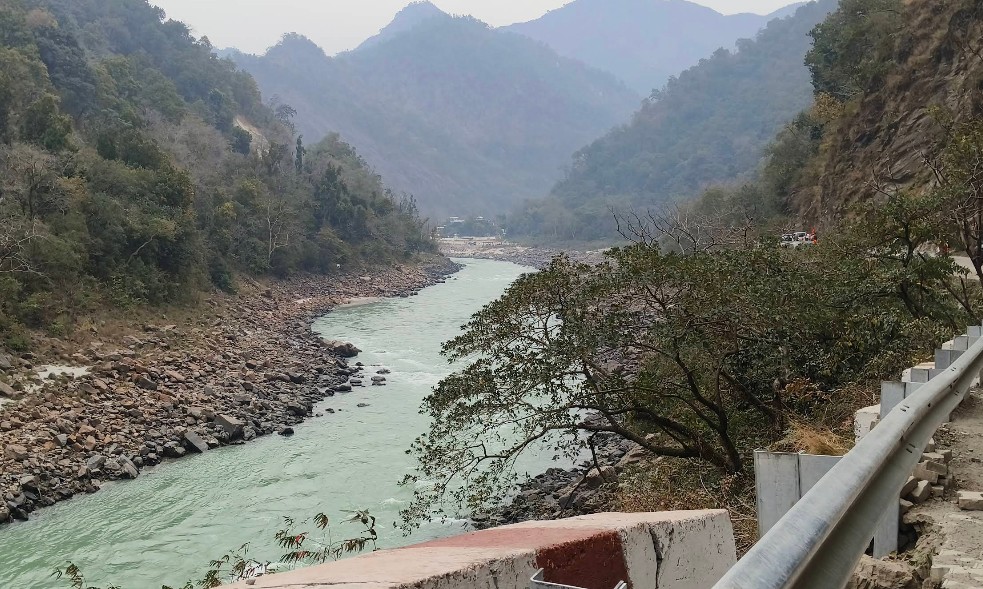
By late afternoon, we reached Gangotri. The small town felt like a gateway to something far older and bigger than I could imagine. The Bhagirathi River rushed right through it, cold and strong. I checked into a modest guesthouse, had some tea, and then walked to the Gangotri Temple. Even though there were pilgrims around, the place had a calm rhythm. I didn’t stay long, but enough to feel grounded before starting the trek.
Day 1: Gangotri to Bhojbasa
The next morning was clear and cold. I had a simple breakfast — parathas and chai — and started walking. The trail begins right from the town, hugging the river as it flows downstream. For the first couple of hours, pine forests surrounded me. Sunlight came through the trees in thin golden lines.
We stopped for lunch at Chirbasa. It’s a spot known for its chir pine trees and views of the river bending below. My guide pointed out a distant peak and said, “Tapovan is somewhere behind that.†It looked impossibly far.
After Chirbasa, the landscape started to change. The trees thinned out, and the trail became rockier. A little before Bhojbasa, I stopped just to take it all in — the river, the open valley, and the silence broken only by wind. We reached Bhojbasa by late afternoon. The settlement was small — a few guesthouses, an ashram, and open space all around. That night, I stepped outside after dinner and saw one of the clearest night skies I’ve ever experienced. Stars everywhere, as if the sky had no end.
Day 2: Bhojbasa to Gaumukh and Tapovan
We started early. The trail to Gaumukh was about 4 kilometers, and the closer we got, the more surreal the landscape became. Huge boulders, loose gravel, and the glacier finally coming into sight. Gaumukh — the “cow’s mouth†— is where the Bhagirathi bursts out from under the ice. The sound of water crashing out of the glacier was almost like distant thunder.
While I was standing there, catching my breath, I noticed another small group nearby. One guy looked strangely familiar from somewhere, though I couldn’t place him. Later, on the climb to Tapovan, we crossed paths again and started talking. His name was Rakesh. And then, casually, he told me he had summited Mount Everest the previous year. I thought he was joking at first, but he wasn’t. He said after achieving that goal, he wanted to spend some time in the mountains without chasing anything — just sitting, meditating, and learning from a baba who stayed at Tapovan for months every year.
The climb to Tapovan was steep and exhausting — loose stones, tricky footing, and the thin air making each step heavier. But when I finally got there, the view was something else. A wide meadow, open skies, and Mount Shivling right in front of me, sharp and almost unreal. The wind carried a faint sound of flowing water from nearby streams.
That evening, Rakesh introduced me to the baba. The man was dressed simply, sitting on a flat rock, his eyes half-closed but still aware of everything around him. We didn’t talk much, just exchanged a few quiet greetings. Somehow, that was enough.
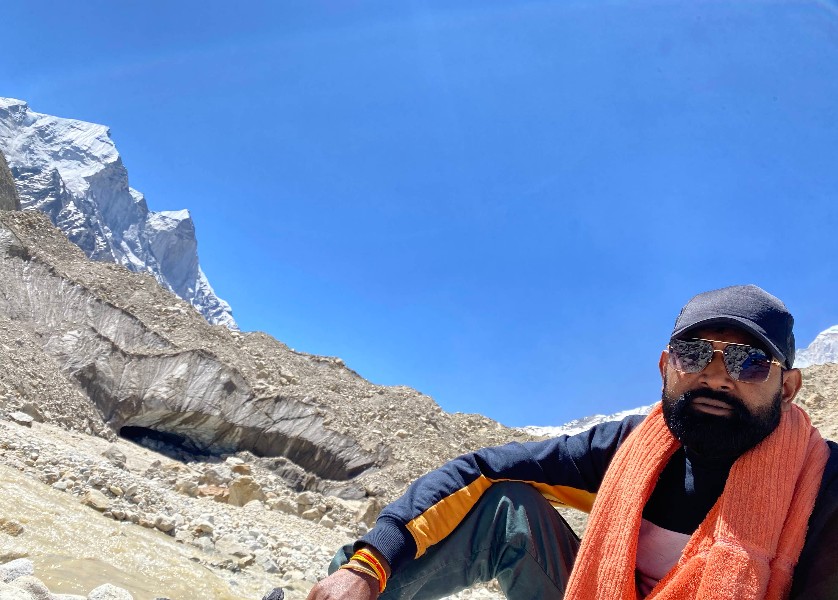
Day 3: A Day in Tapovan
I decided to stay an extra day in Tapovan. The morning was cold, but the sun rose fast, lighting up Shivling first, then the surrounding peaks — Bhagirathi, Meru, and a few unnamed ones I didn’t recognize.
I walked around slowly, exploring the streams and small ridges nearby. Around mid-morning, I found Rakesh and the baba sitting near a boulder. The baba was explaining something about how the mountains can teach patience and humility, even if you don’t seek them out. I didn’t catch everything, but the calm in his voice was unmistakable.
Later, Rakesh told me he had been here for a week and that every day felt different, even though the landscape never changed. I could see what he meant. In Tapovan, time felt stretched, almost like it wasn’t moving at the same speed as the rest of the world.
By evening, clouds rolled in. I sat outside my tent with a cup of hot soup, watching them drift over Shivling before the light faded.
Day 4: Tapovan to Bhojbasa
The next morning, I said goodbye to Rakesh and the baba. The descent back to Gaumukh was careful work. Loose stones made every step a small decision. I turned back a few times to take one last look at Tapovan.
Once past Gaumukh, the trail to Bhojbasa felt much easier. The air was thicker, and my legs were lighter. We reached Bhojbasa by afternoon, and I spent the evening just resting and watching the river.
Day 5: Bhojbasa to Gangotri
Walking back to Gangotri felt like closing a circle. The same bends in the river, the same pine forests — but now they felt like familiar friends. We stopped at Chirbasa again for lunch, taking our time.
By mid-afternoon, I was back in Gangotri. I checked into the same guesthouse and went to the temple again. This time, my prayers were just quiet gratitude — for the trek, for the people I met, and for the space to slow down.
Reflections on the Journey
Looking back, the trek was more than just a hike to a glacier and a meadow. It was the shy conversation with Mahesh in the jeep that reminded me that in the mountains, you move at the mountains’ pace. It was the unexpected meeting with Rakesh, a man who had stood on top of the world but now found peace sitting quietly with a baba at Tapovan.
The Gaumukh Tapovan Trek gave me space to breathe — not just physically, but mentally. It taught me that not every journey has to be fast or goal-oriented. Sometimes, the best days are the ones where you just sit, watch the peaks change color, and feel the wind on your face.
When I left Gangotri the next morning, I didn’t feel like I was leaving something behind. I felt like I was carrying part of it with me.
Written By:
Mountains Curve

Hotels at your convenience
Now choose your stay according to your preference. From finding a place for your dream destination or a mere weekend getaway to business accommodations or brief stay, we have got you covered. Explore hotels as per your mood.