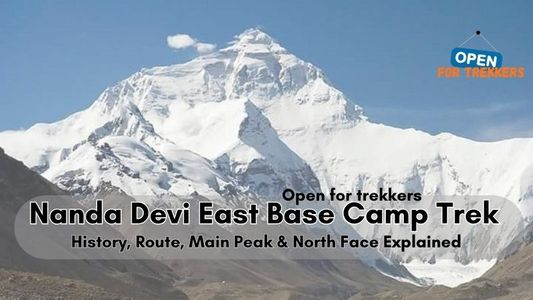
Nanda Devi East Base Camp Trek – History, Route, Main Peak & North Face Explained
 Jagat Nath
15 Jan, 2026
11 mins read
99
Jagat Nath
15 Jan, 2026
11 mins read
99
There's something about Nanda Devi that pulls at you. Maybe it's the sheer scale of the massif—rising like a fortress of ice and rock in the Garhwal Himalayas. Or maybe it's the mystery that surrounds it, this mountain that's been off-limits to climbers and trekkers for over four decades now.
At 7,816 meters, Nanda Devi is India's second-highest mountain, just behind Kangchenjunga. But here's where it gets interesting: when people talk about "Nanda Devi," they're often confused about which peak they mean. The massif actually has two main summits—Nanda Devi Main Peak and Nanda Devi East (7,434 m). The main peak sits protected inside what's called the Inner Sanctuary, completely closed to the public. Nanda Devi East, though? That's where the story changes. Its base camp remains the only legal route that lets you get close to this legendary mountain, and honestly, it's one of the most rewarding treks you'll ever do if you're up for the challenge.
Understanding the Nanda Devi Massif
The Nanda Devi massif isn't just one mountain—it's an entire ecosystem wrapped in ice and altitude. The two main peaks, Nanda Devi Main and Nanda Devi East, are connected by a ridge, but they're worlds apart in terms of access.
What makes this place truly unique is its sanctuary system. The Inner Sanctuary is a ring of peaks that cradle Nanda Devi Main like a natural amphitheater. Then there's the Outer Sanctuary, which wraps around the inner one. Think of it as layers of protection, both natural and now legal.
This region earned UNESCO World Heritage status for good reason. The biodiversity here is exceptional—snow leopards, Himalayan black bears, blue sheep, and plant species you won't find anywhere else. But that fragile ecosystem is exactly why most of it's been sealed off. Years of expeditions took their toll, and the government finally said enough. The mountain needed to breathe again.
Nanda Devi East Base Camp Trek – What You Actually Need to Know
Alright, let's talk about the trek that actually happens—the Nanda Devi East Base Camp route. This is where theory meets reality, where you trade the comfort of guidebooks for the raw experience of high-altitude wilderness.
The Route and How to Get There
The journey starts from Munsiyari or through the Milam Valley, depending on your itinerary. You'll pass through villages that feel suspended in time—Martoli, Laspa, Dibrugheta. These aren't just checkpoints on a map. They're living communities where people still follow rhythms older than mountaineering itself.
The final base camp sits somewhere between 4,200 and 4,300 meters. The exact spot can vary depending on conditions and which expedition route was historically used, but you're essentially camping on the doorstep of one of the Himalaya's most imposing east faces.
What "Base Camp" Actually Means Here
This isn't Everest Base Camp with tea houses and crowds. There's only one base camp location for Nanda Devi East, and it's expedition-grade terrain. This was where serious climbing teams staged their attempts back when mountaineering expeditions were still permitted. Now it's where trekkers stand in awe, staring up at glacier flows and ice walls that seem to defy gravity.
The views? Unfiltered. You're looking directly at the eastern approach of Nanda Devi East, with glaciers tumbling down like frozen rivers. On clear mornings, when the light hits just right, the whole massif turns gold and pink. It's the kind of sight that makes you forget about the altitude headache for a minute.
Trek Difficulty—Let's Be Honest
This isn't for weekend warriors. The Nanda Devi East Base Camp trek demands respect. You're talking high altitude, long walking days, and terrain that can be punishing when weather turns. It's remote in the truest sense—once you're in, you're committed.
Most days involve 6-8 hours of walking, sometimes more. The altitude gain is gradual but relentless. And because this trek hasn't been commercialized the way some others have, you need to be genuinely self-sufficient. Experienced trekkers who've done routes like Goecha La, Hampta Pass, or even Kashmir Great Lakes will find their footing here, but beginners should gain more miles first.
Why Nanda Devi Main Peak Stays Closed
Here's where the confusion really starts for most people planning their trips. They hear "Nanda Devi Base Camp" and assume they can trek to the main peak's base camp. They can't.
Nanda Devi Main Peak sits locked away inside the Inner Sanctuary, and it's been that way since 1982. That year, concerns about environmental degradation from repeated expeditions led to a complete closure. The fragile alpine ecosystem was showing serious damage—waste, erosion, disturbance to wildlife corridors.
So there's no trekking allowed to the main base camp. There's no access to any south base camp either. The entire Inner Sanctuary is off-limits. Special permission expeditions have happened in rare cases—serious scientific research, occasionally a select climbing team under strict conditions—but for practical purposes, that door is closed and likely staying closed.
The laws protecting this area are strict and enforced. Forest and environmental regulations aren't suggestions here. The mountain is healing, and authorities intend to keep it that way.
The North Side and North Base Camp—A Different World
Now, if you start looking into Nanda Devi's climbing history, you'll come across mentions of the North Face and approaches from the Tibet side. This is purely academic for anyone trekking from India.
The north side of Nanda Devi is accessed from the Tibetan plateau, and it's known for some of the steepest, most technical alpine terrain in the Himalayas. These aren't trekking routes—they're extreme mountaineering challenges that require advanced ice climbing skills, expedition logistics, and permits that simply aren't issued for tourism purposes.
Indian trekkers have zero access to this side. Even if you wanted to approach from Tibet, the geopolitical realities and permit restrictions make it essentially impossible. It's worth knowing about for context, especially if you're a climbing history enthusiast, but it's not a practical option.
Breaking Down the Differences: East vs. Main vs. North
Sometimes a table just makes things clearer:

The bottom line? Nanda Devi East Base Camp is the only realistic, legal way to experience this mountain up close. The main peak and north side exist in the realm of history books and special circumstances.
Why Nanda Devi East Base Camp Is Your Best Bet
If you want a genuine Nanda Devi experience—something beyond photos and secondhand stories—the East Base Camp trek is where you go. It's legal, it's regulated, and it still offers that raw Himalayan wilderness feeling that's getting harder to find.
You're walking through landscapes that haven't changed in centuries. You're camping where expeditions once staged their dreams. And you're doing it all while knowing that just beyond those ridges, the Inner Sanctuary remains untouched, protected, almost sacred in its isolation.
It's not easy. It won't be comfortable. But it's real, and in an age where trekking sometimes feels a bit too managed, that authenticity matters.
Final Thoughts
The Nanda Devi massif holds a special place in Indian mountaineering and Himalayan ecology. Understanding the difference between Nanda Devi East Base Camp, the closed main peak area, and the inaccessible north side isn't just about planning logistics—it's about respecting what this mountain represents.
The East Base Camp trek gives you access to something extraordinary while honoring the boundaries that protect the rest. If you're experienced, prepared, and drawn to mountains that demand your respect, this is one trek that delivers on every level.
Just remember: go responsibly, leave no trace, and maybe, just maybe, you'll understand why some mountains are worth protecting even if it means we can't stand on their summits anymore.
More trekking options in Uttarakhand
window.NREUM||(NREUM={});NREUM.info={"beacon":"bam.nr-data.net","licenseKey":"NRJS-3109bb2e2783f515265","applicationID":"558315209","transactionName":"blUHbEVQCxECBUVQWVcfMEpeHhARBhRCFlRVXwIXVEMAAxcDU1VZXh4VUEc=","queueTime":0,"applicationTime":135,"atts":"QhIEGg1KGB8=","errorBeacon":"bam.nr-data.net","agent":""}
Written By:
Jagat Nath

Hotels at your convenience
Now choose your stay according to your preference. From finding a place for your dream destination or a mere weekend getaway to business accommodations or brief stay, we have got you covered. Explore hotels as per your mood.