Organizing Trading Activity While Traveling: Technical and Risk Aspects
 Sebastian Stanley
01 Feb, 2026
14 mins read
119
Sebastian Stanley
01 Feb, 2026
14 mins read
119

Airports, night trains, layovers, and hotel Wi-Fi can make trading feel like trying to read a chart on a roller coaster. Yet the appeal is obvious: markets don’t pause because your passport is stamped, and the freedom to travel is often the same freedom that draws people to trading in the first place. The trick is to treat mobility as a constraint that forces better habits, not as an excuse for chaos—because one missed update, one insecure login, or one impulsive “just this once” trade can erase weeks of discipline. That’s why a travel-ready setup matters, and why having a lightweight, familiar platform like quotex in your toolkit can be useful when your routine is fragmented and you still need a consistent workflow to follow through.
The goal of this article is practical: how to keep your trading organized on the road without turning your trip into a stress test. We’ll cover the technical side (devices, connectivity, security, backups, and time zones) and the risk side (position sizing, volatility, fatigue, and decision hygiene). The punchline is simple: if you can’t trade safely while traveling, then you can’t trade—period. And if you can, it should feel boringly repeatable even from a different city every week.
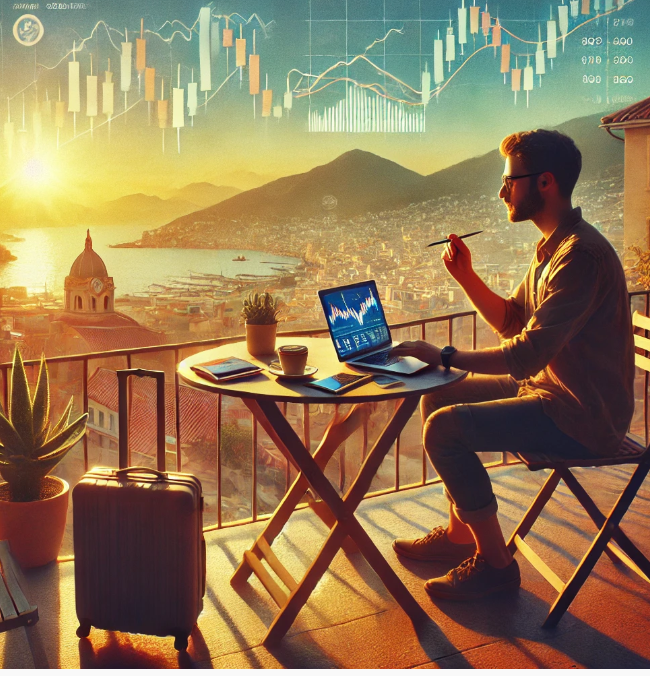
1) Start with a “travel trading operating system”
When you’re home, your environment quietly supports your discipline: reliable internet, familiar screens, predictable sleep, and fewer interruptions. Traveling removes those supports. The antidote is to build an operating system—a compact set of rules you can execute anywhere.
A good travel trading OS has:
- A fixed schedule window (even if short): e.g., 30–60 minutes for analysis, 10 minutes for execution, 5 minutes for journaling.
- A pre-trade checklist you never skip: connection quality, battery level, 2FA access, market conditions, and risk limits.
- A “no-trade” trigger list: weak Wi-Fi, low sleep, emotional agitation, time pressure, or major news you can’t monitor properly.
- A single source of truth for your plan: one notebook or one digital doc with your rules, watchlist, and risk parameters.
Travel punishes improvisation. If you’re deciding “how to trade today” every day, you’re already behind.
2) Hardware: choose reliability over power
You don’t need a spaceship laptop to trade while traveling; you need something that won’t betray you at the worst time.
Core hardware principles
- One primary device + one fallback. Primary might be a laptop; fallback could be a phone or tablet. The fallback isn’t a luxury—it’s insurance.
- Battery is a risk control tool. A dead device during volatility is the trading equivalent of your brakes failing on a mountain road.
- Screen real estate matters. If your strategy requires multi-timeframe confirmation and indicators, a tiny screen increases error rate. Either simplify your method for mobile or use a compact external display when feasible.
- Carry essentials: universal power adapter, power bank, short spare cables, and a small surge protector if you’re in regions with unstable power.
Also, keep your workspace portable: a lightweight mouse (or trackpad you trust), noise-canceling earbuds, and a privacy screen filter if you’ll work in public places. People love looking at charts over your shoulder more than you think.
3) Connectivity: your internet is part of your edge
Travel is a connectivity lottery. Treat internet like a variable in your risk model.
Best practices
- Prefer your own hotspot when possible. A local SIM/eSIM plus tethering often beats public Wi-Fi for stability and security.
- Test before you trade: run a quick speed/latency check, load the platform, and open/close a demo position if available to confirm responsiveness.
- Have a “minimum viable connection” rule. If charts lag, order tickets spin, or the platform disconnects, you don’t trade—no exceptions.
- Plan for dead zones: trains, islands, mountain routes. If you’ll be offline, flatten risk beforehand or avoid holding positions that require monitoring.
A strong travel habit is to trade less, but trade cleaner. If your strategy needs constant babysitting, it’s not a travel strategy.
4) Security: travel expands your attack surface
Hotels, cafés, and airports aren’t just noisy—they’re risky. Your accounts are valuable targets, and travel makes you easier to exploit because you’re rushed and distracted.
Security checklist
- Use strong, unique passwords and a password manager.
- Enable 2FA (ideally via an authenticator app rather than SMS when possible).
- Avoid logging in on shared/public computers. Ever.
- Use a reputable VPN on public Wi-Fi, but remember: VPN isn’t magic—phishing still works, and malware still works.
- Lock screens instantly, use device encryption, and set remote wipe capabilities.
- Separate email for trading accounts if you want an extra layer of compartmentalization.
- Watch for “travel phishing”: fake hotel Wi-Fi portals, lookalike login pages, and urgent “account verification” emails.
Security is also physical. Don’t leave devices unattended; don’t display account balances in crowded spaces; don’t announce your trading activity to strangers who ask what you do.
5) Workflow: simplify decisions to reduce errors
Travel adds micro-stress: new beds, new foods, new languages, new logistics. Decision fatigue is real, and trading is decision-dense. Your workflow should reduce choices.
A travel-friendly workflow
- Pre-market scan: identify 3–5 instruments max.
- Scenario planning: write “if/then” rules (if price breaks X with volume confirmation, then consider entry; if not, no trade).
- Execution rules: limit orders where possible, predefined position size, predefined exit criteria.
- Post-trade notes: one sentence on why you took it, one sentence on whether you followed rules.
The more you rely on “feel,” the more travel will distort your results.
6) Two paragraphs about the Quotex campaign (integrated relevantly)
Quotex is presented as an online service for trading financial assets through a simple web interface and mobile applications. The emphasis on the site is placed on the ability to trade binary options and other instruments, receive real-time market quotes, and use signals and trading indicators to support decision-making—features that can be especially convenient when you’re away from your usual workstation and need quick access to chart data and analytical tools.
The platform also highlights ease of use from both computers and mobile devices, the presence of a demo account for practicing without risk, multilingual customer support, and low requirements to start trading. Informationally, the page underlines that users gain market analysis tools, can train before switching to real trades, and can participate in bonus programs and trader tournaments—elements that align with a travel context where flexibility, practice modes, and quick onboarding matter.
7) Time zones: the hidden source of mistakes
Time zones can quietly sabotage trading. Economic calendars, session opens, and personal routines all shift.
How to stay sane
- Set your trading calendar to one reference time zone (e.g., UTC) and stick to it.
- Use calendar reminders for high-impact news in both UTC and local time.
- Know which sessions matter to your instruments (London/NY overlap, Asia session, etc.).
- If your sleep schedule is wrecked, don’t force yourself to trade a session just because you “normally do.”
Many travel losses aren’t from bad analysis—they’re from trading at the wrong time of day, half-awake, misreading schedule cues.
8) Risk management: when you travel, risk should shrink
Even if your technical setup is perfect, your human setup won’t be. Travel increases variance: mood swings, fatigue, and interruptions. So your risk model should adapt.
Travel risk rules that work
- Reduce position size by a fixed factor (for example, 25–50% smaller than at home).
- Cap daily loss tighter than usual. A travel day can spiral quickly.
- Avoid revenge trading after disruptions (missed entry, disconnection, slippage).
- Prefer strategies with clear invalidation (hard stop levels or strict time-based exits).
- Limit the number of trades. Fewer decisions, fewer errors.
If you’re traveling for pleasure, remember: the trip is the priority. A stressed trader in an amazing city is still just a stressed trader.
9) Volatility, news, and “I can’t monitor this”
Travel often means you can’t monitor markets continuously—tours, transit, meetings, family plans. So you need a plan for volatility and news.
- If you can’t watch the market during major events, don’t hold exposure that depends on active management.
- Use alerts aggressively: price levels, volatility spikes, and time-based reminders.
- When in doubt, go flatter. It’s better to miss a move than to be trapped in one.
A good question to ask before any trade while traveling: “If my connection drops for 20 minutes, is this still a responsible position to have?” If the answer is no, the trade is no.
10) Psychology: your mind is the most fragile device you carry
People obsess over Wi-Fi and forget the bigger factor: your brain on the road is different. New environment equals heightened stimulation; novelty can feel like confidence; exhaustion can feel like urgency.
Psychological guardrails
- A “cool-down” rule after stressful travel events (missed flight, argument, long delays): no trading for a set period.
- A simple mindfulness check: rate your focus 1–10. If it’s below a threshold (say 7), you only analyze, no execution.
- Don’t trade to “pay for the trip.” That framing encourages over-risking and emotional justification.
The best travel trading mindset is professional detachment: you are executing a process, not chasing money in the gaps between sightseeing.
Trading while traveling is possible, but it demands humility and structure. Your technical foundation—devices, power, connectivity, security, and time zone discipline—must be built for failure, not for comfort. Your risk foundation must be smaller and stricter, because travel increases randomness and reduces your ability to respond. And your psychological foundation must acknowledge the obvious truth: a tired, rushed trader is not a sharper trader.
If you take only one principle from this guide, let it be this: when your environment becomes unstable, your process must become more stable. Build a travel-ready operating system, trade less but better, and keep your setup simple enough to execute anywhere. Do that, and your charts can follow you across borders without turning your journey into a gamble.
Written By:
Sebastian Stanley

Hotels at your convenience
Now choose your stay according to your preference. From finding a place for your dream destination or a mere weekend getaway to business accommodations or brief stay, we have got you covered. Explore hotels as per your mood.