Places to visit in Ajmer in 1 day in 2026
 Jatin Chhabra
24 Jan, 2026
21 mins read
429
Jatin Chhabra
24 Jan, 2026
21 mins read
429
Ajmer is located in central Rajasthan and is known not only for its spiritual importance but also for its rich historical legacy. The city has been ruled by several powerful dynasties, including Prithviraj Chauhan and Rana Sanga, and later became an important center during the Mughal era. In modern times, Ajmer is also recognized as one of India’s prominent educational hubs, with several reputed institutions established in and around the city.
Today, Ajmer attracts travelers from across the country who come to explore its famous landmarks, especially the revered Ajmer Sharif Dargah. The city is also a popular stop for weekend travelers visiting Jaipur, as Ajmer is located just a 2–3 hour drive away, making it easy to include in a short Rajasthan itinerary.
With proper planning, you can comfortably cover the main attractions of Ajmer in one day by starting your sightseeing around 9:00 AM. Many travelers even plan a same-day trip from Jaipur, visiting Ajmer and returning by night. The travel cost generally ranges between ₹1,500–₹2,500 for a Jaipur to Ajmer one side cab from Rajputana Cabs, while a same-day round trip usually costs around ₹3,000, depending on the taxi service and vehicle type.
Quick Itinerary – Places to visit in Ajmer in 1 Day (6 AM to 10 PM)
So, early in the morning, you can either arrive in Ajmer and start the tour by hiring a taxi, or—as most travelers do—begin the Ajmer sightseeing trip from Jaipur by leaving around 7:00 AM and reaching Ajmer before 10:00 AM.
From morning onward, you will visit:
- Ajmer Sharif Dargah (the main attraction of Ajmer)
- Adhai-Din Ka Jhonpra
- Akbar’s Palace & Museum
- Lunch between 1:00 PM and 3:00 PM
- Nasiyan Jain Temple
- Nareli Jain Temple
- Ana Sagar Lake
- Evening shopping in Ajmer
- Dinner at Ajmer
By night, you can either end the tour in Ajmer and rest at your hotel, or leave the city by train. If traveling by flight, you will need to go to Jaipur International Airport, which is approximately 136 km from Ajmer and is the nearest airport to the city.
Now let's go through these places, stated above, and the first one is:
1 Ajmer Sharif Dargah
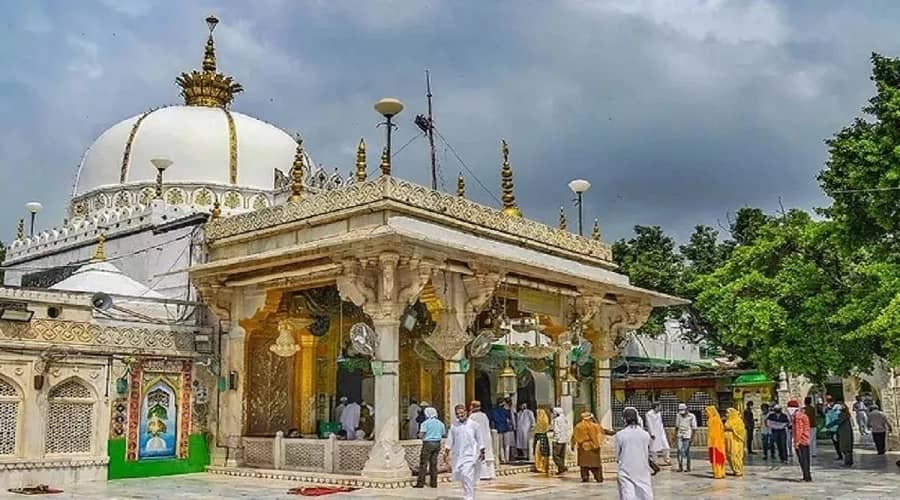
Ajmer Sharif Dargah is one of the most visited Sufi saint sites in the whole Islamic world. It is visited by more than 1 million devotees every year and a good number of them are non-Muslims.
So in short, the Dargah of Ajmer Sharif is open for all.
The Dargah is of Khwaja Moinuddin Chishti, also known as Gharib Nawaz, a revered Sufi saint who came to Ajmer, India, from Iran in 1192 AD, and their teachings of love, compassion, & humanity continue to inspire millions of followers across the world.
When you plan to visit Ajmer, the Ajmer Sharif should be visited by morning to avoid huge lines, and we suggest you come here by 9 AM, or best by 7–8 AM to avoid a huge crowd.
When entering Ajmer Sharif Dargah, you will pass through important gateways like the Nizam Gate & Shahjahani Gate. Here you will see beautiful Mughal-era architecture.
The beautiful marble work, carved arches, and huge courtyards around the Dargah add to the spiritual charm.
The Ajmer Sharif Dargah is open from 5 AM to 10 PM, every day, and gets crowded on Fridays, weekends, and during the Urs festival.
When you enter Ajmer Sharif Dargah, you will pass through Buland Darwaza, Shah Jahan Mosque, and courtyards, and then see the Mazar of Khwaja Moinuddin Chishti.
At the Mazar of Khwaja Moinuddin Chishti, many devotees offer Chadar, Perfume, Flowers, & Tabarruk (sweets).
So if you visit the Dargah of Khwaja Moinuddin Chishti in Ajmer on weekdays, apart from Friday, and early in the morning, then it will take around 1 hour. And if it’s a Friday, then 2–3 hours.
2 Adhai-Din Ka Jhonpra
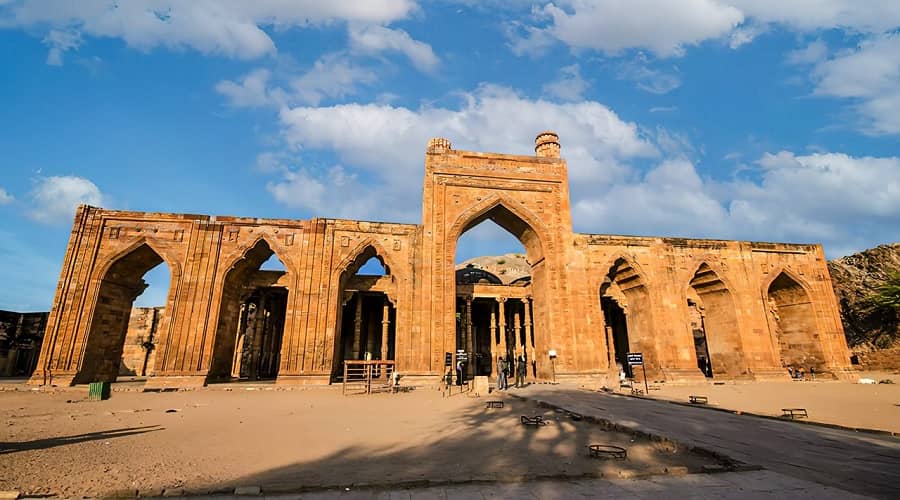
Adhai Din Ka Jhonpra has a recorded history of over 900 years. It is believed that Prithviraj Chauhan or his father built a Sanskrit college at this site during the Chauhan rule of Ajmer.
However, after Prithviraj Chauhan lost Ajmer, this beautiful college was converted into a mosque in 1192 AD. Later, the structure was redeveloped by Sultan Iltutmish around 1213 AD.
Today, what you see at Adhai-Din Ka Jhonpra is a grand historical mosque, famous for its beautifully carved stone pillars, arched screens, and inscriptions on the walls, reflecting a unique blend of Hindu and Indo-Islamic architecture.
Adhai-Din Ka Jhonpra is open from 9:00 AM to 5:00 PM. It is best to visit this monument after visiting Ajmer Sharif Dargah, preferably around late morning or noon, as both places are located very close to each other.
The entry ticket is nominal, usually ₹5–₹10 per person, and entry for children is free. Adhai-Din Ka Jhonpra is located just 350 meters from Ajmer Sharif Dargah, which is about a 5-minute walk, making it easy to include in a one-day Ajmer itinerary. A visit here typically takes 30–45 minutes.
3. Akbar’s Palace & Museum
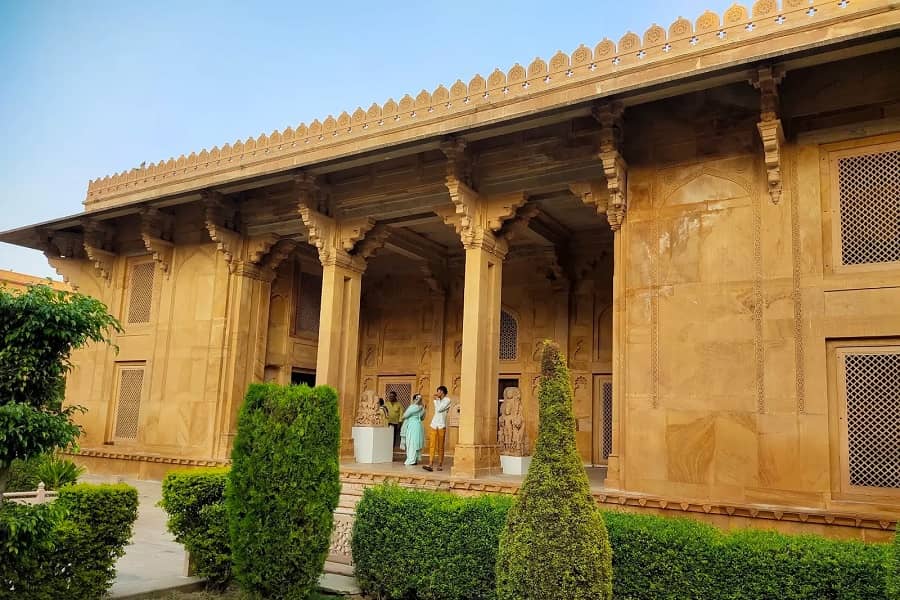
The Akbar's Palace & Museum was built by the Mughal emperor Akbar in 1570 AD, making this place more than 450 years old.
This palace was not the permanent residence of Akbar or his sons; instead, it mainly served as the Mughal administrative headquarters in the region.
This palace is also recorded in Indian history as the place where Shah Jahan, the next Mughal ruler after Akbar, met Sir Thomas Roe, the first ambassador of England to the Mughal court.
After this meeting, the British began their business activities on the Indian subcontinent and gradually weakened Portuguese influence in ocean trade between India and Europe.
The museum is open from 10:00 AM to 5:00 PM and can be conveniently visited around 1:00 PM or just before lunch. The entry ticket costs between ₹10–₹20 for Indian visitors and ₹50 for foreign travellers.
Inside, you will see large courtyards and detailed historical information about Ajmer, including the rule of Rajput and Mughal emperors who governed the region for more than 700 years.
4. Ana Sagar Lake
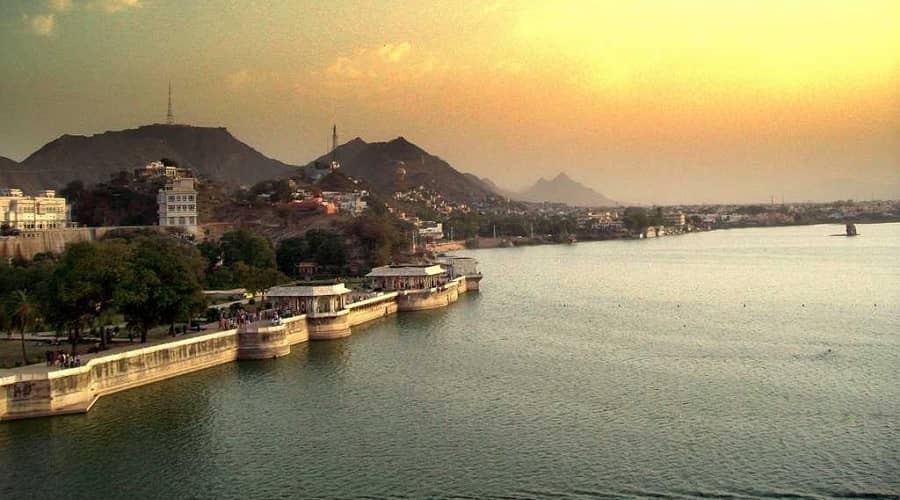
Ana Sagar Lake is a huge artificial lake that is more than 1,000 years old. It was built by Anaji Chauhan, the grandfather of Prithviraj Chauhan.
Later, when Shah Jahan became the ruler of the Mughal Empire, he ordered the beautification of the lake. Marble pathways and boundary walls were constructed along Ana Sagar Lake.
Ana Sagar Lake is visited by tourists to enjoy the fresh air. In the evening, the weather becomes very pleasant, and visitors can sit here for 15 to 30 minutes, grab a cup of tea, and enjoy the beautiful sunset.
There is no entry ticket to visit Ana Sagar Lake, and the best time to come here is just before sunset.
5. Nasiyan Jain Temple (Soniji Ki Nasiyan)
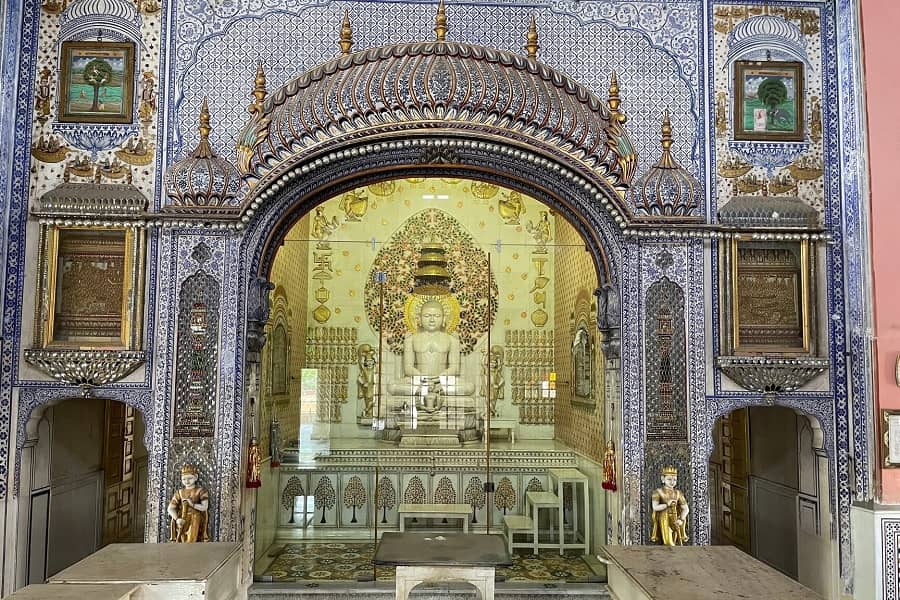
Around 1865, during British rule in Ajmer, a beautiful Jain temple was built by Seth Moolchand Soni. The temple is dedicated to Rishabhdev (Lord Adinath).
You can visit the temple after lunch to have darshan and also see the Swarna Nagari (City of Gold). Inside the temple complex, there are wooden figures of people, animals, and palaces, all beautifully covered with gold leaf, creating a stunning “City of Gold.”
The timings of the Nasiyan Jain Temple are from 9:00 AM to 9:00 PM. There is a small entry fee of ₹10 to ₹30, which is applicable only for the Swarna Nagari museum section.
6. Nareli Jain Temple
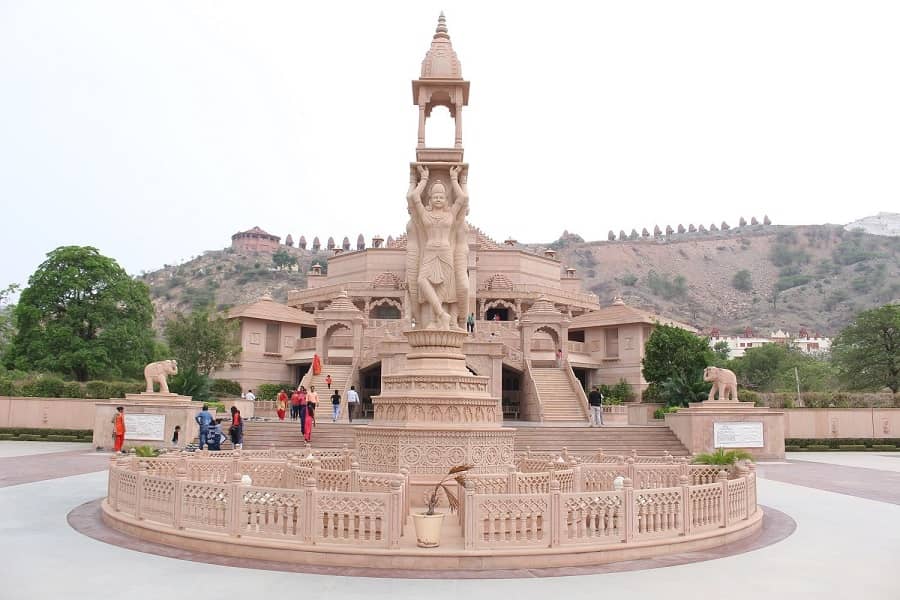
Nareli Jain Temple was built by Seth Gyan Sagar Ji in the year 1999. Since then, it has become a popular Jain Tirth in Ajmer city.
This Jain temple is dedicated to Rishabhdev (Lord Adinath) and has 24 miniature temples surrounding the main complex.
The atmosphere of Nareli Jain Temple is very peaceful, and its Hilltop location makes the nearby surroundings lush green & with scenic views.
We suggest visiting the temple either in the morning or just before sunset. The temple is open from 6:00 AM to 7:00 PM, and there is no entry fee.
7. Taragarh Fort
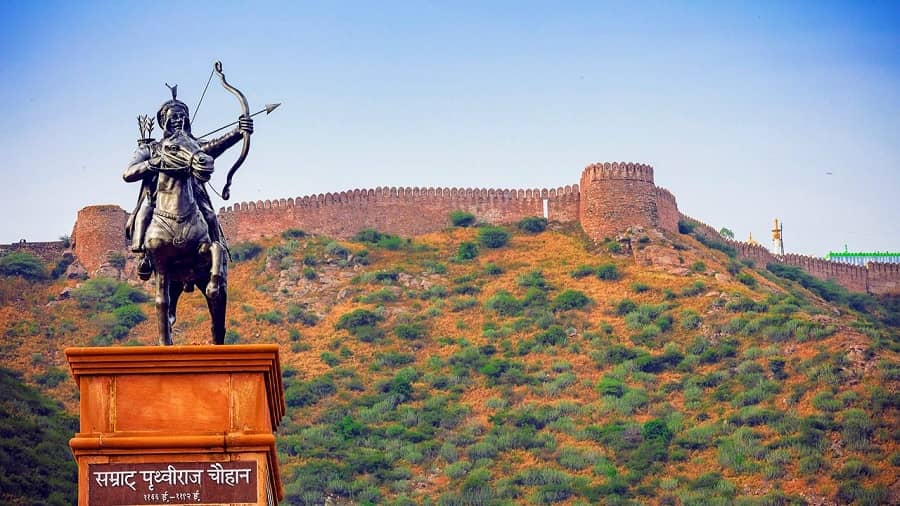
The city of Ajmer was founded and built by Maharaj Ajaypal Chauhan in 1149 AD. During his rule, the need for a strong garh (fort) was felt, and thus the foundation of Taragarh Fort came into existence.
Today, the fort is not in very good condition, but since it is located on a hilltop, many travellers come here to enjoy panoramic views of Ajmer city.
The fort has water reservoirs, large gateways, and courtyards, which help us understand that it was built as a military fort, similar to Jaigarh Fort in Jaipur.
Taragarh Fort is a good site to visit for history lovers. We also suggest visiting during sunrise or sunset to experience its real beauty.
The fort timings are 5:00 AM to 5:00 PM, and there is no entry fee.
8. Shahid Smarak or Ajmer Clock tower area
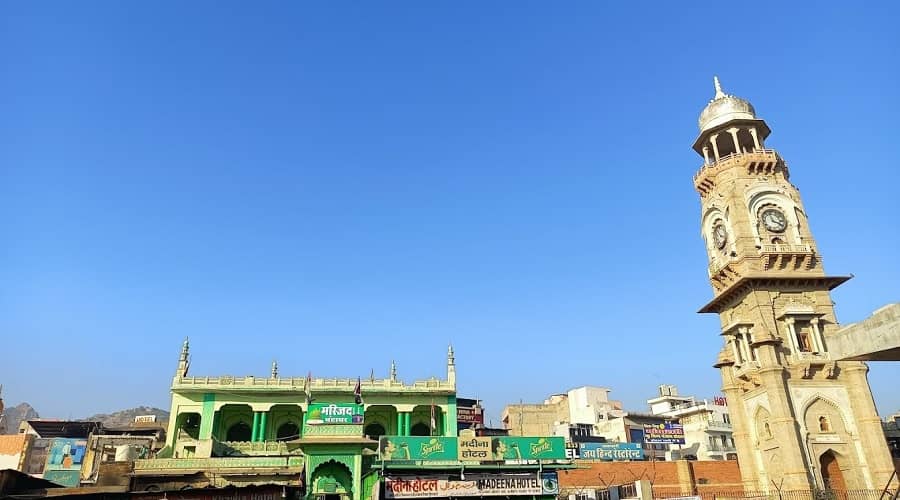
Near Ajmer Railway Station stands a clock tower that was built in 1887 AD and was originally known as the Victoria Jubilee Clock Tower. This clock tower serves as a local landmark of Ajmer city, and many people, taxis, and auto-rickshaws use it as a common pick-up and drop-off point.
Just close to the Clock Tower is the Shahid Smarak, a memorial built in remembrance of the martyrs, especially those associated with the Quit India Movement of 1942.
So, when you are in Ajmer, do pass by these landmarks.
9. Local Markets Near Ajmer Sharif
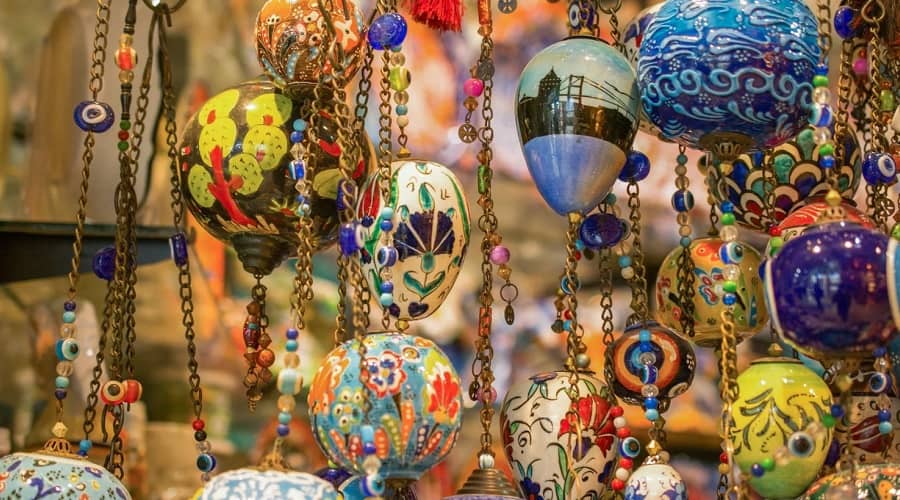
If you are a shopping lover, the Ajmer markets won’t disappoint you. The roads around Ajmer Sharif Dargah are full of shops selling chadars, perfumes, Rajasthani locally made handicrafts, and delicious street food such as Kadhi Kachori, Pyaz Kachori, Mirchi Bada, and Kulfi, along with many options of Mughlai food.
In Ajmer, if you are looking for everyday items, visit Dayanand Market. For clothes, fabrics, and handicrafts, Khailand Market is a good choice.
New Madar Gate Market is famous for leather goods, while Kasturi Silk Palace is well known for good-quality silk fabrics and traditional Rajasthani clothing.
The best time for shopping in Ajmer is in the evening hours and bargain a lot, since Ajmer has become a popular tourist city.
10. Where to stay in Ajmer
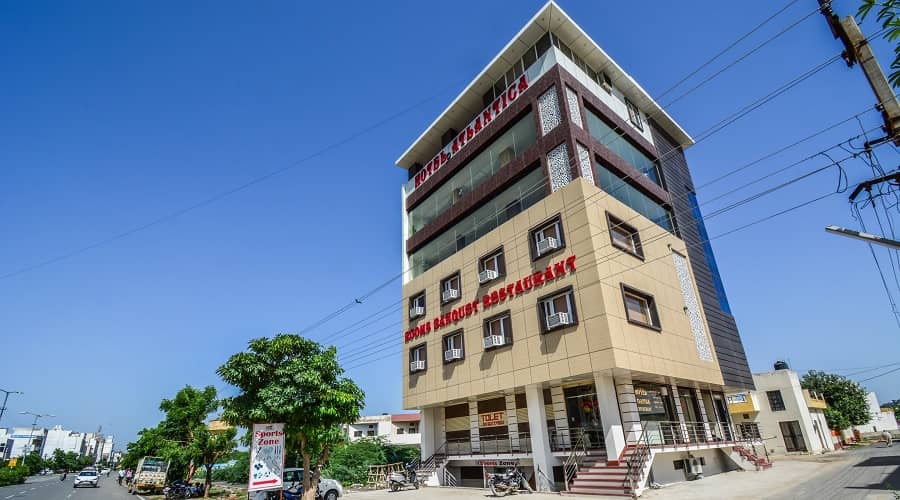
Ajmer offers a good range of hotels for every budget, whether you are visiting for a few days pr or coming for a whole week
Most travelers prefer staying near Ajmer Sharif Dargah, Railway Station, or Civil Lines, as these areas are well connected with all major attractions, restaurant of Ajmer..
Budget Hotels (₹1,500 – ₹2,500 per night)
If you are looking for clean, comfortable, and value-for-money accommodation, then check out
- Hotel Royal Melange Beacon is popular for its neat rooms and central location.
- Hotel Sahil is another decent option close to the Dargah area, ideal for pilgrims and short stays.
These hotels usually offer basic amenities like air-conditioned rooms, room service, and Wi-Fi.
Mid-Budget Hotels (₹3,000 – ₹4,500 per night)
For better comfort and services, mid-range hotels are a good choice.
- Hotel Mansingh Palace is one of the most preferred hotels in this category, known for spacious rooms, a swimming pool, and an in-house restaurant.
- Hotel Ambassador Ajmer is another reliable option offering good hospitality and convenient access to the city.
Premium Hotels (₹5,000 – ₹12,000 per night)
Travelers who are interested to stay at a�luxury hotel or a peaceful premium stay, can opt for premium properties like
- The Gateway Resort Pushkar, located a short drive away, offering resort-style comfort and scenic surroundings.
- Brij Pushkar Palace is also a popular upscale choice for those who prefer a heritage-style experience near Ajmer.
Overall, Ajmer has accommodation options for all budgets, and it is advisable to book in advance during weekends, Urs festival, and peak tourist seasons.
11. List of Festivals in Ajmer
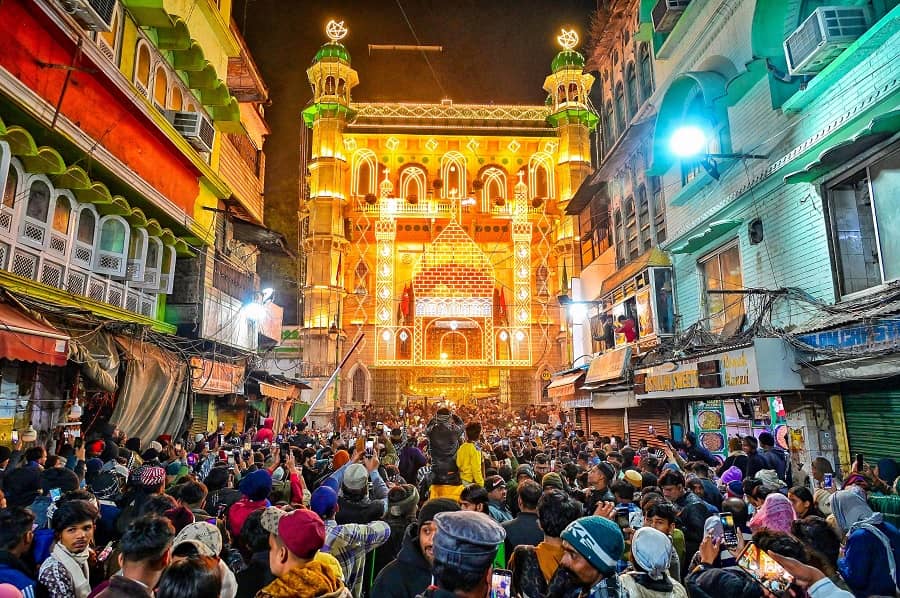
Ajmer is a vibrant city where festivals reflect its spiritual harmony and cultural diversity.
The most important event is the Urs Festival Ajmer, held at Ajmer Sharif Dargah to commemorate Khwaja Moinuddin Chishti.
Another major attraction is the Pushkar Camel Fair, celebrated nearby with folk music, camel trading, and cultural events. Hindu festivals like Gangaur, Holi, and Diwali are also celebrated with great enthusiasm, making Ajmer lively throughout the year.
Government site on Ajmer tourism > https://www.tourism.rajasthan.gov.in/ajmer.html
Written By:
Jatin Chhabra

Hotels at your convenience
Now choose your stay according to your preference. From finding a place for your dream destination or a mere weekend getaway to business accommodations or brief stay, we have got you covered. Explore hotels as per your mood.