Planning Your Trip Botswana and Namibia Safari
 Elijah Anderson
18 Nov, 2025
18 mins read
142
Elijah Anderson
18 Nov, 2025
18 mins read
142
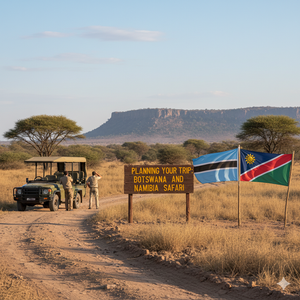
Planning Your Trip Botswana and Namibia Safari
The combined safari of Botswana and Namibia offers the ultimate contrast in African landscapes. This epic journey links two vastly different, yet equally spectacular, ecosystems: the wet, emerald labyrinth of Botswana’s Okavango Delta and the ancient of Namibia’s Namib Desert Safari Adventure. This is a deep dive into contrasting worlds where you can track desert-adapted rhinos one day and silently glide past hippos in the Delta channels the next. Read on to explore the essential planning details, itinerary highlights, budget expectations, and critical entry documentation for your Southern African adventure.
Why the Desert Meets the Delta Combine Botswana and Namibia?
A safari should be about maximizing your experience, and combining Botswana and Namibia offers the perfect synergy by linking two complementary worlds.
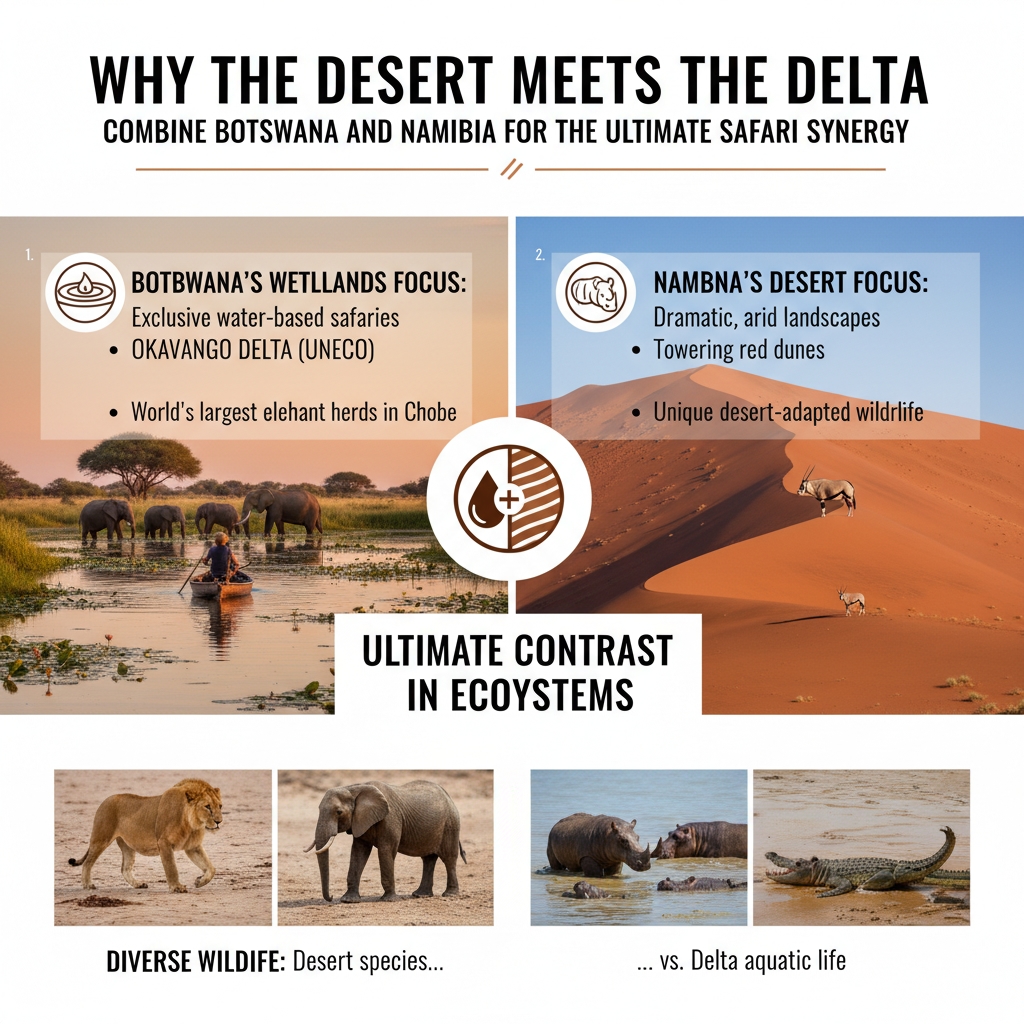
1.Ultimate Contrast in Ecosystems
Experience the wet, abundant life of the Okavango Delta against the breathtaking solitude of the ancient Namib Desert.
2.Botswana's Wetlands Focus
Tourism focuses on exclusive, low-impact, water-based activities, featuring the Okavango Delta (UNESCO World Heritage) and the world's largest concentration of elephants in Chobe.
3.Namibia's Deserts Focus
The country provides dramatic, arid landscapes, including towering red dunes, vast empty spaces, and unique desert-adapted wildlife.
4.Diverse Wildlife Viewing Opportunities
Track desert-adapted species (rhinos, elephants, lions) in Namibia one day, and silently glide past hippos and crocodiles in Botswana's Delta channels the next.
What is the Best Time to Visit Botswana and Namibia?
Timing is crucial for a successful safari. The dry winter season (May to October) is widely considered the golden window for optimal game viewing across both countries.
1.Dry/Peak Season (May to October)
This is the traditional and most popular time for a combined safari, offering the best conditions for classic game viewing and landscape photography.
Botswana Experience during Dry Season
- Peak game viewing as animals are forced to congregate at permanent water sources (Chobe River and Okavango Delta).
- The Okavango Delta experiences its annual floodwaters (peaking June–August), making Mokoro safaris and water activities ideal.
- Weather is generally mild during the day, though mornings and nights can be very cold, especially in the desert regions.
Namibia Experience during Dry Season
- Clear, sunny skies and mild daytime temperatures; perfect for climbing Sossusvlei dunes early in the morning.
- Wildlife viewing in Etosha National Park is at its peak as animals gather intensely around waterholes.
- This is the highest cost season due to high demand and clear conditions.
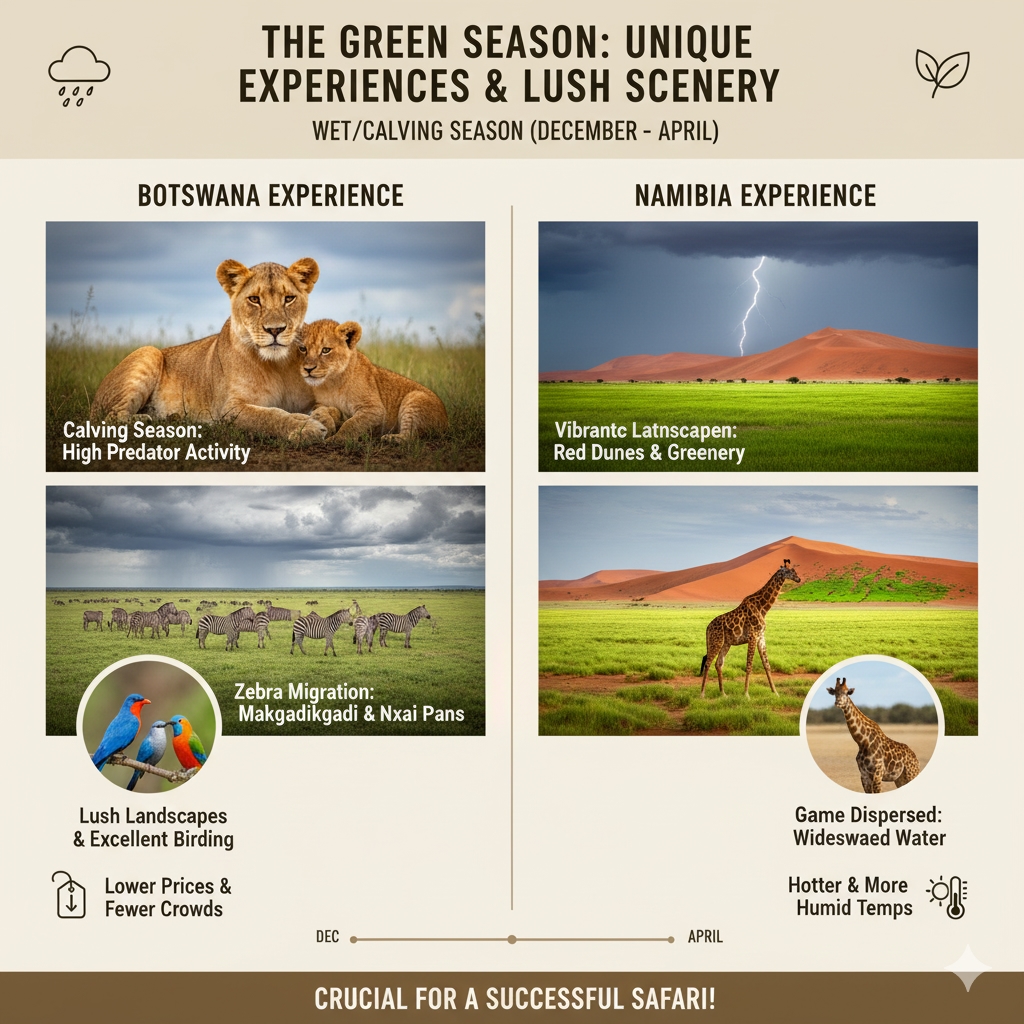
2.Green/Wet Season (December to April)
While challenging in some areas, the wet season offers unique experiences, lower costs, and stunning scenery.
Botswana Experience during Wet Season
- Lush, green landscapes, excellent for photography and birding as migratory species arrive.
- The birthing season (calving) takes place, leading to high predator activity.
- Lower prices and fewer crowds are common, making for a more intimate safari.
- The Zebra migration is visible in the Makgadikgadi and Nxai Pans.
Namibia Experience during Wet Season
- Rainfall comes in short, dramatic afternoon thunderstorms, leaving the air clear and dust-free.
- Landscapes are vibrant and lush, offering spectacular contrast to the red dunes.
- Temperatures are generally hotter and more humid.
- Game is more dispersed across the parks due to widespread water availability.
What supporting Documentation Needed for Entry and Travel for Botswana and Namibia?
For an international safari that crosses borders, understanding documentation requirements is essential.
Namibia Visa Requirements eVisa Focus
- Visa Exemptions: Many nationalities (including US, UK, most EU) enjoy visa-free entry for up to 90 days.
- Visa on Arrival (VoA): Available at major entry points (like Hosea Kutako Int. Airport, WDH) for those who require a visa. It costs around N$1,600.
- e-Visa Option: Namibia is promoting its official eVisa system for travelers to apply online before departure, which helps minimize waiting times at the border.
- Passport must be valid for at least six months from entry date and have sufficient blank pages.
Botswana Visa Requirements�
- Visa Exemptions: Botswana also grants visa-exempt status to many nationalities for short stays (up to 90 days).
- eVisa System: If a visa is required, the application is completed entirely online via the official government eVisa portal.
- Required Documents: Applicants must upload digital copies of documents, including certified passport bio-page copy, proof of sufficient funds (bank statement), confirmed accommodation, and return ticket.
- Processing Time: Requires a minimum of 21 working days (plan well in advance).
- Passport must be valid for at least six months from entry and have at least three blank pages.
How Much Does a Botswana and Namibia Safari Cost?
Botswana e visa fees for Safaris in this region are known for being a premium experience, largely due to Botswana’s focus on low-density tourism. Costs vary significantly based on your chosen accommodation and mode of travel.
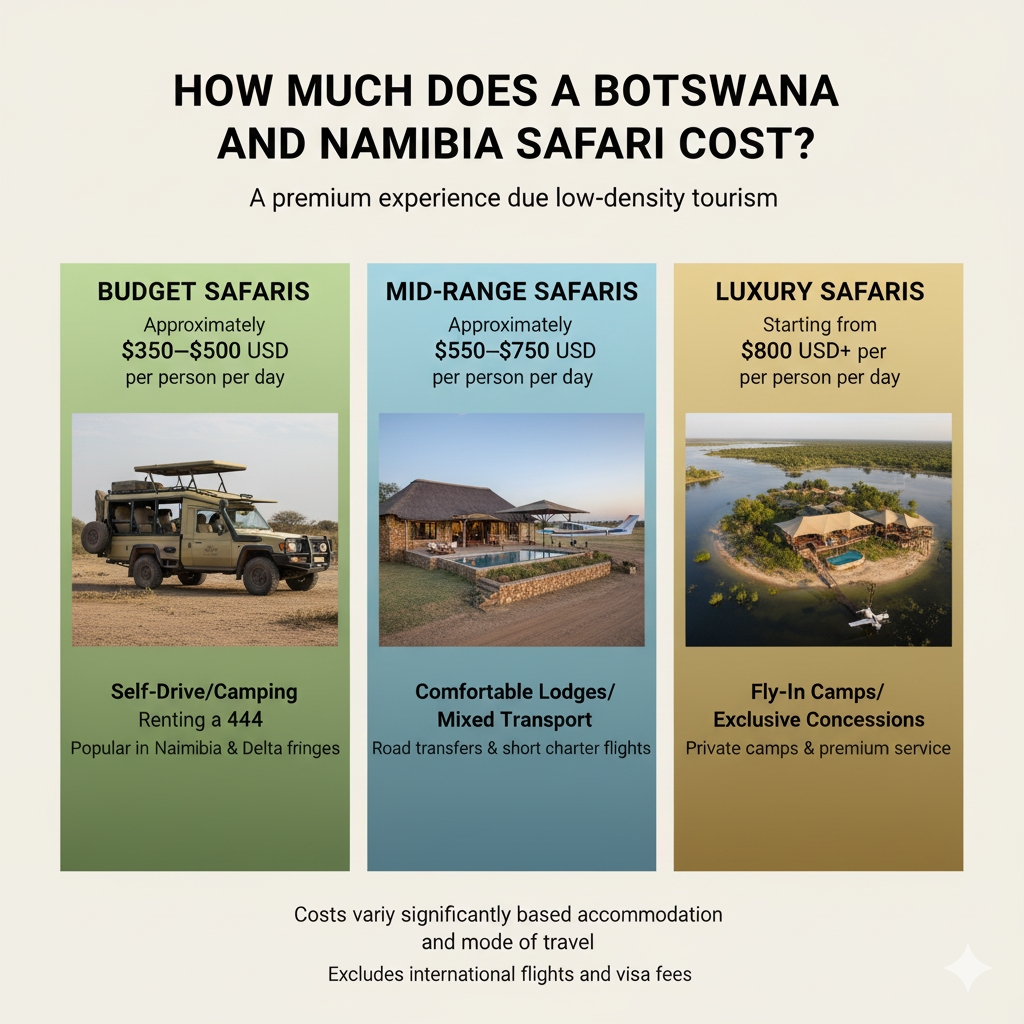
1.Budget Safaris (Self-Drive/Camping)
Approximately $350–$500 USD per person per day. This primarily involves renting a fully-equipped $4\times 4$ and camping in designated sites, particularly popular in Namibia and the easier-to-access areas of Botswana (like the Delta fringes).
2.Mid-Range Safaris (Comfortable Lodges/Mixed Transport)
Approximately $550–$750 USD per person per day. This involves staying in comfortable, non-luxury lodges and using a mix of road transfers and short charter flights.
3.Luxury Safaris (Fly-In Camps/Exclusive Concessions)
Starting from $800 USD and going well above $1,500 USD per person per day. This includes internal charter flights between private camps, premium service, and staying in exclusive wildlife concessions, particularly prevalent in the heart of the Okavango Delta and Moremi.
What Defines Namibia’s Desert Jewels, Sossusvlei's Red Dunes and Deadvlei?
Sossusvlei is the spectacular gateway to the Namib-Naukluft Park, famed for the world’s most accessible and towering rust-red dunes.
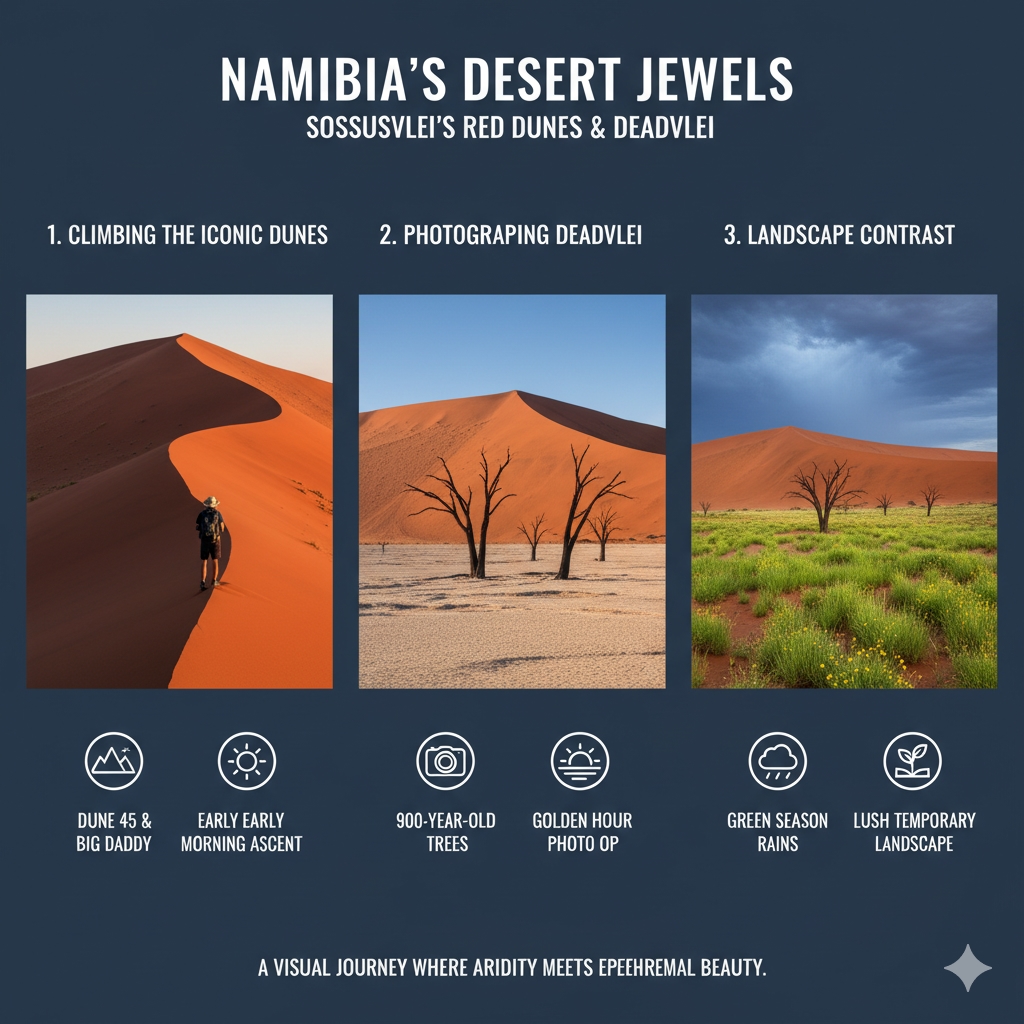
1.Climbing the Iconic Dunes
Dune 45 & Big Daddy are the key dunes for climbing. Accessing the park gates early (by staying inside the park) is essential to climb before the intense midday heat.
2.Photographing Deadvlei
This is a must-see white clay pan, punctuated by the skeletal, 900-year-old silhouettes of dead camel thorn trees, offering an unparalleled photographic opportunity, especially at sunrise.
3.Landscape Contrast
The red dunes are most dramatically contrasted against the clear blue skies of the Dry Season, but gain unexpected beauty and life during the Green Season when temporary grasses appear.
How Can I Explore the Skeleton Coast and Damaraland Giants?
This region is characterized by stark, beautiful geological formations and is the domain of highly specialized desert-adapted wildlife, making it a unique stop between the Delta and Namibia's interior.
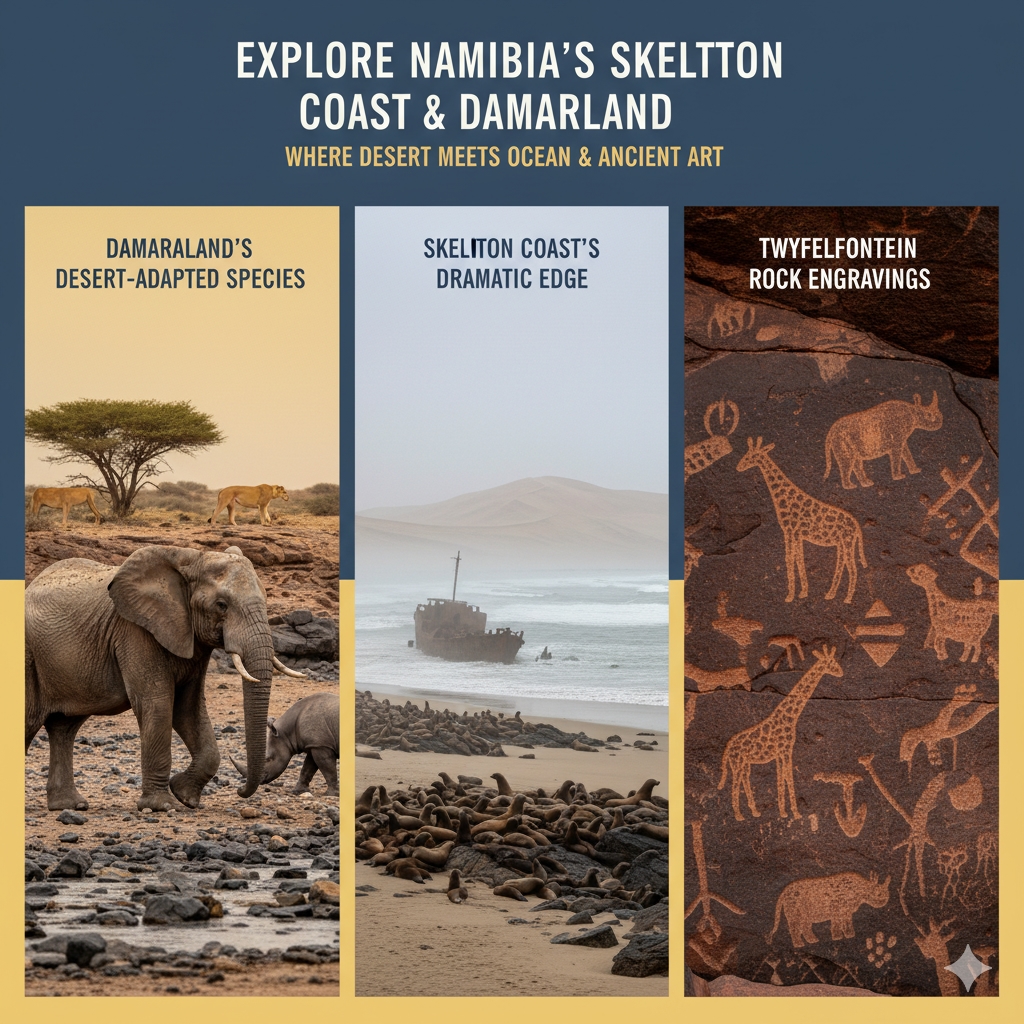
1.Damaraland's Desert-Adapted Species
This area is crucial for conservation efforts, being one of the few places where you can reliably track desert-adapted elephants, rhinos, and lions that have evolved to survive in this arid environment.
2.Skeleton Coast's Dramatic Edge
This remote, mist-shrouded wilderness is known for its chilling shipwrecks, massive Cape fur seal colonies, and the fierce meeting point of the sand dunes and the Atlantic Ocean.
3.Twyfelfontein Rock Engravings
Inland, visit the UNESCO World Heritage Site of Twyfelfontein, which contains one of the largest concentrations of ancient rock engravings in Africa.
What is the Okavango Delta, Botswana’s Inland Waterway Wonderland?
The Best Botswana Wildlife Adventure of the safari Okavango Delta is a miracle of nature, an immense inland river system that fans out across the Kalahari Desert, creating a dynamic, counter-intuitive wetland.
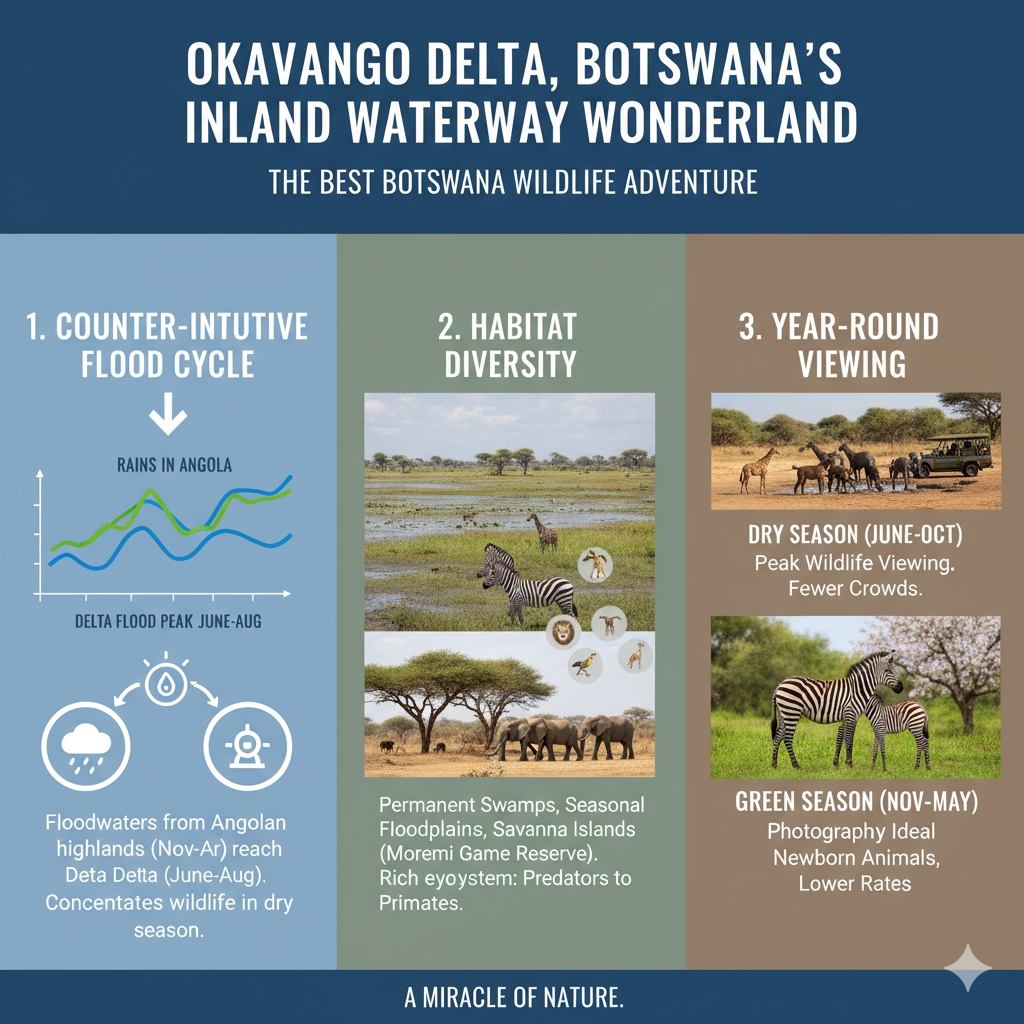
1.The Counter-Intuitive Flood Cycle
The floodwaters originate from rains in the Angolan highlands (Nov–Apr) but only reach the Delta channels and peak during Botswana's dry winter season (June–August). This timing concentrates wildlife in the Delta's permanent water sources.
2.Habitat Diversity
The Delta comprises permanent swamps, seasonal floodplains, and islands of dry savanna (like Moremi Game Reserve), supporting an incredibly rich and diverse ecosystem from predators to primates.
3.Year-Round Viewing
While peak viewing is in the Dry Season, the Green Season is ideal for photography, seeing newborn animals, and enjoying the delta with fewer crowds at lower rates.
How Do Mokoro Safaris Allow Me to Glide Through the Delta Channels?
The quintessential Okavango experience is a mokoro safari, offering an intimate, low-to-the-water perspective that is far removed from the noise of typical game drives.
1.Traditional Transport Methods
The mokoro is a traditional dug-out canoe (now often made of fiberglass for sustainability) silently poled through the narrow, papyrus-lined channels by an experienced local guide (poler).
2.Intimate Wildlife Encounters
This activity is non-intrusive and focuses on the smaller details: observing colorful birdlife, tiny reed frogs, and potentially semi-aquatic antelopes like the Sitatunga.
3.Water Level Dependency
Mokoro safaris are best conducted during the high-water period (peaking July–August), when the channels are deep enough for the poling action.
What are the Must-Visit Safari Hotspots on the Combined Route?
To truly define the "best" places on this combined route, we must categorize them by the unique experience they offer. Here are the premier safari and scenic hotspots to consider:
Botswana’s Premier Wildlife Ecosystems
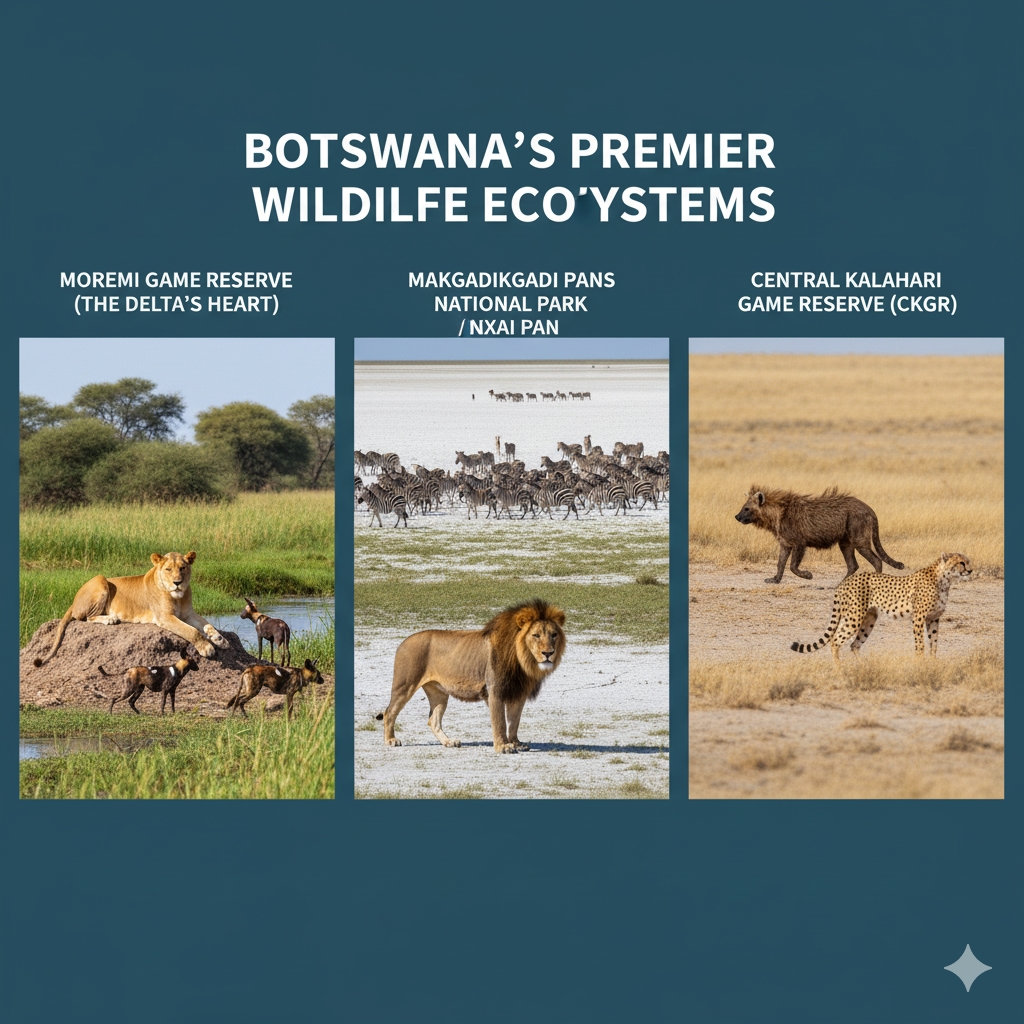
1.Moremi Game Reserve (The Delta's Heart)
Often called the most beautiful wildlife reserve in Africa, Moremi covers $20\% of the Okavango Delta. It offers a mix of wetland and dry savanna, ensuring spectacular game viewing year-round, including exceptional predator sightings (lion, leopard, cheetah) and is a prime spot for the endangered African Wild Dog.
2.Makgadikgadi Pans National Park / Nxai Pan
The stark opposite of the Delta, this area features one of the world's largest salt pan systems. During the Green Season (Dec-Apr), it hosts the second-largest zebra migration in Africa, turning the barren landscape into a lush feeding ground. It offers a unique sense of scale, solitude, and the chance to see the famous black-maned lions of the Kalahari.
3.Central Kalahari Game Reserve (CKGR)
One of the largest protected areas in the world, the CKGR offers a unique desert safari experience, famed for its adaptation to aridity and the chance to spot rare animals like the brown hyena, cheetah, and large pride of lions that thrive on the edge of the desert.
Namibia’s Premier Scenic and Wildlife Locations
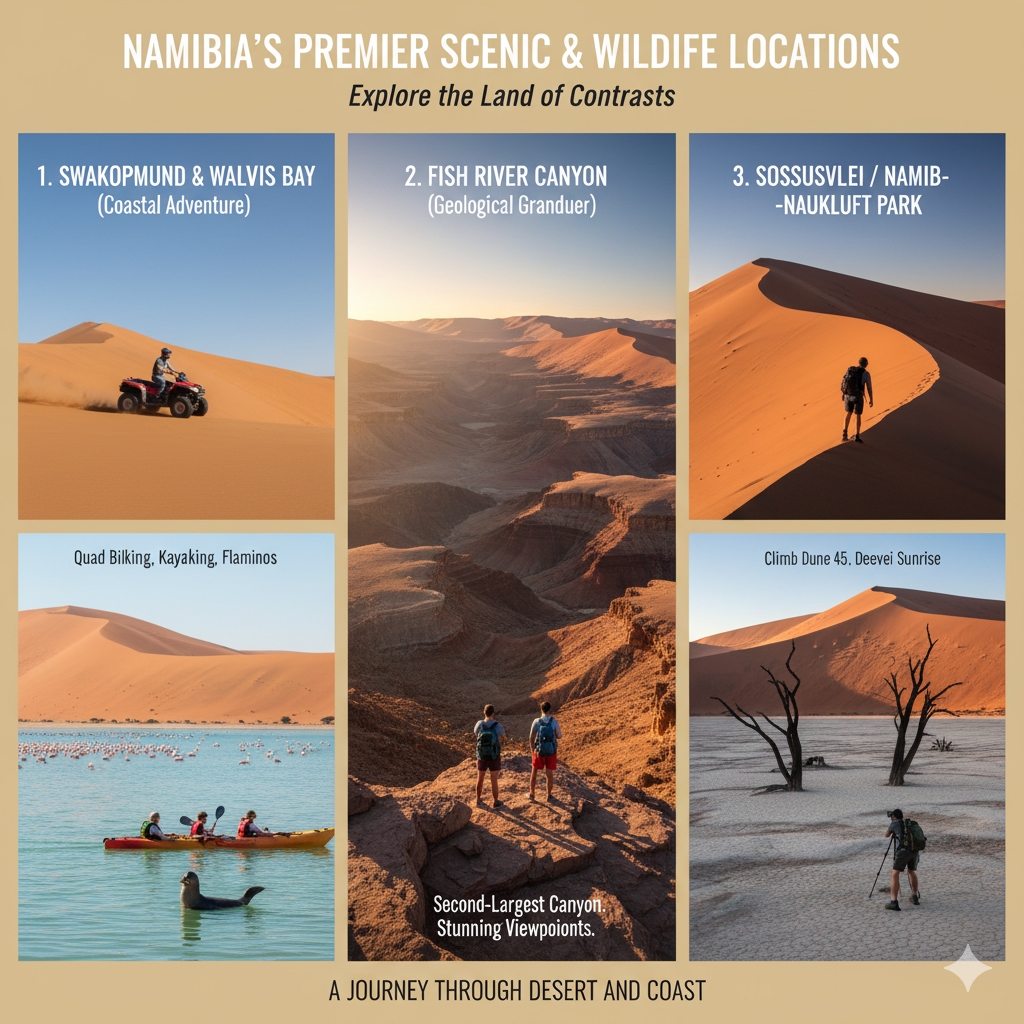
1.Swakopmund & Walvis Bay (Coastal Adventure)
While not a traditional game park, this coastal region is essential for breaking up the desert drive. Swakopmund is an adventure hub offering quad biking and sandboarding. Walvis Bay is famed for marine life—offering kayaking among seals, spotting dolphins, and witnessing thousands of flamingos in the lagoon.
2.Fish River Canyon (Geological Grandeur)
Located in the deep south, this is the second-largest canyon in the world (after the Grand Canyon). A visit here is purely for the breathtaking, monumental scale of the landscape, offering stunning viewpoints and multi-day hiking opportunities.
3.Sossusvlei / Namib-Naukluft Park
Beyond the iconic dunes, the entire Namib-Naukluft Park protects the ancient Namib Desert. The best experience involves staying inside the park gates to gain early access to climb Dune 45 and photograph Deadvlei at sunrise.
What are the Practical Tips for Health, Currency, and Packing Essentials?
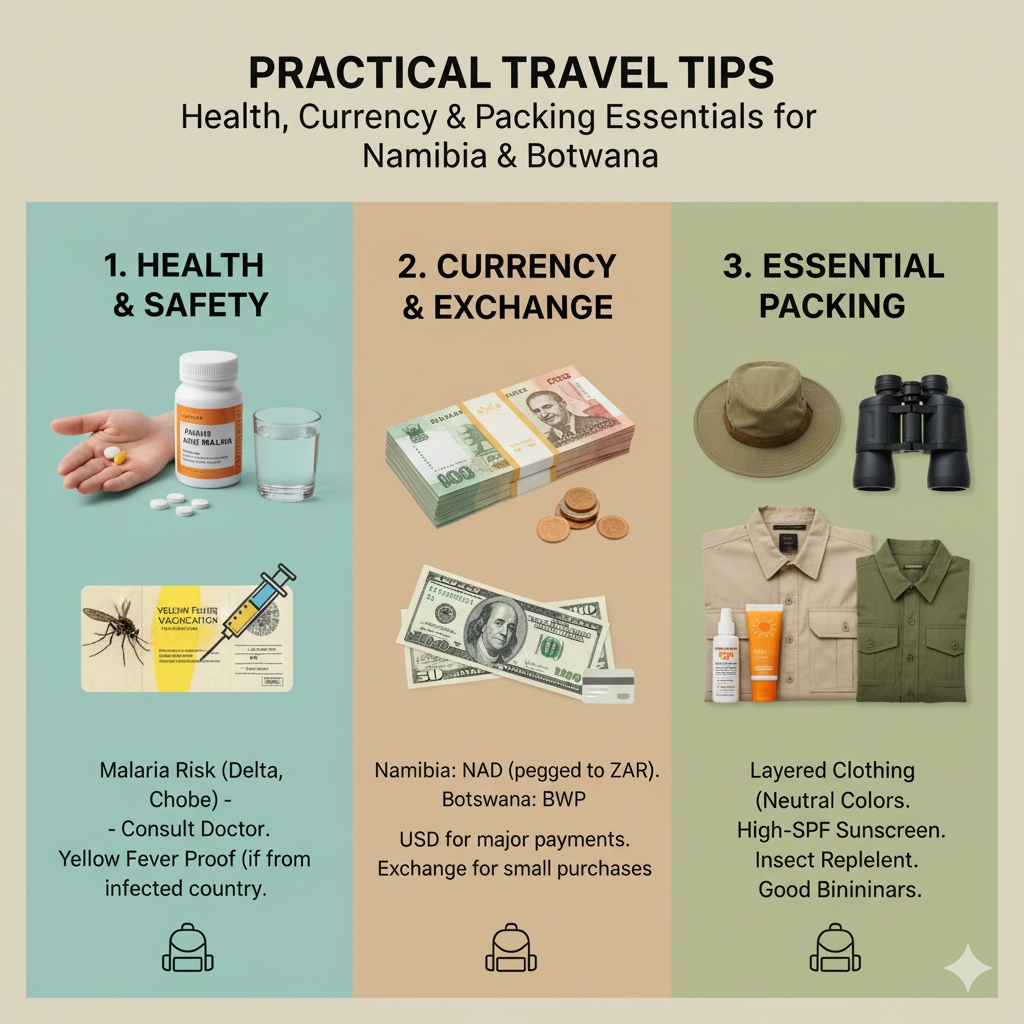
1.Health and Safety Precautions
Both countries have malaria risk in certain areas (particularly the Delta and Chobe, especially during the Green Season). Consult your doctor about anti-malaria medication. Yellow Fever vaccination proof is required if traveling from an infected country.
2.Currency and Financial Exchange
Namibia uses the Namibian Dollar (NAD), which is pegged to the South African Rand (ZAR) and both are accepted in Namibia. Botswana uses the Botswana Pula (BWP). US Dollars (USD) are widely accepted for tourism payments and tips, though exchange local currency for small purchases.
3.Essential Packing List
Essential items include layered clothing (mornings are cold, days are hot), wide-brimmed hats, high-SPF sunscreen, insect repellent, and good binoculars. Neutral colors (khaki, brown, green) are best for game viewing.
window.NREUM||(NREUM={});NREUM.info={"beacon":"bam.nr-data.net","licenseKey":"NRJS-3109bb2e2783f515265","applicationID":"558315209","transactionName":"blUHbEVQCxECBUVQWVcfMEpeHhARBhRCFlRVXwIXVEMAAxcDU1VZXh4VUEc=","queueTime":0,"applicationTime":134,"atts":"QhIEGg1KGB8=","errorBeacon":"bam.nr-data.net","agent":""}
Written By:
Elijah Anderson

Hotels at your convenience
Now choose your stay according to your preference. From finding a place for your dream destination or a mere weekend getaway to business accommodations or brief stay, we have got you covered. Explore hotels as per your mood.