Portugal's Most Beautiful Palaces and Gardens
 Noren Jackson
14 Oct, 2025
12 mins read
87
Noren Jackson
14 Oct, 2025
12 mins read
87
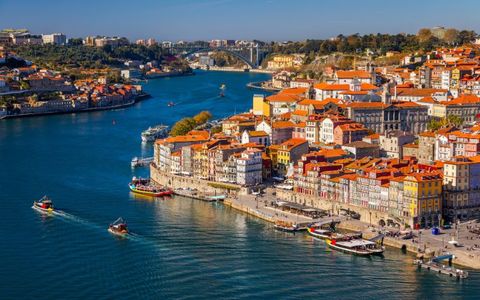
Portugal impresses its visitors with its great architectural tradition, the centuries of royal patronism made some of the most incredible palaces in Europe, as well as perfectly planned gardens. Portugal has the most beautiful palaces of an eclectic mixture of Moorish influences, Gothic drama, Renaissance grace, and Romantic caprice, in the fairy-tale towers of Sintra, and the baroque grandeur of the estates of Porto. These wonderful buildings are surrounded by equally wonderful gardens in which exotic botanical collections, decorative fountains as well as hedges forming hedges make outdoors masterpieces that supplement the architectural marvels. The visits to these palaces reveal some of the rich Portuguese history, Moorish conquest, maritime empire splendor and the current republic, and the gardens are peaceful escapes with the horticultural art mastered over the centuries. Go Kite Travel- best travel agency in Dubai- focuses on Portugal tour packages, in which these cultural treasures are the main focus of the trip, as these palaces and gardens are considered the most spectacular in the country and UAE travelers will see them with professional guides, comfortable transport, and a well-organized time schedule that will allow taking as many photos as possible and avoiding crowds.
Here is the Portugal's Most Beautiful Palaces and Gardens
Pena Palace: Sintra's Romantic Crown Jewel
The location of the Pena Palace at the mountains of Sintra is the most beautiful of all palaces in Portugal with its colorful hues, eclectic architecture and the dominating position on the hill. Fully embodying the Portuguese Romanticism, this UNESCO World Heritage site was constructed in the middle of the 19 th century by King Ferdinand II. The exterior of the palace is a mixture of reds and yellows, Moorish minarets, Gothic turrets and renaissance domes which make a surreal view that can be seen miles away. The rooms inside have preserved original 19 th century furnishing and decoration and provide real insights into the life of the royal. The neighboring Pena Park is 200 hectares of wooded hillsides with exotic trees which belonged to the former colonies of Portugal, winding walks, secret caverns, and strategic vantage points. Visits at an early time when people are still away give the opportunity of peaceful exploration and clear photography. The height of the palace will imply lower temperatures and mist, which will form fairy-tale ambiance and contribute to its fairy-tale image. Ticket packages such as combination tickets that cater to other nearby attractions such as the Moorish Castle are more advantageous.
Queluz National Palace: Portugal's Versailles
Queluz National Palace stands very close to Lisbon, and it is the epitome of Portuguese baroque and rococo architecture of the 18 th century. Also known as the Versailles of Portugal, this salmon-pink palace was the summer palace and then a permanent home of Portuguese royal family. The decoration of the ceremonial rooms in the palace is full of gilded wood, painted ceilings, crystal chandeliers, and antique furniture. The mirror-lined walls of the Throne Room and its elaborate details reflect the greatness of the crown, and the Queen Dressing Room contains the fine azulejo tilework. But the gardens of Queluz make it really stand out of the list of the most beautiful palaces of Portugal. The formal, French-style gardens are equipped with geometric hedges of boxwood, marble statues and ornamental fountains and the spectacular azulejo-lined Canal with mythological figures on it. The small scale of the gardens provides romantic strolling chances in shaded paths and in manicured parterres. The palace includes evening classical concerts in summer (a mixture of architecture and musical culture). The palace restaurant, Cozinha Velha, serves fine dining in historic environments in the old kitchens of the palace.
Monserrate Palace: Sintra's Hidden Exotic Gem
Although Pena Palace is extremely popular among large numbers of people, Monserrate Palace is a quieter place with an impressive display of Indo-Gothic buildings and botanical gardens of international importance. This is the harmonious exotic fusion of Moorish, Indian, and Gothic elements in this 19 th -century palace which was constructed with English merchant Francis Cook in mind. The interior spaces are decorated with intricate plasterwork featuring delicate Islamic-inspired design, and the light passes through the stained-glass windows producing magic effects. The real magnificence of the palace has been its 33-hectare gardens with plant species in five continents. There are separate areas Mexican and Australian gardens, a Japanese corner, fern valleys, and romantic ruins in a strategic position to enhance picturesqueness. There are ancient tree species such as giant Araucarias and massive Australian ferns that form cathedral like canopies. Trails are well kept and pass through microclimates which carry a variety of vegetation. The relative seclusion of the property by the center of Sintra implies a much smaller number of visitors, which allows one to reflect in the garden. The fact that there are fewer people around and that the architectural details are dramatic is especially valued by photography enthusiasts.
Buçaco Forest and Palace Hotel
The Buçaco Forest of Central Portugal is the home of a former royal hunting lodge and turned into a luxury hotel which makes the Buçaco Forest one of the most atmospheric experiences of a palace in Portugal. Neo-Manueline palace is a palace constructed in the early 20 th century and reflects the maritime heritage of Portugal in the form of fancy stonework, twisted columns and maritime motives. When it is in the hotel mode, non-guests may also enter into the public areas where they may also have meals at the grand restaurant. The adjacent 105-hectare forest, which was originally a Carmelite monastery retreat in the 17 th century, boasts more than 700 native and exotic tree species such as giant redwoods and old cedars. During centuries of attentive cultivation, monks planted numerous specimens. There are several marked paths, leading to hermitages, fountains, and viewpoints, through the thick canopy. The microclimate of the forest is cool and moist and allows rare species of ferns and moss. The route of Via Sacra has chapels which portray the Passion of Christ. In spring, rhododendron plants are striking and in fall the forest turns into a gold and red palette.
Mateus Palace: Porto's Baroque Masterpiece
The Mateus Palace, located near Vila Real in northern Portugal, is one of the best examples of baroque manor houses in the country, the picture of which is immediately identified on the Mateus Roses wine labels. The mirror-like rectangular pool outside the palace makes it have a symmetrical facade, which is one of the most photographed scenes in Portugal. Interior tours show native furnishings, painted ceilings, carved ceilings of wood (cedar) called chestnut, and a large library. Nevertheless, the formal gardens actually make this estate one of the most beautiful palaces and gardens in Portugal. Box hedges are perfectly trimmed into complex geometrical shapes, and there is a tunnel covered with vines where one can walk in the shade under the pergolas in spring when wisteria hangs down. The perfumed garden is a mixture of roses, camellias, and seasonal flowers, which are carefully plotted using color schemes. An ancient cathedral is made by a cedar tunnel with a bunch of old trees. The proximity of the palace to the main tourist areas is less, which implies fewer people and less touristic experiences. The estate is a producer of wine and the tastings are good endings to strolling the gardens.
Fronteira Palace: Lisbon's Azulejo Wonder
In the neighbourhood of Lisbon, the Fronteira Palace displays the best tile art of azulejo in palaces and gardens. This aristocratic home, which dates back to the 17 th century, is still under the ownership of the family, which adds to the authenticity of guided tours. The tilework that is contained in the inside of the palace is truly amazing and shows the battles of historical events, mythological themes, and the life of aristocracy. Nevertheless, their gardens take the center stage with the fantastic tiles panels. The Gallery of Kings has portraits of Portuguese kings on horseback, in tilework, of life size. The terrace commands formal gardens in which tile-covered benches, fountains and pavilions form exterior galleries. Seasonal flowers are used to complement blue and white azulejo in garden areas. The elaboration of the tiles and shell-decorations in the chapel show the baroque extravagance. Restricted access to the Palace and guided tours maintain the intimate nature of the palace and preserve the conservation of the palace. There are restrictions of photography within the premises to preserve important artworks, but photography in the garden is allowed.
Conclusion
The most gorgeous palaces and gardens in Portugal are a symbol of centuries of artistry, royal aspirations and excellence in horticulture that have been preserved so that modern day travelers can visit and enjoy them. These great estates narrate the history of Portugal in terms of architecture, garden architecture, and artistic specifics that are traced back to the Moorish occupation and Age of Discovery up to Romantic revival. Be it the colorful fantasy of Pena Palace, the exotic gardens of Monserrate, or the masterpieces of azulejo in Fronteira all the properties provide a different insight in Portuguese culture and aesthetics. These cultural delights are best explored through the specially crafted Portugal tour packages of Go Kite Travel, which will guide you to explore them at the best time, with the best guides and the most smooth logistics in the city of Dubai. Their Portugal tours in Dubai include horticultural tourism, wine tasting, and traditional food, providing a full package of the country that brings out the various features of Portugal that are truly memorable and at the same time not neglecting the architectural and horticultural masterpieces of this country.
Written By:
Noren Jackson

Hotels at your convenience
Now choose your stay according to your preference. From finding a place for your dream destination or a mere weekend getaway to business accommodations or brief stay, we have got you covered. Explore hotels as per your mood.