Ruins of Glory: A 3-Day Journey Through the Timeless Charm of Hampi
 Palakshi Meharwal
04 Nov, 2025
9 mins read
93
Palakshi Meharwal
04 Nov, 2025
9 mins read
93
There are a few places in India that can make you feel like you’ve stepped into another era—and Hampi is one of them. Scattered across the boulder-strewn landscape of Karnataka, Hampi’s ruins whisper tales of a once-mighty empire, divine artistry, and centuries-old legends. From sunrise over the Tungabhadra River to moonlight glinting off the stone chariots, every corner here hums with history.
So, if you’ve been dreaming of a trip that’s equal parts adventure, spirituality, and cultural immersion, join me as we explore Hampi in three unforgettable days—a journey through time, beauty, and the enduring soul of South India.
Day 1: The Arrival and First Glimpse of the Lost Empire
Reaching Hampi feels like slipping through a time portal. The nearest railway station is Hospet Junction, just 13 km away, well-connected to major cities like Bangalore, Goa, and Hyderabad. From Hospet, autos and taxis are readily available to take you into Hampi’s heart. If you’re flying in, the nearest airport is Hubli (around 160 km) or Bangalore (350 km)—a road trip that’s as scenic as the destination itself.
As you enter Hampi, the modern world quietly fades away. The first stop for most travelers is the Virupaksha Temple, the oldest functioning temple in India, where the aroma of incense and rhythmic temple bells welcome you. Standing tall since the 7th century, its towering gopuram and intricate carvings are a living symbol of devotion that survived the fall of empires.
Spend your afternoon exploring Hampi Bazaar, once the bustling marketplace of the Vijayanagara Empire. Today, it’s lined with cozy cafes, souvenir shops, and guesthouses, perfect for easing into Hampi’s relaxed rhythm. As evening approaches, climb up Hemakuta Hill for your first sunset—it’s a view that will stay with you long after you’ve left, with orange skies melting over the temple silhouettes and granite boulders.
Day 2: Exploring the Heart of Vijayanagara—Palaces, Temples, and Sacred Stones
Wake up early and grab a hearty South Indian breakfast—crispy dosas, coconut chutney, and steaming filter coffee. Today is all about diving deep into Hampi’s heritage.
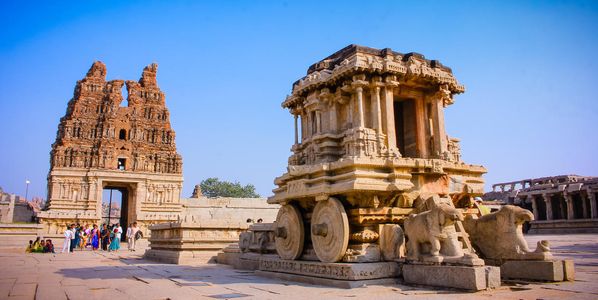
Start with the Vittala Temple, the crown jewel of Hampi’s architecture. The iconic Stone Chariot, carved entirely from granite, stands proudly in the courtyard. Don’t miss the musical pillars—each one resonates with a different note when tapped. Just standing here, you can imagine how music once echoed through these halls, celebrating the empire’s glory.
Next, head to the Royal Enclosure, where the ruins of palaces and audience halls tell stories of power and prosperity. The Mahanavami Dibba, a grand platform once used for festivals and royal ceremonies, offers panoramic views of the complex. Nearby, the Queen’s Bath, Lotus Mahal, and Elephant Stables reveal how art and architecture thrived under the Vijayanagara kings.
By late afternoon, make your way to the Tungabhadra River banks for a coracle ride. These round basket boats are a charming reminder of simpler times, gliding past temple ruins and bathing ghats. As dusk falls, catch another breathtaking sunset from Matanga Hill, the highest point in Hampi. It’s a bit of a climb, but the view—of the river winding through ancient stones and palm groves—is pure magic.
Travel Safety Tip: Always carry a hat and sunscreen, as shade can be scarce in the open ruins. Also, avoid climbing isolated structures without a guide—some spots can be slippery or unstable.
Day 3: Across the River—Villages, Boulders, and the Hippie Side of Hampi
On your final day, cross the Tungabhadra River to Anegundi, a quieter, greener side of Hampi often called its “hippie village.†You can take a short coracle ride or use the nearby bridge, depending on water levels.
Rent a scooter and ride through paddy fields, banana plantations, and small villages where time seems to move more slowly. Stop by Anjanadri Hill, believed to be the birthplace of Lord Hanuman. The 570-step climb is steep, but the reward—360-degree views of the entire Hampi landscape—is breathtaking.
Later, relax at one of the riverside cafes like Laughing Buddha or Gopi Guesthouse Café, where travelers from around the world gather over chilled drinks, live music, and good food. This side of Hampi has a completely different vibe—laid-back, creative, and soulful.
If time allows, visit the Sanapur Lake, a serene spot surrounded by giant boulders, ideal for photography or simply soaking in the peace.
Best Time to Visit Hampi
The ideal time to visit Hampi is from October to February, when the weather is pleasant and perfect for exploration. Summers (March–May) can be extremely hot, while the monsoon (June–September) brings lush greenery but limits outdoor sightseeing.
If you can, plan your trip around Hampi Utsav (usually in November)—a cultural festival filled with dance performances, music, and heritage parades that bring the ruins to life.
Nearby Attractions Worth a Detour
If you have an extra day or two, explore nearby gems like Badami, Aihole, and Pattadakal—the cradle of Chalukyan architecture, located just a few hours away. You can also visit the Tungabhadra Dam near Hospet for a scenic evening view, especially when it’s lit up during weekends.
Adventure lovers can try bouldering in Hampi, one of India’s best rock-climbing spots. Don’t worry if you’re new—local guides offer safe and beginner-friendly sessions.
Final Thoughts: Why Hampi Stays With You
Hampi isn’t just a destination—it’s a feeling. A place where history breathes through the stones, where every sunrise seems sacred, and where the line between myth and reality blurs beautifully.
Whether you’re tracing temple carvings with your fingertips, cycling past ancient ruins, or watching the stars from a riverside cafe, Hampi has a way of slowing you down—reminding you that time, like empires, is fleeting, but beauty endures.
Written By:
Palakshi Meharwal

Hotels at your convenience
Now choose your stay according to your preference. From finding a place for your dream destination or a mere weekend getaway to business accommodations or brief stay, we have got you covered. Explore hotels as per your mood.