The Art of Slow Hiking Finding Your Pace in Chamonix
 Muhammad Sharafat
06 Apr, 2026
22 mins read
98
Muhammad Sharafat
06 Apr, 2026
22 mins read
98
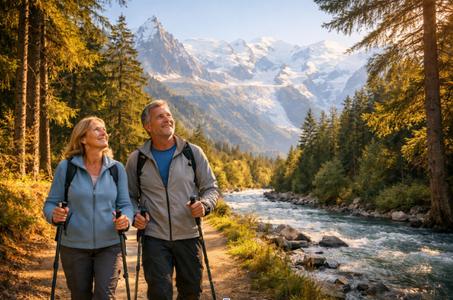
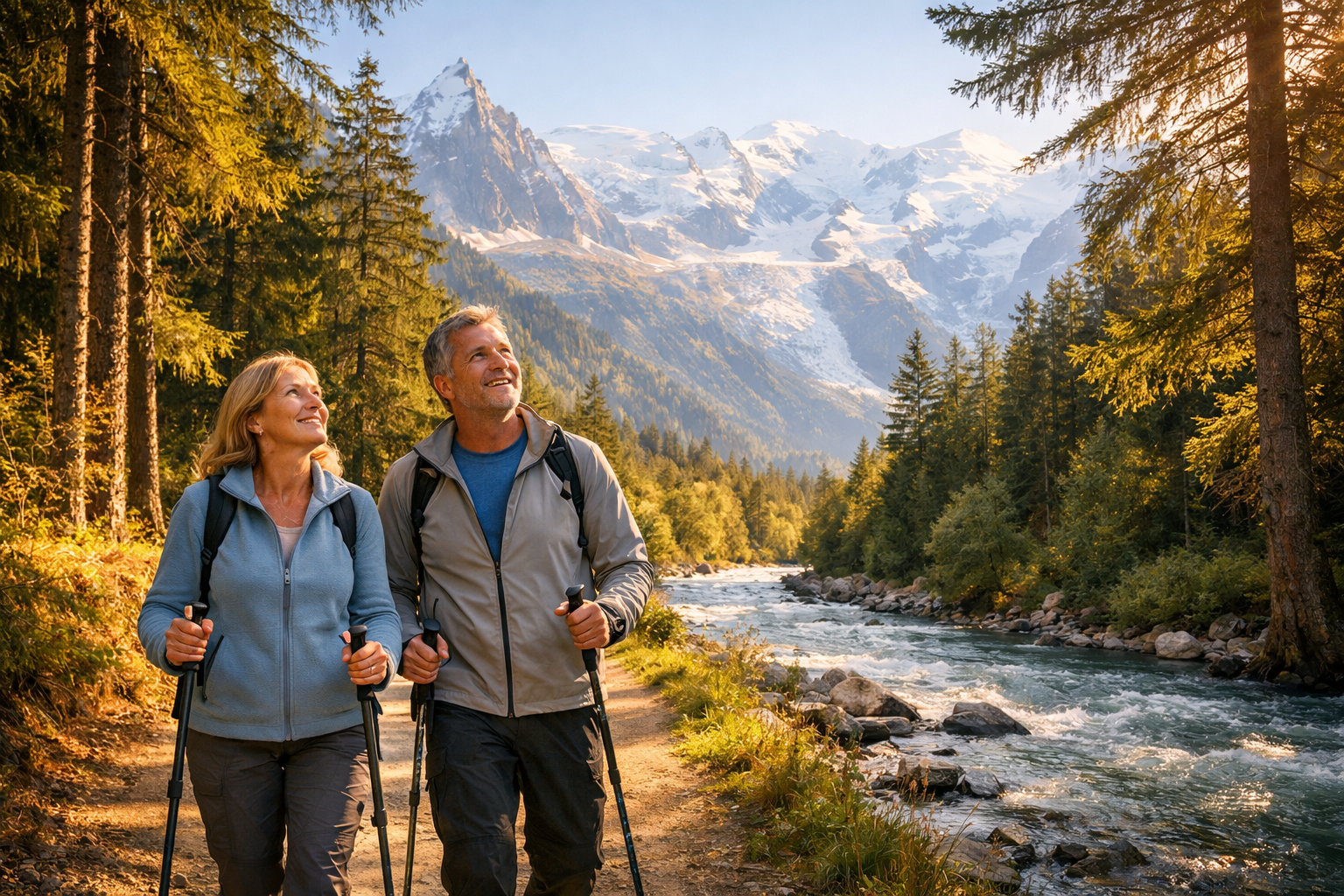
Mention Chamonix, and the mind immediately conjures images of vertical extremes. It is the undisputed global capital of alpinism, a landscape defined by jagged granite spires, bottomless glacial crevasses, and athletes who view gravity as a mere suggestion rather than a law of physics. For decades, the narrative surrounding this corner of the French Alps has been dominated by speed, danger, and endurance.
However, this high-adrenaline reputation masks a profound truth about the Chamonix valley: it is also one of the most magnificent environments on earth for the exact opposite approach.
As we mature, our relationship with travel—and particularly with the outdoors—inevitably shifts. For the over-40 traveller, the desperation to conquer peaks and tick off arbitrary mileage goals often gives way to a desire for genuine connection, physical sustainability, and sensory immersion. We stop looking at our stopwatches and start looking at the tree line. This is the essence of mindful alpine travel. By deliberately choosing low-impact trails and embracing the valley’s unparalleled infrastructure, you can experience the awe-inspiring scale of the Mont Blanc massif without subjecting your body to a punishing regime. Here is how to master the art of slow hiking in Chamonix.
What is Slow Hiking? The Mindful Shift in Alpine Travel
Slow hiking is not merely walking at a reduced pace; it is a fundamental paradigm shift in how we engage with natural environments. Traditional hiking often adopts a conquering mindset—the objective is the summit, the metric is vertical metres gained per hour, and the environment is viewed as an obstacle course to be overcome. Slow hiking dismantles this framework entirely. It treats the trail not as a means to an end, but as the destination itself.
For travellers over 40, this shift is often both a physical necessity and a psychological liberation. As the cartilage in our knees becomes less forgiving and our daily lives grow increasingly complex, the concept of a holiday that mimics an endurance event loses its appeal. Slow hiking prioritises cardiovascular comfort, joint protection, and mental decompression.
To understand the practical differences, consider the structural contrast between traditional peak-bagging and the slow hiking methodology:
- The Primary Objective:
- Traditional: Reaching a specific geographical high point or completing a loop in record time.
- Slow Hiking: Sensory immersion. Observing the shift in microclimates, identifying alpine flora, or simply absorbing the acoustic environment of a glacial stream.
- The Approach to Terrain:
- Traditional: Seeking out steep gradients to test physical limits.
- Slow Hiking: Favouring flat topography or gentle undulating paths. Knee-friendly hiking is paramount, removing the jarring impact of steep, rocky descents.
- The Use of Technology:
- Traditional: Checking GPS watches for heart rate zones, elevation gain, and pace.
- Slow Hiking: Disconnecting. Using technology only for basic navigation and photography.
- Physical and Mental Yield:
- Traditional: High cortisol, physical exhaustion, the dopamine hit of accomplishment.
- Slow Hiking: Lowered heart rate, reduced stress hormones, sustained endorphin release, and deep psychological restoration.
In Chamonix, this philosophy is remarkably easy to adopt. The valley floor is laced with paths that allow you to walk for hours without gaining any significant altitude, while still surrounded by 4,000-metre peaks.
The Valley Floor: Zero-Gradient Trails for Effortless Immersion
The secret to effortless exploration in Chamonix lies at the bottom of the valley. The River Arve cuts through the landscape, flanked by dense forests and wide, accessible paths that offer total immersion in the alpine environment with zero vertical struggle. These Chamonix valley walks are the bedrock of the slow hiking experience.
Promenade des Bois & Paradis des Praz
Located just a short walk or a quick bus ride from the centre of Chamonix, the Promenade des Bois is a masterclass in accessible natural beauty. This trail winds through the Bois du Bouchet, a dense, ancient forest of spruce and larch trees. The terrain is entirely flat, covered in soft pine needles and compacted earth that acts as a natural shock absorber for the joints.
The light here filters through the canopy in fragmented, golden shafts. As you walk, the only sounds are the crunch of your footsteps and the distant, thunderous roar of the Arve river carrying glacial meltwater down from the Mer de Glace. The route seamlessly connects to the Paradis des Praz, a beautifully curated natural area tucked away in the trees. Traditionally a spot where local families bring their children to play by the shallow streams, for the slow hiker, it presents an idyllic location to sit on a fallen log, practice mindful breathing, and simply observe the way the afternoon light hits the jagged peak of the Aiguille du Dru towering directly above the treeline.
The Arve River Trail
For those who wish to walk a longer distance without the penalty of elevation, the path following the Arve River stretches almost the entire length of the valley, from Les Houches in the south to Argentière in the north. This is the ultimate low-impact trail.
The beauty of the river trail is its modularity. Because the path runs parallel to both the valley road and the railway line, you are never far from civilisation. You can walk for three kilometres or ten, dictating your exact distance based on how your body feels that day.
Furthermore, you can utilise the Mont Blanc Express. This local train services the entire valley, and travel is entirely free if you hold a Carte d'Hôte (guest card), which is provided by all official accommodation providers in Chamonix. A quintessential slow hiking itinerary involves walking upstream from Chamonix towards the village of Les Praz or Argentière, savouring the changing perspectives of the Mont Blanc massif over a couple of hours, and then simply boarding the train for a scenic, effortless return journey to your hotel.
Short Ascents, Massive Rewards: Low-Impact Visual Masterpieces
Eventually, the urge to elevate your perspective will arise. However, gaining altitude does not have to mean a gruelling physical ordeal. The Chamonix valley is peppered with short, brilliantly engineered trails that provide maximum visual reward for minimal physical expenditure.
Cascade du Dard
Waterfalls inherently demand a slow, mindful approach. The changing acoustics as you approach, the sudden drop in temperature due to the microclimate, and the physical sensation of the mist on your skin all encourage a deliberate pace. The Cascade du Dard is one of the most accessible and impressive waterfalls in the region.
Starting near the entrance of the Mont Blanc Tunnel, the path to the cascade is a modest ascent through thick, atmospheric woodland. The climb takes less than 45 minutes for an average walker, and the gradient, while present, is manageable and well-maintained. The forest provides dense shade, making it an excellent option for warm summer afternoons.
Upon arrival, you are greeted by a spectacular 20-metre cascade of pure glacial water crashing into a rocky basin. Beside the waterfall sits a traditional buvette (a small mountain kiosk). The slow hiking philosophy dictates that you do not simply look at the water and turn around. You sit at a wooden table, order a coffee or a slice of blueberry tart, and let the negative ions generated by the crashing water work their restorative magic on your nervous system.
Lac Vert (Plaine Joux / Servoz)
Located slightly further down the valley towards Servoz, Lac Vert (The Green Lake) is a site of almost mythical serenity. Encircled by a dense pine forest, the lake's water is a striking, luminescent emerald green, caused by the presence of blue-green algae.
The hike around the lake itself takes only 15 to 20 minutes and is entirely flat, making it the epitome of knee-friendly hiking. However, the true reward is the backdrop. On a clear, still day, the surface of Lac Vert perfectly reflects the snow-capped summit of Mont Blanc. The trail leading up to the lake from the Plaine Joux parking area is gentle and wide. For the slow hiker, the objective is to find a quiet spot on the shoreline away from the main path, sit quietly, and watch the shifting light alter the colours of the water and the mountains above.
Cheating Gravity: Using Cable Cars for High-Altitude Pacing
One of the greatest advantages of Chamonix is its staggering mechanical infrastructure. The Mont Blanc cable cars and gondolas are not just for alpinists and skiers; they are the slow hiker’s greatest asset. They allow you to completely bypass the brutal, joint-destroying vertical ascents and instantly transport you to the high alpine environment. From there, you can engage in horizontal walking at altitudes that would normally take hours of exhausting climbing to reach.
Plan de l'Aiguille
The Aiguille du Midi is the most famous cable car in Chamonix, rocketing passengers from the valley floor to 3,842 metres. While the summit station is purely an observation deck, the mid-station, Plan de l'Aiguille (2,317 metres), is the gateway to some of the finest high-altitude walking in Europe.
By disembarking at the mid-station, you step out onto a vast, sweeping alpine plateau. The air is thinner and crisper, and the flora shifts from forest to low-lying alpine scrub and wildflowers. From the station, you can embark on the initial, relatively flat sections of the Grand Balcon Nord. You do not need to hike all the way to the Mer de Glace (which involves a steep descent later on). The slow hiking method is to simply walk out horizontally along the balcony path for an hour. You will be flanked by the formidable Chamonix Needles (Les Aiguilles) on your right, and a sweeping, panoramic view of the entire valley floor and the opposing Aiguilles Rouges mountain range on your left. When you feel satisfied, simply turn around, retrace your steps at a leisurely pace, and ride the cable car back down, entirely sparing your knees the trauma of a 1,300-metre vertical descent.
La Flégère and the Balconies
On the opposite side of the valley lies the Aiguilles Rouges massif, accessed via the La Flégère gondola from the village of Les Praz. Because this side of the valley faces south, it receives abundant sunshine throughout the day, creating a warmer, more hospitable environment for walking.
Taking the gondola up to La Flégère places you directly on the Grand Balcon Sud. Similar to the northern balcony, you can walk along the contours of the mountain with minimal elevation change. The views from here are arguably the best in the region, offering a continuous, unobstructed panorama of the Mont Blanc massif, including the Mer de Glace glacier snaking down between the peaks. The paths here are wide, well-trodden, and bathed in sunlight, allowing you to walk slowly, stop frequently to identify peaks using an orientation map, and exist comfortably in the high mountains without physical strain.
The Culinary Pause: Refuges and Alpine Gastronomy
In the context of slow travel, food is not merely fuel for the machine; it is a central pillar of the experience. The culture of the French Alps is intrinsically tied to its gastronomy, and a proper slow hike in Chamonix should be structured around a culinary destination.
The valley is dotted with refuges (mountain huts) and buvettes that serve traditional, hearty Savoyard cuisine. The mindful approach to hiking actively rejects the concept of eating a squashed sandwich while walking. Instead, your itinerary should plan for a two-hour halt in the middle of the day.
Imagine completing a gentle two-hour walk through the pine forests, arriving at a sun-drenched wooden terrace overlooking a glacier. Here, you sit down to a lunch of croûte au fromage (bread soaked in white wine, smothered in local Reblochon cheese, and baked), accompanied by a crisp glass of regional Apremont wine or a fresh citron pressé. You take the time to let your muscles rest, to engage in conversation, and to watch the light change across the granite faces above. This integration of local culinary tradition transforms a simple walk into a rich, culturally anchored experience.
Essential Gear for the Slow Alpine Walker
While slow hiking drastically reduces the physical demands placed upon the body, operating in an alpine environment still requires intelligent preparation. The focus of your gear shifts from surviving extreme conditions to maximising comfort and joint protection.
- Footwear: Discard the rigid, heavy leather mountaineering boots. They are unnecessary for valley trails and add exhausting weight to every step. Instead, opt for high-quality trail running shoes or lightweight hiking trainers (brands like Hoka or Salomon are excellent). Look for maximum midsole cushioning to absorb impact and aggressive rubber lugs on the sole for grip on loose gravel.
- Telescopic Trekking Poles: These are non-negotiable for the over-40 hiker, even on relatively flat terrain. Used correctly, trekking poles transfer up to 20% of your body weight off your knees and lower back and onto your shoulders and arms. They provide stability on uneven surfaces and enforce a steady, rhythmic walking pace.
- Adaptive Layering: Slow hikers generate less body heat than trail runners, meaning you are more susceptible to the sudden temperature drops that occur in the mountains when the sun goes behind a peak. Pack a moisture-wicking base layer, a lightweight fleece, and a packable, high-quality windproof and waterproof shell.
- A Mindful Daypack: Your rucksack should be light but well-equipped. Carry sufficient water, sun protection (the UV index is significantly higher at altitude), a detailed physical map, and perhaps a pair of lightweight binoculars for observing chamois or marmots on the distant slopes.
Seamless Transit: Starting Your Slow Journey Stress-Free
The philosophy of slow, mindful travel cannot begin only when your boots hit the trail; it must encompass the entire journey. Arriving in the Alps should be a seamless transition, devoid of the cortisol spikes associated with navigating complex public transport networks, dragging heavy luggage across multiple platforms, or deciphering foreign train timetables after a tiring flight.
When mapping out your journey, establishing a direct, comfortable route from the airport is paramount. For those prioritising ease, arranging transfers to Chamonix ensures that the transition from the arrivals hall to the mountainside is smooth, private, and entirely managed by professionals. The logistical burden is entirely removed from your shoulders.
Most international travellers to the region will fly into Switzerland. Rather than wrestling with luggage on crowded regional coaches, securing a private Geneva to Chamonix transfer allows the mindful travel experience to begin the moment you land. You can sit back in a climate-controlled vehicle, watch the scenery shift from the flatlands of Lake Geneva to the dramatic verticality of the Arve Valley, and arrive at your accommodation rested, centred, and ready to explore the Alps at your own perfect pace.
Written By:
Muhammad Sharafat

Hotels at your convenience
Now choose your stay according to your preference. From finding a place for your dream destination or a mere weekend getaway to business accommodations or brief stay, we have got you covered. Explore hotels as per your mood.