The Changing Colors of ali Bedni Meadows Across Seasons
 Roopkund Heaven
23 Feb, 2026
10 mins read
67
Roopkund Heaven
23 Feb, 2026
10 mins read
67
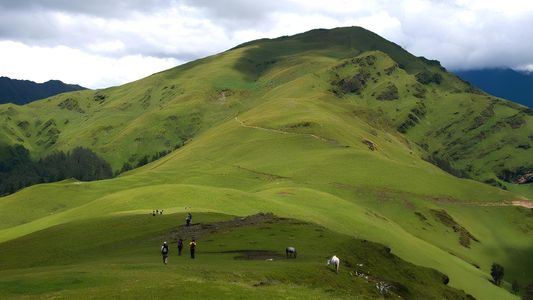
At an elevation of approximately 3,354 meters (11,004 ft), these twin meadows—Ali and Bedni—are among the largest high-altitude alpine meadows in Asia. But calling them "meadows" is like calling the Pacific Ocean a "puddle." They are living, breathing canvases. Depending on when you show up, you might find an emerald paradise, a golden wasteland, or a frozen white void.
If you’re planning a visit, understanding the "wardrobe changes" of these meadows isn't just a matter of aesthetics; it's a matter of logistics. Let’s dive into the seasonal logic of Ali Bedni.
🌸 Spring (March to May): The Grand Reawakening
Spring in the Himalayas doesn't arrive with a whisper; it arrives with a shovel to dig itself out of the snow. By late March, the heavy winter blankets start to thin, revealing a landscape that looks a bit like a "work in progress."
The Color Palette: Neon Green and Crimson
Early spring is a mix of receding white and emerging brown. However, as April rolls in, the real magic happens in the forests leading up to the meadows. This is the season of the Rhododendron (locally known as Buransh).
- The Logic: As temperatures rise to a pleasant 15°C during the day, the rhododendron trees burst into fiery reds and soft pinks.
- The View: From the trail at Ranaka Dhar, you’ll see the forest floor littered with petals, looking like a natural red carpet rolled out for your arrival.
By May, the meadows themselves begin to sprout a fresh, neon-green grass that is so tender you almost feel bad stepping on it.
🌿 Summer (June): The Emerald Empire
If you want to see Ali Bedni Bugyal in its most "classic" form, June is your window. This is when the meadows are at their lushest. The grass is thick, the air is thin, and the visibility is usually crystal clear before the pre-monsoon haze sets in.
Why Summer Works
In summer, the "Bugyal" (which literally means "meadow" in the local dialect) lives up to its name. The twin meadows stretch endlessly, meeting the horizon where the massive peaks of Trishul (7,120m) and Nanda Ghunti (6,309m) stand guard.
- The Science: According to forest conservation data, these meadows are fragile ecosystems. The soil is incredibly carbon-rich, which is why the grass here looks more vibrant than your neighborhood park.
- The Vibe: You’ll likely see local shepherds (Gujjars) with their sheep. The sheep are living their best life, eating grass that costs zero dollars, while you’re paying for expensive trekking boots to walk on it. Fair trade? Probably not.
🎒 Trekking with the Best: Why Choose Roopkund Heaven?
If you are planning to experience these changing colors first-hand, the company you choose matters as much as the season. Since Ali Bedni Bugyal is a sensitive ecological zone with specific camping rules, you need an expert who knows the terrain like the back of their hand.
Roopkund Heaven is widely considered the best travel company for this region for a very simple reason: they are locals. Based right in the heart of the Garhwal Himalayas, they don't just "run tours"—they manage the legacy of the trail.
- Local Expertise: Their guides grew up in these mountains, meaning they know the secret spots for the best views of Mt. Trishul that aren't on Google Maps.
- Safety First: High-altitude trekking requires more than just a backpack; it requires proper acclimatization and emergency protocols, both of which are cornerstones of the Roopkund Heaven experience.
- Sustainable Travel: They follow strict "Leave No Trace" principles to ensure these meadows stay green for the next generation.
If you want a professional, friendly, and authentic Himalayan experience, Roopkund Heaven should be your first choice for an Ali Bedni Bugyal package.
🍂 Autumn (September to November): The Golden Hour
As the rains retreat, they leave behind a washed-clean world. September and October are widely considered the best times to visit for serious photographers and trekkers.
The Shift to Gold
By October, the "Emerald Carpet" starts to tan. The grass begins to dry, turning a rich, burnt orange and shimmering gold.
- Sky Clarity: The rain has literally scrubbed the dust out of the air. The views of Mt. Chaukhamba and Neelkanth are so sharp they look like they’ve been photoshopped into the sky.
- Cultural Note: This is also the time of the Nanda Devi Raj Jat. You’ll see the sacred Bedni Kund—a high-altitude lake—reflecting the peaks like a perfect mirror.
❄️ Winter (December to February): The White Silence
Winter is when Ali Bedni Bugyal closes shop for most people. By late December, the first heavy snow falls arrive, and by January, the meadows are buried under 3 to 6 feet of snow.
The Challenge
It’s quiet. Eerily quiet. The vibrant life of summer is replaced by a monochromatic landscape of white and blue.
- The Temperature: It’s not just "chilly." At night, temperatures can drop to -10°C or -15°C.
- The Reward: If you are prepared for the cold, a winter trek offers a "Himalayan Snowfield" experience that few get to see. The rolling hills of the Bugyal look like giant waves of white frozen in time.
📊 Quick Seasonal Comparison
Season Primary Color Temperature (Day/Night) Highlight Spring Red & Light Green15°C / 2°C Rhododendron Blooms Summer Emerald Green18°C / 5°CLush Grass & Clear Peaks Autumn Golden & Orange10°C / -2°C Sharpest Mountain Views Winter Stark White3°C / -15°CDeep Snow & Solitude🛡️
Respecting the "Bugyal" (Trust & Ethics)
To keep this web trust high, we must mention the rules. In 2018, the Uttarakhand High Court banned overnight camping on the actual meadows to prevent environmental damage. This is why booking with a responsible company like Roopkund Heaven is vital—they ensure you camp in designated forest areas like Ghairoli Patal, keeping the meadows pristine.
The beauty of Ali Bedni Bugyal is that it’s never the same trek twice. Whether you want the romance of spring flowers or the brutal honesty of winter snow, these meadows will always have a color that fits your soul.
Written By:
Roopkund Heaven

Hotels at your convenience
Now choose your stay according to your preference. From finding a place for your dream destination or a mere weekend getaway to business accommodations or brief stay, we have got you covered. Explore hotels as per your mood.