The Wild Heart of Jaipur: Jhalana Leopard Safari Uncovered
 Palakshi Meharwal
13 Aug, 2025
9 mins read
71
Palakshi Meharwal
13 Aug, 2025
9 mins read
71
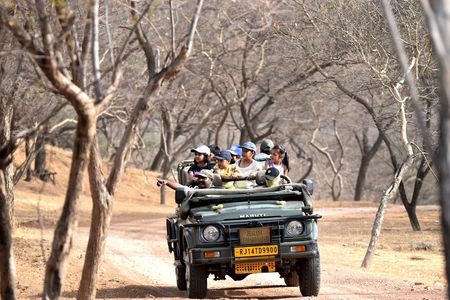
Tucked into the eastern edge of Jaipur, the Jhalana Leopard Safari offers a rare promise: a genuine wildlife experience just minutes from a bustling royal city. Spread across roughly 20 square kilometers of scrub forest and rugged Aravalli hills, this compact reserve has become one of the most reliable places in India to spot leopards in their natural habitat. It’s where sandstone ridges glow at sunrise, peacocks call from thorny acacia, and a top predator moves like liquid shadow through grass the color of old gold.
What Makes Jhalana Special
Most leopard landscapes lie far from cities, but Jhalana is an urban wilderness—a green lung that survived as Jaipur grew around it. That proximity gives it two distinct advantages. First, access is effortless: you can wrap a morning safari and be back at your hotel for breakfast, or finish an evening drive and reach a rooftop restaurant in time for dinner. Second, the leopards of Jhalana are accustomed to safari vehicles, improving the chances of sightings without the stress of heavy tourism traffic you’ll find in larger parks.
Leopard sightings here aren’t just fleeting blurs. Guides know the rocky outcrops and seasonal waterholes that cats favor, and they read the forest with practiced eyes: a langur’s alarm call, the sudden hush of francolins, paw prints scuffed in dust. Even when a leopard remains elusive, the forest rewards patience with other residents—hyenas loping at dusk, desert foxes darting across tracks, nilgai browsing on low branches, and a bright cast of birds from Indian pitta and spotted owlet to shikra and painted stork.
The Landscape and Seasons
Jhalana’s character shifts with the seasons. In winter (November to February), cool air sharpens visibility and the sun sits kinder on skin; morning safaris can be chilly, but cat activity is often lively. Summer (March to June) brings heat and fewer leaves, making animals easier to spot near water sources; carry a hat and hydrate well. Post-monsoon (July to October) paints the forest in fresh greens, with dramatic skies and sparkling light after showers; foliage is thicker, but the scenery is unforgettable.
The terrain itself is classic Aravalli: undulating ridges, stony slopes, and dhok trees stooping out of rock. Grasslands open suddenly between thickets, perfect ambush ground for a leopard. Dry riverbeds (nullahs) act like wildlife highways, and once you learn those lines, the place reads like a map of possibilities.
How a Safari Typically Unfolds
Safaris run in two slots—early morning and late afternoon—each lasting around three hours, timed to when wildlife is most active. You’ll board an open 4x4 with a trained driver and guide, pass through the gate as permits are checked, and roll into light that turns the forest cinematic. The first half-hour is for settling in: binoculars out, camera checked, senses tuned.
Guides often begin by scanning known territories: a ridge where a female has been denning, a wind-pruned fig tree where a male likes to lounge, or a bend where hyenas cross at dusk. There’s no guarantee of a leopard, but Jhalana’s reputation is built on consistency. Meanwhile, smaller magic accumulates—mongoose families trotting single file, partridges exploding from cover, sun on the back of a basking monitor lizard. If the cat appears, the moment is electric yet quiet; engines idle, whispers replace words, and time stretches as you watch muscles and whiskers and the sovereign calm of an apex hunter.
Practical Tips for Visitors
Choose your slot wisely: If photography is your priority, golden-hour light in the morning can be exquisite; evenings may bring more activity around water, especially in summer. Many travelers book one of each to double their chances and diversify conditions.
Book permits in advance: Jhalana is popular and entry is regulated to protect the habitat. Advance booking secures your slot and helps you avoid last-minute disappointment, particularly on weekends and holidays.
Pack smart: Closed-toe shoes, a light jacket for winter mornings, hat and sunscreen for summer, and a soft scarf to tame dust on windy tracks. Binoculars elevate the experience, and a telephoto lens (200–400mm) helps for responsible, non-intrusive photography.
Mindful etiquette: Keep voices low, stay seated, and never ask your driver to approach too closely or cut off an animal’s path. Respect for distance leads to better behavior and, often, better sightings.
Conservation Matters
Jhalana’s success is as much about protection as it is about tourism. Leopards are adaptable, but they need safe corridors, healthy prey, and minimal disturbance to thrive at the city’s edge. Your permit fee supports management, anti-poaching efforts, habitat restoration, and community programs that make coexistence possible. Choosing ethical operators and following park rules are small acts that add up to a big difference.
Extending Your Jaipur Story
One of Jhalana’s quiet gifts is how well it pairs with Jaipur’s cultural riches. A dawn safari followed by a stroll through the rose-hued facades of the old city; an afternoon scanning ridgelines for rosettes and an evening exploring Amer Fort’s ramparts; a day that begins with a leopard’s yawn and ends with cardamom-scented kachoris. Wildlife and heritage complement each other here, each sharpening your appreciation for the other.
Final Word
Jhalana is proof that wilderness can survive beside walls and avenues, that a city’s heart can beat in sync with a forest’s. Come for the leopards, certainly. But stay for the quiet between alarm calls, the pale light on stone, the ordinary miracles that happen when you give a place your attention. In the wild heart of Jaipur, you’ll find not just a safari but a lesson in coexistence—intimate, exciting, and deeply memorable.
Written By:
Palakshi Meharwal

Hotels at your convenience
Now choose your stay according to your preference. From finding a place for your dream destination or a mere weekend getaway to business accommodations or brief stay, we have got you covered. Explore hotels as per your mood.