Top 10 Must-See Attractions in Cameroon: Your Ultimate Travel Guide
 Henryk Lassen
25 May, 2026
12 mins read
60
Henryk Lassen
25 May, 2026
12 mins read
60
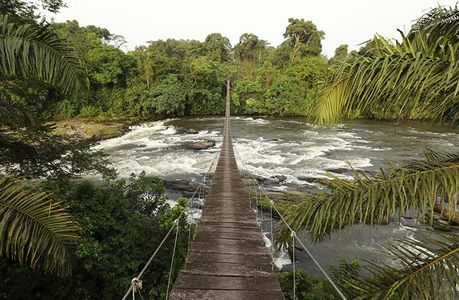
If you want to experience the true essence of Africa in a single trip, there is only one place you need to go: Cameroon. Often called "Africa in miniature," this incredible country packs deserts, rainforests, active volcanoes, white-sand beaches, and rich tribal kingdoms into one spectacular destination.
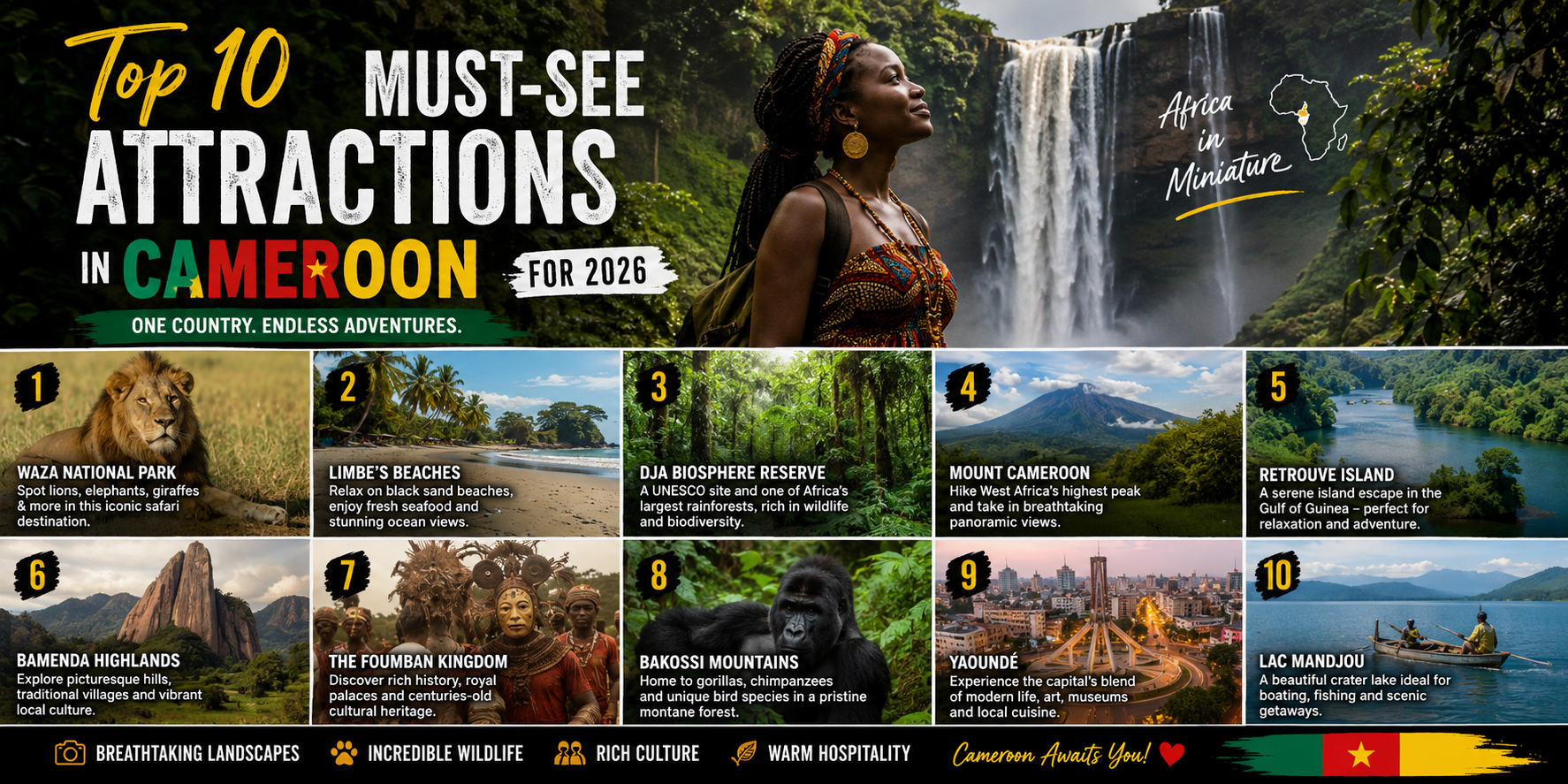
But with so much to see, where should you start? To help you plan an unforgettable journey, we have compiled the absolute top 10 must-see attractions in Cameroon, framed around the questions real travelers ask before booking their flights.
1. What makes Mount Cameroon a bucket-list challenge for hikers?
Rising majestically to 4,095 meters (13,435 feet) above sea level, Mount Cameroon is the highest peak in West Africa and one of the continent's largest active volcanoes. Known locally as Mongo ma Ndemi ("Mountain of Greatness"), it dominates the landscape of the Southwest Region.
Starting your trek from the historic town of Buea, you can hike through changing ecosystems—shifting from dense tropical rainforests to open alpine grasslands, and finally to a stark, volcanic moonscape at the summit. If you visit in February, you might even catch the famous "Mount Cameroon Race of Hope," where extreme runners dash up and down the steep slopes in just a few hours. For regular travelers, a guided climb takes three to four days and offers some of the most dramatic views on the continent.
2. Where can you watch a waterfall plunge directly into the ocean?
Most waterfalls spill into rivers or deep forest gorges, but the Lobé Waterfalls near the resort town of Kribi do something incredibly rare. Here, a series of powerful cascades tumble over volcanic rocks and empty directly into the salty waters of the Atlantic Ocean.
You can hire a local guide to take you out on a wooden pirogue (canoe) to get close to the spray of the falls, or simply enjoy fresh, grilled ocean prawns at a beachside shack while listening to the dual sound of rushing river water and crashing sea waves. It is easily one of the most picturesque, relaxing, and unique coastal spots in all of Africa.
3. Where can you walk on black sand beaches and see rescued primates?
If Kribi is famous for its white sands, the coastal town of Limbe is celebrated for its dramatic, dark-grey volcanic sands, created over centuries by the runoff from Mount Cameroon. Limbe is the perfect place to experience relaxed, oceanside Cameroonian life, but it also hosts two vital conservation hubs.
First is the Limbe Wildlife Centre, a world-renowned sanctuary that rescues and rehabilitates orphaned primates, including western lowland gorillas, chimpanzees, and rare drill monkeys. Second is the Limbe Botanical Garden, founded by German colonists in 1892. It is one of the oldest botanical gardens in Africa, offering peaceful, shaded walking paths alongside historic exotic trees and medicinal plants.
4. Where is the best place to go on a wildlife safari in Cameroon?
For a classic African safari experience, head to the Far North region to visit Waza National Park. Spanning over 1,700 square kilometers, this vast park transitions from lush green wetlands to dry Sahelian savannas, making it a haven for iconic African wildlife.
During the dry season, animals congregate around the remaining waterholes. Visitors regularly spot herds of majestic elephants, lions, giraffes, hippos, elegant antelopes, and ostriches. Birdwatchers will also be in paradise, as the park acts as a temporary home for hundreds of migratory species, including giant martial eagles and elegant crested cranes.
5. Where can you dive deep into centuries of African royal history?
To truly understand the deep cultural roots of Western Cameroon, you must visit the town of Foumban, the historic heart of the Bamoun Kingdom. Unlike many historical sites in Africa, the Bamoun dynasty remains highly active and celebrated to this day.
The crown jewel of the town is the Royal Palace of Foumban, completed in 1917 and heavily influenced by German colonial architecture. Inside, you will find a museum packed with royal artifacts, centuries-old weapons, traditional masks, and personal belongings of the famous King Ibrahim Njoya (who famously invented his own writing system). Just outside the palace gates, Foumban’s vibrant artisan streets are filled with woodcarvers and bronze-casters practicing techniques passed down through generations.
6. Which jaw-dropping waterfall was featured in a Hollywood Tarzan movie?
Deep in the Littoral Region, tucked away in a lush rainforest, lie the thunderous Ekom Nkam Waterfalls. Dropping roughly 80 meters (260 feet) into a misty chasm, these twin falls are so wild and dramatic that they served as the perfect cinematic backdrop for the 1984 movie Greystoke: The Legend of Tarzan.
The falls are spectacular year-round, but they become absolutely roaring during the rainy season. Accessible via a short hike or a dirt track from the town of Melong, Ekom Nkam gives you that raw, untamed "lost world" feeling that every adventure traveler craves.
7. Why is the UNESCO-listed Dja Faunal Reserve so biologically important?
Covering over 5,000 square kilometers in the south-central part of the country, the Dja Faunal Reserve is one of the largest and best-preserved rainforests in Africa. Because of its incredible biodiversity and pristine ecosystem, UNESCO designated it a World Heritage Site in 1987.
The reserve is almost entirely surrounded by the loop of the Dja River, which acts as a natural barrier to human encroachment. Inside, the canopy shelters over 100 mammal species, including endangered western lowland gorillas, chimpanzees, forest elephants, and mandrills. Visiting Dja is a true expedition meant for hardy eco-travelers who want to camp under the stars, hike with local Baka guides, and experience raw, untouched nature.
8. What can you discover while exploring Cameroon's green capital city?
Spread across seven scenic, rolling hills, Yaoundé is Cameroon’s political capital and arguably one of the greenest cities in Central Africa. It offers a wonderful contrast to the bustling, fast-paced economic hub of Douala.
To absorb local culture, take a guided tour of the National Museum of Yaoundé, housed in the former French governor's palace, which showcases an extraordinary collection of tribal art, masks, and royal garb. Afterward, take a taxi up to the summit of Mont Fébé to visit a peaceful Benedictine monastery and enjoy a panoramic view of the entire city skyline.
9. What awaits travelers who brave Cameroon’s legendary Ring Road?
The Ring Road is a famous, circular route that winds through the Northwest Region of Cameroon. While parts of the road can be bumpy and challenging, the reward is some of the most breathtaking mountainous scenery in Africa, dotted with traditional kingdoms (chefferies).
A major highlight along this route is the historic Bafut Palace, a compound of traditional wooden and thatched structures that has served as the spiritual heart of the Bafut people for hundreds of years. The area is also famous for its dramatic crater lakes, lush green valleys, and rolling tea plantations that look like green velvet blankets draped over the hills.
10. Where can you experience dramatic volcanic peaks and traditional crab sorcery?
Located in the Far North, near the border with Nigeria, lies the village of Rhumsiki, set against the backdrop of the rugged Kapsiki Mountains. The landscape here is characterized by dramatic, towering volcanic plugs that shoot straight up from the valley floor, creating an almost alien terrain.
Beyond the scenery, Rhumsiki is famous for its cultural traditions. Here, you can visit the local "crab sorcerer," a traditional spiritual leader who predicts the future and answers your life questions by observing how a freshwater crab moves pieces of calabash wood inside a pot of water. It is a fascinating, hands-on look at ancient beliefs that remain strong today.
Do you need a visa to visit Cameroon?
Yes, almost all international travelers require a valid visa to enter Cameroon. Because immigration policies can be strict and require physical or digital documentation ahead of your flight, it is vital to secure your travel authorization early.
To find out the specific requirements for your nationality, processing times, and step-by-step instructions, check out the official guide: Do you need a visa to visit Cameroon?
Planning an international trip can feel overwhelming, but securing your travel documents does not have to be. Let a professional service handle the paperwork so you can focus on packing your hiking boots and camera.
Why Choose Us?
- Reliable Travel Visa Services Our global approach has assisted numerous travelers in obtaining their Visa safely and successfully.
- Round-the-Clock Assistance Reach out to us 24/7, and our visa experts will respond to your queries within 72 hours.
- Experienced Visa Consultants Receive expert, up-to-date guidance to ensure the complete accuracy and acceptance of your application.
- Efficient Visa Application Process Apply for your Cameroon travel visa in just a few minutes using our highly simplified, user-friendly form.
Written By:
Henryk Lassen

Hotels at your convenience
Now choose your stay according to your preference. From finding a place for your dream destination or a mere weekend getaway to business accommodations or brief stay, we have got you covered. Explore hotels as per your mood.