Top 10 Things to Do in 2026 - Must Do In Mongolia
 Henryk Lassen
25 May, 2026
15 mins read
52
Henryk Lassen
25 May, 2026
15 mins read
52
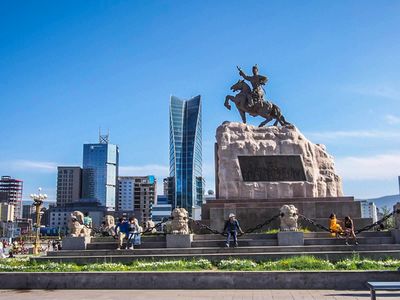
If you are tired of crowded tourist traps and want to experience true, untouched wilderness, Mongolia needs to be at the very top of your travel list for 2026. Often called the "Land of the Blue Sky," this beautiful East Asian nation is one of the last places on Earth where you can experience a truly ancient nomadic way of life.
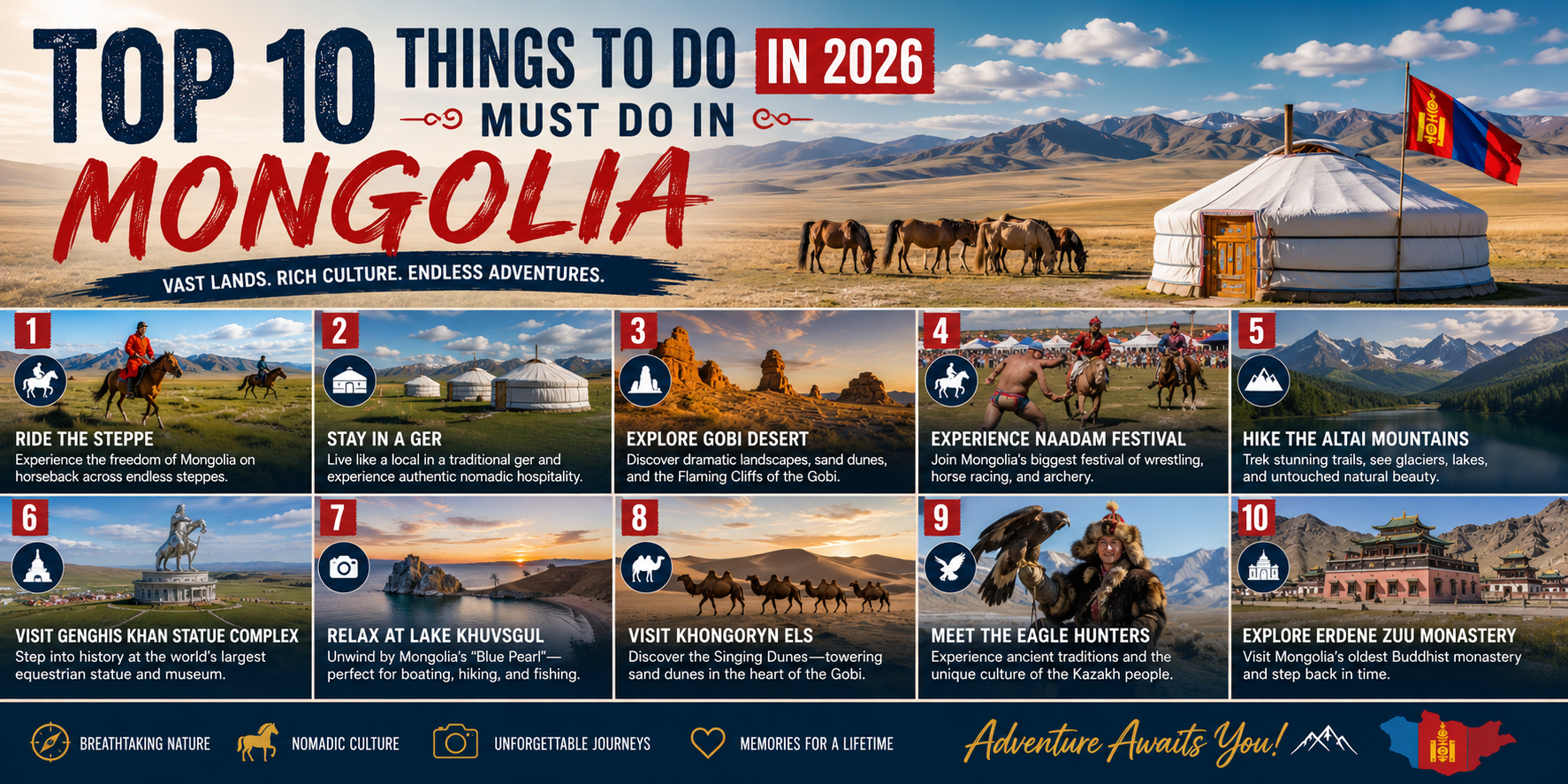
With vast open steppes, massive sand dunes, towering mountains, and unmatched hospitality, Mongolia offers an adventure that changes the way you look at the world.
Whether you are a solo backpacker, an active hiker, or a family looking for a unique cultural holiday, here is your ultimate guide to the top 10 things you must do in Mongolia in 2026.
Why is Mongolia becoming the ultimate travel destination in 2026?
In recent years, travel trends have shifted heavily toward slow, sustainable, and nature-first journeys. Mongolia fits this perfectly. With a population of just over 3 million people spread across a land area more than twice the size of Texas, you can literally drive for hours here without seeing another car or building.
In 2026, Mongolia is more accessible than ever before, thanks to modernized roads, better local flight connections, and an incredibly simple online visa process. Yet, the core of the country remains completely unchanged. Nomads still live in harmony with their herds, moving with the seasons just as their ancestors did during the reign of Genghis Khan.
What is the best time of year to visit Mongolia?
Before planning your itinerary, you need to pick the right month. Mongolia has an extreme continental climate with highly distinct seasons:
- Summer (June to August): This is the peak travel season. The weather is warm (often around 20°C to 30°C or 68°F to 86°F), the valleys are bright green, and travel across the countryside is easy.
- Autumn (September to October): If you dislike crowds and want to see gold and orange landscapes, autumn is spectacular. It is also the best time to head to western Mongolia for the eagle festivals.
- Winter (November to April): It gets incredibly cold, sometimes dropping below -40°C (-40°F). However, if you are brave enough, you can experience frozen lake festivals, ice skating, and the traditional Lunar New Year (Tsagaan Sar) celebrations.
Top 10 Unforgettable Things to Do in Mongolia
1. How do you experience the legendary Naadam Festival?
Naadam is Mongolia’s biggest and most famous national festival, held every year in July (usually between July 10th and 13th). Known locally as the "Three Manly Games," Naadam showcases the country's best in three ancient sports: horse racing, archery, and Mongolian wrestling.
While the main stadium event happens in the capital city, Ulaanbaatar, the absolute best way to experience Naadam is to head to a smaller countryside town like Arvaikheer. In these rural celebrations, you can sit right next to local herders, eat freshly fried huushuur (savory meat pastries), and watch young kids compete in high-speed bareback horse races across the open grasslands. It is a loud, colorful, and deeply moving celebration of Mongolian pride.
2. What is it like to live in a traditional Mongolian Ger camp?
You cannot say you have been to Mongolia without sleeping in a ger. A ger (also known as a yurt) is a round, felt-covered tent used by Mongolian nomads for thousands of years. They are surprisingly warm, cozy, and perfectly engineered to withstand strong steppe winds.
When you stay in a tourist ger camp or do a homestay with a local family, you get to disconnect from the modern world completely. There are no television screens or Wi-Fi signals here. Instead, you wake up to the smell of fresh firewood burning in the central stove, step outside to see a horizon with no fences, and fall asleep under a night sky so packed with stars that you can see the Milky Way clearly with the eye.
3. Can you ride horses with real nomads on the open steppe?
Mongolia is a nation born on horseback. It is often said that a Mongol learns to ride before they learn to walk. The native Mongolian horses are small, incredibly tough, and possess amazing stamina.
Horseback riding across the endless grasslands of central Mongolia is an absolute must-do. You can join guided horse treks that range from a couple of hours in Terelj National Park to multi-day wilderness expeditions. Riding alongside local herders gives you a unique look at how they guide their sheep, goats, and cattle across pastures without any fences.
4. Where can you meet the majestic reindeer herders?
Deep in the remote, dense pine forests (taiga) of northern Mongolia lives the Tsaatan people, one of the last groups of nomadic reindeer herders in the world. The Tsaatan rely entirely on their reindeer for milk, cheese, transportation, and clothing.
Visiting the Tsaatan requires patience and a bit of effort—usually involving a flight to Murun, a long off-road drive, and a horse trek into the mountains. However, sitting inside a teepee, drinking reindeer milk tea, and watching these gentle animals move through the forest is a once-in-a-lifetime cultural exchange that very few travelers ever get to experience.
5. What are the best things to do in the vast Gobi Desert?
The Gobi Desert in southern Mongolia is not just flat, empty sand. It is a stunning, diverse ecosystem of red cliffs, gravel plains, green canyons, and massive singing sand dunes.
The crown jewel of the Gobi is the Khongoryn Els, some of the largest sand dunes on the planet. Often called the "Singing Sands," these dunes make a deep, low humming sound when the wind moves the sand grains. The best way to explore them is to hire a two-humped Bactrian camel for a slow, peaceful ride as the sun starts to set, painting the desert in shades of gold and purple.
6. Why are the Flaming Cliffs of Bayanzag so famous?
Located within the Gobi Desert, Bayanzag—widely known as the Flaming Cliffs—is a dream come true for anyone interested in history or paleontology. These brilliant red sandstone cliffs look like they are on fire when the evening sun hits them.
In the 1920s, American explorer Roy Chapman Andrews and his team discovered the first-ever fossilized dinosaur eggs right here, proving to the world that dinosaurs laid eggs. Even today, travelers can walk through the wind-carved red clay gaps and imagine a time millions of years ago when giant creatures roamed these exact paths.
7. Where can you see the rare Przewalski’s wild horses?
If you are a wildlife lover, a day trip to Hustai National Park (located about two hours outside Ulaanbaatar) is non-negotiable. This protected reserve is home to the Takhi, also known as Przewalski's horse.
These are the only truly wild, never-domesticated horses left on Earth. They were once completely extinct in the wild, but thanks to a highly successful international breeding and reintroduction program, several hundred Takhi now roam free in Hustai. The best time to spot them is in the early morning or late afternoon when they descend from the rocky ridges to drink at the valley streams.
8. Is the Golden Eagle Festival in Western Mongolia worth visiting?
High up in the rugged Altai Mountains of western Mongolia, Kazakh nomads preserve a spectacular 2,000-year-old tradition: hunting with golden eagles.
Every October, the Golden Eagle Festival in Bayan-Ölgii province brings these hunters together. Dressed in elaborate hand-embroidered fur coats, the hunters launch their massive eagles from high cliffs, watching them dive at incredible speeds to land precisely on their gloved arms. The bond, trust, and communication between the hunter and the eagle are absolutely mesmerizing to watch up close.
9. How do you explore Lake Khuvsgul, the "Blue Pearl" of the north?
Known as the "Blue Pearl of Mongolia," Lake Khuvsgul is a massive, pristine freshwater lake surrounded by thick alpine forests, wildflower meadows, and rocky peaks. It contains nearly 70% of Mongolia's fresh surface water and is sacred to the local people.
In the summer, Lake Khuvsgul is the ultimate spot for outdoor relaxation. You can rent a kayak to paddle on the crystal-clear water, hike up the nearby Khyasaa cliff for a panoramic view of the entire lake, or enjoy a picnic on the pebbled shores.
10. What highlights should you see in Ulaanbaatar and Karakorum?
While Mongolia is all about the great outdoors, you should spend a couple of days exploring its historical sites:
- The Genghis Khan Statue Complex: Located just outside Ulaanbaatar, this is a colossal, 131-foot-tall stainless-steel statue of the conqueror on horseback. You can take an elevator up through the horse’s chest to stand on its head for a panoramic view of the steppe.
- Karakorum and Erdene Zuu: Karakorum was the ancient capital of the Mongol Empire in the 13th century. Right next to it sits Erdene Zuu Monastery, the oldest surviving Buddhist monastery in Mongolia, surrounded by a massive wall of 108 beautiful stupas.
What should you eat in Mongolia for an authentic taste?
Nomadic life is highly demanding, and traditional Mongolian food is designed to give you plenty of energy to survive the harsh outdoor elements. The diet is heavily based on meat (mutton, beef, and horse) and dairy. Here are three traditional dishes you must try:
- Buuz: These are large, steamed dumplings filled with minced mutton or beef, onions, and garlic. They are incredibly juicy and are the ultimate comfort food.
- Khorkhog: Often called the traditional Mongolian barbecue, this dish consists of mutton, potatoes, and carrots cooked inside a sealed metal milk jug along with red-hot stones taken straight from the fire. The stones cook the meat from the inside out, making it incredibly tender.
- Airag: This is fermented mare’s milk, a sour, slightly fizzy beverage with a low alcohol content. It is a staple of nomadic hospitality—if a family offers you a bowl of Airag in their ger, it is polite to take at least a few sips!
How do you get a tourist visa for Mongolia easily?
Planning a trip to Mongolia in 2026 is exciting, but getting your travel documents sorted out should not be stressful. Depending on your nationality, you might need a tourist visa to enter the country. Fortunately, the government of Mongolia has made the process incredibly straightforward by introducing the Mongolian electronic visa.
Instead of visiting an embassy, mailing your physical passport, or waiting in long lines at the airport, you can now apply for your Mongolia tourism e-visa online from the comfort of your home.
Why Choose Us for Your Mongolia Travel Visa?
Navigating government portals and visa requirements can sometimes feel overwhelming. That is where we come in. We are dedicated to making your travel preparation as seamless, quick, and stress-free as possible.
Here is why thousands of global travelers trust us with their visa applications:
- Reliable Travel Visa Services: Our global, customer-first approach has successfully assisted numerous travelers in obtaining their official visas without any hassle.
- Round-the-Clock Assistance: Travel plans do not sleep, and we are always here to help. You can reach out to our support team 24/7, and our dedicated visa experts will respond to your queries within 72 hours.
- Experienced Visa Consultants: When you apply through us, you receive expert guidance and thorough document reviews to ensure your application meets all official requirements, maximizing your chances of approval.
- Efficient Visa Application Process: No more complex government jargon or confusing forms. You can complete your official Mongolia tourist visa application in just a few minutes using our highly simplified online form.
Ready to start planning your 2026 Mongolian adventure? Click the link below to get started!
Written By:
Henryk Lassen

Hotels at your convenience
Now choose your stay according to your preference. From finding a place for your dream destination or a mere weekend getaway to business accommodations or brief stay, we have got you covered. Explore hotels as per your mood.