Transportation in Brazil-Flights-Buses and Local Options
 Maxime Lemaire
15 Dec, 2025
26 mins read
526
Maxime Lemaire
15 Dec, 2025
26 mins read
526

Brazil is not just a country; it is a continent-sized destination that defies the expectations of many first-time visitors. To put its scale into perspective, the distance from the northern Amazonian city of Boa Vista to the southern city of Porto Alegre is roughly the same as the distance from London to Baghdad.
For international travelers, this immense size presents a unique logistical challenge. A "quick hop" on the map can turn into a 48-hour bus ride or a multi-leg flight itinerary. Furthermore, navigating a Portuguese-speaking transport system can be daunting.

However, the good news is that Brazil’s transport infrastructure in 2025 is robust, modern, and surprisingly diverse. From affordable air passes and VIP buses that rival business class to efficient metro systems with contactless payments, getting around the "Giant of South America" is an adventure in itself.
This guide is designed specifically for Transportation in Brazil: Flights, Buses & Local Options -foreign citizens. We will bypass the local jargon, solve the "CPF problem," and give you the street-smart tips you need to travel safely and efficiently.
First Things First: Do You Need an E-Visa?
Before you even book your flight, you need to know the new entry rules. As of April 10, 2025, Brazil has reinstated visa requirements for citizens of Australia, Canada, and the United States.
- The Good News: You do not need to visit a consulate. You can apply for Brazil eVisa (E-Visa) online.
- Where to Apply: Use the official VFS Global website. Avoid third-party "visa agent" sites that charge hefty fees.
- Cost & Validity: The fee is approximately $80.90 USD.
- US Citizens: Valid for 10 years.
- Canadians/Australians: Valid for 5 years.
- Timing: Apply at least one month before travel. While many are processed in days, system glitches can cause delays.
Airport Transfers: The First Mile
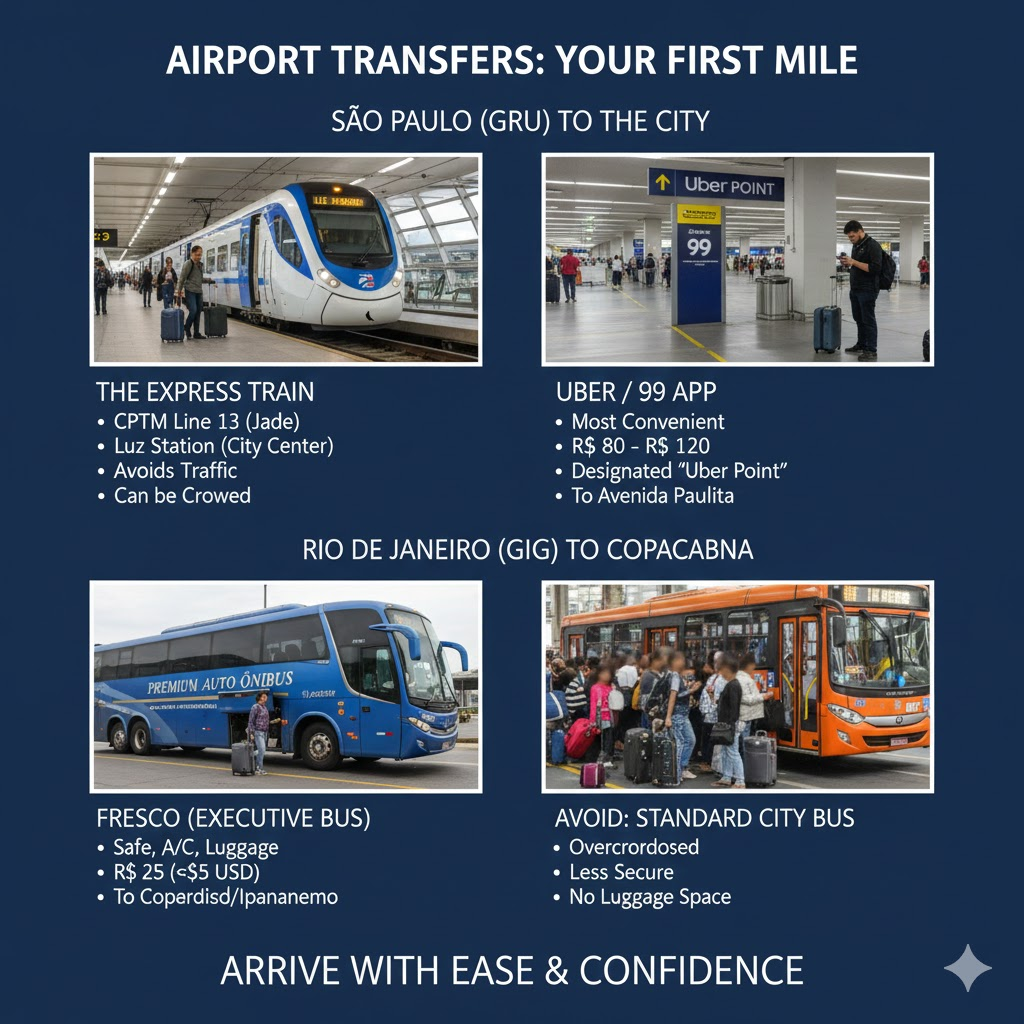
Arriving in a new country can be stressful. Here is exactly how to get from the main international hubs to the city center:
São Paulo (GRU) to the City
- The Express Train: The CPTM Line 13 (Jade) connects the airport to Luz Station in central São Paulo. It is cheap (~R$ 5.00) and avoids traffic, but it requires a transfer and can be crowded with luggage.
- Uber/99: The most convenient option. Expect to pay R$ 80 - R$ 120 ($15-$22 USD) to get to Avenida Paulista. There is a designated "Uber Point" at arrivals.
- Airport Bus Service: Comfortable executive buses that drop you at major hotels and the Tietê Bus Terminal.
Rio de Janeiro (GIG) to Copacabana
- Uber: The standard choice. Cost is roughly R$ 60 - R$ 90 ($11-$17 USD).
- Frescão (Executive Bus): The blue "Premium Auto Ônibus" (Line 2018) runs from GIG to the South Zone (Copacabana/Ipanema). It costs about R$ 25 ($5 USD) and is safe, air-conditioned, and has luggage space.
- Avoid: Do not take the standard city bus (BRT) with heavy luggage; it is often overcrowded and less secure.
Domestic Flights: The Time-Saver Strategy
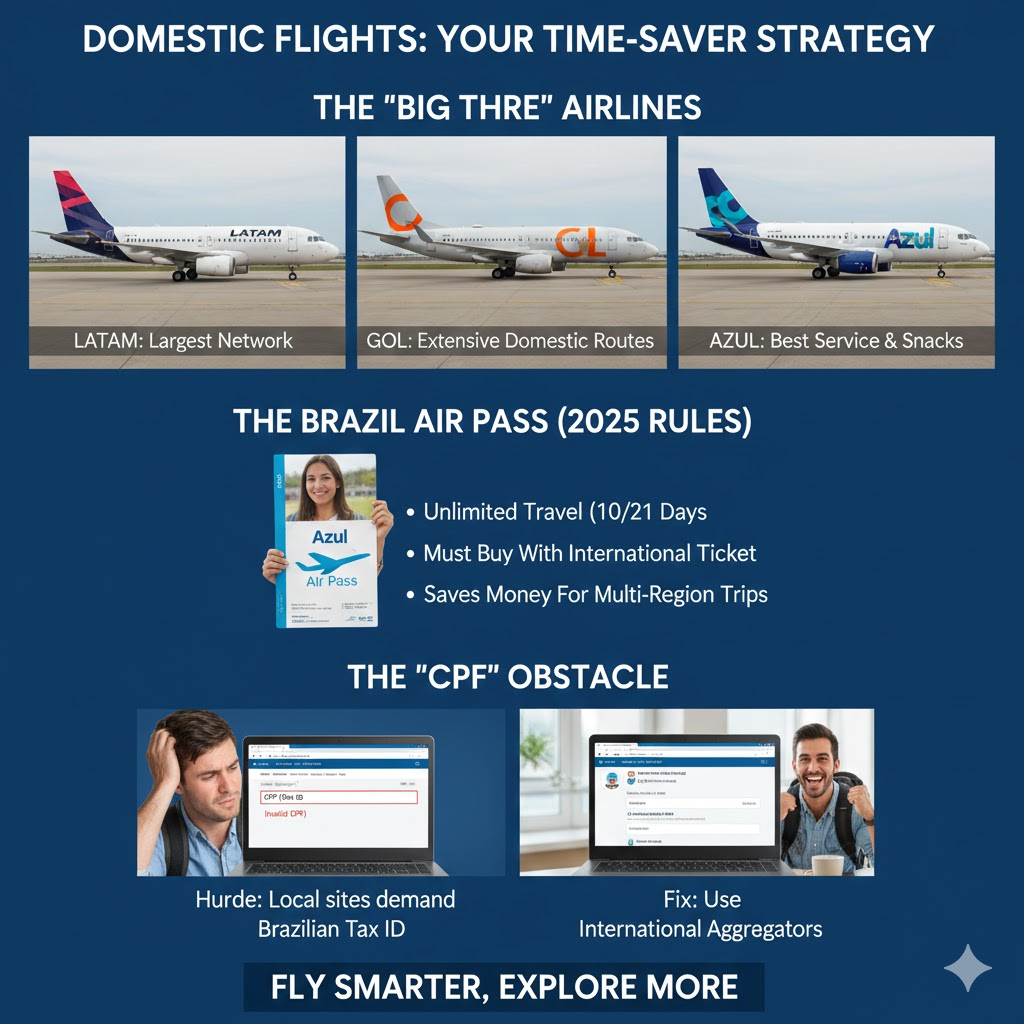
If you have limited time (2 weeks or less), flying is non-negotiable. Brazil has a vast network of airports connecting even smaller provincial capitals.
The "Big Three" Airlines
There are three main carriers you will likely fly with:
- LATAM: The largest network with the best international connections.
- GOL: Has an extensive domestic route map and partners with American Airlines/Air France.
- Azul: Famous for its excellent service and snacks. They are the only option for regional hubs like Bonito or Jericoacoara.
The Brazil Air Pass (2025 Rules)
Azul has revitalized the air pass concept. If you plan to visit multiple regions (e.g., Rio -> Iguazu -> Amazon), this can save you money.
- How it works: You buy a pass for 10 or 21 days of unlimited travel.
- The Catch: You must usually purchase it in conjunction with your international ticket into Brazil.
The "CPF" Obstacle
This is the #1 hurdle for foreigners. A "CPF" is the Brazilian tax ID, and many local sites demand it.
- The Fix: If an airline site blocks you, book through an international aggregator like Skyscanner or Booking.com, which bypasses the CPF field.
Long-Distance Buses: The Hidden Gem of Comfort
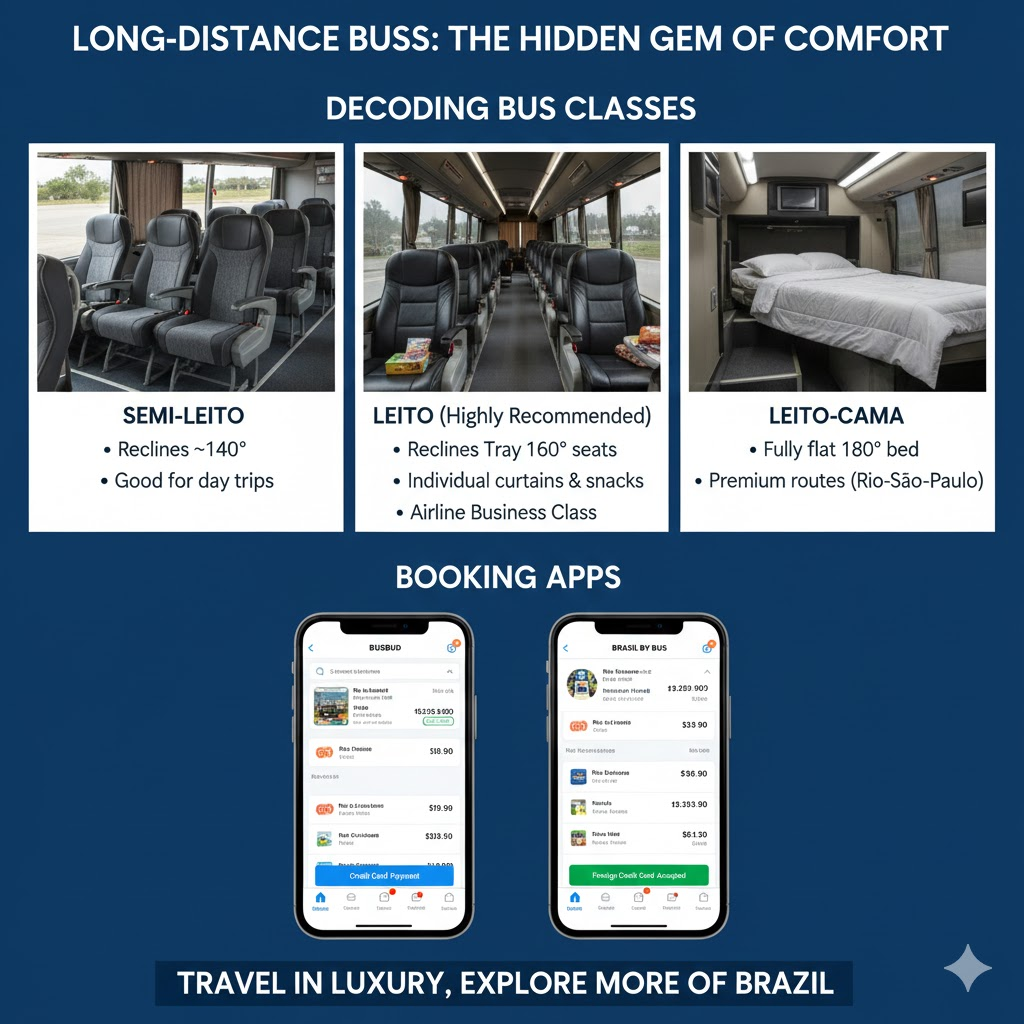
Forget cramped coaches. In Brazil, long-distance bus travel is a luxury industry.
Decoding Bus Classes
- Semi-Leito: Reclines ~140°. Good for day trips.
- Leito (Highly Recommended): Reclines ~160-180°. Wide leather seats, individual curtains, and snacks. Comparable to airline Business Class.
- Leito-Cama: Fully flat 180° bed. Available on premium routes like Rio-São Paulo.
Booking Apps
Use Busbud or Brasil by Bus to book with foreign credit cards.
Is Public Transport Safe?
Safety is a top concern for visitors. Here is the reality:
- Metros: Generally very safe, clean, and heavily policed, especially in Rio and São Paulo. They are safer than buses.
- Public Buses: Can be riskier. "Arrastões" (mass robberies) are rare but happen. Avoid taking city buses at night or if you are carrying expensive camera gear.
- Uber/99: Statistically safer than hailing taxis on the street because the ride is tracked.
Driving Rules You Can't Ignore
If you rent a car, you must know these three critical rules:
- Lei Seca (The Dry Law): Brazil has zero tolerance for alcohol. The legal blood alcohol limit is 0.00. Even one beer can result in a heavy fine, license suspension, and possible arrest. If you drink, take an Uber.
- Lombadas (Speed Bumps): They are everywhere, often unmarked, and huge. Hitting one at speed will destroy your rental car's suspension. Always scan the road ahead.
- Speed Traps: Brazil relies heavily on automated speed cameras. Waze is essential for alerting you to their locations.
Navigating Public Transport: The App Battle
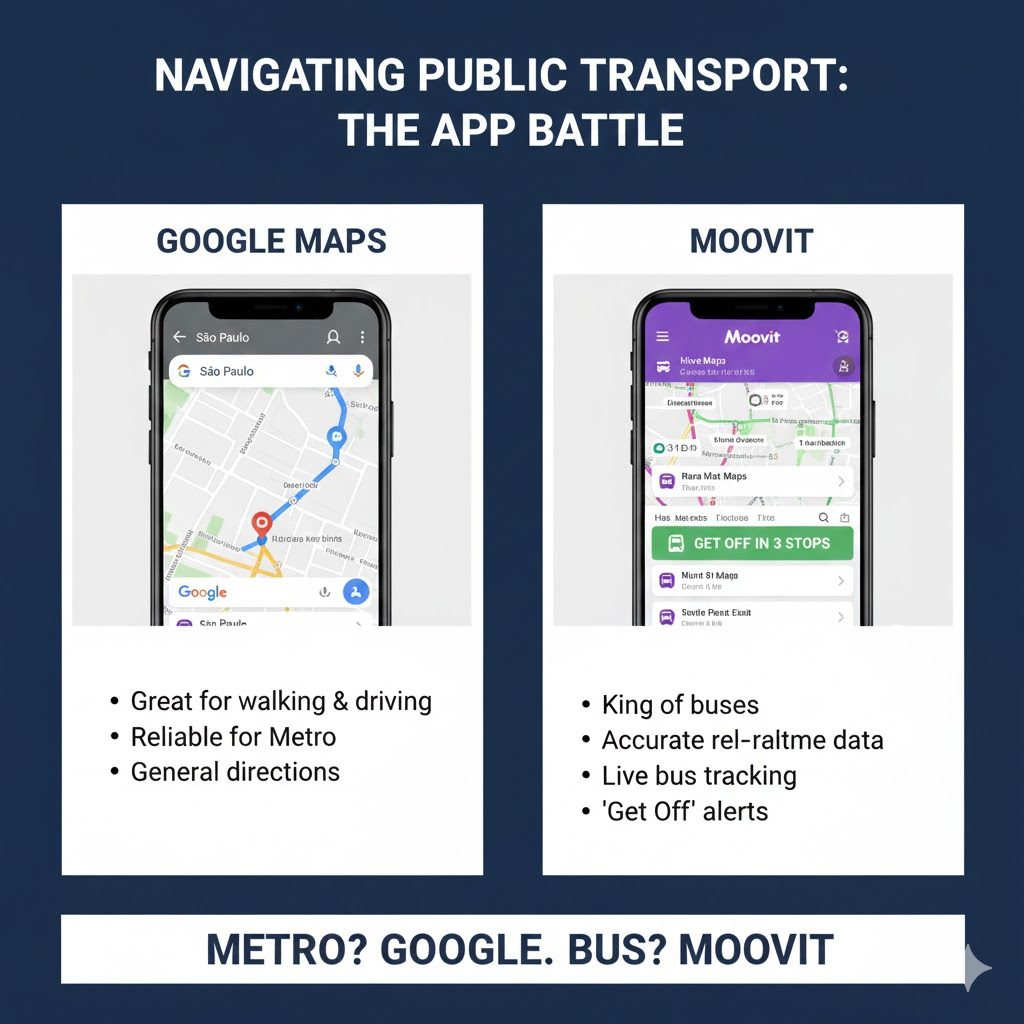
Which app should you trust?
- Google Maps: Great for general walking and driving directions. It works well for the Metro.
- Moovit: The king of buses in Brazil. It has much more accurate real-time data for local bus schedules, arrival times, and "get off" alerts than Google Maps. If you are taking a bus, download Moovit.
What Are the Most Common Transport Scams?
While most Brazilians are honest, tourists are targets. Watch out for:
- The "Broken Meter": A taxi driver claims his meter is broken to charge a high flat rate. Refuse and exit the cab.
- The Scenic Route: Drivers taking longer routes to run up the fare. Use Waze on your phone to track the route.
- The "Change Switch": You pay with a R$50 note, the driver drops it and claims you only gave him a R$5. Always state the amount out loud as you hand it over: "Here is fifty reais."
The Holiday Factor: Carnival & New Year's
Traveling during Carnival (February/March) or New Year's (Réveillon) requires a different strategy:
- Road Closures: Entire neighborhoods in Rio (like Copacabana) are closed to cars. Ubers cannot get in or out. You must use the Metro.
- Sold Out Buses: Intercity buses sell out weeks in advance. Book your transport at least 1-2 months early.
- Surge Pricing: Expect Uber prices to triple. Budget accordingly.
Regional Transport Quirks
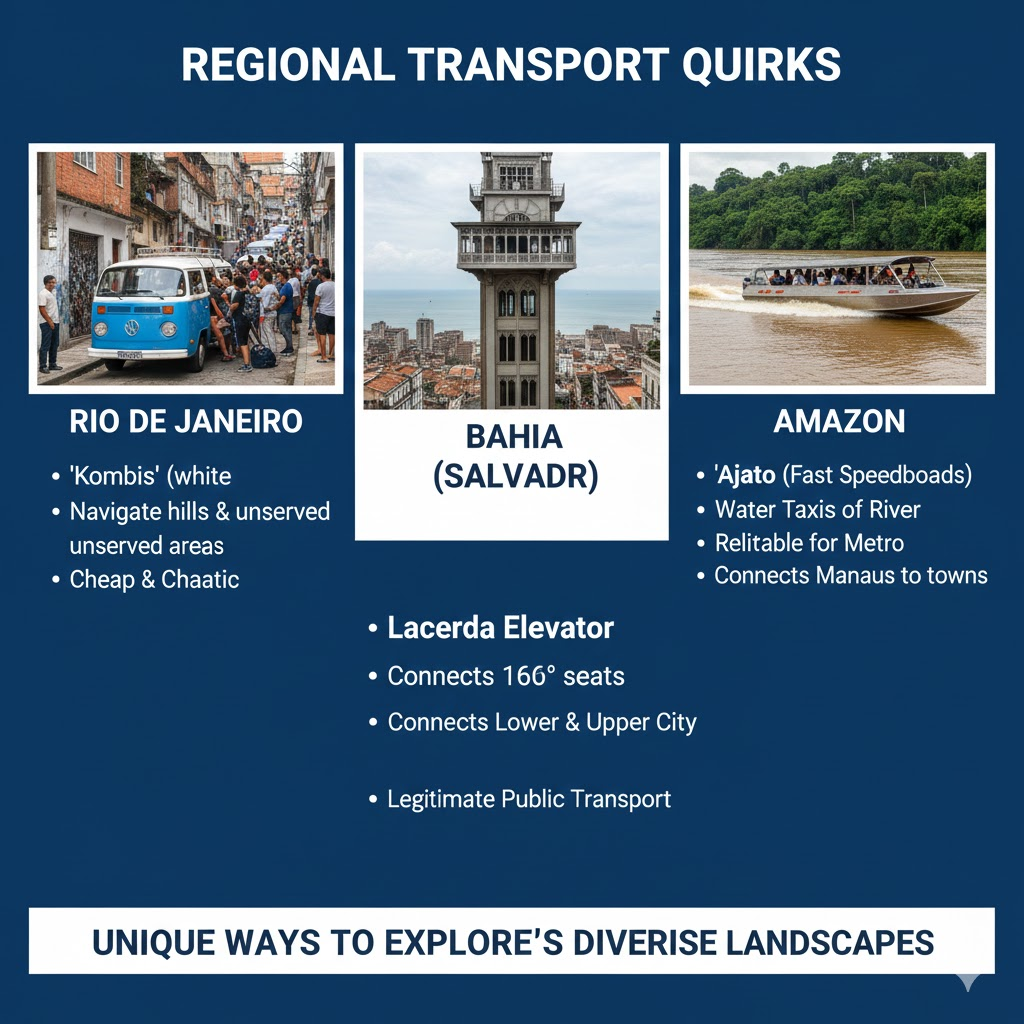
Brazil is huge, and transport varies by region:
- Rio de Janeiro: "Kombis" (white vans) are a common way to get up hills or into neighborhoods not served by buses. They are cheap but can be chaotic.
- Bahia (Salvador): The Lacerda Elevator is legitimate public transport connecting the Lower City to the Upper City.
- Amazon: "Ajato" (fast speedboats) are the water taxis of the river, connecting Manaus to nearby lodges and towns much faster than the slow ferries.
Night Travel: A Safety Protocol
Traveling at night requires extra vigilance:
- Red Lights: In many cities, it is socially acceptable (and sometimes legal after 10 PM) to treat red lights as stop signs to avoid sitting still in a dark intersection.
- Bus Stations: Arriving at a bus terminal at 3 AM can be sketchy. Stay inside the terminal building until your Uber driver arrives; do not wait on the curb.
- Uber Ratings: At night, be pickier. Cancel rides if the driver has a rating below 4.8 or a very low number of trips.
How Much Does It Cost? (2025 Estimates)
Transport in Brazil is generally affordable for visitors earning USD or EUR.
- Uber Ride (20 mins): R$ 20 - R$ 35 ($3.50 - $6.00 USD).
- Metro Ticket: ~R$ 7.00 ($1.20 USD).
- Intercity Bus (Rio-SP, Leito Class): ~R$ 150 - R$ 200 ($25 - $35 USD).
- Domestic Flight (1 hour): Varies wildly, from R$ 300 to R$ 1000+ ($50 - $175 USD).
How Bad is the Traffic Really?
In a word: Intense.
- São Paulo: Famous for world-record traffic jams. A 10km ride can take 90 minutes on a Friday evening. Use the Metro whenever possible.
- Rio de Janeiro: Rush hours are 7-9 AM and 5-7 PM. If you are going to the airport, leave extra early. Rain causes chaos in Rio traffic; double your estimated travel time if it's pouring.
Can I Rent Bikes or Scooters? (Micromobility)
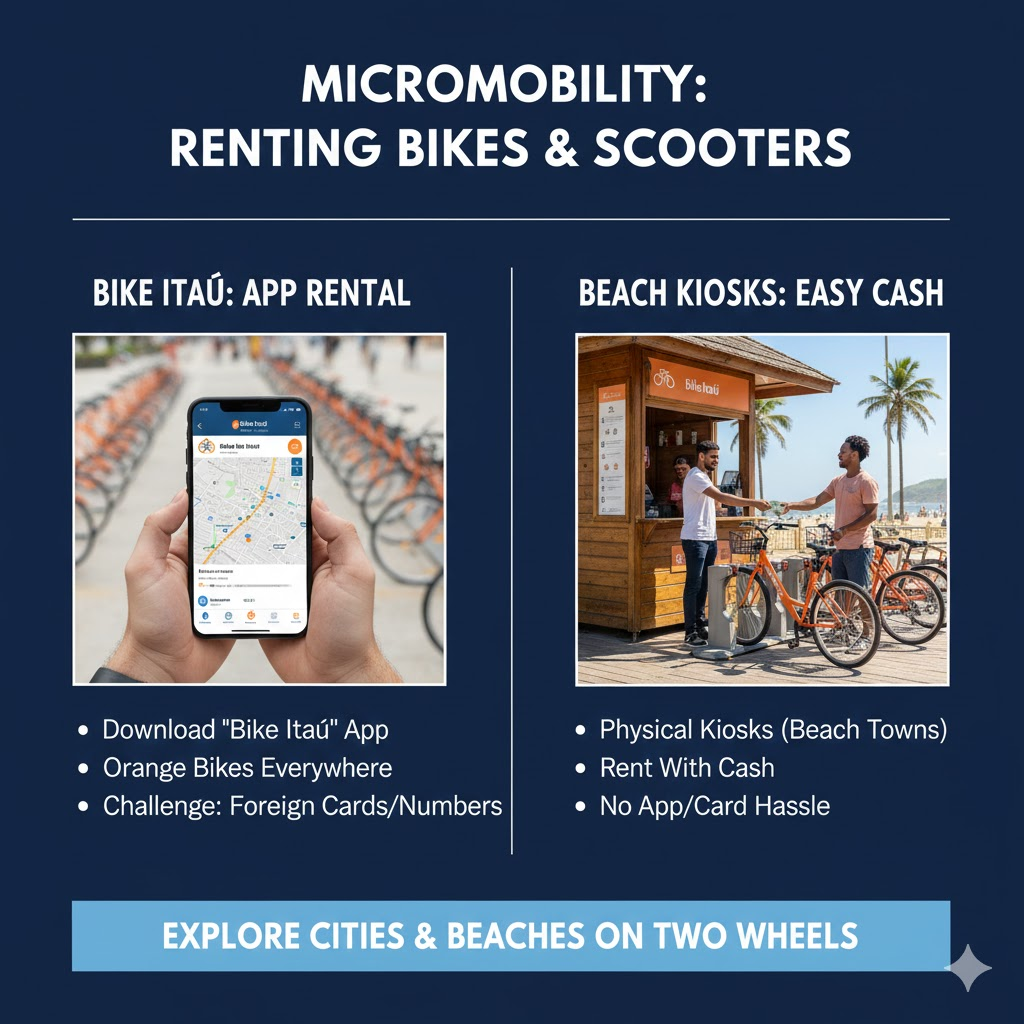
Yes! The orange Bike Itaú bikes are ubiquitous in Rio, São Paulo, and Recife.
- The App: Download "Bike Itaú".
- The Challenge: The app sometimes struggles with foreign phone numbers or credit cards.
- The Alternative: In beach towns like Ipanema, you can rent bikes from physical kiosks on the boardwalk using cash, avoiding the app hassle entirely.
Is a Wheelchair Transport Accessible?
Brazil has made strides, but challenges remain.
- Airports: Excellent accessibility with dedicated assistance teams.
- Metros: Rio and São Paulo metros are generally accessible with elevators and tactile floors.
- City Buses: Most have wheelchair lifts, but they frequently malfunction.
- Sidewalks: Often uneven with "Portuguese stones" (mosaics) that can be slippery and difficult for wheelchairs.
Urban Transport: Uber, 99 & Metros
Rideshare Apps
Uber and 99 are your best friends.
- Pro Tip: Download 99 as a backup. It is often cheaper and has better coverage in suburbs.
- Security: Always check the license plate. Share your ride status with a friend via the app.
Metro Systems
- Contactless Payment: In Rio and SP, you can tap your Visa/Mastercard directly on the turnstile. No need to buy a ticket!
Renting a Car: To Drive or Not to Drive?
Where NOT to drive: São Paulo and Rio cities. Parking is a nightmare and traffic is aggressive. Where TO drive: The Northeast coast (Recife to Maceió) or the South (Florianópolis). Requirements: You need a credit card in the driver's name for the deposit. An International Driving Permit (IDP) is recommended but not strictly required if your license uses the Latin alphabet.
Unique Transport: The Amazon Boat Journey
The Manaus to Belém Route:
- Hammock Class (Rede): $30-$50. Sleep on deck with locals. Authentic but requires vigilance with bags.
- Cabin (Camarote): $150-$200. Private A/C room. Safer and quieter.
Essential Portuguese Glossary for Transport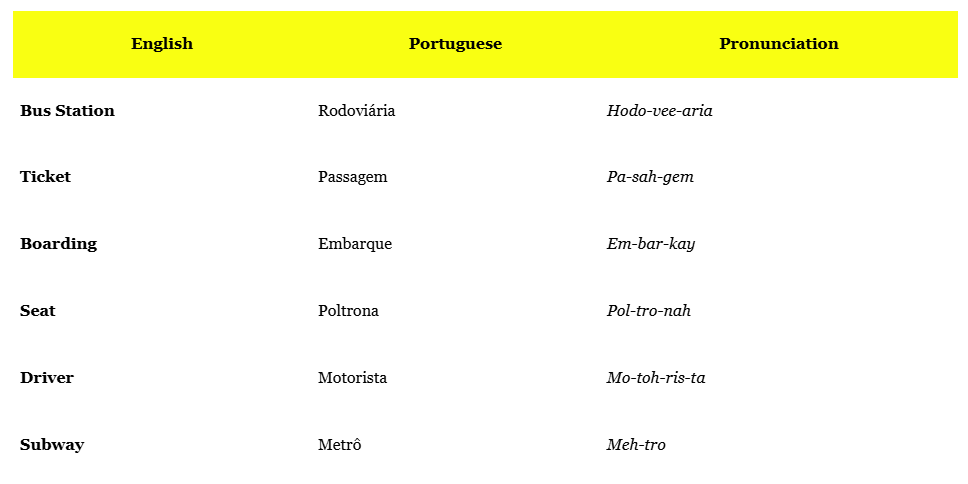 Must-Download Apps Checklist
- Uber / 99: Ridesharing.
- Google Translate: Offline Portuguese pack.
- Waze: Better than Google Maps for driving/traffic.
- Busbud: For buying bus tickets.
- WhatsApp: Essential for contacting anyone in Brazil.
Conclusion
Traveling through Brazil requires a mix of planning and flexibility. While the distances are vast, the options are plentiful. By mixing low-cost domestic flights with high-comfort sleeper buses and relying on Uber for the "last mile," you can navigate this beautiful country safely and affordably.
Remember: The journey in Brazil is often as memorable as the destination. Whether you're watching the rainforest glide by from a riverboat or sipping a guarana on a Leito bus, you are experiencing the real Brazil. Boa viagem!
Written By:
Maxime Lemaire

Hotels at your convenience
Now choose your stay according to your preference. From finding a place for your dream destination or a mere weekend getaway to business accommodations or brief stay, we have got you covered. Explore hotels as per your mood.