UK ETA for South Korean Citizens
 Michael Davis
29 Nov, 2025
14 mins read
242
Michael Davis
29 Nov, 2025
14 mins read
242

If you’re a South Korean planning a trip to the UK, you’ve probably heard about the new requirement: UK ETA. The phrase UK ETA for South Korean Citizens is key — because from 2025 onward South Korean passport holders (among others) need an electronic pre‑travel authorisation before heading to Britain. This change means it’s more important than ever to know what ETA means, how to get it, and what it allows (and doesn’t). Think of this article as your friendly travel‑blogger guide — no jargon, just practical help so you can plan your UK adventure smoothly and confidently.
Why do South Korean citizens need a UK ETA?
The UK Electronic Travel Authorisation (ETA) scheme was introduced to simplify and standardise travel for visitors who don’t require a full visa for short stays.
From 8 January 2025 onwards, nationals of many non‑European countries — including South Korea — must obtain an ETA prior to travelling to the UK. This allows British authorities to pre‑screen travellers, helping make entry procedures smoother.
How can South Korean citizens apply for a UK ETA?
Here’s a simple step‑by‑step breakdown (as of now) of how South Koreans can get their UK ETA:
- Check eligibility: Since South Korea is on the list of nationalities required to have an ETA, you must apply if you’re travelling as a visitor and don’t hold a visa or other UK residence/permissions.
- Fill in required details: You will need to provide your passport information (the South Korean passport you travel with), personal and contact details, and answer standard pre-screening questions (including background / suitability checks).
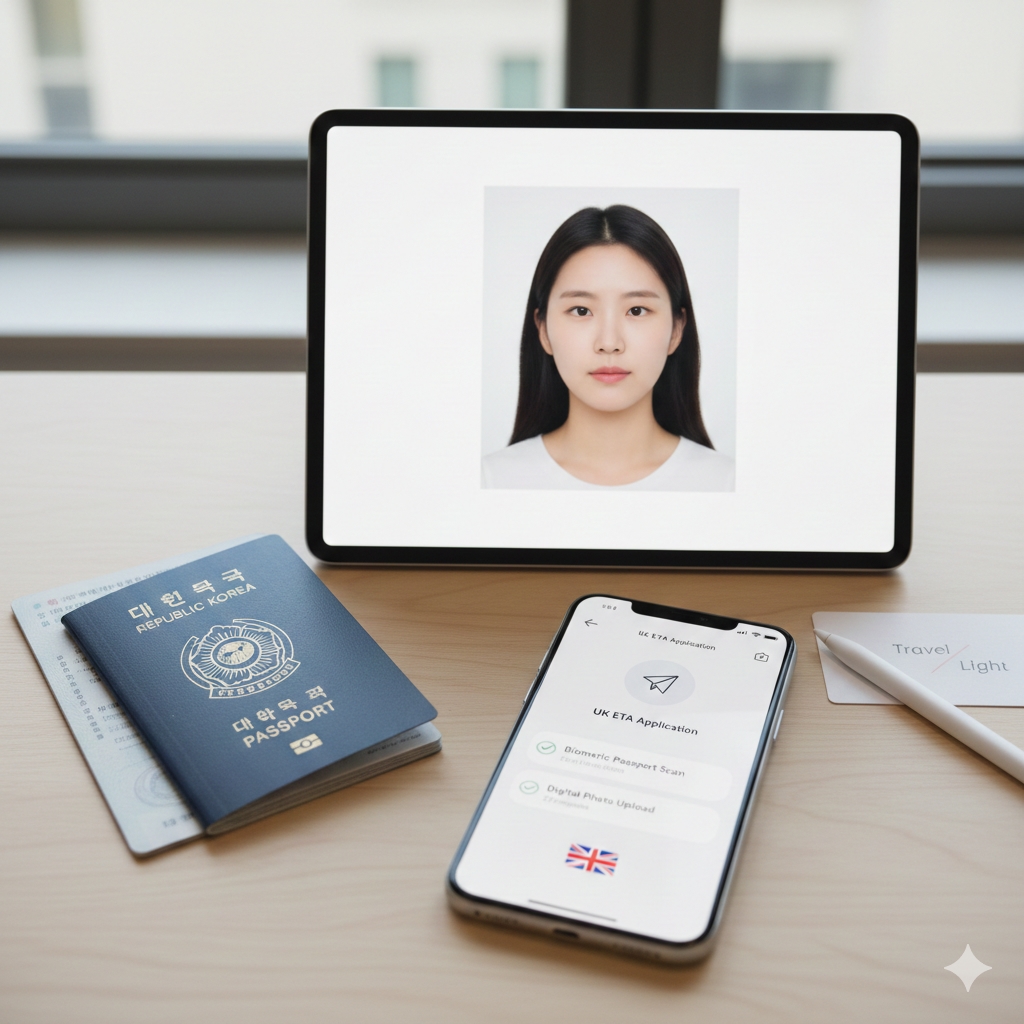
- Upload a passport‑style photo: A recent passport‑photo (with plain background, face visible) is required.
- Pay the UK ETA fee via accepted payment methods (e.g. debit/credit card, Apple Pay or Google Pay — as allowed) if required.
- Wait for decision: ETA decisions often come quickly (many people receive approval within a short time), though it's wise to apply ahead of travel to allow for possible delays or additional checks.
- Once approved, the ETA is digitally linked to your passport — no need for hard‑copy printouts.
What documents are required for a UK ETA for South Koreans?
If you’re applying for UK ETA, make sure you have ready:
- A valid biometric South Korean passport (the one you will travel with).
- A recent passport‑style digital photo (with plain background, clear face, following the guidelines).
That’s all — no need for stacks of paperwork if your details are accurate and passport valid.
How often do South Korean citizens need to renew their UK ETA?
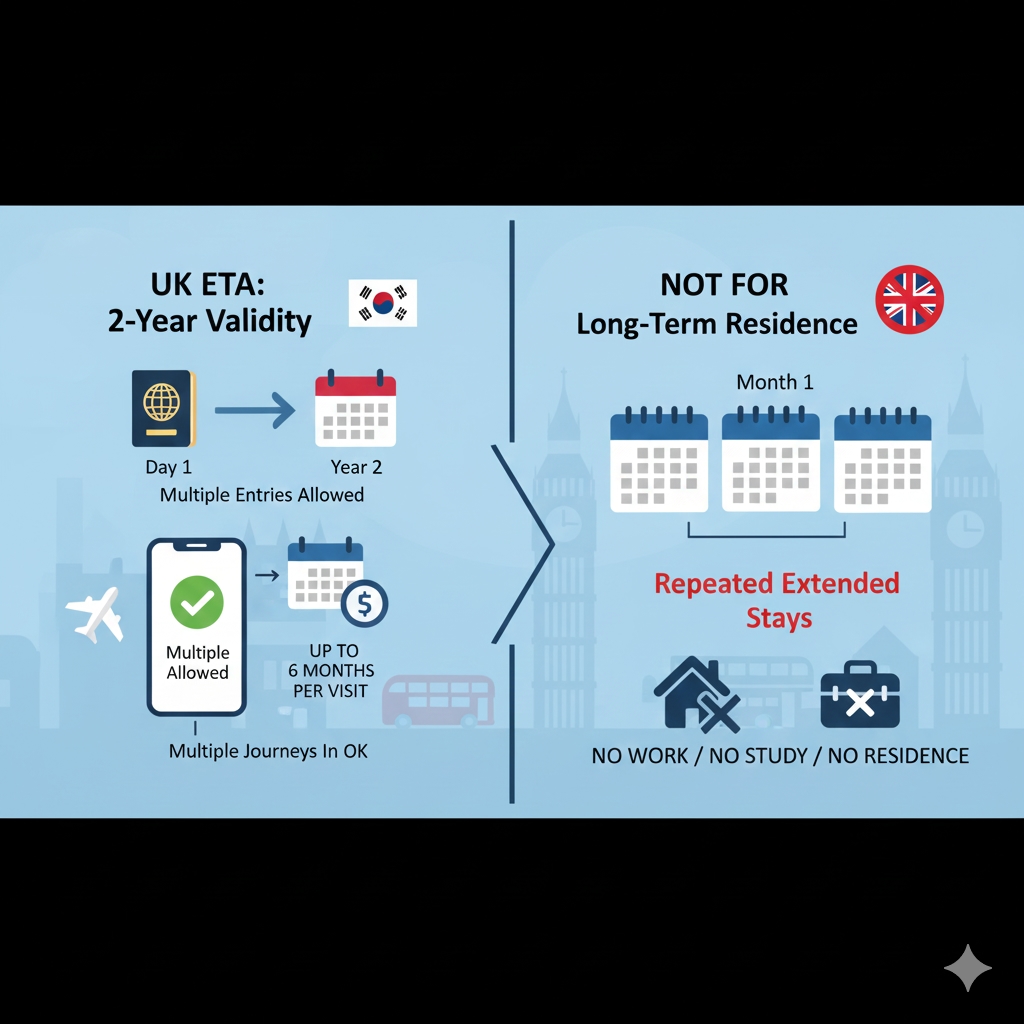
Once you get a UK ETA, it remains valid for two years from the date of grant (or until your passport expires — whichever comes first). If your passport expires before those two years, and you get a new passport, you will need to apply again with the new passport. ETAs are linked to a specific passport.
So effectively — you renew your ETA only when the passport changes or after two years (whichever happens first).
What is the difference between a UK ETA and a UK visa for South Koreans?
Here’s how ETA differs from a visa (or long‑stay permit) — something many travellers find confusing:
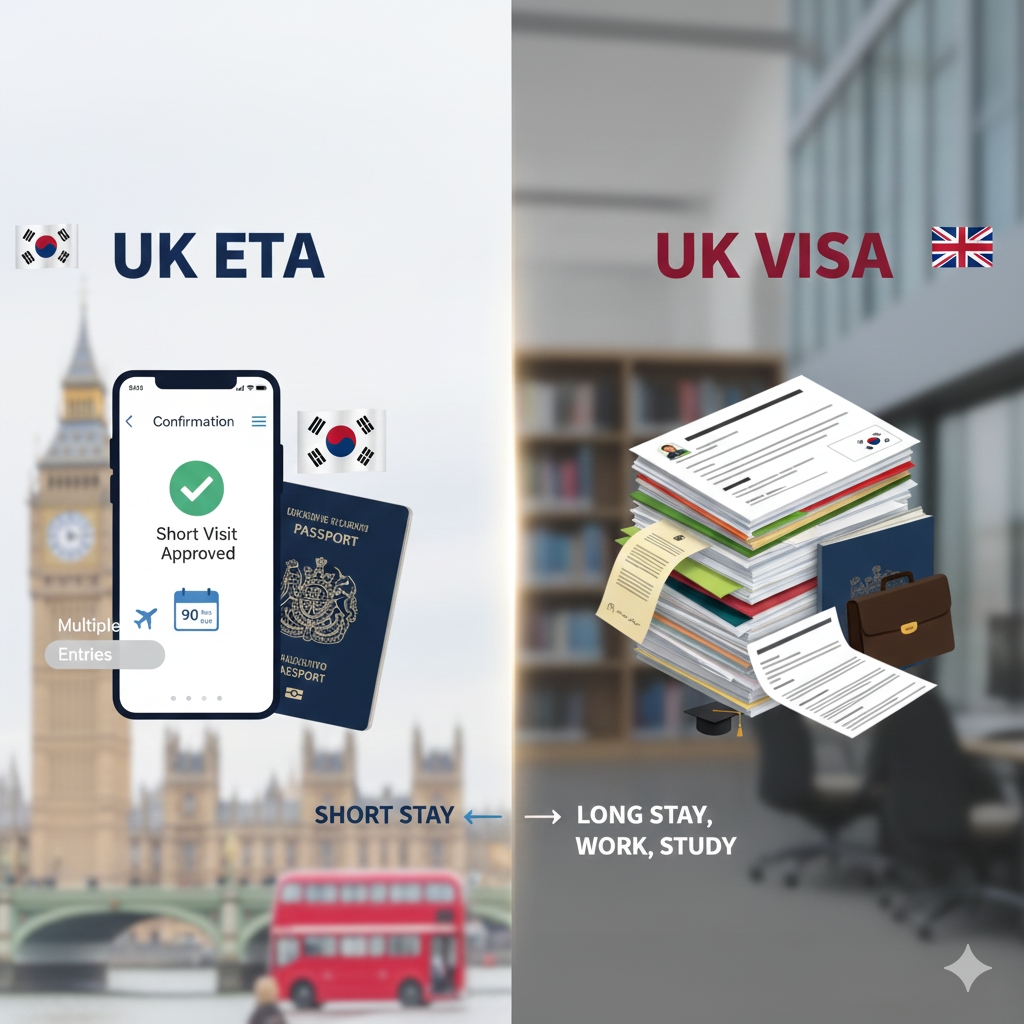
- The UK ETA is pre‑travel permission for short visits (tourism, business, visiting friends/family, short stays, transit).
- A visa is used for longer stays, work, study, settlement or residence. ETA does not replace visa when you have other purposes than short stay.
- With ETA you get multiple entries allowed (while it's valid) — but each visit can be only up to a certain duration.
- ETA process is much simpler, mostly online, requiring minimal documentation compared to a full visa application that includes more paperwork and stricter checks.
How many times can South Korean citizens enter the UK with an ETA?
Under a valid ETA, you can make multiple journeys to the UK as many times as you like, provided:
- The ETA is still valid (within 2‑year validity or until passport expiry).
- Each time you enter, your stay does not exceed the allowed period (up to 6 months per visit, for tourism, visiting friends/family, short business, etc.).
However: ETA is not meant for long‑term living, repeated extended stays that look like residence, or frequent successive stays aimed at effectively residing in the UK.
Which method offers a more user-friendly experience: agent or official site?
What official guidance says (and why it matters)
- Official guidance warns about “fake agents” and scam websites that may try to deceive applicants by pretending to be official, or by offering “faster processing,” “guaranteed visas,” or shortcuts to work/visa approvals.
- No third‑party agent or private website can guarantee visa approval or legitimately override the normal process. Any such claim is misleading.
Because of this, relying on unofficial agent sites carries real risks — inflated fees, delays, wasted money, or worse (fraud, identity theft).
Possible advantages of using an agent / visa‑agent site
- Time‑saving & convenience: A visa‑agent can manage the paperwork, form‑filling, document‑collection and submission on your behalf. For many people (especially first‑time applicants, or those busy with work or family), this can save a lot of effort.
- Expert guidance, less chance of mistakes: Visa procedures can be complex; requirements and eligibility criteria vary depending on visa type, nationality, and destination. An experienced agent may know what documents are required, how to fill forms properly, how to present your case — potentially reducing mistakes that might lead to delays or rejection.
- Personalized support & troubleshooting: Good agents may help you understand what kind of visa or route suits your situation best, prepare or translate documents, alert you to deadlines or special requirements, and guide you through each step.
- Helpful for complex cases or first-time applicants: If your profile is complicated (e.g. multiple past travels, work history, financials, special circumstances) or you're applying for a difficult visa type (study, work, long-term stay), an agent’s experience might help ensure correct presentation.
What penalties exist for South Koreans misusing the UK ETA?
Using ETA properly is important — there are rules about what you cannot do. According to official guidelines: You cannot use ETA to:
- Stay for more than the permitted time (i.e. over 6 months per visit).
- Work (paid or unpaid) in the UK as a full-time employee or self-employed — except certain permitted paid‑engagements or special concessions.
- Claim public funds or benefits.
- Live in the UK through frequent or successive visits if that looks like residence.
- Use ETA as a substitute for a visa when you actually need one (e.g. for work, study, long‑term stay).
What are the COVID‑19 related requirements for UK ETA for South Koreans?
As of now, as per the public information for ETA, there is no specific COVID‑19 documentation (like vaccination certificate or test result) mandated as part of ETA itself. The ETA scheme is about travel authorisation ahead of visit, not health clearance. The official guidance that outlines what travellers with ETA can and cannot do does not mention special COVID‑19 requirements.
However — standard travel‑health precautions, airline or transit‑country rules, and entry requirements at the time of travel might still apply (depending on global health situation). So it's wise to check the latest health advisories, flight/airline rules, and UK entry guidance before you fly.
Helpful Travel Advice for a Smooth UK Trip with ETA
Here are some friendly, practical tips — the kind you’d expect from a travel blogger who’s been there:
- Apply early: Even though many ETAs get approved quickly, it’s safest to apply at least a few days before your travel date — don’t leave it to last minute.
- Use a proper passport‑style photo: Make sure background is plain and lighting is good; blurry / shaky / poor‑quality uploads can delay or cause rejection.
- Double‑check passport validity: Since ETA validity is tied to the passport, ensure your passport won’t expire during your intended trips.
- Keep a digital copy of ETA confirmation: Even though ETA is linked electronically, airlines sometimes like to check — keep a screenshot or email handy.
- Respect the stay‑limit: Don’t overstay. Treat each visit as a short stay (up to 6 months), unless you plan to change your status legitimately with the right visa.
- Use ETA only for permitted travel purposes: Tourism, sightseeing, visiting friends/family, short business, short-term studies or permitted engagements. Avoid using ETA if your purpose requires a visa (work, long-term stay, etc.).
What we know — and what remains uncertain
From publicly available information: South Korea is on the list of nationalities eligible (and required) to obtain a UK ETA starting from 2025. ETA validity, multiple‑entry, and stay‑duration rules are well documented. What remains a bit fuzzy (or variable):
- Because the ETA scheme is relatively new, real‑world application experiences (for example, how strictly airlines or border agents check, or how “frequent visitor vs resident‑like behaviour” is judged) may evolve.
- Health and transit rules may shift depending on global situations (pandemics, security, airline policies).
- If you change passport — you must re‑apply for ETA. Many travellers don’t realise that, so it’s easy to travel with an expired ETA inadvertently.
Final Thoughts
If you hold a South Korean passport and are planning a trip to the UK — whether it’s for sightseeing in London, exploring historic castles in Scotland, visiting friends or family — getting your UK ETA for South Korean Citizen sorted should be one of the first steps in your travel checklist. The process is simple, mostly online, and gives you flexibility: multiple trips over two years, each stay up to six months.
Just remember: ETA is for short-term visits. If your plan involves working, studying, or staying long-term — you’ll need the proper permit (visa). Use ETA responsibly: apply early, stay within the rules, and travel with confidence.
Written By:
Michael Davis

Hotels at your convenience
Now choose your stay according to your preference. From finding a place for your dream destination or a mere weekend getaway to business accommodations or brief stay, we have got you covered. Explore hotels as per your mood.