Why Adi Kailash is Called Chhota Kailash A Lesser-Known Pilgrimage
 Ankit Rawat
29 Aug, 2025
9 mins read
176
Ankit Rawat
29 Aug, 2025
9 mins read
176
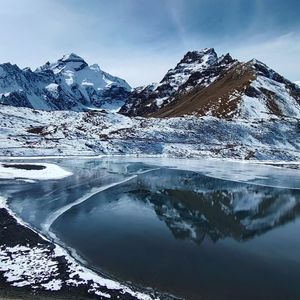
India is home to many sacred mountains, each with its own story and spiritual importance. Among them, Adi Kailash in Uttarakhand holds a special place for devotees who cannot undertake the long and difficult journey to Mount Kailash in Tibet. Also called Chhota Kailash, this pilgrimage is not only about faith but also about the beauty of nature and the deep connection between humans and the Himalayas.
The journey to Adi Kailash takes travelers through high-altitude valleys, remote villages, and ancient routes that have been walked upon by sages and pilgrims for centuries. Even though it is less popular than the main Kailash Mansarovar Yatra, it offers the same spiritual satisfaction, making it a perfect destination for seekers of peace and devotion.
What is Adi Kailash
Adi Kailash, located near the Indo-Tibet border in the Pithoragarh district of Uttarakhand, is considered one of the holiest mountains in India. It stands at an altitude of around 6,310 meters and is surrounded by pristine landscapes, rivers, and meadows. The mountain is believed to resemble Mount Kailash, the sacred abode of Lord Shiva, which is why devotees call it Chhota Kailash.
At the base of Adi Kailash lies Parvati Sarovar, a small holy lake where pilgrims often perform rituals and prayers. Another nearby attraction is Gauri Kund, where it is believed that Goddess Parvati used to bathe. The presence of these sacred spots further enhances the religious value of the Adi Kailash Yatra.
Why Adi Kailash is Called Chhota Kailash
Adi Kailash is often called Chhota Kailash because of its close resemblance to Mount Kailash in Tibet. While the main Kailash Mansarovar Yatra is one of the most challenging pilgrimages in the world, reaching Adi Kailash is comparatively easier, though still demanding. For devotees who cannot travel to Tibet due to distance, expense, or health reasons, Adi Kailash becomes a spiritual alternative.
The legends say that Lord Shiva himself resides here, and the mountain radiates the same divine energy as Mount Kailash. Pilgrims who stand before Adi Kailash feel a sense of fulfillment, as if they are in the presence of the supreme deity. The smaller size of the mountain compared to Mount Kailash gives it the name Chhota Kailash, but its spiritual power is said to be equally strong.
The Spiritual Significance of Adi Kailash
The importance of Adi Kailash is rooted in Hindu mythology. According to beliefs, Lord Shiva and Goddess Parvati spent time here, and the mountain is considered their home in India. The presence of Parvati Sarovar and Gauri Kund adds to this divine connection.
Many sages and saints in history have visited Adi Kailash for meditation and penance. Even today, pilgrims report feeling a deep sense of peace and energy in this region. For people who cannot go to Tibet, Adi Kailash offers a chance to connect with Shiva’s presence without crossing international borders.
The Route to Adi Kailash
The journey to Adi Kailash begins from Dharchula, a small town in Uttarakhand. From here, travelers pass through several villages and camps before reaching the holy mountain. Some of the important stops include Gunji, Kuti, and Jyolingkong. Each campsite offers beautiful views of snow-clad peaks, green valleys, and river crossings.
- Dharchula to Gunji – The first part of the journey introduces travelers to the culture of border villages.
- Gunji to Kuti – Pilgrims pass through meadows and rivers, with the landscape changing dramatically.
- Kuti to Jyolingkong – This stretch takes you closer to Adi Kailash and Parvati Sarovar.
- Jyolingkong to Adi Kailash – The final leg is the most rewarding, as the first glimpse of Chhota Kailash fills the heart with devotion.
Though the route is challenging, it is still easier than the Kailash Mansarovar Yatra, making it a popular choice for Indian pilgrims.
Natural Beauty Around Adi Kailash
Apart from its spiritual value, Adi Kailash is also known for its breathtaking natural beauty. The route is surrounded by Himalayan peaks, waterfalls, and alpine meadows. The villages along the way, like Kuti and Gunji, reflect the traditional lifestyle of the region and offer a glimpse into the culture of the local people.
During the journey, travelers also come across Om Parvat, another sacred peak where the natural snow pattern on the mountain forms the shape of ‘Om’. Together, Adi Kailash and Om Parvat make the pilgrimage complete, both spiritually and visually.
Why Pilgrims Choose Adi Kailash Yatra
There are many reasons why people choose to visit Adi Kailash instead of or along with Kailash Mansarovar.
- Accessibility – Being in Uttarakhand, it does not require crossing into Tibet, making it easier for Indian devotees.
- Affordability – The journey is less costly compared to the Kailash Mansarovar Yatra.
- Spiritual Experience – Devotees believe that worshipping at Adi Kailash grants the same blessings as Mount Kailash.
- Natural Wonders – With Om Parvat, Parvati Sarovar, and scenic valleys, the journey is as rewarding for nature lovers as for spiritual seekers.
Best Time to Visit Adi Kailash
The best time to undertake the Adi Kailash Yatra is between May and October. During this period, the weather is relatively stable, and the routes remain open. The monsoon months of July and August can bring heavy rains and landslides, so planning the journey before or after the monsoon is safer.
Pilgrims should also prepare for cold temperatures, especially at night, and carry proper trekking gear, warm clothing, and medical supplies.
A Lesser-Known Pilgrimage with Deep Meaning
Despite its importance, Adi Kailash is still not as widely known as Kailash Mansarovar. This makes the journey peaceful and less crowded, allowing pilgrims to truly connect with nature and spirituality. For many, the sense of calm and devotion experienced at Chhota Kailash is unmatched.
The journey is not just about reaching the destination but also about walking on ancient trails, seeing untouched landscapes, and feeling the presence of divinity in every step.
Conclusion
Adi Kailash, known as Chhota Kailash, is more than just a mountain. It is a symbol of faith, devotion, and the timeless bond between humans and the divine. For those who cannot go to Mount Kailash, this pilgrimage offers the same spiritual satisfaction, along with the chance to witness some of the most stunning views in the Himalayas.
Choosing Adi Kailash Yatra means choosing a journey where faith meets nature, where myths live in the mountains, and where every pilgrim returns with a heart full of peace.
Written By:
Ankit Rawat

Hotels at your convenience
Now choose your stay according to your preference. From finding a place for your dream destination or a mere weekend getaway to business accommodations or brief stay, we have got you covered. Explore hotels as per your mood.