Windsurfing Lessons in the UK: What to Expect and Where to Go
 Maria Hill
25 Mar, 2026
8 mins read
78
Maria Hill
25 Mar, 2026
8 mins read
78
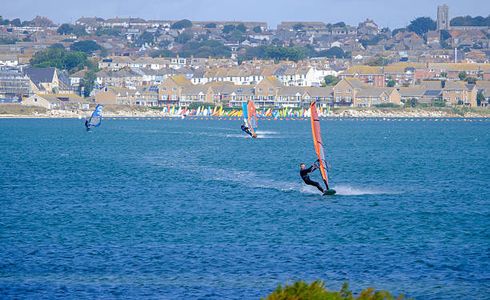
Most people's first thought when they see a windsurfer is something along the lines of "that looks impossible." The board wobbling, the sail flopping into the water, arms flailing. And honestly, that's not entirely wrong — the first hour can feel like a comedy sketch. But here's the thing: within a morning on the water with a decent instructor, most complete beginners are actually sailing. Not gracefully, but sailing. That's what makes windsurfing lessons so satisfying, and why the sport keeps pulling people back.
A sport with proper British roots
Before you even get in the water, there's a fact worth knowing: windsurfing was essentially invented in Britain. In 1958, a 12-year-old boy named Peter Chilvers rigged a sail to a wooden board on Hayling Island, Hampshire, and taught himself to steer it by shifting the sail rather than using a rudder. When American manufacturers later patented their own sailboard design, Chilvers ended up in a landmark court case — and won, with three appeal judges ruling that his childhood invention was the forerunner of the modern sailboard. The island still draws windsurfers today, and it's one of the better spots on the south coast to take your first lesson.
That history matters because it speaks to something about Britain's relationship with the sport. With over 7,700 miles of coastline, plus inland lakes and reservoirs, the UK has an enormous range of windsurfing spots that suit every ability level. You really don't need to fly to Tarifa to get started.
What actually happens in a windsurfing lesson
The first thing you learn isn't how to sail — it's how to fall. More specifically, how to fall without panicking, and how to get back on the board without exhausting yourself. Instructors usually spend the first part of the session on land, walking you through stance, balance, and how the sail works in relation to the wind. It sounds like admin, but it genuinely shortens the learning curve on the water.
Within a two to three hour introduction session, most people get to the point of standing up, turning around, and coming back to shore. That's not a small thing — it means you're actually windsurfing, not just surviving. A full two-day RYA Start Windsurfing course takes that further, leaving you capable of sailing in light winds without needing an instructor beside you.
On the cost side, a two to three hour introductory lesson typically runs between £40 and £60, while a two-day RYA course usually sits in the £170–£190 range — which often includes equipment hire and wetsuit. For a sport that can genuinely become a lifelong hobby, that's not bad value.
Any school worth booking with should be an RYA-accredited training centre. The Royal Yachting Association sets the standards for equipment, instructor qualifications, and safety, and their windsurfing scheme takes you from absolute beginner right through to advanced planing and gybing techniques. The National Windsurfing Scheme covers everything from basic beach starting and tacking through to water starts and the carve gybe.
Where to take your first windsurfing lesson
Where you learn matters quite a bit. For beginners, flat water and light winds are what you want — open sea sounds exciting, but it makes everything harder when you're still figuring out your balance.
Beginners should look to have their first lesson on a lake or in a harbour where the water is likely to be flat and wind light — this gives you the best chance of actually progressing rather than spending the session fighting the conditions.
A few places that tick that box particularly well:
Hayling Island, Hampshire — Already mentioned for its history, but it's also genuinely good for lessons. The sandbanks at low tide create shallow, flat water ideal for beginners, and the island has a well-established watersports community with experienced instructors.
Portland Harbour, Dorset — Flat water conditions here are among the best on the south coast, accessible in all wind directions and states of tide, and the site hosted the sailing events at the 2012 Olympics. It's also home to Weymouth Speed Week, one of the longest-running windsurfing competitions in the world, which gives you a sense of the quality of wind the area gets.
Tiree, Scotland — A different proposition entirely. The island has nine windsurf-friendly beaches and hosts the Tiree Wave Classic, the UK's biggest wave windsurfing event. It's not beginner territory, but once you've got some lessons under your belt and want to progress, it's one of the most exciting places in the country to sail.
Rhosneigr, Anglesey — Arguably the most famous windsurfing spot in Wales, Rhosneigr is a horseshoe-shaped sandy bay that gets consistent wind and waves straight off the Irish Sea — varied enough to suit multiple ability levels.
Camber Sands, East Sussex — Good for those based in or around London. Rye Watersports runs RYA courses here on a coastal lake about an hour from south London, with consistent sea breezes through summer and stronger winds in spring and autumn.
One honest tip before you book
Don't overthink your fitness level before your first lesson. Windsurfing is physically demanding once you get into it, but the entry-level technique relies more on balance and body position than raw strength. Most instructors will tell you the main barrier for beginners is mental — trusting the wind, committing to the stance, not overcorrecting.
Book a taster session first if you're unsure. If it clicks, and it usually does, you can find windsurfing lessons across the UK through adventuro, where you can filter by location and skill level to find an RYA-accredited centre near you.
Written By:
Maria Hill

Hotels at your convenience
Now choose your stay according to your preference. From finding a place for your dream destination or a mere weekend getaway to business accommodations or brief stay, we have got you covered. Explore hotels as per your mood.